
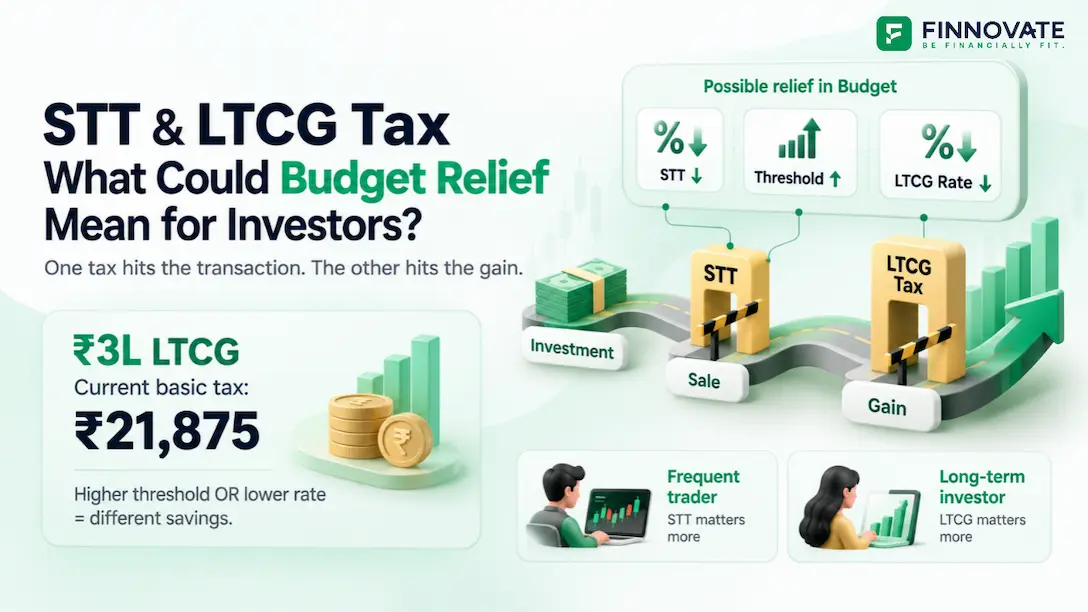
STT and LTCG Tax: What Budget Relief Could Mean for Investors
Understand how STT cuts, a higher LTCG exemption or lower capital gains tax could affect i...
19 October 2026

Finnovate’s editorial team researches and creates financial content using trusted sources, regulatory references and inputs from subject experts.

You filed your income tax return, completed verification and then received an email referring to an “Intimation under Section 143(1)”. The document may show no change, a refund, a lower refund, an adjustment to income or loss, or an additional amount payable.
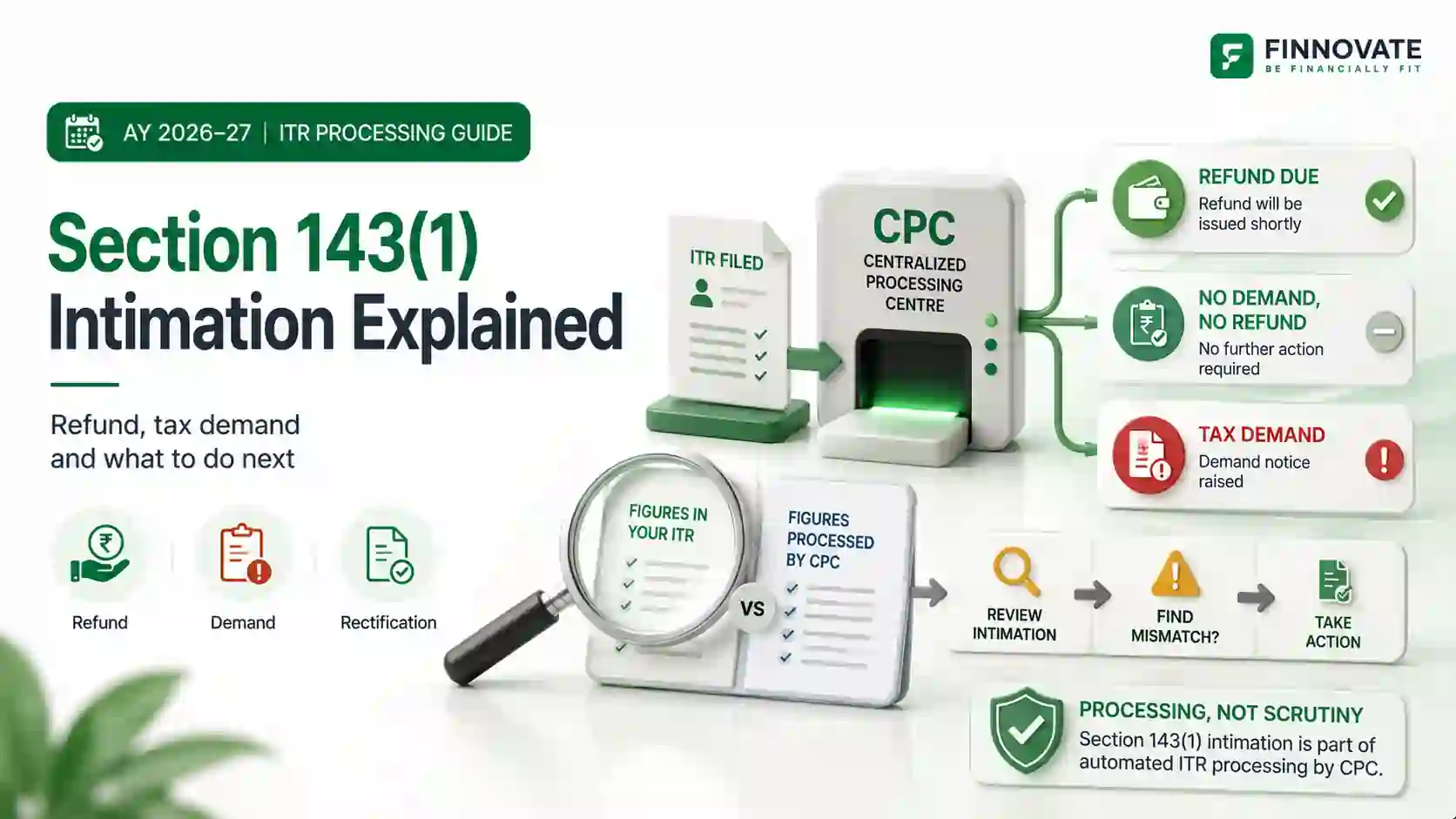
Receiving this intimation does not automatically mean that your return has been selected for scrutiny. It is generally the result of preliminary processing by the Centralised Processing Centre (CPC). What matters is the outcome shown and whether CPC’s figures match the return you filed.
Table of Contents
Use the flowchart to identify the result shown in the intimation. Then read the relevant action section below before paying, disputing or correcting anything.

After an ITR is filed and verified, CPC processes the return. It checks the return for specified issues, computes tax and interest, gives eligible credit for taxes reflected in the system and determines the final result.
Preliminary processing based mainly on the filed return, tax-credit records and adjustments permitted by law.
A separate notice connected with scrutiny, where claims, income or supporting information may be examined in greater detail.
A return processed under Section 143(1) should not be described as permanently approved in every respect. Further proceedings may still take place where the law permits them.
These are two different communications and should not be treated as one.
| Point | Proposed adjustment under Section 143(1)(a) | Final intimation under Section 143(1) |
|---|---|---|
| When it appears | Before CPC finalises a proposed adjustment | After CPC completes processing |
| What it asks | Agree or disagree with each proposed variance | Review the processed refund, demand, income or loss |
| Response period | Normally within 30 days of issue of the communication | Depends on the action required, such as demand response, rectification or appeal |
| Common portal area | Pending Actions > e-Proceedings | Filed returns, outstanding demand or rectification services |
Section 143(1) processing is not a full investigation. CPC can make specified preliminary adjustments, including:
The adjustment must remain within the scope permitted by the section. A complex factual or legal dispute that requires fresh investigation is different from a simple processing adjustment.
| Check first | What a mismatch may indicate |
|---|---|
| Total income | Income added, omitted or reported differently across schedules |
| Deductions | A claim adjusted, limited or not supported by return information |
| TDS and TCS | Credit not available or not matched with Form 26AS |
| Advance tax and self-assessment tax | Wrong challan details, assessment year or omitted payment |
| Interest and fee | Recalculation under the applicable interest or late-filing provisions |
| Loss carried forward | Loss reduced or disallowed, which may affect future returns |
Your Form 16 or Form 16A may show tax deducted, while the deductor’s statement has not been filed correctly or contains the wrong PAN or amount. CPC generally grants tax credit based on the tax-credit information available in the system.
A demand can arise when self-assessment tax or advance tax was paid under the wrong assessment year, omitted from the ITR or entered with incorrect challan details.
The issue may be a statutory limit, missing return information, late filing or an inconsistency between schedules.
CPC may calculate interest under Sections 234A, 234B or 234C and fee under Section 234F where applicable. A change in processed income or available tax credit can also change the interest calculation.
A current-year refund may be reduced where an earlier outstanding demand exists. Check the outstanding-demand section before assuming that the present return was processed incorrectly.
Review the figures. If they match and the portal shows no pending action, save the intimation with your filed ITR and tax records.
Compare the amount claimed and determined. Check tax credits, earlier demand, bank validation and refund status.
Pay the amount through the portal and submit the appropriate response against the outstanding demand. Save the challan and acknowledgement.
Submit disagreement through the portal and then use the remedy that fits the cause. Do not pay the full amount merely to close the notification.
Check whether a revised return under Section 139(5) is still available. For AY 2026-27, the normal statutory cutoff is December 31, 2026, or completion of assessment, whichever is earlier.
A rectification request under Section 154 may be appropriate. Common portal routes include reprocessing, tax-credit mismatch correction and permitted return-data correction.
An intimation that adjusts returned income may be appealable through Form 35. An appeal generally has to be filed within 30 days from service of the relevant order or demand, subject to the applicable provisions. Professional review is advisable before taking this route.
| Route | Generally suitable when | Not a substitute for |
|---|---|---|
| Revised return | Your original return has an omission or wrong statement and the revision period is open | Correcting every CPC processing issue after intimation |
| Rectification | There is a mistake apparent from the record in the processed intimation | A fresh claim or a detailed legal dispute |
| Demand response | You need to accept, partly disagree or fully disagree with a demand | Correcting the underlying return or processing error by itself |
| Appeal | You dispute an appealable adjustment or legal conclusion | A simple challan or tax-credit correction |
| Action or communication | General time limit |
|---|---|
| Section 143(1) intimation | Within 9 months from the end of the financial year in which the return is filed |
| Response to proposed adjustment under Section 143(1)(a) | Within 30 days of issue of the communication |
| Revised return for AY 2026-27 | Normally by December 31, 2026, or before completion of assessment, whichever is earlier |
| Rectification under Section 154 | Generally within 4 years from the end of the financial year in which the intimation or order sought to be amended was passed |
| Appeal through Form 35 | Generally within 30 days from service of the relevant order or demand |
If a return is filed on July 20, 2026, the financial year of filing ends on March 31, 2027. Nine months from that date takes the normal Section 143(1) intimation deadline to December 31, 2027.
A salaried taxpayer pays ₹18,500 as self-assessment tax before filing. CPC later raises a demand for the same amount plus interest.
Self-assessment tax appeared as zero because the challan was not correctly reported in the filed return.
The demand is the result. The missing tax credit is the cause. Depending on the record and processing status, the taxpayer may need a tax-credit correction or rectification and should also respond to the outstanding demand. Paying the same tax again without checking the challan could create a duplicate payment.
A tax review can help identify the first mismatch and the correct route before a response deadline is missed.
Explore Finnovate Tax PlanningNo. Section 143(1) is preliminary processing. A scrutiny notice under Section 143(2) is a separate communication.
No. It means the return has been processed under Section 143(1). Further proceedings may still be initiated where legally permitted.
A separate response is normally not required if the figures match and the portal shows no pending action. Retain the intimation and supporting records.
Section 143(1)(a) covers specified adjustments during processing. CPC first communicates a proposed adjustment and gives you an opportunity to respond. The final Section 143(1) intimation shows the processed result.
The challan may be missing, entered incorrectly, paid under the wrong assessment year or not matched during processing. Check the tax-paid schedule before paying again.
Yes. The portal allows a taxpayer to disagree with the demand in full or in part and pay the undisputed amount, where applicable.
If your original return contains an omission or wrong statement, check whether the Section 139(5) revision period is still open and whether assessment has been completed. The right route depends on the error and processing stage.
A revised return corrects your filed return. Rectification corrects a mistake apparent from the record in a processed intimation or order.
An intimation making an adjustment to returned income may be appealable, subject to the applicable conditions and deadline.
The demand may be confirmed, remain payable against your PAN or be adjusted against a future refund. Submit a response even if you disagree.
A Section 143(1) intimation is usually a processing result, not a scrutiny notice. But the document should still be reviewed carefully.
Compare the figures reported in your ITR with the figures processed by CPC, find the first mismatch and then choose the route that matches the cause. That may mean retaining the intimation, tracking a refund, responding to a demand, filing a revised return, seeking rectification or considering an appeal.
Disclaimer: This article is for general information and educational purposes only. It does not constitute tax, legal or investment advice. The discussion is based on provisions and portal guidance relevant to Section 143(1) of the Income-tax Act, 1961 for AY 2026-27. The correct response depends on the actual intimation, return, tax-credit records, legal position and applicable deadline. Please consult a qualified tax professional for guidance specific to your case.
No spam. Only new posts, simple explainers, and practical money checklists for busy professionals.
Finnovate is a SEBI-registered financial planning firm that helps professionals bring structure and purpose to their money. Over 3,500+ families have trusted our disciplined process to plan their goals - safely, surely, and swiftly.
Our team constantly tracks market trends, policy changes, and investment opportunities like the ones featured in this Weekly Capsule - to help you make informed, confident financial decisions.
Learn more about our approach and how we work with you:
No spam. Only new posts, simple explainers, and practical money checklists.
You may also like
Understand how STT cuts, a higher LTCG exemption or lower capital gains tax could affect i...

Tax planning for married couples in India explained for 2026. Compare tax regimes, deducti...
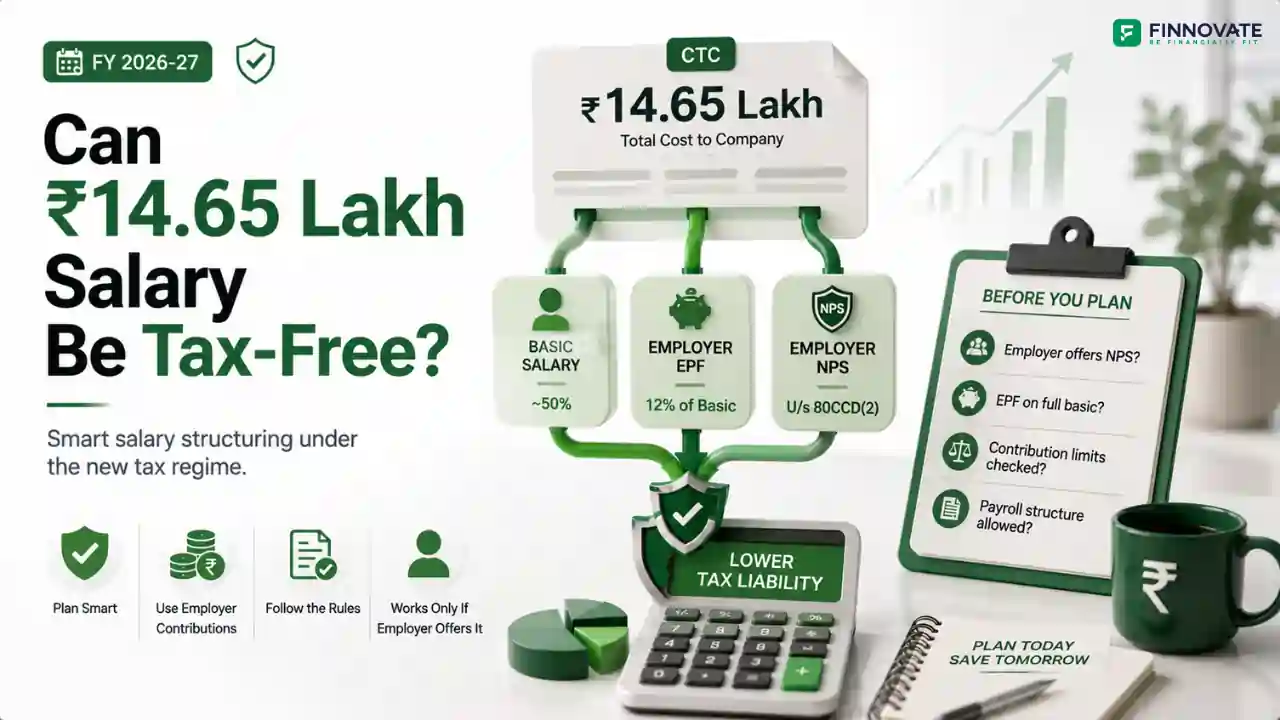
Zero tax on a ₹14.65 lakh salary is real, but only if your employer contributes EPF on f...
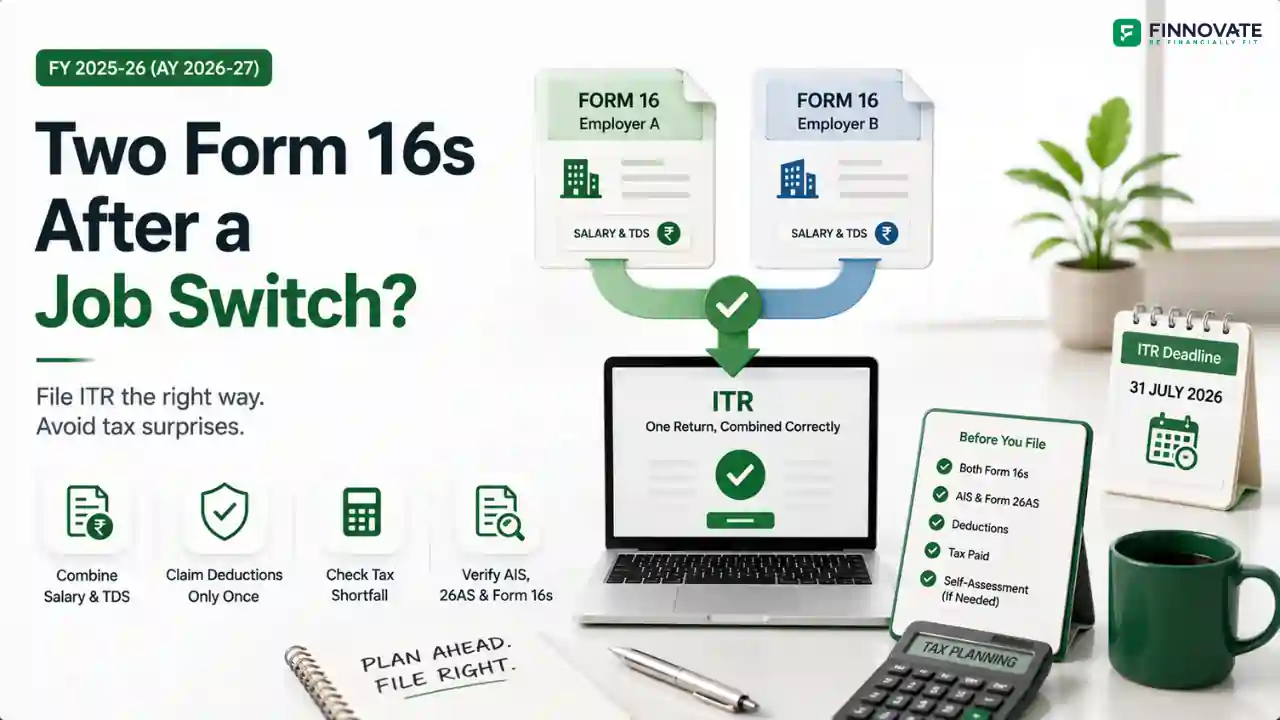
Changed jobs in FY 2025-26? See why combining two Form 16s can create a tax shortfall past...
Popular now

Learn how to easily download your NSDL CAS Statement in PDF format with our step-by-step g...

Looking for the best financial freedom books? Here’s a handpicked 2026 reading list with...
Learn what SIF investment means in India, SEBI rules, Rs 10 lakh minimum investment, avail...
Clear guide to mutual fund taxation in India for FY 2025–26 after July 2024 changes: equ...