

Tax Planning and Benefits for Married Couples in India: 2026 Guide
Tax planning for married couples in India explained for 2026. Compare tax regimes, deducti...
05 September 2026

Finnovate’s editorial team researches and creates financial content using trusted sources, regulatory references and inputs from subject experts.

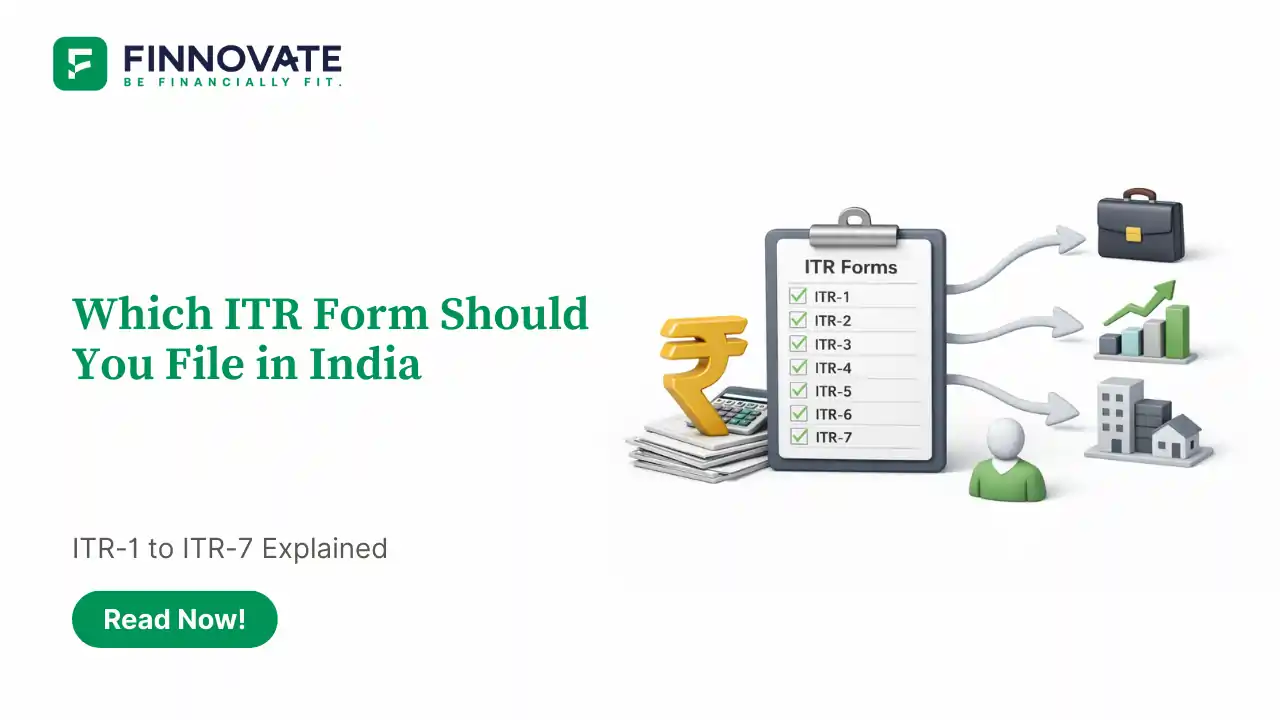
Choosing the correct Income Tax Return form is as important as calculating your tax correctly. Each year, many taxpayers face defective return notices not because their tax was wrong, but because they filed under the wrong form for their income profile.
The Income Tax Department prescribes different ITR forms for different income structures. Filing under the wrong form can result in the return being treated as invalid under Section 139(9), refunds being withheld, and mandatory refiling with late fees. This guide covers ITR-1 through ITR-7 with clear eligibility conditions, exclusions, and real-life scenarios for AY 2026-27 (FY 2025-26).
Table of Contents
Filing an ITR is mandatory if any of the following conditions apply for FY 2025-26:
| Category | New Regime | Old Regime |
|---|---|---|
| Below 60 years | ₹4,00,000 | ₹2,50,000 |
| Senior citizen (60 to 79 years) | ₹4,00,000 | ₹3,00,000 |
| Super senior citizen (80 years and above) | ₹4,00,000 | ₹5,00,000 |
Tax calculation and ITR form selection are two separate steps. A correctly calculated tax liability does not justify using a simpler form if the income profile does not qualify for it.
The consequences of filing under the wrong form include:
| ITR Form | Who It Is For | Key Exclusions |
|---|---|---|
| ITR-1 (Sahaj) | Salaried residents with simple income, total income up to ₹50 lakh | Capital gains, business income, directors, NRIs, agricultural income above ₹5,000 |
| ITR-2 | Investors, directors, NRIs with no business income | Business or professional income of any kind |
| ITR-3 | Business owners, professionals, partners in firms | No exclusions. Most comprehensive individual form |
| ITR-4 (Sugam) | Presumptive taxation cases under 44AD, 44ADA, 44AE | Capital gains, directors, foreign income, income above ₹50 lakh |
| ITR-5 | Firms, LLPs, AOPs, BOIs | Individuals, HUFs, companies |
| ITR-6 | Companies registered under the Companies Act | Entities claiming exemption under Section 11 |
| ITR-7 | Trusts, charitable institutions, political parties | Regular business entities, individuals |
ITR-1 is the simplest form, designed for resident individuals with straightforward income sources and total income not exceeding ₹50 lakh. All of the following conditions must be satisfied simultaneously.
ITR-2 covers all income types that ITR-1 cannot accommodate, except business or professional income. It is the appropriate form for salaried individuals who also invest in equity, mutual funds, or property, and for NRIs with India-sourced income.
ITR-2 is a non-business form. The moment any business or professional income exists, ITR-3 applies instead.
ITR-3 is the most comprehensive individual form. It covers all income heads and is applicable when business or professional income exists and the taxpayer is not opting for presumptive taxation.
ITR-4 is available only to individuals, HUFs, and firms (other than LLPs) who opt for the presumptive taxation scheme. It simplifies income computation by allowing a fixed percentage of turnover or gross receipts to be declared as profit, without maintaining detailed books of accounts.
| Section | Applicable To | Turnover / Gross Receipt Limit | Deemed Profit Rate |
|---|---|---|---|
| 44AD | Eligible businesses (traders, contractors) | Up to ₹3 crore (if 95%+ receipts are digital); otherwise up to ₹2 crore | 6% of turnover (digital); 8% (cash) |
| 44ADA | Specified professions (doctors, lawyers, architects, engineers, CAs, etc.) | Up to ₹75 lakh gross receipts | 50% of gross receipts |
| 44AE | Goods carriage operators | Not more than 10 goods carriages at any time | Fixed amount per vehicle per month |
ITR-5 is applicable to non-individual, non-company entities. It is never used by individuals or HUFs, regardless of income level or structure.
ITR-6 applies to all companies registered under the Companies Act, 2013 or Companies Act, 1956, whether private limited, public limited, or one-person companies, provided they do not claim exemption under Section 11 (income from property held for charitable or religious purposes).
ITR-7 is applicable to persons and entities required to furnish a return under specific sections of the Income Tax Act relating to charitable, religious, educational, or political activity.
| Income Situation | Correct ITR Form | Why |
|---|---|---|
| Salary only, income below ₹50 lakh, no investments generating capital gains | ITR-1 | Simple salary income, all ITR-1 conditions met |
| Salary plus equity mutual fund redemptions during the year | ITR-2 | Capital gains disqualify ITR-1 |
| Salary plus directorship in any company | ITR-2 | Director status disqualifies ITR-1 regardless of other income |
| Freelancer with gross receipts under ₹75 lakh, opting for 44ADA | ITR-4 | Presumptive taxation applies, income under ₹50 lakh |
| Freelancer with gross receipts above ₹75 lakh | ITR-3 | 44ADA not available above ₹75 lakh; books of accounts required |
| Freelancer salary plus freelance income, not opting for presumptive | ITR-3 | Business income present, presumptive not opted |
| NRI with salary from Indian employer | ITR-2 | NRI status disqualifies ITR-1 |
| Virtual digital assets (crypto) bought and sold during year, no business income | ITR-2 | VDA gains are capital gains; ITR-1 and ITR-4 cannot report these |
| Virtual digital assets plus freelance consulting income | ITR-3 | Business income present alongside VDA gains |
| Partnership firm annual filing | ITR-5 | Non-individual entity |
| Income below exemption limit but TDS deducted by employer | File to claim refund (ITR-1 if conditions met) | Filing is optional below threshold but needed to get refund |
Overlapping income sources such as salary with investments, freelance work, directorships, or foreign assets are where form selection errors most commonly occur. Our advisory team can help you identify the correct form before filing.
Book a 15-Minute ITR Form Clarity CallThe return may be treated as defective under Section 139(9). The Income Tax Department issues a notice requiring correction within a specified period. If not corrected in time, the return may be treated as not filed, which can result in late fees, loss carry-forward being disallowed, and interest on unpaid tax.
No. Any capital gains, including from mutual fund redemptions, equity shares, or debt funds, disqualify ITR-1. ITR-2 is applicable in this situation. This applies even if the capital gains amount is small.
It depends on whether presumptive taxation is opted for. If gross receipts are within ₹75 lakh and Section 44ADA is opted for, ITR-4 may apply. If gross receipts exceed ₹75 lakh, or if presumptive taxation is not opted for, ITR-3 applies with books of accounts. Consulting a qualified tax professional is advisable to make this determination accurately.
Yes. Director status alone disqualifies ITR-1 regardless of income level or whether remuneration was received. ITR-2 is the correct form for a director with only salary or investment income and no business income.
Crypto and other virtual digital asset (VDA) income cannot be reported in ITR-1 or ITR-4. If no business income exists alongside VDA gains, ITR-2 applies. If business income is also present, ITR-3 applies. Please consult a SEBI-registered investment adviser or qualified tax professional for guidance on VDA reporting specific to your situation.
For salaried individuals filing ITR-1 or ITR-2, the deadline is July 31, 2026. For non-audit business and professional taxpayers filing ITR-3 or ITR-4, the deadline is August 31, 2026. Audit cases filing ITR-3 have until October 31, 2026. A belated return can be filed up to December 31, 2026 with applicable late fees.
Disclaimer: This article is for general information and educational purposes only. It does not constitute investment advice, a recommendation, or an offer to buy or sell any securities or financial instruments. ITR form eligibility conditions, income thresholds, and filing deadlines referenced here are based on publicly available CBDT notifications and are applicable for AY 2026-27 (FY 2025-26). Rules may change in subsequent notifications or budgets. Please consult a SEBI-registered investment adviser or qualified tax professional before making any tax filing or financial decision.
No spam. Only new posts, simple explainers, and practical money checklists for busy professionals.
Finnovate is a SEBI-registered financial planning firm that helps professionals bring structure and purpose to their money. Over 3,500+ families have trusted our disciplined process to plan their goals - safely, surely, and swiftly.
Our team constantly tracks market trends, policy changes, and investment opportunities like the ones featured in this Weekly Capsule - to help you make informed, confident financial decisions.
Learn more about our approach and how we work with you:
No comments yet. Start the conversation. What would you add?
No spam. Only new posts, simple explainers, and practical money checklists.
You may also like
Tax planning for married couples in India explained for 2026. Compare tax regimes, deducti...
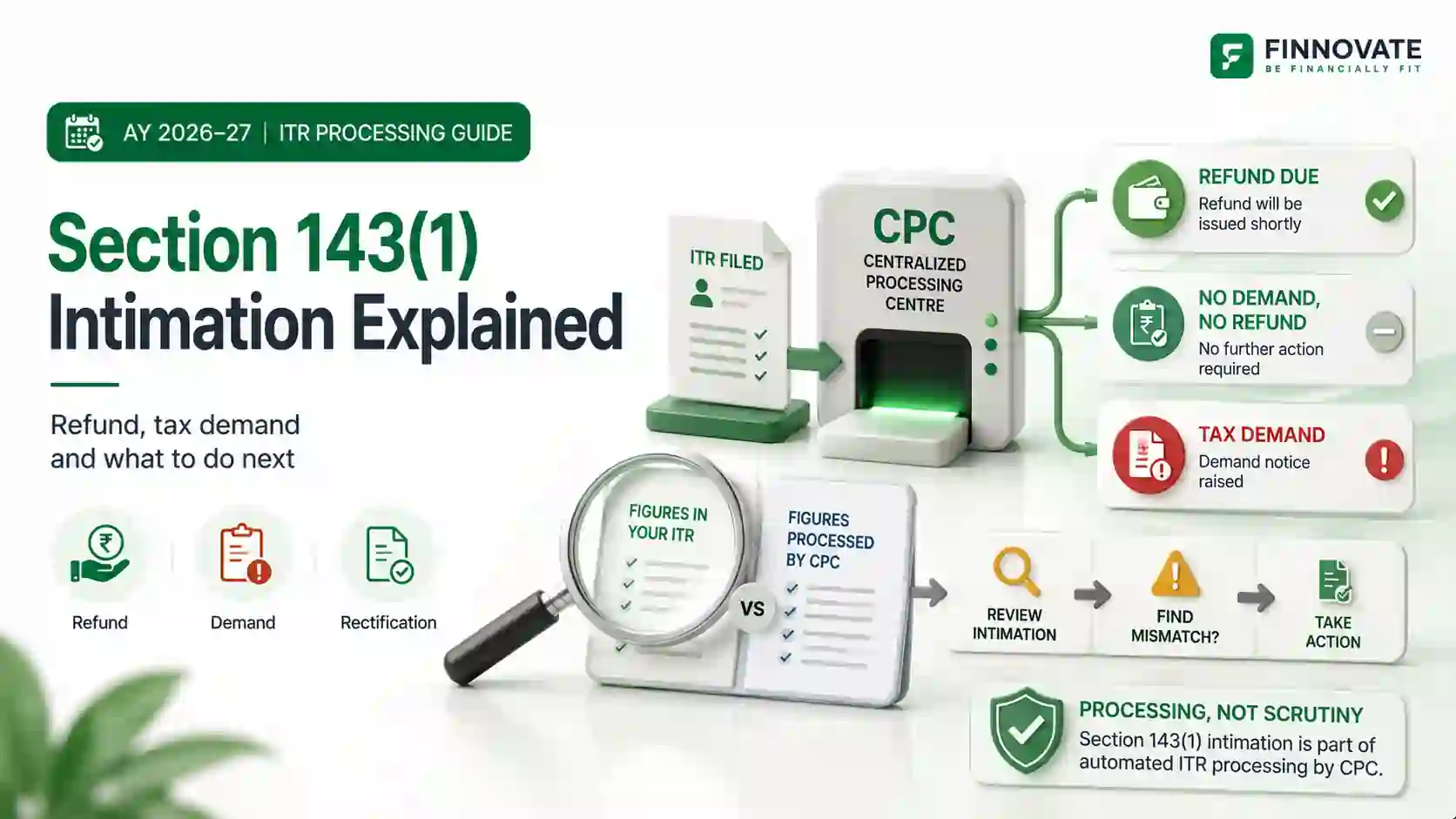
Received a Section 143(1) intimation? Understand CPC adjustments, refunds, tax demands, re...
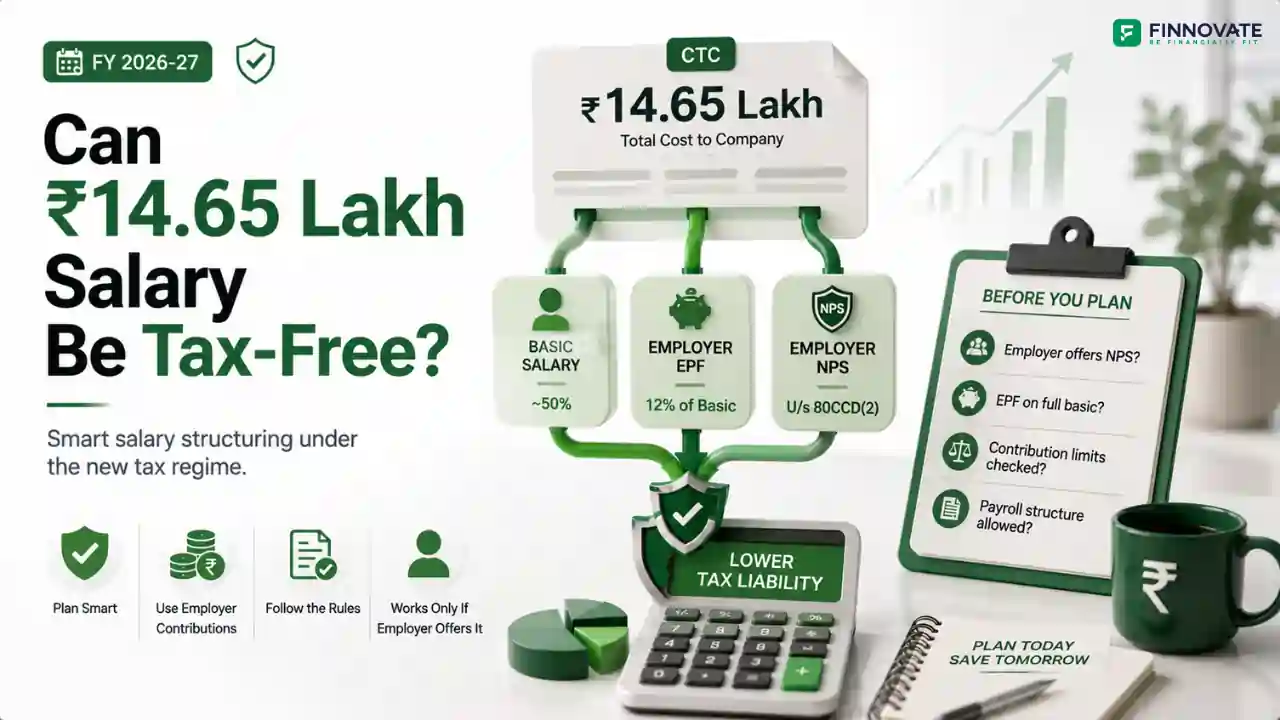
Zero tax on a ₹14.65 lakh salary is real, but only if your employer contributes EPF on f...
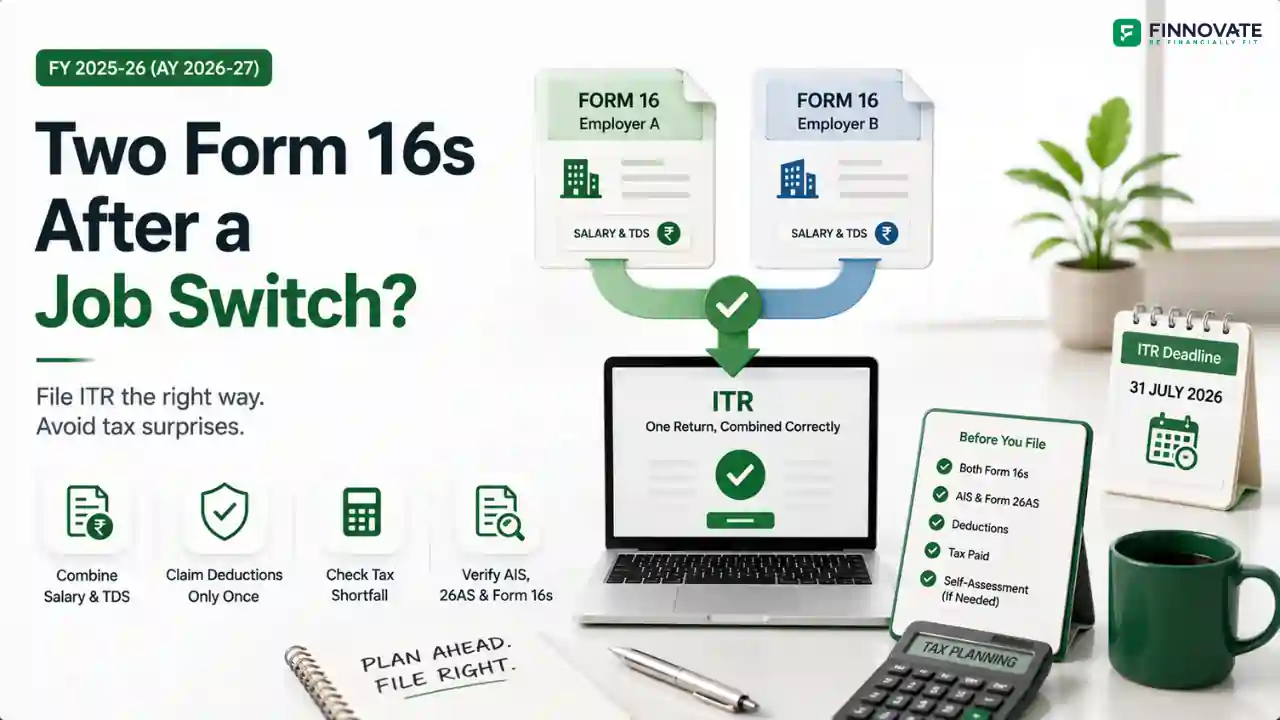
Changed jobs in FY 2025-26? See why combining two Form 16s can create a tax shortfall past...
Popular now

Learn how to easily download your NSDL CAS Statement in PDF format with our step-by-step g...

Looking for the best financial freedom books? Here’s a handpicked 2026 reading list with...
Learn what SIF investment means in India, SEBI rules, Rs 10 lakh minimum investment, avail...
Clear guide to mutual fund taxation in India for FY 2025–26 after July 2024 changes: equ...