

Can India Build the Hardware Behind the AI Boom?
Explore India’s AI hardware opportunity through the proposed Adani–Jabil venture, from...
14 October 2026


Finnovate’s editorial team researches and creates financial content using trusted sources, regulatory references and inputs from subject experts.
Foreign investors are buying Indian equities again.
After returning as net buyers in July, Foreign Portfolio Investors, or FPIs, put approximately $3.1 billion into Indian equities in August 2026, making it their strongest monthly buying in nearly two years.
That makes August the second consecutive month of net foreign equity buying after four straight months of heavy selling between March and June.
But does two good months mean the FPI sell-off is over?
Not yet.
Foreign investors had withdrawn roughly $27.8 billion between March and June 2026. July brought about $2.1 billion back, followed by another $3.1 billion in August.
And as of the end of August, foreign investors were still net sellers of approximately $24.6 billion in Indian equities during calendar 2026.
Table of Contents
Different FPI datasets can show slightly different monthly totals because of reporting cut-offs, currency conversion and the treatment of transactions.
CDSL-linked reports put total August equity buying at approximately ₹30,919 crore. NSDL's complete-month sectoral dataset shows approximately ₹29,630 crore, or $3.14 billion.
For sector analysis, we will use the NSDL-linked numbers consistently.
| August 2026 FPI Flow | Approx. Amount |
|---|---|
| Equity | +$3.14 billion |
| Debt | -$154 million |
| Largest equity inflow | Financial Services: +$1.11bn |
| Second-largest inflow | Consumer Services: +$891m |
| Largest equity outflow | Telecommunication: -$527m |
Foreign interest in equities strengthened, but debt flows turned slightly negative in August.
The full-month sectoral breakdown shows a very selective pattern.
| Sector | August 2026 FPI Flow |
|---|---|
| Financial Services | +$1.11bn |
| Consumer Services | +$891m |
| Healthcare | +$628m |
| Information Technology | +$434m |
| Consumer Durables | +$413m |
| Automobile & Auto Components | +$329m |
| Metals & Mining | +$189m |
| Services | +$187m |
| Chemicals | +$90m |
| Capital Goods | +$63m |
| Construction Materials | +$14m |
| Media & Entertainment | +$7m |
| Construction | +$4m |
| Diversified | -$2m |
| Forest Materials | -$2m |
| Utilities | -$3m |
| Textiles | -$31m |
| Others | -$47m |
| Realty | -$63m |
| Power | -$164m |
| Oil, Gas & Consumable Fuels | -$186m |
| FMCG | -$203m |
| Telecommunication | -$527m |
Financial Services attracted approximately $1.11 billion of FPI buying in August, making it the largest recipient of foreign capital.
This is a meaningful change from July, when Financial Services had ended the month slightly negative after early buying was followed by later selling.
August reversed that pattern.
During the first half alone, FPIs put roughly ₹6,535 crore into financial stocks.
Several factors may have supported renewed interest:
It would be too simplistic to attribute the entire move to the FCNR(B) programme. The financial-sector story is broader.
Financial Services took the top spot in August, but Consumer Services may be the more persistent foreign-investor theme.
The sector received about $891 million, or roughly ₹8,417 crore, during August.
Consumer Services had also been the largest FPI buying sector in July.
The attraction spans businesses linked to online consumer platforms, retail, hospitality, travel, restaurants and other discretionary services.
Between August 16 and 31, FPIs put another ₹13,010 crore into Indian equities, and Consumer Services alone attracted roughly ₹5,019 crore.
Healthcare attracted approximately $628 million during August, making it the third-largest recipient of foreign capital.
Potential drivers include hospital and diagnostics growth, pharmaceutical exports, CDMO opportunities, domestic healthcare demand and the coming global pharmaceutical patent-expiry cycle.
The patent cliff is relevant, but it should not be treated as the explanation for all healthcare buying.
IT received approximately $434 million of foreign investment during August.
Earlier in 2026, global money had strongly favoured AI and semiconductor-heavy markets such as Taiwan and South Korea, while India saw heavy foreign selling.
By July and August, investors had started reassessing how quickly massive AI infrastructure spending would translate into profits. Indian IT valuations had also adjusted after months of weakness.
Automobiles and auto components ended August with approximately $329 million of net FPI buying.
During August 1-15, FPIs bought around ₹4,405 crore of auto stocks. The full-month inflow, however, was only around ₹3,110 crore.
Capital Goods ended August with only a modest full-month inflow, but the direction matters.
The sector had seen foreign selling in July and again in the first half of August. FPIs returned as buyers during the second half.
That comes at a time when India's investment cycle is strengthening. Q1 FY27 real Gross Fixed Capital Formation grew 11.9%, while capital-goods production has also remained strong.
One fortnight does not establish a trend, but continued foreign buying would suggest overseas investors are becoming more willing to participate in India's domestic capex story.
This was not an isolated fortnight. Telecom had already seen substantial selling in July and again during the first half of August.
-$203 million
-$186 million
-$164 million
-$63 million
The reasons differ significantly across sectors, ranging from valuation and margin concerns to commodity risk and company-specific positioning.
Currency risk was one of the major concerns for foreign investors earlier in 2026.
A foreign investor can earn money on an Indian stock and still lose part of that return if the rupee falls substantially against the dollar.
India's special foreign-currency measures ultimately attracted approximately $136.38 billion, including around $127.23 billion through the non-resident deposit programme.
A larger reserve buffer does not guarantee the rupee cannot weaken. Oil prices, global interest rates and geopolitical developments still matter.
But it gives RBI greater capacity to manage disorderly currency volatility.
When banks raised foreign currency and swapped those dollars with RBI, the central bank released rupees into the banking system.
Banking-system surplus liquidity reached around ₹10.3 lakh crore by September 3, prompting RBI to announce a ₹7 lakh crore, 30-day Variable Rate Reverse Repo operation to absorb part of the excess.
How RBI manages that liquidity can eventually influence money-market rates, bond yields and banking conditions.
There are stronger signs than there were a month ago.
But foreign investors sold roughly $27.8 billion between March and June, while July and August brought back only around $5.2 billion. At August-end, FPIs were still net sellers of roughly $24.6 billion during calendar 2026.
FPI data can tell us where global institutional interest is increasing or declining, but it should not become a stock-selection system.
A sector receiving foreign money can still be expensive. A sector seeing foreign selling can still contain strong businesses.
FPI positioning can also reverse quickly when global interest rates change, the dollar moves, crude oil rises, geopolitical risk increases, earnings expectations change or valuations become stretched.
NSDL complete-month sectoral data shows foreign investors added about ₹29,630 crore, or $3.14 billion, to Indian equities in August. Other depository-linked datasets show slightly different totals because of methodology and reporting cut-offs.
Yes. FPIs returned as net equity buyers in July after four consecutive months of selling and remained net buyers in August.
Financial Services received the highest net foreign investment at approximately $1.11 billion.
Consumer Services attracted around $891 million, Healthcare $628 million, IT $434 million, Consumer Durables $413 million and Automobiles $329 million.
Telecommunication saw the largest sectoral outflow at approximately $527 million.
No. Despite buying in July and August, FPIs were still net sellers of approximately $24.6 billion in Indian equities during calendar 2026 at August-end.
Foreign flows can influence market liquidity, currency demand, sector valuations and short-term market movements. But they should not be used alone to make investment decisions.
Disclaimer: This article is for educational and informational purposes only. FPI flows are historical market data and do not constitute investment advice or a recommendation to buy or sell any security or sector. Investor flows can change rapidly based on global and domestic conditions. Investors should evaluate their financial goals, risk profile, portfolio allocation and other relevant factors before making investment decisions.
No spam. Only new posts, simple explainers, and practical money checklists for busy professionals.
Finnovate is a SEBI-registered financial planning firm that helps professionals bring structure and purpose to their money. Over 3,500+ families have trusted our disciplined process to plan their goals - safely, surely, and swiftly.
Our team constantly tracks market trends, policy changes, and investment opportunities like the ones featured in this Weekly Capsule - to help you make informed, confident financial decisions.
Learn more about our approach and how we work with you:
No comments yet. Start the conversation. What would you add?
No spam. Only new posts, simple explainers, and practical money checklists.
You may also like
Explore India’s AI hardware opportunity through the proposed Adani–Jabil venture, from...
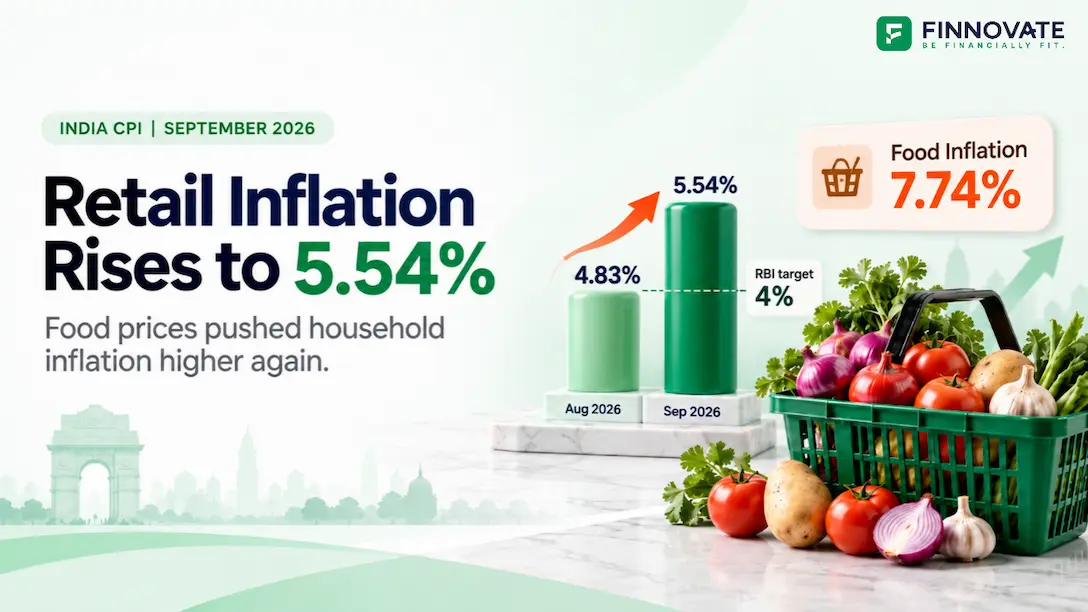
India’s CPI inflation rose to 5.54% in September 2026. Compare monthly trends, food pric...

The Shiller CAPE ratio is near its 1999 peak. Explore what it means for US stock valuation...

Can Starlink change internet access in India? Explore why Jio and Airtel signed deals, how...
Popular now

Learn how to easily download your NSDL CAS Statement in PDF format with our step-by-step g...

Looking for the best financial freedom books? Here’s a handpicked 2026 reading list with...

Learn what SIF investment means in India, SEBI rules, Rs 10 lakh minimum investment, avail...

Clear guide to mutual fund taxation in India for FY 2025–26 after July 2024 changes: equ...