

HDFC Bank: What Must Change to Win Back Investors?
Can HDFC Bank win back investors? Explore how deposit costs, profit margins, loan quality ...
12 October 2026

Data period: Month ending May 30, 2026
The Nifty 50 declined approximately 2.6% month-on-month in May 2026, pressured by the ongoing Middle East conflict and its supply chain effects, continued FPI selling, and the weight reduction in the MSCI EM index. On a year-on-year basis, the index was down approximately 5.2%. Against this backdrop, select pockets of the market outperformed meaningfully.
This report presents Finnovate's four-factor ranking model for the top 20 Nifty 50 stocks for the month ending May 2026. The model combines short-term momentum, long-term performance, recovery from lows, and proximity to peak, giving a 360-degree view of each stock's current positioning.
Quick read: In May 2026, commodities dominated the Nifty outperformers with five stocks in the top 20, driven by collateral effects of Middle East supply disruptions. Infrastructure and PSU capital goods names were strong on domestic demand. Defensives (FMCG and healthcare) held up amid global uncertainty. Financials and autos with strong domestic franchises also featured, despite being rate-sensitive sectors.
The combined rank is the average of four individual ranks, each capturing a different dimension of a stock's performance. Lower combined rank means better overall positioning.
| Company | 1-Month Return (Rank) | 1-Year Return (Rank) | Bounce From Low (Rank) | Distance to Peak (Rank) | Combined Rank |
|---|---|---|---|---|---|
| HINDALCO | 6 | 1 | 1 | 7 | 3.75 |
| ADANIPORTS | 5 | 6 | 5 | 2 | 4.50 |
| ADANIENT | 1 | 10 | 3 | 4 | 4.50 |
| GRASIM | 3 | 7 | 13 | 1 | 6.00 |
| BAJAJ-AUTO | 9 | 8 | 8 | 5 | 7.50 |
| APOLLOHOSP | 7 | 11 | 20 | 3 | 10.25 |
| JSWSTEEL | 22 | 5 | 10 | 8 | 11.25 |
| ASIANPAINT | 4 | 12 | 12 | 17 | 11.25 |
| SHRIRAMFIN | 16 | 2 | 2 | 25 | 11.25 |
| TATASTEEL | 28 | 4 | 4 | 12 | 12.00 |
| EICHERMOT | 19 | 3 | 6 | 21 | 12.25 |
| NESTLEIND | 32 | 9 | 9 | 6 | 14.00 |
| LT | 15 | 17 | 15 | 14 | 15.25 |
| TATACONSUM | 12 | 23 | 24 | 15 | 18.50 |
| AXISBANK | 20 | 19 | 19 | 16 | 18.50 |
| NTPC | 35 | 14 | 18 | 11 | 19.50 |
| SUNPHARMA | 27 | 20 | 23 | 10 | 20.00 |
| DRREDDY | 25 | 25 | 28 | 9 | 21.75 |
| COALINDIA | 43 | 16 | 16 | 13 | 22.00 |
| CIPLA | 8 | 32 | 21 | 29 | 22.50 |
Reading the table by individual factor and then by combined rank reveals six distinct themes in Nifty 50 performance for May 2026.
| Theme | Key Stocks in Top 20 | Driver | Signal |
|---|---|---|---|
| Commodities led the month | Hindalco, Grasim, JSW Steel, Tata Steel, Coal India | Middle East conflict driving commodity supply disruption and pricing tailwinds; metals and mining benefited from both pricing effects and supply-chain re-routing | Dominant theme: 5 of 20 stocks |
| Infrastructure and PSU capital goods | Adani Ports, Larsen and Toubro, NTPC, Coal India | Domestic demand-driven; insulated from global risk-off; PSU names attracted strong institutional buying in May 2026 | Strong domestic demand signal |
| Defensive tilt across FMCG and healthcare | Asian Paints, Nestle, Tata Consumer, Apollo Hospitals, Sun Pharma, Cipla | Global uncertainty drove rotation toward lower-beta, cash-generative businesses with domestic revenue visibility | Classic risk-off behaviour |
| Financials and autos held up | Axis Bank, Shriram Finance, Eicher Motors, Bajaj Auto | Despite rate-sensitive classification, strong domestic customer franchise was the performance driver; retail credit and two-wheeler demand remained resilient | Franchise quality over macro sensitivity |
| Holding company incubators outperformed | Adani Enterprises, Grasim, Larsen and Toubro | For the first time in several months, holding company structures with diversified subsidiary exposure featured prominently at the top of the rankings, a notable shift from the prior pattern of pure-play sector leaders | Emerging structural theme |
| Broader index resilience despite selling | 14 of 20 positive MOM; 19 of 20 positive YOY | Stock-level divergence was high in May 2026: the index fell, but selective pockets delivered meaningful positive returns. Alpha opportunity was available to investors who held higher-quality or sector-appropriate positions | High dispersion, selective alpha |
A monthly ranking model captures the current state of the market; it is not a forward prediction. The patterns in May 2026, however, carry some durable observations worth noting.
Commodity stocks dominated the top rankings in May 2026, but commodity performance is by nature cyclical and tied to global conflict and supply dynamics that can reverse sharply. The same Middle East-related factors that drove metals and energy-adjacent names higher in May could unwind if geopolitical conditions ease. Commodity exposure in a portfolio is worth reviewing in the context of how long the underlying supply disruption is likely to persist.
The defensive tilt (FMCG and healthcare) alongside the infrastructure tilt (PSU capex names) is an unusual combination. Typically these two themes compete for capital in risk-off vs risk-on cycles. Their simultaneous outperformance in May 2026 reflects a market environment where both domestic demand visibility and defensive income were being rewarded at the same time, suggesting genuine uncertainty rather than a clean directional risk-off signal.
The presence of holding company incubators (Adani Enterprises, Grasim, L&T) at the top of the combined rankings is a structural observation worth tracking. These are not pure-play sector bets; they represent diversified exposure to multiple growth themes within one holding. Their emergence at the top of rankings may reflect a broader market preference for diversification at the stock level in a volatile macro environment.
For context on the FPI selling pressure that shaped the May 2026 market environment, see FPI Outflows in Early March 2026 and our analysis of FPI Flows January 2026.
Market volatility creates both risk and alpha opportunity. The FinnFit Financial Fitness Test takes 3 minutes and shows you where your plan stands today and whether your current portfolio is aligned with your goals or over-exposed to the themes driving current volatility.
Take the FinnFit TestThe model ranks all Nifty 50 stocks on four individual dimensions: 1-month return, 1-year return, bounce from 52-week low, and distance from 52-week peak. The combined rank is the simple average of these four individual ranks. Lower combined rank means better overall positioning. The model uses two short-term and two long-term measures to provide a balanced view.
The Middle East conflict created supply chain disruptions and pricing tailwinds for metals and commodities. Hindalco, JSW Steel, and Tata Steel benefited from both higher commodity prices and supply re-routing dynamics. This is a cyclical driver and typically reverses when geopolitical conditions ease.
The ranking model reflects past performance and current positioning, not a forward recommendation. A stock with a strong combined rank has outperformed recently and sits close to its highs, which may reflect momentum but also potentially stretched valuations. Past rankings are not indicative of future returns. Please consult a SEBI-registered investment adviser before making any investment decision based on this data.
Defensive sectors (FMCG, healthcare) typically hold up better during broader market declines because their revenues are less sensitive to economic cycles and global volatility. In May 2026, stocks like Asian Paints, Nestle, Apollo Hospitals, and Cipla attracted capital rotation from investors seeking lower-beta exposure amid Middle East uncertainty and FPI-driven selling.
The bounce from low rank measures how much a stock's current price has recovered from its 52-week low. A rank of 1 means the stock has bounced the most from its low relative to all Nifty 50 peers. This is a resilience signal: stocks that have recovered strongly from their lows typically have demonstrated demand at lower price levels.
Disclaimer: This article is for general information and educational purposes only. It does not constitute investment advice, a recommendation, or an offer to buy or sell any securities or financial instruments. Rankings and return data are based on publicly available NSE price data for the month ending May 30, 2026. Index return figures are approximate. Past performance is not indicative of future returns. Please consult a SEBI-registered investment adviser or qualified financial professional before making any investment decision. Equity investments are subject to market risks.
No spam. Only new posts, simple explainers, and practical money checklists for busy professionals.
Finnovate is a SEBI-registered financial planning firm that helps professionals bring structure and purpose to their money. Over 3,500+ families have trusted our disciplined process to plan their goals - safely, surely, and swiftly.
Our team constantly tracks market trends, policy changes, and investment opportunities like the ones featured in this Weekly Capsule - to help you make informed, confident financial decisions.
Learn more about our approach and how we work with you:
No comments yet. Start the conversation. What would you add?
No spam. Only new posts, simple explainers, and practical money checklists.
You may also like
Can HDFC Bank win back investors? Explore how deposit costs, profit margins, loan quality ...
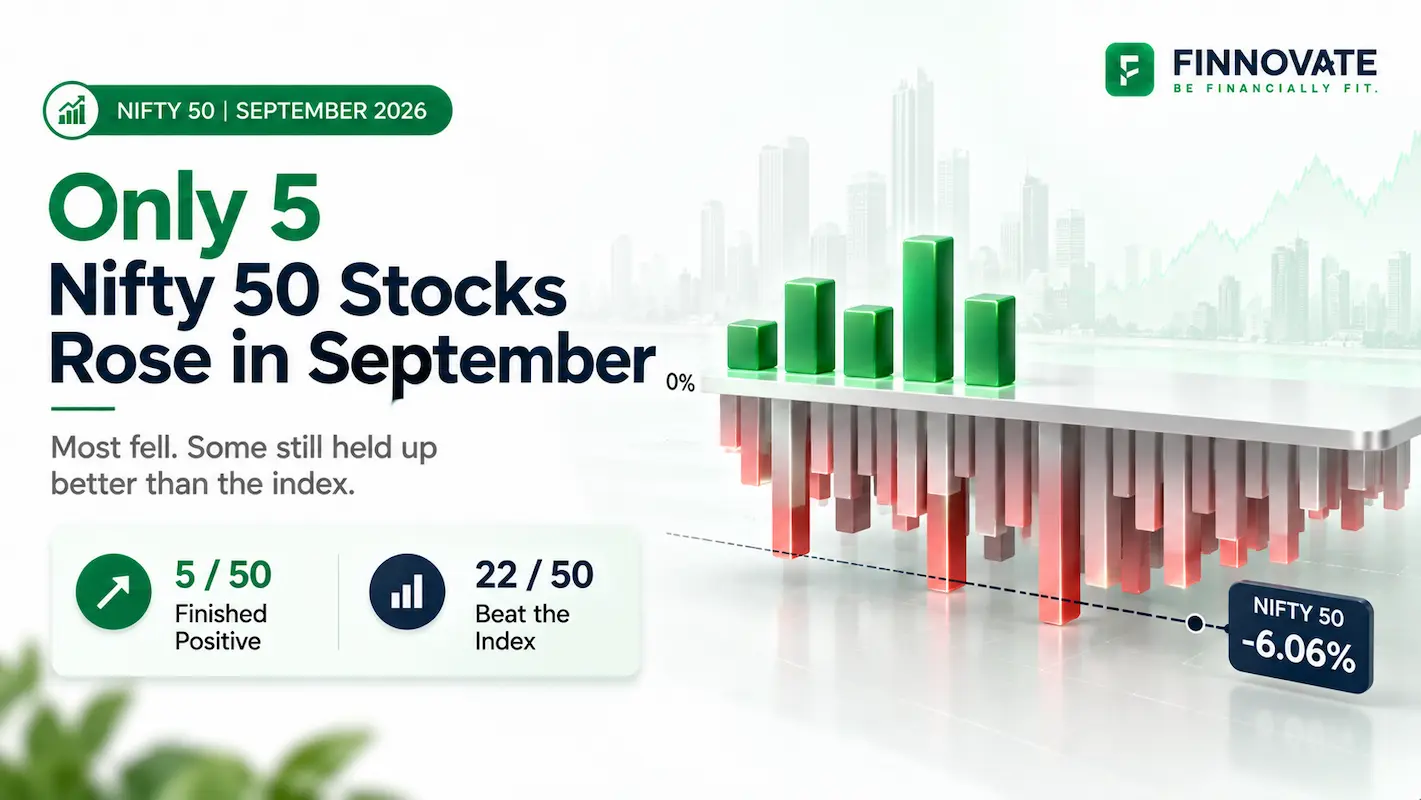
Only five Nifty 50 stocks rose in September 2026 as the index fell 6.06%. Compare monthly ...
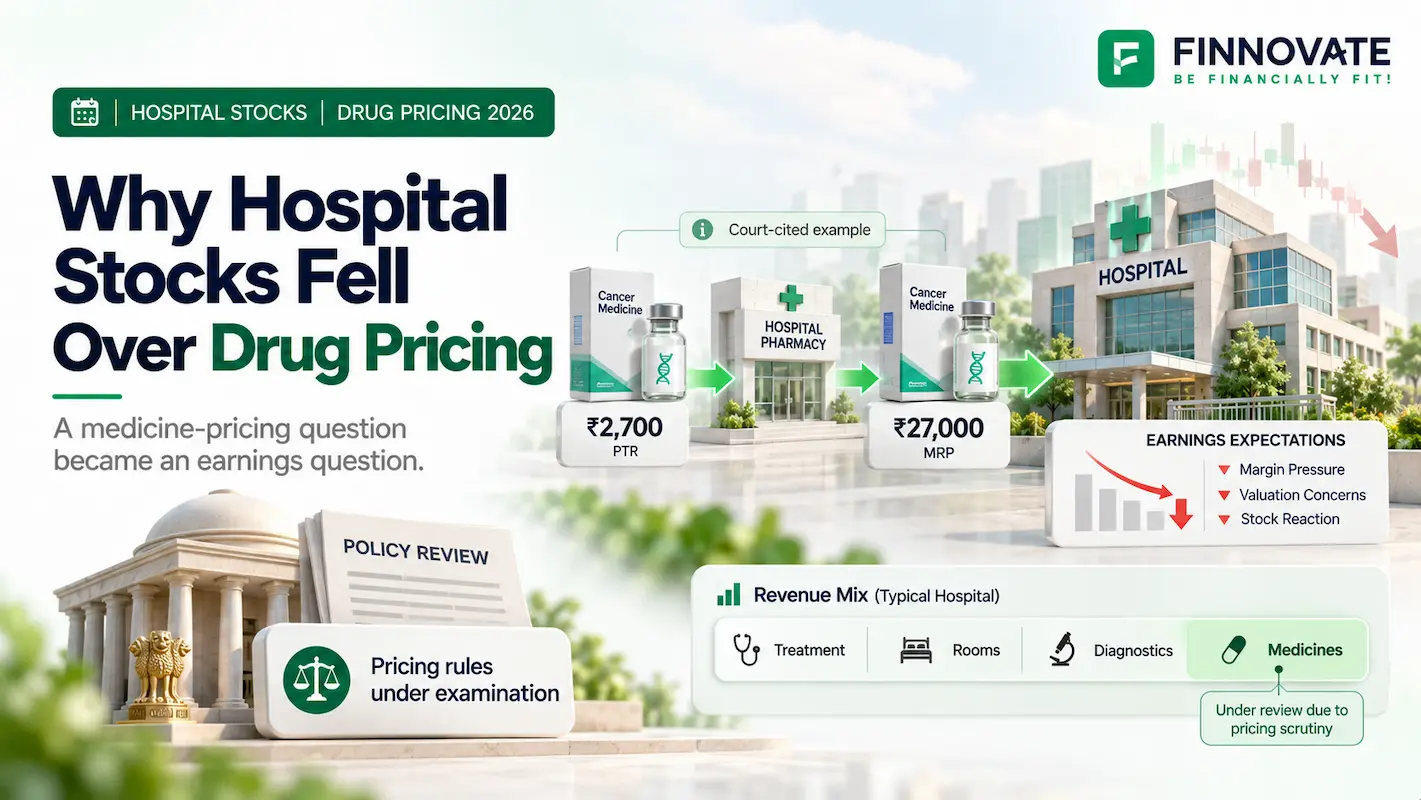
Why did hospital stocks fall after Supreme Court scrutiny of medicine prices? Understand d...
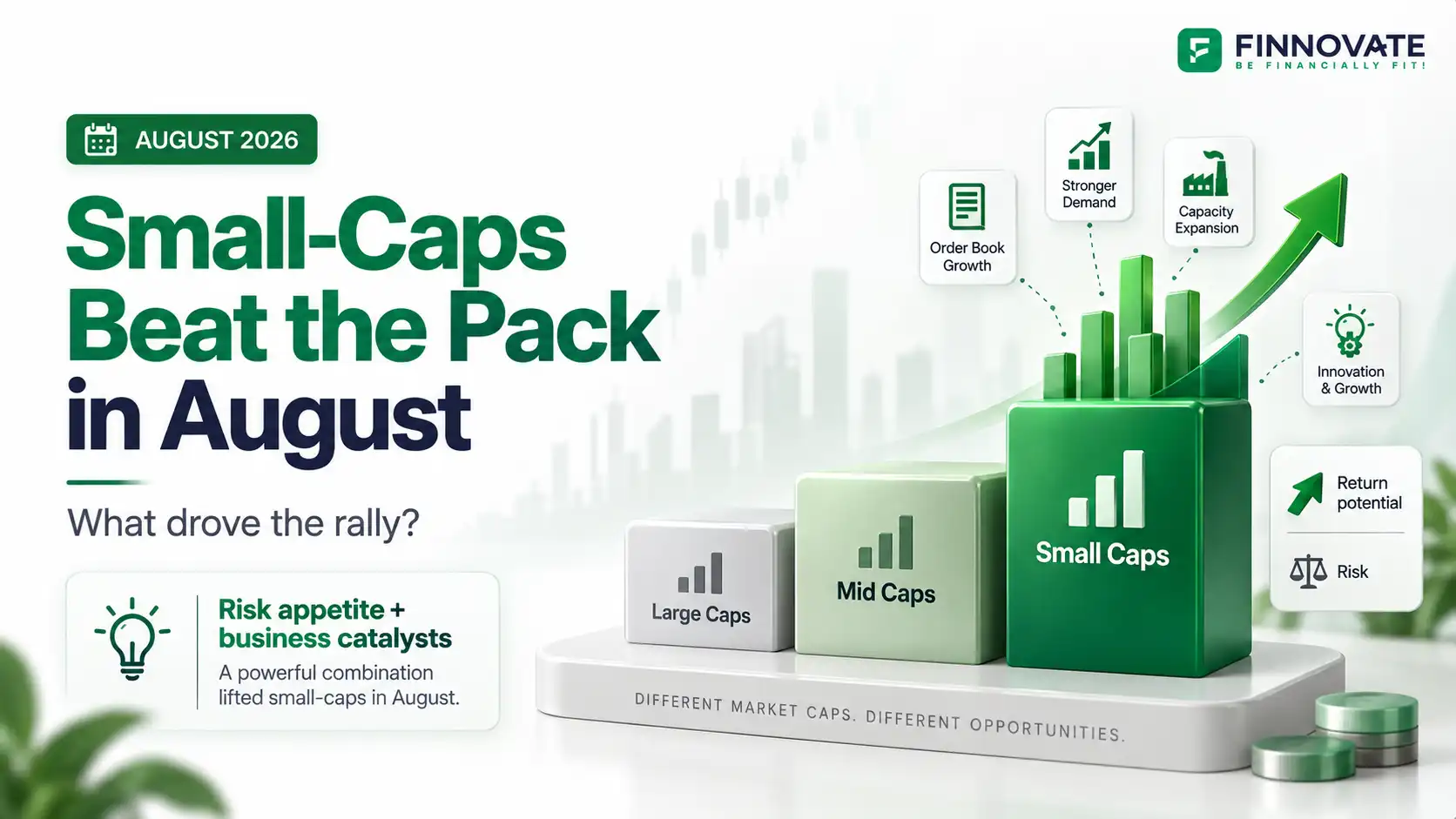
Nifty Smallcap 100 rose 3.16% in August 2026. See which small-cap stocks led, what drove t...
Popular now
Learn how to easily download your NSDL CAS Statement in PDF format with our step-by-step g...

Looking for the best financial freedom books? Here’s a handpicked 2026 reading list with...
Learn what SIF investment means in India, SEBI rules, Rs 10 lakh minimum investment, avail...
Clear guide to mutual fund taxation in India for FY 2025–26 after July 2024 changes: equ...