
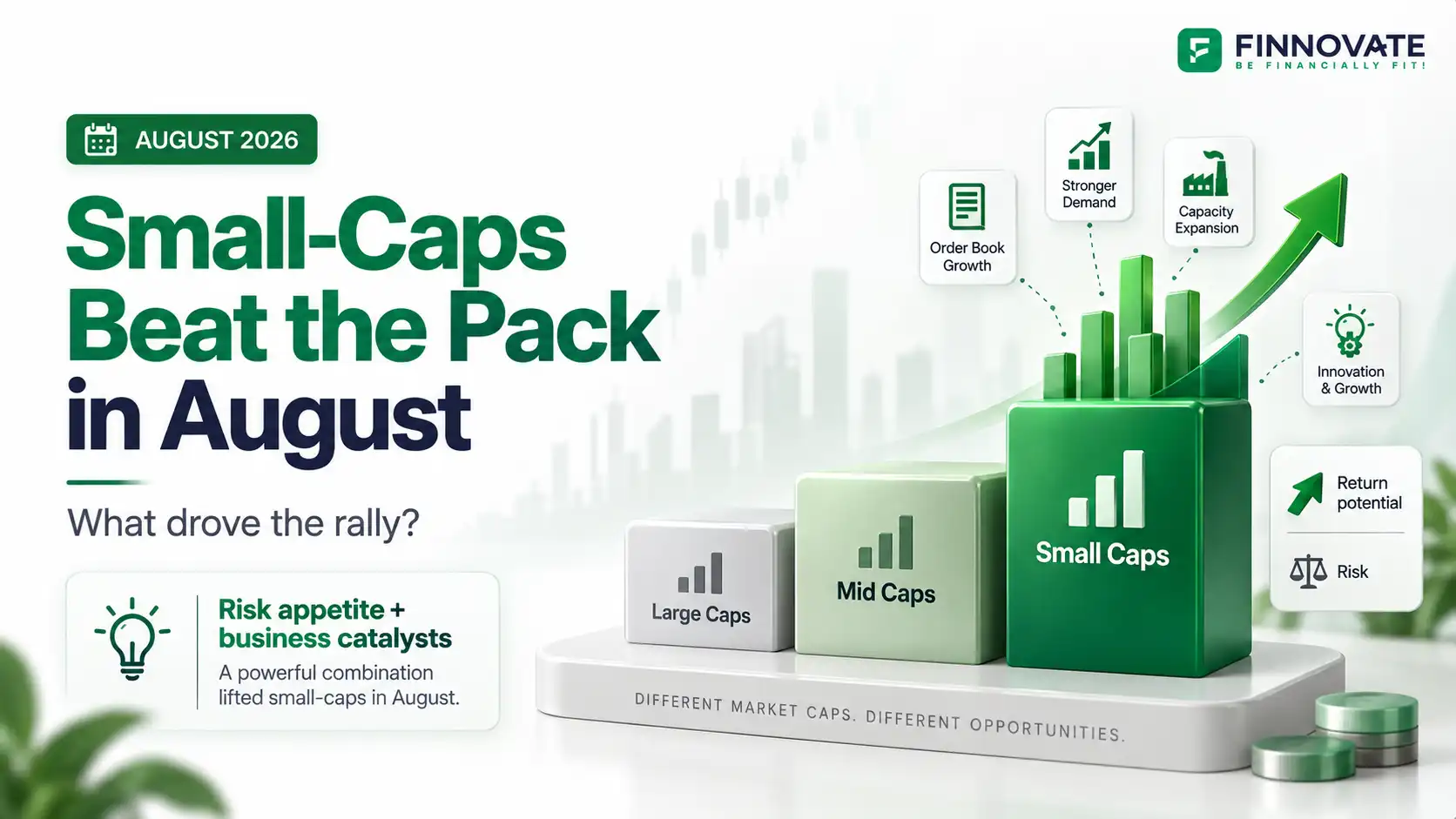
Top Small-Cap Stocks in August 2026: Why Small Caps Outperformed
Nifty Smallcap 100 rose 3.16% in August 2026. See which small-cap stocks led, what drove t...
08 September 2026
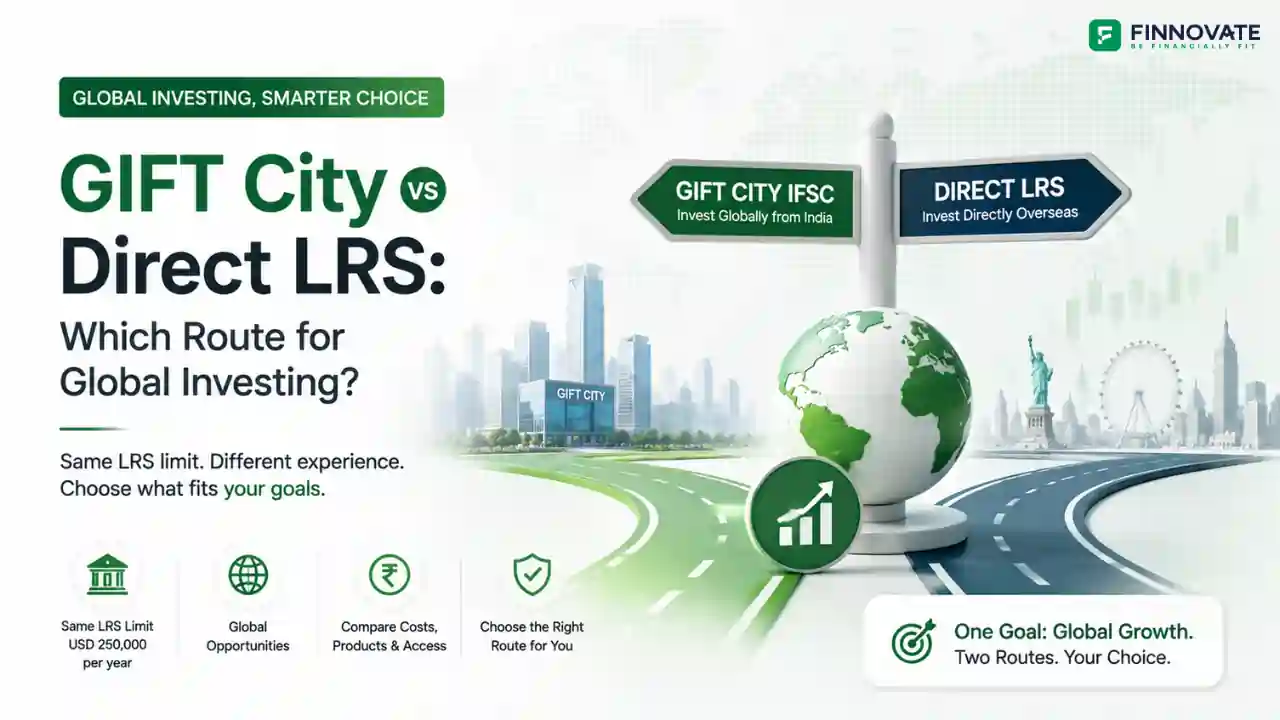
Quick Answer: Both GIFT City IFSC and direct overseas investing use LRS. The same USD 250,000 per year limit applies to both routes. The real differences are in product access, transaction costs, and compliance structure.
Most Indian investors assume LRS means one thing: remit money to a foreign broker, buy global stocks. Since 2023, a second path has emerged. You can now invest in global securities through GIFT City IFSC, India's international financial services centre in Gandhinagar, without moving funds to a foreign jurisdiction at all.
Both routes operate under LRS. Both consume your USD 250,000 annual limit. The question is which route suits your specific situation better, and why.
The RBI's Liberalised Remittance Scheme allows resident Indians to remit up to USD 250,000 per financial year for permitted purposes, including overseas investment. This limit is per individual, per PAN, across all banks and platforms combined.
This is the core decision matrix. Every dimension where the two routes differ is mapped below, with a verdict on which route has the advantage and why.
| Dimension | GIFT City IFSC | Direct Overseas via LRS | Verdict |
|---|---|---|---|
| LRS quota consumed | Yes. Counts toward USD 250,000/year | Yes. Counts toward USD 250,000/year | Identical. No advantage either way. |
| TCS above Rs 10 lakh | 20% under Section 206C(1G) | 20% under Section 206C(1G) | Identical. TCS is advance tax, recoverable at ITR. |
| Regulatory framework | IFSCA (statutory, Indian) | RBI / FEMA | GIFT City: onshore comfort. Direct: established global framework. |
| Account setup | Separate IFSC account with IFSC-registered broker | Foreign brokerage account or SEBI-registered overseas platform | GIFT City: familiar Indian brokers. Direct: may require foreign KYC. |
| Transaction costs | No STT or stamp duty on IFSC exchange trades (NSE IX, India INX) | Indian STT does not apply. Foreign brokerage commission, FX conversion spread (typically 0.5–1%), and custody charges apply instead. | Structures differ. GIFT City: no STT by exemption. Direct LRS: no STT by jurisdiction. Cost comparison depends on broker and trade size. |
| Product universe | IFSC-listed ETFs, UDRs, funds, AIFs. Growing but bounded. | Full global universe: stocks, bonds, REITs, options across all exchanges | Direct LRS advantage: significantly broader access. |
| Capital gains tax | US stocks treated as unlisted foreign securities. 24-month LTCG at 12.5%; STCG at slab. | US stocks treated as unlisted foreign securities. 24-month LTCG at 12.5%; STCG at slab. | Identical. Tax treatment does not change by route. |
| ITR reporting | Direct securities (UDRs, ETFs): Schedule FA applies. GIFT City retail fund units: reporting obligation depends on product structure. Verify with a tax adviser. | Schedule FA disclosure in ITR-2 or ITR-3 for direct foreign securities holdings. | Direct LRS: Schedule FA clearly required. GIFT City: applies to direct securities; fund structures may differ by product type. |
| SWIFT / cross-border transfer | Not required. Funds stay within India's regulatory perimeter. | Required. Outward wire to foreign broker or jurisdiction. | GIFT City advantage: simpler remittance process. |
| FCA utility (post July 2024) | GIFT City FCA can also remit to other foreign jurisdictions for permitted LRS purposes | Direct remittance only to designated foreign account | GIFT City advantage: one account, broader utility per RBI Circular RBI/2024-25/49. |
Transactions on IFSC exchanges (NSE IX, India INX) are exempt from Securities Transaction Tax, Commodity Transaction Tax, and stamp duty. Indian STT does not apply to direct LRS investing via a foreign broker either, since that transaction executes outside Indian exchanges. The relevant cost comparison is therefore GIFT City's IFSC exchange fees versus the foreign brokerage commissions, FX conversion spreads, and custody charges on the direct route. For investors using Indian IFSC brokers with competitive pricing, this can work in GIFT City's favour.
Funds stay within India's regulatory perimeter. No SWIFT transfer, no foreign account opening, no cross-border settlement complexity. IFSC accounts are opened with familiar Indian brokers including Zerodha IFSC, HDFC Securities IFSC, Kotak Securities IFSC, and ICICI Securities IFSC.
GIFT City now hosts outbound retail mutual funds investing in global equities, including S&P 500 and Nasdaq 100 structures launched by established fund houses. Some AIFs and structured products available here are not accessible through a standard foreign broker account.
Per RBI Circular No. 15 dated July 10, 2024, a Foreign Currency Account (FCA) opened in GIFT City can now also be used to remit to other foreign jurisdictions for all permitted LRS purposes, not just IFSC investments. This gives the GIFT City account additional utility beyond IFSC securities alone.
A foreign brokerage account gives access to the full global market: US-listed stocks, global REITs, international bonds, options, and instruments not yet listed on IFSC exchanges. If a target security is not available on NSE IX or India INX, the direct route is the only option.
Investors who already have accounts with established foreign brokers benefit from existing custody arrangements, research access, and multi-currency portfolio management in one place, without the need to open a separate IFSC account.
Some international fund managers and specialised strategies accept direct investment from Indian residents but do not have IFSC-registered vehicles. The direct route remains the only path to these structures.
Both routes are subject to the same Indian resident tax framework on global income.
For US stocks accessed through either route, gains are treated as unlisted foreign securities for Indian tax purposes. A 24-month holding period determines whether gains are long-term or short-term. Long-term capital gains (LTCG) are taxed at 12.5%. Short-term capital gains (STCG) are taxed at the investor's applicable income tax slab rate.
Dividend income from US stocks is taxable as Income from Other Sources at slab rates. US withholding tax already deducted is available as a Foreign Tax Credit to avoid double taxation in India.
Both routes require Schedule FA disclosure in ITR-2 or ITR-3 for foreign asset reporting. The STT and stamp duty exemption in GIFT City reduces transaction costs at execution. It does not affect the capital gains tax computation at redemption.
Anand, a 42-year-old software professional in Pune, wants to invest Rs 15 lakh into a US equity index fund this financial year. He has not made any prior LRS remittances this year.
| Step | GIFT City IFSC Route | Direct LRS Route |
|---|---|---|
| Account setup | Open IFSC account with existing broker's GIFT City entity | Open account with foreign broker or SEBI-registered overseas platform |
| Remittance | Rs 15 lakh via LRS to IFSC account | Rs 15 lakh via LRS to foreign broker |
| TCS triggered | 20% on Rs 5 lakh above threshold = Rs 1 lakh blocked as advance tax | 20% on Rs 5 lakh above threshold = Rs 1 lakh blocked as advance tax |
| Product access | S&P 500 or Nasdaq 100 fund listed at GIFT City | Direct US ETF or stock of choice on foreign exchange |
| Transaction costs | No STT or stamp duty on IFSC exchange trades | Foreign brokerage commission, FX spread, and custody charges apply. No Indian STT. |
| ITR compliance | Schedule FA disclosure required | Schedule FA disclosure required |
| TCS recovery | Adjusted against final tax liability at ITR filing | Adjusted against final tax liability at ITR filing |
The TCS cash outflow is identical in this example. The difference is product access and transaction cost structure.
If Anand only wants a Nasdaq 100 fund and prefers using his existing Indian broker, GIFT City is the cleaner fit. If he wanted direct Tesla or Nvidia exposure, US REITs, and foreign bonds together, the direct LRS route would give him access that GIFT City cannot yet match.
GIFT City IFSC and the direct LRS route are not competing alternatives in the way many comparisons suggest. Both trigger the same TCS above Rs 10 lakh. The decision comes down to three factors: what you want to invest in, how much compliance complexity you are prepared to manage, and which cost structure suits your transaction frequency.
For investors who want simplicity, familiar Indian brokers, and a curated product universe, GIFT City is the more practical fit. For those who need maximum investment choice across global markets, direct overseas investing remains the broader option. A fee-only adviser can map these specifics to your portfolio before you commit capital to either route.
Not sure where Global Investing fits in your plan? A 20-minute Financial Fitness assessment will tell you.
Book a Discovery CallYes. Remittances to GIFT City IFSC for investment are counted within the USD 250,000 per financial year LRS limit, the same as any direct overseas remittance. There is no separate or additional LRS limit for GIFT City investments.
No. Both routes attract 20% TCS on remittances exceeding Rs 10 lakh per financial year under Section 206C(1G) of the Income Tax Act. TCS is advance tax and is fully adjustable against your final income tax liability when filing your ITR.
Yes. IFSC exchanges list Unsponsored Depository Receipts (UDRs) for US companies, priced and settled in USD. Several outbound mutual funds and ETFs tracking S&P 500 and Nasdaq 100 are also available through GIFT City fund houses. The product universe is growing but remains smaller than a full-service foreign brokerage account. Please consult a SEBI-registered investment adviser before investing.
There is no single answer that applies across situations. GIFT City tends to offer simpler account setup with familiar Indian brokers for investors starting out. The direct route may suit those who need specific securities not yet available on IFSC exchanges. Factors like existing LRS usage, investment amount, and ITR filing complexity are all relevant. Please consult a SEBI-registered investment adviser for guidance specific to your situation.
For direct overseas investments via LRS, Schedule FA disclosure in ITR-2 or ITR-3 is required for all foreign securities holdings. For GIFT City investments, direct securities such as UDRs and ETFs on IFSC exchanges also attract Schedule FA. However, GIFT City retail fund units may be treated differently depending on product structure. Some fund structures are classified as Indian fund investments rather than direct foreign asset holdings, in which case Schedule FA may not apply. The reporting obligation for a specific GIFT City product is worth confirming with a qualified tax adviser before filing.
Disclaimer: This article is for general information and educational purposes only. It does not constitute investment advice, a recommendation, or an offer to buy or sell any securities or financial instruments. Information on LRS rules, TCS rates, GIFT City regulations, and IFSCA products is based on publicly available sources and regulatory circulars as of June 2026 and is subject to revision. Past market behaviour is not indicative of future outcomes. Please consult a SEBI-registered investment adviser or qualified financial professional before making any investment decision. International investments are subject to market risks, currency risk, and regulatory change.
No spam. Only new posts, simple explainers, and practical money checklists for busy professionals.
Finnovate is a SEBI-registered financial planning firm that helps professionals bring structure and purpose to their money. Over 3,500+ families have trusted our disciplined process to plan their goals - safely, surely, and swiftly.
Our team constantly tracks market trends, policy changes, and investment opportunities like the ones featured in this Weekly Capsule - to help you make informed, confident financial decisions.
Learn more about our approach and how we work with you:
No comments yet. Start the conversation. What would you add?
No spam. Only new posts, simple explainers, and practical money checklists.
You may also like
Nifty Smallcap 100 rose 3.16% in August 2026. See which small-cap stocks led, what drove t...
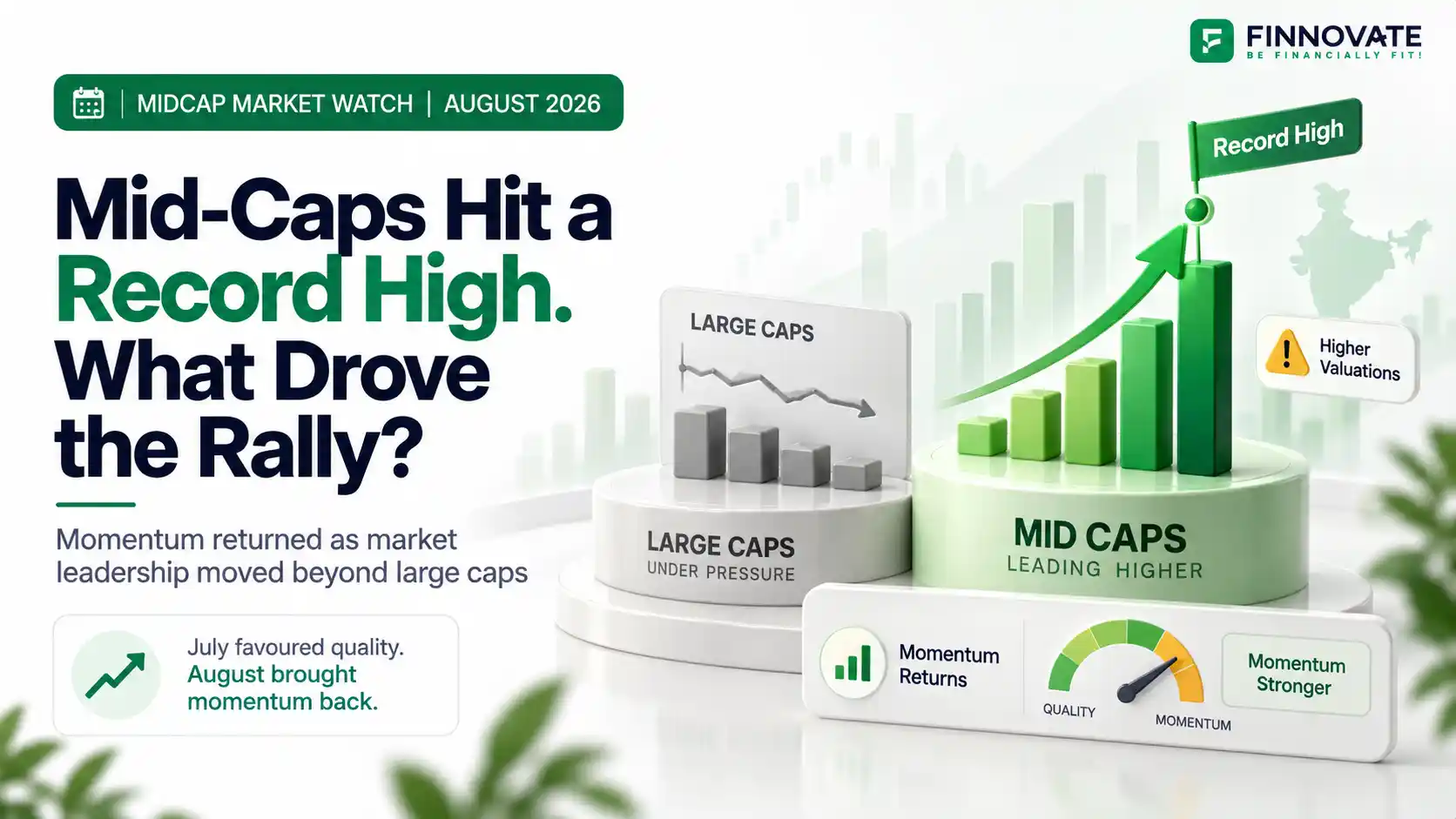
Nifty Midcap 100 rose 2.15% in August 2026. See which mid-cap stocks led the rally, key se...
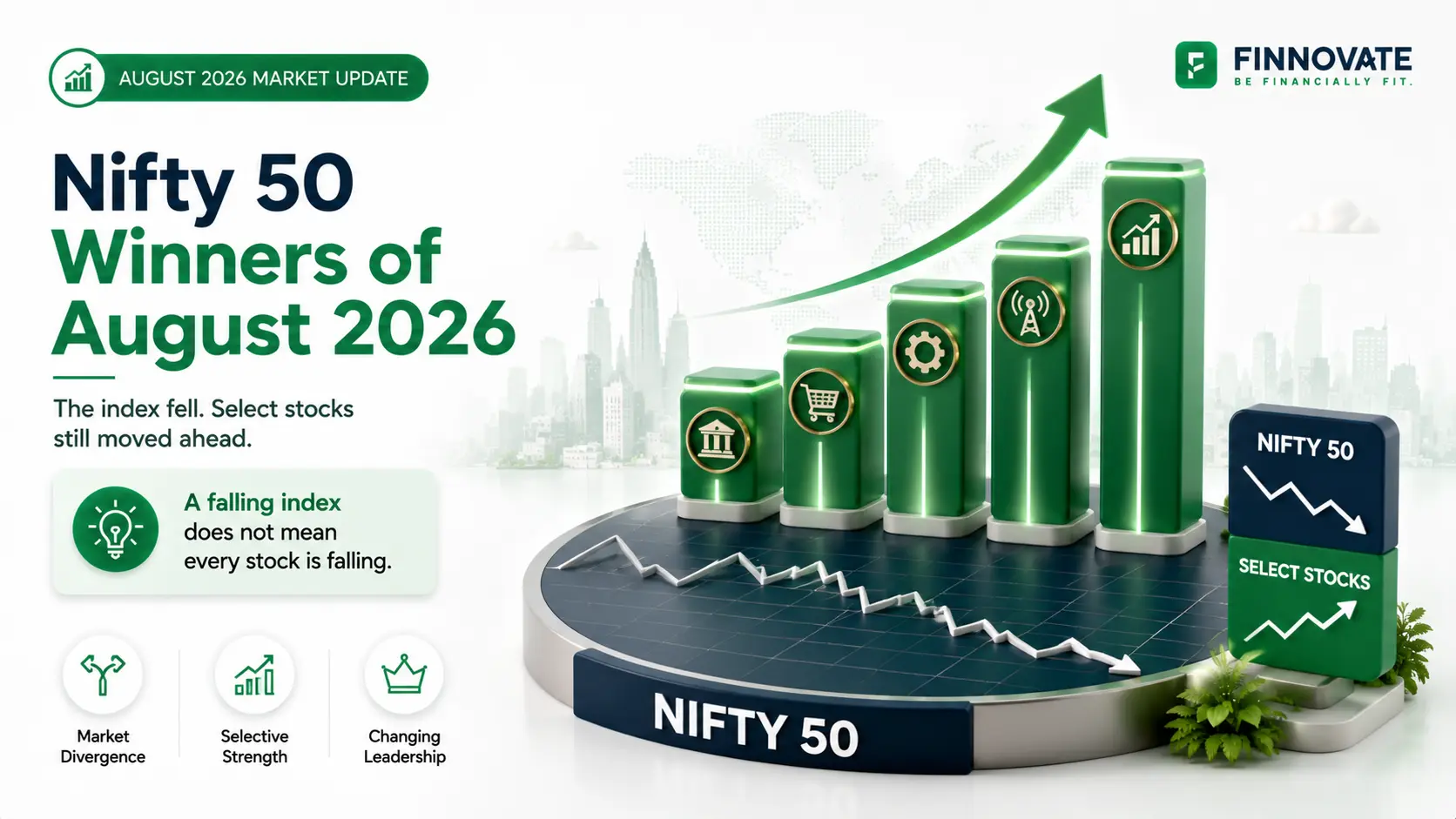
See the best-performing Nifty 50 stocks in August 2026, which sectors led the market, and ...
Nifty Midcap 100 gained 1.81% in July 2026 and moved near its yearly high. See the top mid...
Popular now
Learn how to easily download your NSDL CAS Statement in PDF format with our step-by-step g...

Looking for the best financial freedom books? Here’s a handpicked 2026 reading list with...
Learn what SIF investment means in India, SEBI rules, Rs 10 lakh minimum investment, avail...
Clear guide to mutual fund taxation in India for FY 2025–26 after July 2024 changes: equ...