12 Things to Check Before Buying Health Insurance in India

Finnovate’s editorial team researches and creates financial content using trusted sources, regulatory references and inputs from subject experts.
Health insurance policies can look similar when you compare only the sum insured and premium. The bigger differences often sit in room-rent limits, co-payments, waiting periods, sub-limits, exclusions and restoration conditions.
So before choosing a policy, check what can affect how much cover you can actually use during a claim, where you can use it and what you may still have to pay yourself.
Here are 12 things worth checking.
1. Is the Sum Insured Adequate for Your Needs?
A ₹5 lakh or ₹10 lakh policy can look substantial until you compare it with the hospitals and treatments you may actually use.
The amount of cover you need can depend on your city, the hospitals you are likely to choose, the number and ages of people covered, existing health conditions and whether you already have employer-provided insurance.
Employer cover can help, but it may reduce or disappear when you change jobs.
You can also compare a higher base cover with a base policy plus a super top-up. Many super top-ups use an aggregate deductible across eligible expenses during the policy year, but check the deductible definition in the actual product.
2. Is an Individual Policy or Family Floater More Suitable?
The main difference is how the sum insured is shared.
Each insured person has a separate sum insured. One person's claim generally does not reduce another person's original cover.
Multiple insured members share one pool. A large claim by one person can reduce what remains for the rest of the family during that policy year.
Suppose four family members share a ₹10 lakh floater.
If one member makes a ₹7 lakh claim, ₹3 lakh of the original sum insured remains for the family, before considering any applicable restoration benefit.
Parents are also worth evaluating separately rather than adding them automatically to the same floater, particularly where ages and medical needs differ materially.
3. How Does the Restoration Benefit Actually Work?
A policy may advertise a 100% restoration benefit, but the percentage alone does not tell you when the restored cover can actually be used.
Check:
- Does restoration activate after partial use or only after the original cover is exhausted?
- Can the restored amount be used by the same person?
- Can it be used for the same illness?
- Can it be used for the same claim, or only a subsequent claim?
- How many times can restoration occur during the policy year?
- Does unused restored cover carry forward?
No-Claim Bonus conditions deserve the same attention.
Depending on the product, an NCB may increase the sum insured, reduce the renewal premium, or provide a choice between available forms.
4. Does the Policy Restrict Room Rent or ICU Charges?
Some policies allow any eligible room category. Others specify a room category or set a daily room-rent limit.
Suppose your policy permits a room costing ₹5,000 per day, but you choose one costing ₹10,000.
Depending on the current policy wording, the insurer may apply a proportionate deduction to certain associated expenses.
The effect should be checked in the actual policy clause rather than assumed from a general rule.
5. Does the Policy Have a Co-Payment or Deductible?
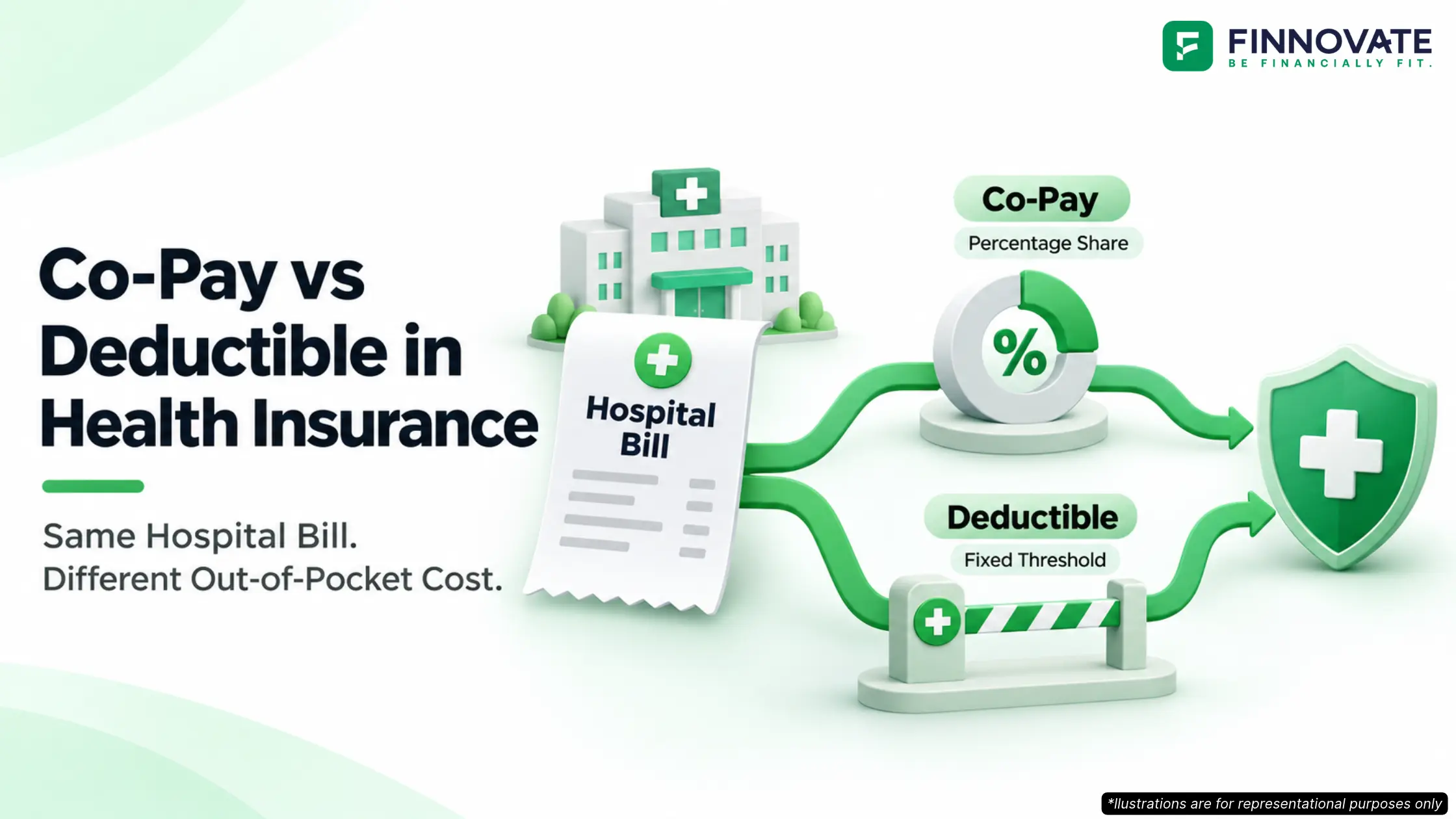
Both can increase what you pay during a claim, but they work differently.
You bear a stated percentage of the admissible claim. If the admissible amount is ₹2 lakh and the co-payment is 20%, your share is ₹40,000.
A deductible is the specified amount or threshold that must be crossed before the insurer's liability begins under that benefit.
A deductible can operate per claim or on an aggregate basis during the policy year, depending on the product.
A lower premium is not necessarily cheaper if part of the saving comes from a cost-sharing clause that you may repeatedly pay during claims.
6. Are There Disease-Wise or Procedure-Wise Sub-Limits?
A ₹10 lakh policy does not mean every covered treatment can use ₹10 lakh.
Suppose the policy has a ₹1 lakh sub-limit for a particular procedure.
If the eligible treatment costs ₹1.5 lakh, the insurer's payout may still be capped at ₹1 lakh under that clause.
Sub-limits may apply to specific procedures, diseases, benefits or expense categories.
7. What Waiting Periods Apply?
Coverage does not always begin for every illness on the first day of the policy.
Initial waiting period
Many health policies apply an initial waiting period for illness-related claims, commonly 30 days. Accidental hospitalisation is generally treated differently, but the exact duration and exceptions depend on the product.
Pre-existing diseases
Under the current IRDAI framework, a waiting period for a disclosed pre-existing disease can be up to 36 months of continuous coverage.
A pre-existing disease generally includes a condition diagnosed, or for which medical advice or treatment was recommended or received, during the 36 months before the policy begins.
Specified diseases or procedures
Certain illnesses or procedures may have a separate waiting period. Under the current framework, this can also extend up to 36 months.
The example shows why asking only for the “waiting period” can be misleading. A single policy can have different waiting periods for different types of claims.
8. What Does the Policy Exclude?
Waiting period and exclusion are not the same thing.
A waiting period may end after the stated period is completed.
An excluded treatment or condition may remain outside the policy's cover, depending on the wording.
Look particularly at exclusions relevant to your medical history, likely treatment needs, non-medical expenses and specific procedures or circumstances.
Brochures focus heavily on what a policy offers. The exclusions section tells you where that cover stops.
9. What Treatments and Medical Expenses Are Actually Covered?
Hospitalisation may be the core benefit, but policies can differ materially in what else they cover and how those benefits are structured.
- Inpatient hospitalisation
- Day-care procedures
- Eligible pre- and post-hospitalisation expenses
- Home or domiciliary treatment
- Ambulance and air ambulance
- Organ donor expenses
- AYUSH treatment
- OPD
- Maternity and newborn cover
- Consumables or non-medical items
Not every policy includes all of these benefits as standard. Some may be optional, capped, subject to waiting periods or available only through add-ons.
The useful question is not how many benefits appear in the brochure. It is whether the benefits relevant to your household are included in the base policy, optional, capped or subject to separate conditions.
10. Have You Disclosed Your Medical History Properly?
The insurer uses the proposal form to assess the applicant before accepting the risk.
Answer every proposal-form question completely and accurately.
Where asked, this can include information about:
- existing medical conditions and diagnoses;
- medication and ongoing treatment;
- previous surgeries or hospitalisations;
- tests and investigations in progress;
- previous medical advice or treatment.
Do not leave out a condition because it seems minor or is currently under control.
A pre-existing condition does not automatically mean the insurer will reject the proposal. Depending on the product and underwriting, the insurer may accept it with applicable terms or decline it.
If you are unsure how to answer a question, ask the insurer and keep the response in writing.
11. Are the Hospitals and Claim Process Practical for You?
A large network-hospital count is useful only if it includes hospitals you would actually choose.
Identify two or three hospitals you would realistically use and check:
- whether they are currently in the insurer's network;
- whether cashless treatment is available;
- whether your preferred doctors practise there;
- whether the insurer provides practical claim support and tracking.
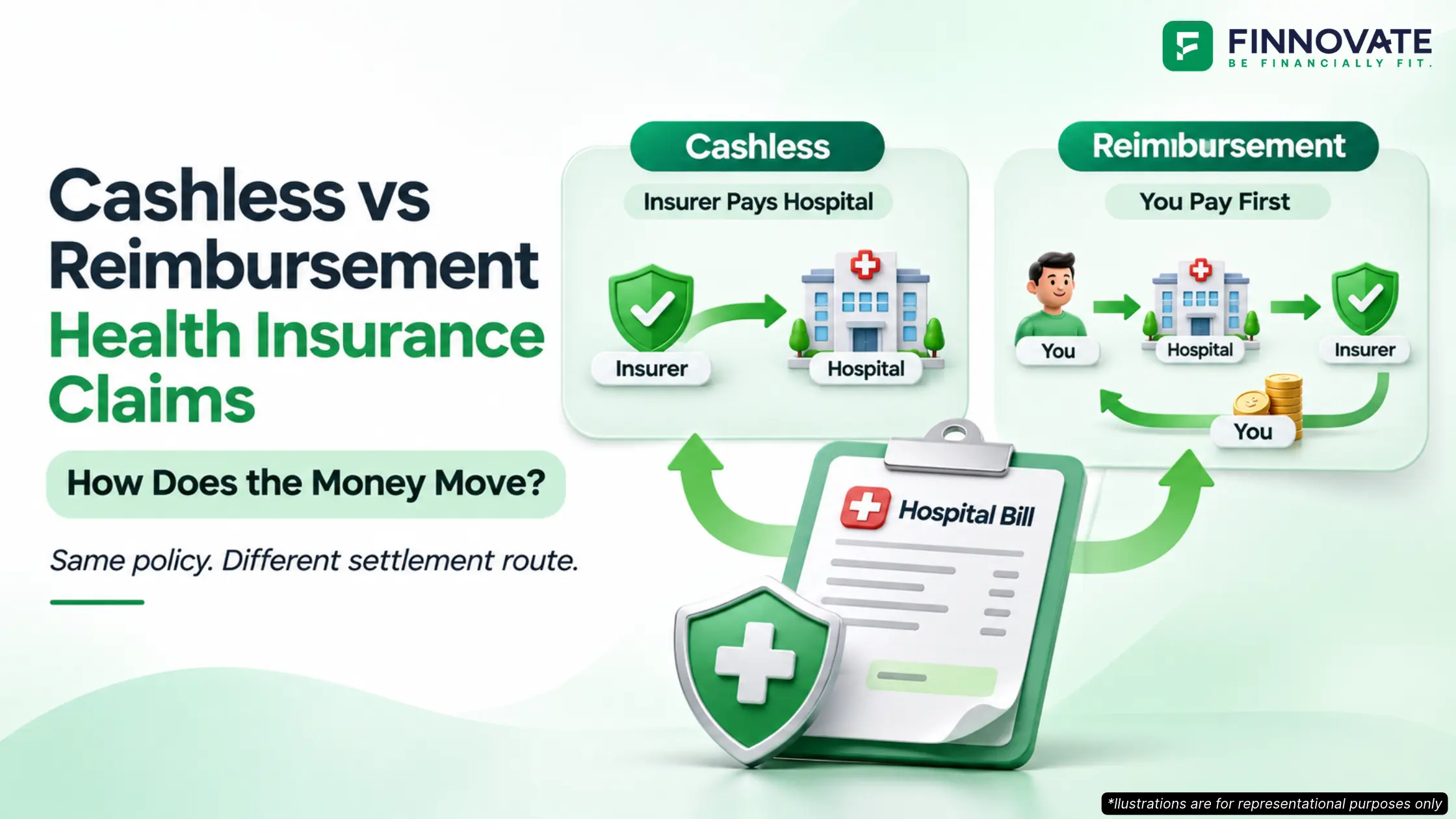
Cashless Everywhere can provide another route to request cashless treatment at eligible non-network hospitals, subject to insurer procedures, hospital coordination and the underlying policy conditions.
Hospital networks can also change.
Ask, “Are the hospitals I am likely to use available for cashless treatment?”
Also Check the Insurer's Service Record
Do not shortlist an insurer using one headline claims percentage alone.
If an insurer or comparison website displays a claim-settlement percentage, check how it is calculated. Is it based on the number of claims, the amount paid or another measure?
Incurred Claims Ratio, or ICR, is different. It compares claims incurred with premiums earned. It is not the percentage of claims approved.
Look at claims paid, rejected and pending, grievance trends, claim-support channels and more than one year of data.
12. Can You Afford to Keep the Policy for Years?
Health insurance should not be evaluated only on the first-year premium.
Premiums may change because of age bands, product-level pricing revisions, changes in family composition, a higher sum insured or additional benefits.
Also check whether a lower premium is being achieved through a co-payment, deductible or another restriction.
The better question is not only:
“Which policy is cheaper today?”
It is:
“Can I continue paying for this cover as my family gets older?”
- Grace period: The current framework provides 15 days for monthly premium payments and 30 days for quarterly, half-yearly or annual payment frequencies.
- Renewal: Renewal cannot be refused merely because claims were made in previous policy years, subject to applicable regulatory exceptions.
- Individual claim experience: For individual products, renewal premium loading should not be based on that policyholder's individual claim experience.
- Portability: Eligible continuity credits can move when you switch to another insurer.
- Migration: Migration generally refers to moving to another health insurance product with the same insurer.
- Moratorium: After 60 continuous months of coverage, including eligible portability or migration credits, the policy or claim generally cannot be contested on grounds of non-disclosure or misrepresentation, except established fraud. An increase in sum insured has a separate 60-month period for the enhanced portion.
The moratorium does not turn excluded expenses into covered expenses. Policy benefits, limits and exclusions continue to apply.
Which Health Insurance Documents Should You Actually Read?
Different policy documents answer different questions.
Use the CIS for a shorter summary of coverage, sum insured, exclusions, sub-limits, co-pay, deductibles, waiting periods, renewal and claims information.
Use it for exact definitions, exclusions, restoration conditions, room-rent-linked deductions, claim conditions and detailed restrictions.
Use these for the premium, payment frequency, available add-ons and options selected before purchase.
This records the health and other information you disclosed when applying. Keep a copy of the completed form.
Where the CIS is available before purchase, it can help compare shortlisted policies. Once the policy is issued, the insurer is required to provide the CIS with the policy document.
Check the Product UIN and Policy Version Too
Insurers can revise products over time, so the product name alone may not always tell you which policy wording applies to your cover.
A practical example is HDFC ERGO's policy-wordings page, which asks policyholders to match the product name and UIN shown on the policy schedule or certificate of insurance with the correct policy wording. It also asks them to check the applicable policy-period start date.
When an insurer has old, revised and current versions of the same product family, this can prevent you from reading terms that do not apply to your policy.
What Should You Check After the Policy Is Issued?
Buying the policy is not the final step.
Once the documents arrive, confirm that they match what you selected and disclosed.
- Names and details of all insured members
- Sum insured and policy type
- Co-payment and deductible
- Room eligibility and applicable limits
- Selected add-ons or optional benefits
- Disclosed medical conditions
- Special terms or endorsements
- Policy schedule
- Customer Information Sheet
- Full policy wording
If something does not match, contact the insurer promptly and request a written correction or endorsement.
Check the revised document rather than relying only on a phone conversation.
You Also Have a Free-Look Period
For a new individual health insurance policy with a term of at least one year, the current regulatory framework provides a 30-day free-look period from the date you receive the policy document, electronically or physically.
If you disagree with the terms and have not made a claim, you can request cancellation during this period.
Permitted deductions can include proportionate risk premium for the period of cover, medical examination expenses where applicable and stamp duty.
Final Takeaway
Two health insurance policies with the same sum insured can behave very differently when a claim happens.
Room-rent limits, co-payment, deductibles, treatment sub-limits, waiting periods, restoration rules and exclusions can matter as much as the headline cover.
Start with the cover your household needs. Then check what can reduce a claim, what may have to wait, where the policy can be used and whether it will remain practical to hold over the years.
Use the CIS for the summary where available. Use the full policy wording for the exact clause. Keep a copy of the proposal form, and after issuance, check the policy schedule and endorsements carefully.
The goal is not to find the policy with the longest feature list.
It is to know what you are paying for and how the policy is likely to respond when you actually need treatment.
FAQs
1. Is a Higher Health Insurance Sum Insured Always Better?
A higher sum insured gives you a larger pool of cover, but usable protection also depends on room-rent restrictions, co-payments, deductibles, treatment sub-limits, exclusions and waiting periods. Compare these conditions along with the sum insured.
2. Should Parents Be Included in a Family Floater?
Compare their ages, medical needs, premium and the effect of sharing the sum insured with the rest of the family. A separate policy gives parents an independent sum insured, while a floater uses a shared pool.
3. Can Waiting-Period Credit Transfer When I Switch Insurers?
Eligible continuity credits can generally transfer through portability, subject to applicable rules and the amount of cover being ported. Additional cover above the transferred amount may have separate waiting-period treatment.
4. Can My Health Insurance Premium Increase at Renewal?
Yes. Premiums can change because of age bands, product-level revisions, changes in cover or other applicable factors. For individual products, renewal premium loading should not be based on that policyholder's individual claim experience.
5. Can an Insurer Refuse Renewal Because I Made a Claim?
Renewal cannot be refused merely because claims were made in previous policy years, subject to the applicable regulatory exceptions and product status.
6. What Should I Do if the Issued Policy Differs From What I Selected?
Contact the insurer promptly and request a written correction or endorsement. Check the revised policy schedule and other documents. For eligible new individual health policies, the 30-day free-look period also gives you time to review the issued terms.
- IRDAI (Insurance Products) Regulations, 2024
- IRDAI (Protection of Policyholders' Interests, Operations and Allied Matters of Insurers) Regulations, 2024
- IRDAI Master Circular on Health Insurance Business, 29 May 2024
- Ministry of Finance: Key Regulatory Reforms in Health Insurance
- Care Health Insurance: Care Supreme product details - used only for the product-specific waiting-period example.
- HDFC ERGO Health Policy Wordings - used for the practical UIN and policy-version example.