Why Are Gold Prices Falling in November 2026?

Finnovate’s editorial team researches and creates financial content using trusted sources, regulatory references and inputs from subject experts.
Gold has become cheaper, but the news driving the fall looks like the kind that should support it.
Inflation remains a concern. Interest-rate uncertainty persists. Investors are still dealing with geopolitical risks. Yet gold has come under fresh selling pressure.
In India, the IBJA benchmark for gold of 999 purity fell from ₹1,41,452 per 10 grams on November 6 to ₹1,35,809 on November 13. That is a decline of ₹5,643, or about 4% in a week, excluding GST and making charges.
Internationally, spot gold traded around $3,879.71 an ounce at 2:05 p.m. ET on November 13, with its weekly decline at roughly 4.5%.
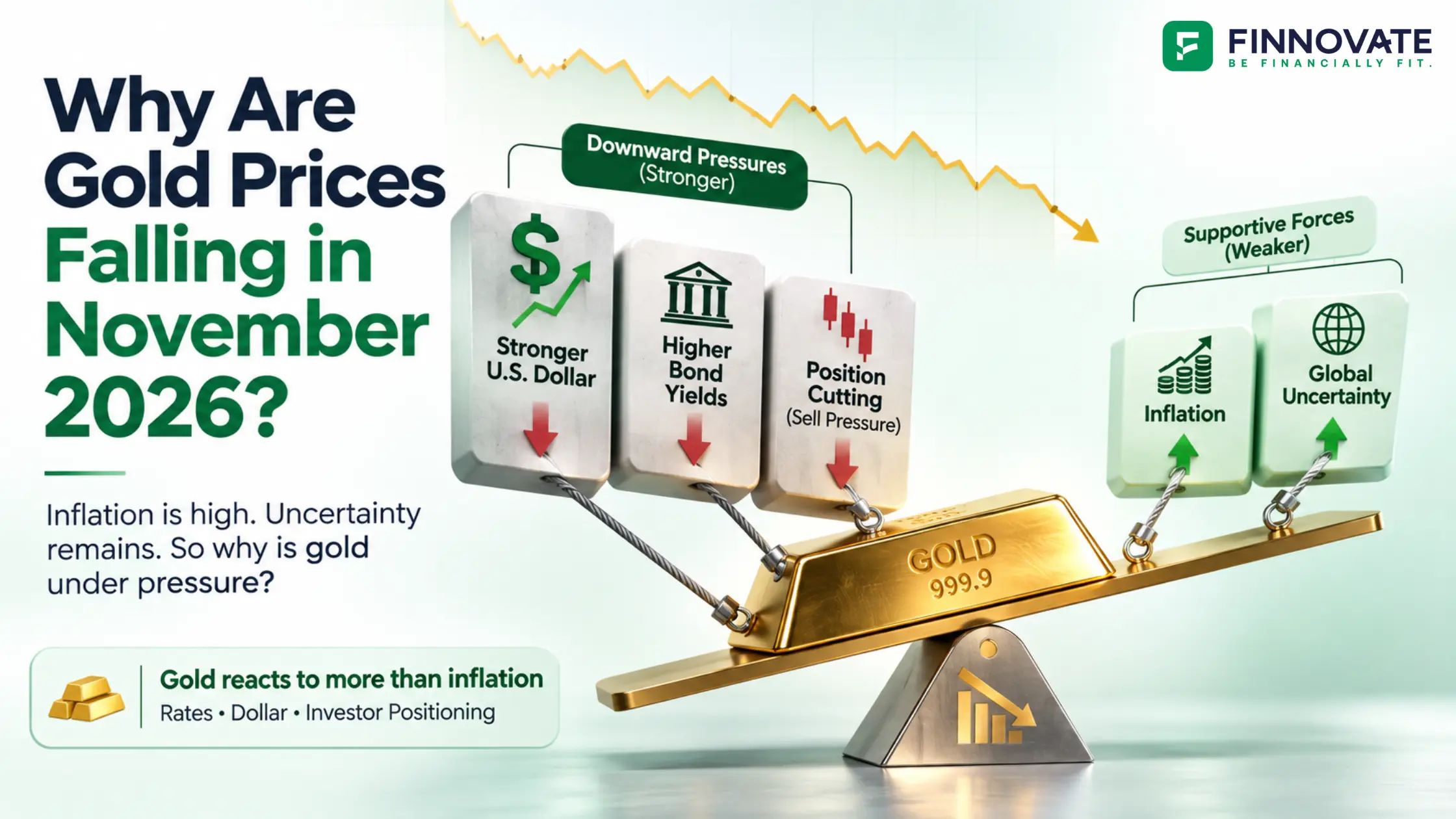
The pressure comes from several connected forces. Persistent US inflation has strengthened expectations of tighter monetary policy. That changes the appeal of interest-paying investments and supports the dollar. Meanwhile, traders reducing their positions have added another source of selling.
Gold is responding to what inflation could make central banks do next, as well as to inflation itself.
Higher Inflation Has Changed the Interest-Rate Calculation
The latest US inflation release gave markets another reason to watch the Federal Reserve closely.
Consumer prices rose 0.4% month on month in October. Prices excluding food and energy increased 0.3%. Energy costs rose 0.7%, following a much sharper increase in September.
For gold, the effect of such a release runs through expectations.
When inflation stays stubborn, investors may expect the Fed to keep borrowing costs high or raise them further. Financial markets can respond immediately, well before a policy meeting takes place.
Bond prices adjust. Yields change. Currencies move. Gold is repriced alongside them.
November’s selling has reflected expectations of further Fed tightening, with markets weighing a possible December increase. Those expectations remain sensitive to each new economic release.
That helps explain a seemingly odd outcome: inflation concerns can put pressure on an asset widely held as protection against inflation.
Over shorter periods, the expected policy response can outweigh the demand for protection.
 Gold Explained
How inflation can push gold lower
The pressure builds through interest-rate expectations, bond yields and the US dollar.
Interest-paying assets become more attractive. Holding gold means giving up more potential income.
At an unchanged dollar price, gold becomes more expensive for buyers using other currencies.
Gold faces stronger competition for investors’ money.
Higher Bond Yields Raise the Cost of Holding Gold
Gold pays no interest. A holder depends on its resale price for a return before costs.
A government bond offers a stream of payments. When the yield available on that bond rises, an investor has a stronger income-paying alternative.
Consider an investor choosing where to hold money for the next year. If bonds offer a higher yield than before, holding gold involves giving up more potential income. Gold may still appeal for diversification or protection against financial stress, but its relative attraction has changed.
This is often described as gold’s “opportunity cost”. In plain English, it is the income an investor passes up by choosing gold.
Inflation expectations also belong in this calculation. Investors care about how much purchasing power remains after inflation. A rise in bond yields that outpaces expected inflation can make those bonds more attractive relative to gold.
The relationship varies over time. Gold can rise alongside yields when demand for protection is strong enough. During the latest sell-off, however, tighter-policy expectations have been an important source of pressure.
A Stronger Dollar Adds to the Pressure
Gold’s international price is quoted in US dollars.
When the dollar strengthens against other currencies, the same dollar price of gold costs more in those currencies. Buyers may reduce purchases, wait for better prices or demand a lower dollar price.
The dollar reached a 19-month high on November 12, adding to the pressure on bullion.
Interest rates and the dollar often reinforce each other. Expectations of higher US rates can make dollar assets more attractive, supporting the currency while raising the income available from alternatives to gold.
Gold then faces two pressures at once: stronger competition from interest-paying assets and a higher currency-adjusted cost for some buyers.
These forces are connected, which is why the latest fall is better understood as a chain of events than as a list of unrelated reasons.
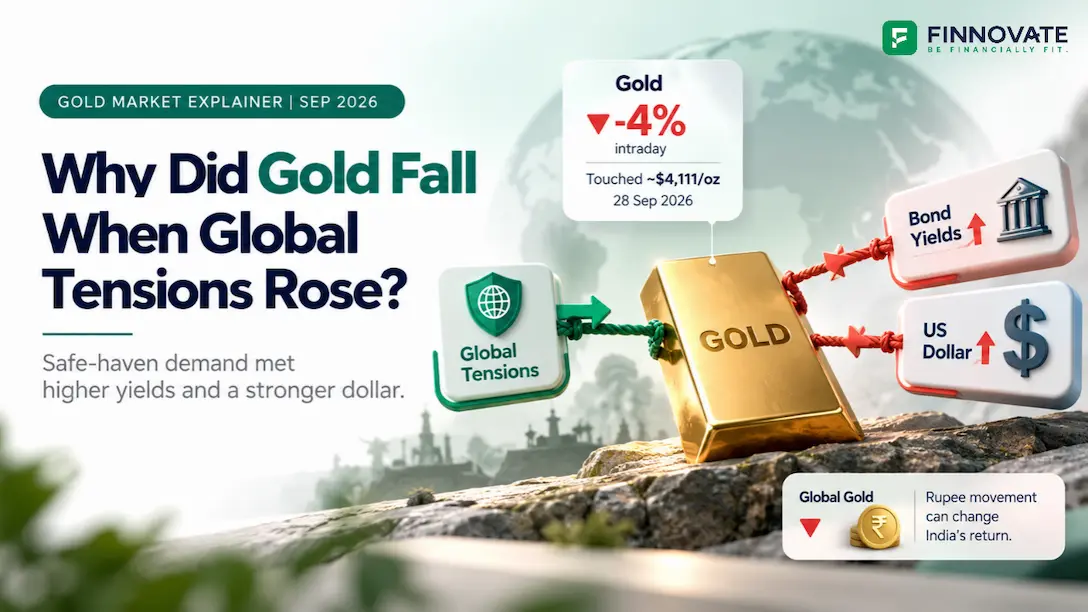
Why Global Tensions Have Not Stopped the Fall
Geopolitical risk can encourage investors to hold gold. But a conflict can also affect energy prices, inflation and interest rates.
If disruption pushes oil prices higher, it raises costs across transport, manufacturing and other activities. Markets may then expect inflation to remain elevated and central banks to keep policy tight.
During the November 12 sell-off, rising oil prices and fading hopes for a Middle East settlement contributed to those concerns.
The same event can therefore create competing effects.
Demand for protection may support gold. Expectations of higher rates and a stronger dollar may pull it lower. The price reflects the balance between those forces at that moment.
That is why a tense global backdrop alone cannot explain the direction of gold prices.
The Broader Correction Also Involves Traders Cutting Positions
The decline began before the latest inflation release.
Gold fell 6.3% in dollar terms during October. Reduced speculative positions, changing rate expectations and shifts between assets likely contributed. Yields also fell during October, so rising yields alone cannot explain that month’s gold decline.
Trading positions can amplify a price move.
Some investors take exposure through futures, where they commit only part of the contract’s value upfront. If prices move against them, they may need to supply more cash or reduce their positions. Others sell because their risk limits have been reached.
Such decisions can create selling even when the investor’s longer-term view of gold has changed little.
There is also a broader cash-management issue. When other investments fall, investors may sell liquid assets to meet obligations or reduce overall exposure.
Gold’s ease of sale can make it a source of cash during stressful markets. That can put short-term pressure on an asset held partly for protection.
But Gold ETF Buyers Have Not Disappeared
The demand picture is more mixed than the falling price suggests.
Global physically backed gold ETFs attracted $2.7 billion in October, while their holdings increased by 19 tonnes. European and Asian funds recorded inflows, while North America saw modest outflows.
So gold prices fell during a month when these funds collectively added metal.
ETF demand is one part of a much larger market. Futures trading, physical purchases, institutional transactions and other activity also influence prices.
Steady buying by one group can be outweighed by selling elsewhere. Buyers may also continue accumulating while being willing to pay less.
Gold is facing enough selling pressure to fall despite continued demand from some investors.
Slower inflows into Indian gold ETFs belong in this context. A smaller positive inflow still represents net investment, and does not by itself establish the cause of a global price decline.
Why Gold Falls Differently in India
Indian gold prices respond to the international price and the rupee’s exchange rate, alongside duties and local premiums.
A weaker rupee raises the rupee cost of a dollar-priced ounce. That can soften the impact of a fall in international gold.
For example, if dollar gold falls 5% while the dollar becomes 2% more expensive in rupees, the combined change is approximately a 3.1% decline, before changes in duties, premiums and costs. This is an illustration, rather than a calculation of the latest market move.
The reverse also applies. If the rupee strengthens while international gold falls, the domestic decline can become larger.
Price comparisons also need a consistent basis. An IBJA bullion benchmark, an MCX futures contract and a jewellery-shop quote reflect different products or trading conditions.
The IBJA figures used here compare the same purity and PM benchmark on both dates. A jewellery bill additionally includes costs such as making charges and GST.
What Could Ease the Pressure?
A recovery would depend on changes in the forces driving the selling.
Softer inflation readings could reduce expectations of further tightening. Lower inflation-adjusted bond yields could reduce the income advantage of bonds. A weaker dollar could ease the currency pressure on gold.
Trading activity matters too. If investors finish reducing positions, selling pressure may ease even before the economic backdrop improves substantially.
On the other side, persistent inflation, firmer rate expectations or fresh demand for cash could prolong the weakness.
These developments can pull in different directions. A single favourable data release may produce a rebound without reversing the broader trend.
November’s decline is being driven by the changing price of money: the interest investors can earn, the strength of the dollar and the cash they need to hold.
Those forces help explain why gold can struggle even while inflation and uncertainty remain reasons to own it.
Sources
Disclaimer: This article is for general information and education only and is not a recommendation to buy or sell gold or any investment product. Prices and market expectations can change. Investments are subject to market risks.