Cashless vs Reimbursement Health Insurance Claims: Process and Differences

Finnovate’s editorial team researches and creates financial content using trusted sources, regulatory references and inputs from subject experts.
A family member needs hospitalisation. You have health insurance, but the hospital asks how you plan to settle the bill.
Should you use the cashless facility? Or pay the hospital first and claim reimbursement later?
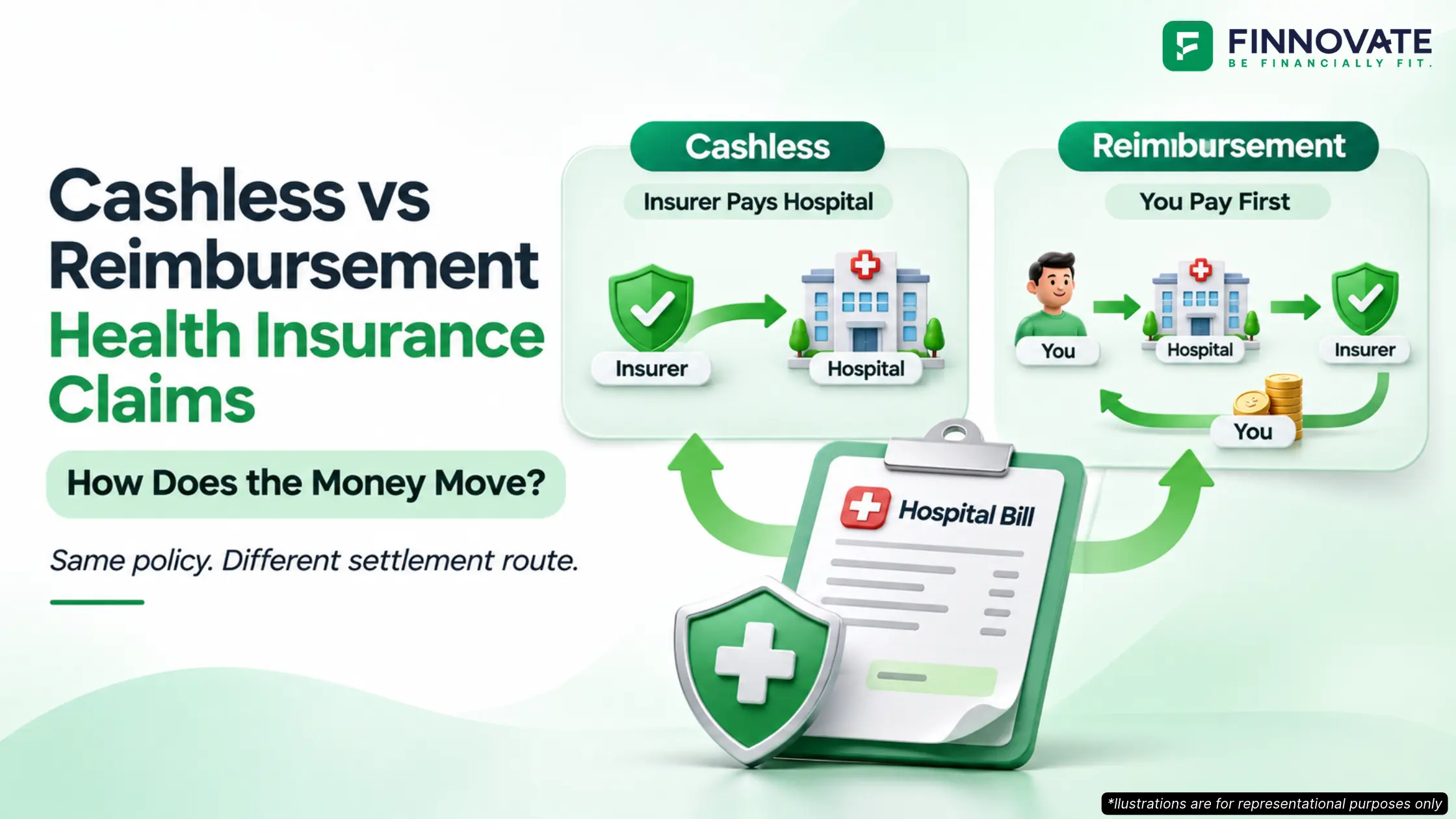
Both routes use the same underlying health insurance policy. What changes is who pays the hospital first and how the claim moves through the insurer.
In a cashless claim, the insurer settles admissible medical expenses directly with the hospital. In a reimbursement claim, you pay the hospital first and later seek reimbursement of eligible expenses from the insurer.
The settlement method changes who pays first. It does not change what your policy covers.
Before Hospital Admission: What Should You Do First?
- Check whether cashless treatment can be arranged at the hospital.
- Check the planned treatment against waiting periods, room limits, co-pay, deductible and other applicable conditions.
- Ask the hospital's insurance desk to start pre-authorisation before admission.
- Ask whether any deposit or expected non-payable amount needs to be arranged.
- Do not delay treatment while waiting for insurance approval.
- Share the policy details with the hospital as soon as possible.
- Ask the insurance desk to initiate cashless authorisation, where available.
- Notify the insurer and keep your own copies of important records.
Cashless vs Reimbursement Health Insurance Claims: Key Differences
| Question | Cashless Claim | Reimbursement Claim |
|---|---|---|
| Who pays the hospital first? | Insurer settles the admissible amount directly with the hospital | You pay the hospital first |
| How much money do you arrange upfront? | Usually lower, although deductions and uncovered expenses may remain | You generally need to arrange the hospital payment yourself |
| Where can it be used? | Where a cashless arrangement is available, including eligible non-network cases under Cashless Everywhere | Subject to policy terms where cashless was unavailable, declined or not used |
| When is the claim assessed? | Through pre-authorisation and final assessment at discharge | After the reimbursement claim is submitted |
| Who receives the approved amount? | Hospital | Policyholder |
How Do the Two Claim Processes Move?
How Does a Cashless Health Insurance Claim Work?
For a planned hospitalisation, the process usually begins with the hospital's insurance desk.
You provide your policy details. The hospital sends the insurer or Third-Party Administrator, where one is involved, information about the diagnosis, proposed treatment and estimated expenses.
This is the pre-authorisation request.
The insurer reviews the request and communicates whether cashless treatment can be authorised, subject to the policy and the information available at that stage.
So an initial approval should not be read as confirmation that every charge appearing in the final hospital bill will be paid.
The 1-Hour and 3-Hour Cashless Claim Rules
What if final discharge authorisation takes more than three hours?
The patient should not be made to wait for discharge because of an insurer-side delay beyond the prescribed timeline.
Under the applicable IRDAI framework, if the hospital charges an additional amount because the insurer's final authorisation crossed the three-hour period, that additional amount is to be borne by the insurer from its shareholder funds.
Can You Get Cashless Treatment at a Non-Network Hospital?
Cashless treatment was traditionally associated mainly with hospitals in an insurer's network.
The General Insurance Council introduced the Cashless Everywhere initiative in January 2024, creating a route for policyholders to request cashless treatment at eligible non-network hospitals as well.
Under the published Cashless Everywhere guidance:
- for an elective procedure, the insurer should be informed at least 48 hours before admission;
- for emergency treatment, the insurer should be informed within 48 hours of admission;
- the claim must still be admissible under the policy;
- the cashless facility remains subject to the insurer's operating guidelines.
For a planned admission at a non-network hospital, contact both the insurer and hospital before admission rather than assuming the facility will be available when you arrive.
How Does a Reimbursement Health Insurance Claim Work?
Reimbursement becomes relevant when you pay the hospital yourself.
This may happen because cashless treatment was unavailable, cashless was not used, or the cashless process could not be completed even though the treatment may still be covered.
- Inform the insurer or TPA. Follow the policy's prescribed claim-intimation process.
- Pay the hospital. Keep your payment records and copies of important medical papers.
- Submit your claim details. Provide the information that the insurer requires directly from you.
- The claim is assessed. The insurer applies the policy's coverage, exclusions, limits and cost-sharing conditions.
- The approved amount is paid. The admissible reimbursement is transferred to the registered bank account.
Do you have to collect every hospital document yourself?
Current IRDAI claim-processing rules place responsibility on insurers and TPAs to obtain required hospital-held documents directly from the hospital after claim intimation.
You may still need to provide information that comes from you, such as claim details, bank information, KYC where applicable, documents in your own possession and responses to specific claim queries.
Why Might You Still Have to Pay Under a Cashless Claim?
Cashless does not mean zero out-of-pocket expense.
Consider this illustrative hospital bill:
| Particulars | Amount |
|---|---|
| Total hospital bill | ₹3,00,000 |
| Admissible expenses approved by insurer | ₹2,40,000 |
| Amount paid directly by insurer | ₹2,40,000 |
| Amount payable by policyholder | ₹60,000 |
The claim can still be cashless even though you pay ₹60,000 yourself.
That amount may arise because of:
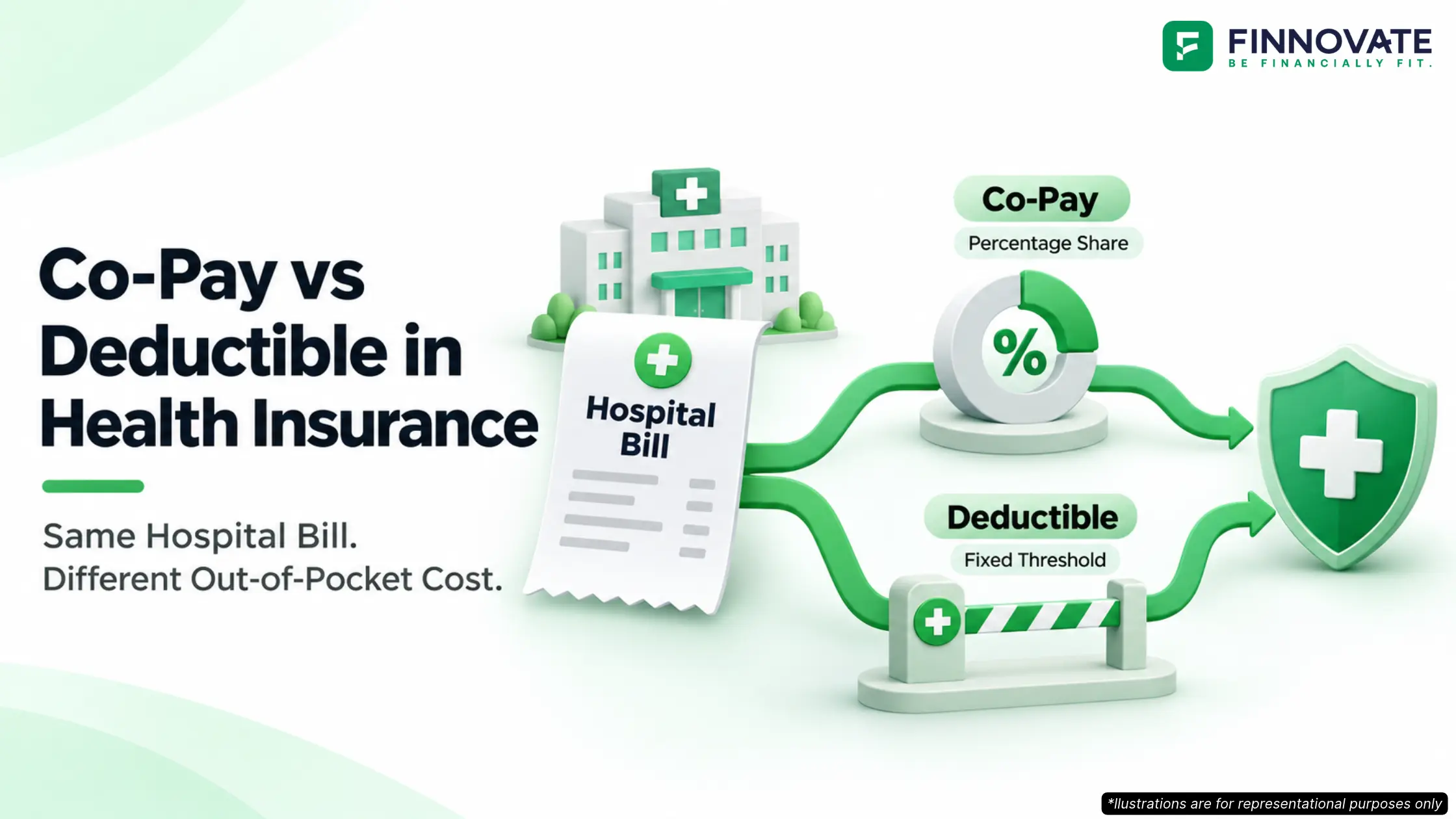
- Co-payment: a specified percentage of the admissible claim that you bear;
- Deductible: an amount that falls below the insurer's liability under the applicable structure;
- Room-rent or other sub-limits: expenses beyond specified limits;
- Non-payable expenses: items excluded under the policy;
- Available sum insured: expenses beyond the remaining cover may stay with you.
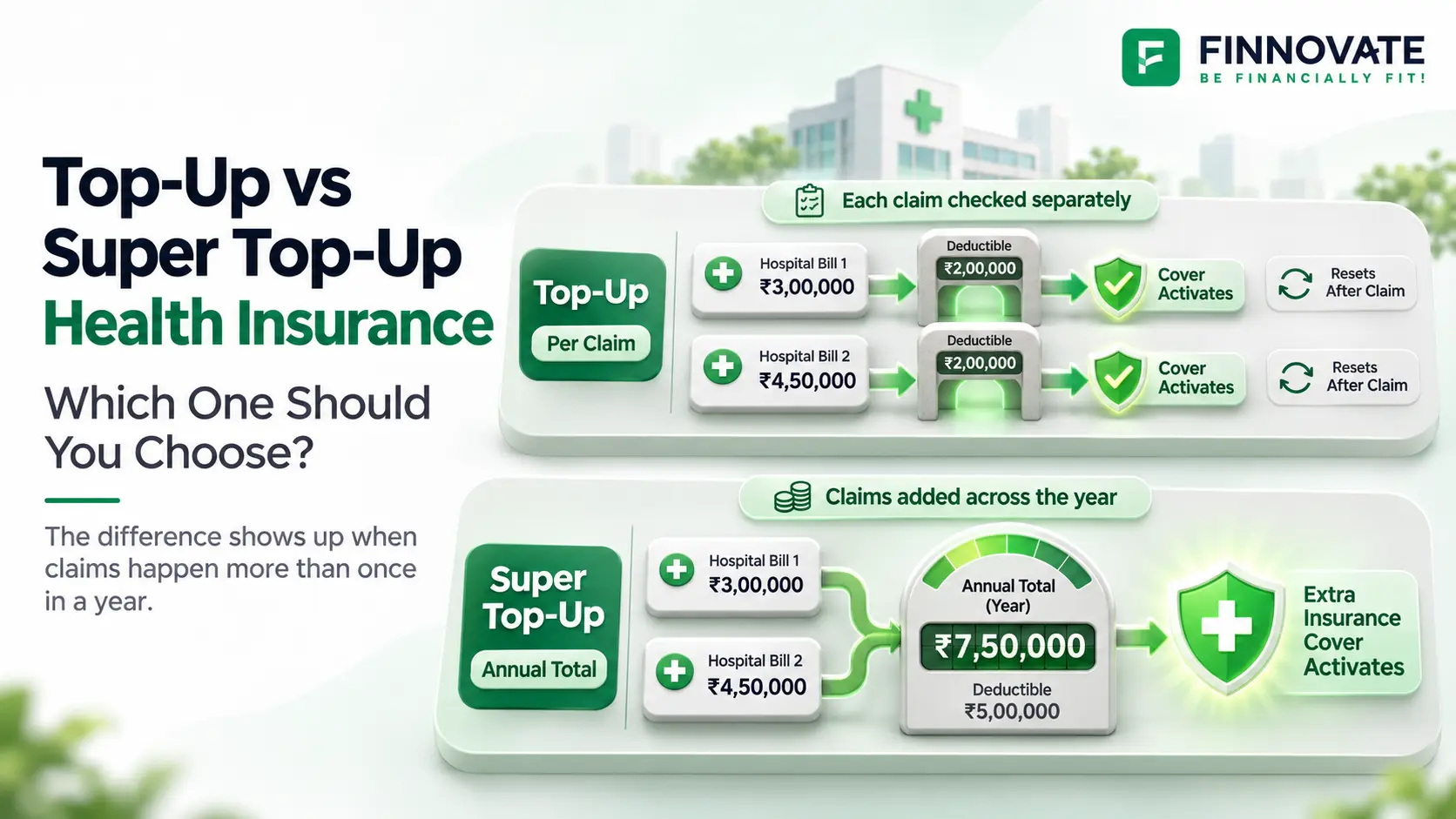
Our detailed guide to co-pay vs deductible in health insurance explains how two common cost-sharing clauses affect what you finally pay.
What if Your Cashless Request Is Declined?
A cashless request can fail because of the hospital arrangement, the information available during pre-authorisation or another process issue.
If the underlying treatment is covered, reimbursement may still be possible.
So do not stop at “cashless declined”.
Ask:
- Why was cashless declined?
- Was the issue related to the hospital/process or the treatment itself?
- Which policy condition was applied?
- Can the claim still be submitted through reimbursement?
Keep These Three Claim Dates Separate
The third date is the settlement/payment date.
These dates serve different purposes. For claims other than cashless, the prescribed 15-day settlement timeline runs from submission of the claim.
Where an insurer fails to settle a health claim within the prescribed timeline, the current policyholder-protection framework provides for interest at the bank rate plus 2 percentage points, payable along with the claim amount.
What if the Final Claim Is Reduced or Rejected?
A cashless pre-authorisation decision and the insurer's final claim decision are different stages.
A claim may eventually be fully approved, partly approved or rejected after the insurer applies the policy conditions.
Suppose the hospital bill is ₹3 lakh but only ₹2.4 lakh is admitted.
The useful question is not simply:
“Why didn't you pay the full bill?”
Ask:
“Which expenses were disallowed, and which policy condition was applied to each deduction?”
Also follow the insurer's intimation process as early as possible. Under the current policyholder-protection framework, however, a claim should not be rejected or closed solely because intimation was delayed or because documents were not submitted by the policyholder.
How Do You Escalate a Health Insurance Claim Grievance?
1. Start with the insurer
Raise a formal complaint with the insurer's Grievance Redressal Officer and keep the complaint reference or acknowledgement.
Current Ministry of Finance guidance dated 14 August 2026 states that insurers must acknowledge grievances immediately and provide a resolution within 14 days.
2. Escalate through Bima Bharosa if required
If you are dissatisfied with the insurer's response or the issue remains unresolved, you can raise or track the grievance through IRDAI's Bima Bharosa platform.
3. Insurance Ombudsman
The Insurance Ombudsman is another escalation route subject to its eligibility rules.
You must first have complained to the insurer. You can approach the Ombudsman if you are dissatisfied with the insurer's response, the complaint is rejected, or the insurer does not reply within one month.
The complaint generally needs to be made within one year under the applicable rules, and the current compensation limit is ₹50 lakh.
Cashless or Reimbursement: Which Should You Use?
If cashless treatment is available and approved, it is usually operationally easier because you do not need to arrange the entire admissible hospital expense yourself.
Reimbursement remains useful when cashless is unavailable, cannot be processed or was not used.
But the more important question is:
Is the treatment covered, and how much of the bill is actually admissible under the policy?
The settlement route changes how the money moves. The policy decides what the insurer is liable to pay.
Final Takeaway
Cashless and reimbursement are two ways of settling an underlying health insurance claim.
Cashless can reduce how much money you need to arrange upfront. Reimbursement requires you to pay the hospital first and seek the admissible amount later.
Under either route, co-pay, deductibles, sub-limits, exclusions, waiting periods and the available sum insured still matter.
And if a cashless request fails, find out why before assuming the underlying insurance claim has failed too.
FAQs
1. Can I switch to reimbursement if my cashless request is declined?
Possibly. If the cashless request failed because of a hospital or process issue and the underlying treatment is covered, reimbursement may still be available. If the treatment itself is excluded or otherwise inadmissible, changing the claim route will not change that.
2. Can I claim reimbursement even at a network hospital?
Depending on the policy and insurer's process, reimbursement may be available even where the hospital is part of the insurer's network. Check the applicable process before choosing to settle the full bill yourself.
3. Can I get cashless treatment at a non-network hospital?
Cashless Everywhere provides a route to request cashless treatment at eligible non-network hospitals, subject to insurer guidelines, hospital coordination, intimation requirements and the underlying policy coverage.
4. Does cashless approval mean the full hospital bill will be covered?
No. Co-pay, deductibles, sub-limits, excluded expenses, non-payable items and amounts beyond the available sum insured may still need to be paid by you.
5. How long should a reimbursement health insurance claim take?
Under the current regulatory framework, health claims other than cashless should be settled within 15 days from submission of the claim. Delayed-settlement interest may apply where the prescribed timeline is missed.
6. What happens if cashless discharge approval takes more than three hours?
The patient should not be held up for discharge because of an insurer-side delay beyond the prescribed period. Where the hospital charges an additional amount because of such delay, the applicable framework places that additional cost on the insurer.
7. How do I escalate a rejected health insurance claim?
Start with the insurer's Grievance Redressal Officer. If the response is unsatisfactory or the issue remains unresolved, you can approach IRDAI through Bima Bharosa. The Insurance Ombudsman is another route, subject to its eligibility and timeline requirements.
- IRDAI Master Circular on Health Insurance Business, 29 May 2024
- IRDAI Master Circular on Protection of Policyholders' Interests, 5 September 2024
- General Insurance Council: Cashless Everywhere
- Ministry of Finance, 26 March 2026
- Ministry of Finance, 14 August 2026
- Council for Insurance Ombudsmen: Complaint Procedure