

SWP vs FD for Retirement: Which Is Better for Regular Income?
SWP vs FD for retirement: compare income, risk, inflation, tax, liquidity and corpus susta...
28 August 2026


Finnovate’s editorial team researches and creates financial content using trusted sources, regulatory references and inputs from subject experts.

Wanting ₹2 lakh per month after retirement sounds like a specific goal. But the corpus required could be ₹6 crore, ₹10 crore, ₹20 crore or more depending mainly on one question: does ₹2 lakh mean your income at retirement, or does it represent the lifestyle ₹2 lakh buys you today?
If you are retiring today, ₹2 lakh per month means ₹24 lakh a year. Using a 4% starting withdrawal rate as a simple rule of thumb, that points to an indicative corpus of around ₹6 crore.
But if retirement is 20 years away and ₹2 lakh represents today's lifestyle, 6% annual inflation increases that expense to approximately ₹6.41 lakh per month. The same 4% shortcut then points to approximately ₹19.24 crore.
There are two different questions hidden inside the same retirement goal.
You are retiring now, or ₹2 lakh is the actual monthly amount you want to start withdrawing when retirement begins.
You spend ₹2 lakh today and want to maintain roughly the same lifestyle after retiring several years from now.
For someone retiring today:
But this is only a rule-of-thumb starting estimate. It does not by itself model how long you live, how withdrawals increase with inflation, what your portfolio earns after retirement or whether you want money left behind.
For a more detailed calculation based on retirement age, expenses, existing investments, income, healthcare reserve and legacy assumptions, you can use Finnovate's Retirement Calculator.
If ₹2 lakh represents your current lifestyle, the first step is to estimate what the same lifestyle may cost when you retire.
The table below uses 6% annual inflation as an illustration.
| Years to Retirement | Monthly Expense at Retirement |
|---|---|
| Today | ₹2.00 lakh |
| 5 years | ₹2.68 lakh |
| 10 years | ₹3.58 lakh |
| 15 years | ₹4.79 lakh |
| 20 years | ₹6.41 lakh |
| 25 years | ₹8.58 lakh |
| 30 years | ₹11.49 lakh |
Someone retiring 30 years from now may therefore need almost ₹11.5 lakh per month merely to buy what ₹2 lakh buys today.
The important point is not that inflation will remain exactly 6%. It will not. The point is that a retirement goal several years away needs to be calculated in future purchasing power.
Now we can convert the inflation-adjusted expense into an indicative corpus.
| Retirement Is | Monthly Lifestyle Cost | Indicative Corpus at 4% |
|---|---|---|
| Today | ₹2.00 lakh | ₹6.00 crore |
| 5 years away | ₹2.68 lakh | ₹8.03 crore |
| 10 years away | ₹3.58 lakh | ₹10.75 crore |
| 15 years away | ₹4.79 lakh | ₹14.38 crore |
| 20 years away | ₹6.41 lakh | ₹19.24 crore |
| 25 years away | ₹8.58 lakh | ₹25.75 crore |
| 30 years away | ₹11.49 lakh | ₹34.46 crore |
Take the same 20-year example. The annual retirement expense works out to approximately ₹76.97 lakh.
| Starting Withdrawal Rate | Indicative Corpus |
|---|---|
| 3.5% | ₹21.99 crore |
| 4.0% | ₹19.24 crore |
| 4.5% | ₹17.10 crore |
₹19.24 crore is only a rule-of-thumb estimate. Check your own retirement age, current investments, EPF, NPS, future income, healthcare reserve and legacy requirement together.
Before inflating your current ₹2 lakh expense for the next 20 years, remove expenses that are unlikely to continue after retirement.
Home loan EMI, children's education, commuting, work-related spending and retirement SIPs.
Groceries, utilities, home maintenance, domestic help, travel, entertainment and personal expenses.
Healthcare, insurance, domestic assistance, leisure travel or other lifestyle expenses.
This matters because an investment is not an expense.
If your current ₹2 lakh monthly outflow includes a ₹50,000 SIP, you do not need to inflate that ₹50,000 and fund it again during retirement.
Likewise, someone currently paying a large home loan EMI may need materially less than their present monthly cash outflow once the loan ends.
A better starting point is to build a retirement version of your current budget: remove costs likely to end, retain ongoing lifestyle expenses and add costs that may rise.
A person planning for a ₹2 lakh monthly retirement lifestyle may already have EPF, NPS, mutual funds, PPF, stocks or other long-term investments.
Those assets should be projected to retirement before calculating the additional monthly investment required.
Consider the ₹19.24 crore target with 20 years remaining. The illustration below assumes existing investments grow at an effective 10% annually and any additional SIP is invested monthly at the equivalent monthly rate.
| Already Invested Today | Approx. Value After 20 Years | Additional Monthly Investment |
|---|---|---|
| ₹0 | ₹0 | ₹2.68 lakh |
| ₹50 lakh | ₹3.36 crore | ₹2.21 lakh |
| ₹1 crore | ₹6.73 crore | ₹1.74 lakh |
| ₹2 crore | ₹13.45 crore | ₹80,600 |
| ₹3 crore | ₹20.18 crore | Nil under these assumptions |
This is why two people with the same retirement lifestyle target can require completely different monthly investments.
If you are starting from zero with 20 years remaining, the required monthly investment is highly sensitive to the return assumption.
Both calculations assume the stated annual return is converted into an equivalent monthly rate and the investment is made at the end of each month.
The difference is significant. But choosing a higher assumed return simply to reduce the SIP on paper does not make the goal easier in real life.
Your contribution does not necessarily need to remain flat for 20 years.
Using the same ₹19.24 crore target and an illustrative 10% annual return:
The same contribution throughout the 20-year period.
Approximate starting SIP if the monthly contribution increases by 10% every year.
You can test different corpus targets, existing savings, timelines, return assumptions and annual increases using Finnovate's Goal SIP Calculator.
For a large retirement corpus, it helps to separate three different jobs that your money may need to perform.
Regular household expenses, travel, leisure, utilities and day-to-day retirement living.
A separate provision for medical expenses, unexpected costs and expenses not covered by regular income.
Money you deliberately want to preserve for your spouse, children, estate or another long-term purpose.
This separation matters because a retirement plan designed to gradually use the corpus during your lifetime is different from one designed to preserve a large part of the principal.
Suppose you successfully build ₹19 crore by retirement. You still need to decide how the portfolio will produce regular income without forcing you to sell long-term investments at the wrong time.
A retirement portfolio can broadly separate money by when it may be required:
Money required for immediate expenses and liquidity.
Assets focused more on stability for expenses expected over the next several years.
Growth assets intended to help the remaining corpus fight inflation over a long retirement.
The appropriate mix changes as retirement approaches. Finnovate's guide to asset allocation by age in India explains how the balance between equity, debt, gold and liquidity typically changes across different life stages.
After retirement, an SWP can be one way to create regular withdrawals from an invested corpus, but it is not automatically better than an FD or other income options. The comparison depends on risk, liquidity, tax treatment and the role each investment plays.
For a deeper explanation, read SWP vs FD for retirement, or test different withdrawal amounts, inflation assumptions and time horizons using the SWP Calculator.
A large retirement corpus reduces financial pressure, but the plan still needs room for uncertainty.
This is also why retirement planning should be reviewed periodically rather than treated as a calculation completed once at age 40 or 50.
How much do you actually need for retirement?
Your answer depends on your real expenses, current portfolio, EPF and NPS, retirement age, healthcare requirement, other income and whether you want to leave a legacy.
₹2 lakh per month in retirement is not one fixed financial goal.
If you retire today and want ₹2 lakh per month, a 4% starting withdrawal-rate shortcut points to approximately ₹6 crore.
If ₹2 lakh represents today's lifestyle and retirement is 20 years away, the same lifestyle could cost approximately ₹6.41 lakh per month at 6% inflation. The indicative corpus then rises to approximately ₹19.24 crore.
But even that number should not become your retirement target automatically.
First estimate what your retirement lifestyle will actually cost. Then account for existing investments, EPF, NPS, healthcare, other retirement income and any money you want to preserve.
The useful retirement number is not the largest corpus you can calculate. It is the corpus your own retirement actually needs.
If you are retiring today, ₹2 lakh per month equals ₹24 lakh annually. Using a 4% starting withdrawal rate as a rule-of-thumb estimate gives an indicative corpus of approximately ₹6 crore. Your actual requirement depends on retirement duration, inflation, investment returns, taxes, healthcare and other income.
If ₹2 lakh represents today's purchasing power, it becomes approximately ₹6.41 lakh per month after 20 years at 6% annual inflation. Using a 4% starting withdrawal-rate shortcut gives an indicative corpus of approximately ₹19.24 crore.
At a 4% starting withdrawal rate, ₹5 crore corresponds to an initial annual withdrawal of ₹20 lakh, or approximately ₹1.67 lakh per month. Whether ₹5 crore is sufficient depends on your age, expenses, inflation, other income, investment returns and how long the money needs to last.
There is no universal answer. At a 4% starting withdrawal rate, ₹10 crore corresponds to approximately ₹40 lakh in first-year withdrawals, or around ₹3.33 lakh per month. Whether that is enough depends on your retirement lifestyle and the duration and structure of the retirement plan.
Starting from zero, an illustrative 10% effective annual return requires approximately ₹2.68 lakh per month. At an illustrative 12% annual return, the amount is approximately ₹2.11 lakh per month. These figures assume month-end investments and constant returns, which will not occur in real markets. You can test your own target using Finnovate's Goal SIP Calculator.
Yes. EPF, NPS, PPF, mutual funds, stocks and other assets specifically available for retirement should be considered when estimating how much you already have. Their projected future value reduces the remaining retirement gap.
Regular healthcare and insurance expenses can form part of the monthly budget, but a separate reserve for major medical and emergency costs can prevent unexpected expenses from disrupting the main lifestyle corpus.
No single withdrawal rate can be guaranteed to be safe for every retiree. This article uses 4% only as a simple starting-corpus shortcut. The sustainable rate for an individual depends on retirement duration, inflation, portfolio allocation, actual returns, withdrawal pattern and other income.
Disclaimer: This article is for general information and educational purposes only. It does not constitute investment advice, a recommendation, or an offer to buy or sell any security or financial product. Inflation, investment return, withdrawal-rate and corpus assumptions used in this article are illustrative and are not guaranteed outcomes. Actual retirement requirements will vary based on individual circumstances, investment performance, market conditions, taxes and regulatory changes. Past performance is not indicative of future returns. Please consult a SEBI-registered investment adviser or other qualified professional before making investment or retirement-planning decisions. Market-linked investments are subject to market risks.
No spam. Only new posts, simple explainers, and practical money checklists for busy professionals.
Finnovate is a SEBI-registered financial planning firm that helps professionals bring structure and purpose to their money. Over 3,500+ families have trusted our disciplined process to plan their goals - safely, surely, and swiftly.
Our team constantly tracks market trends, policy changes, and investment opportunities like the ones featured in this Weekly Capsule - to help you make informed, confident financial decisions.
Learn more about our approach and how we work with you:
No comments yet. Start the conversation. What would you add?
No spam. Only new posts, simple explainers, and practical money checklists.
You may also like
SWP vs FD for retirement: compare income, risk, inflation, tax, liquidity and corpus susta...

NPS vs mutual funds for retirement: compare liquidity, tax, lock-in, asset allocation, ann...
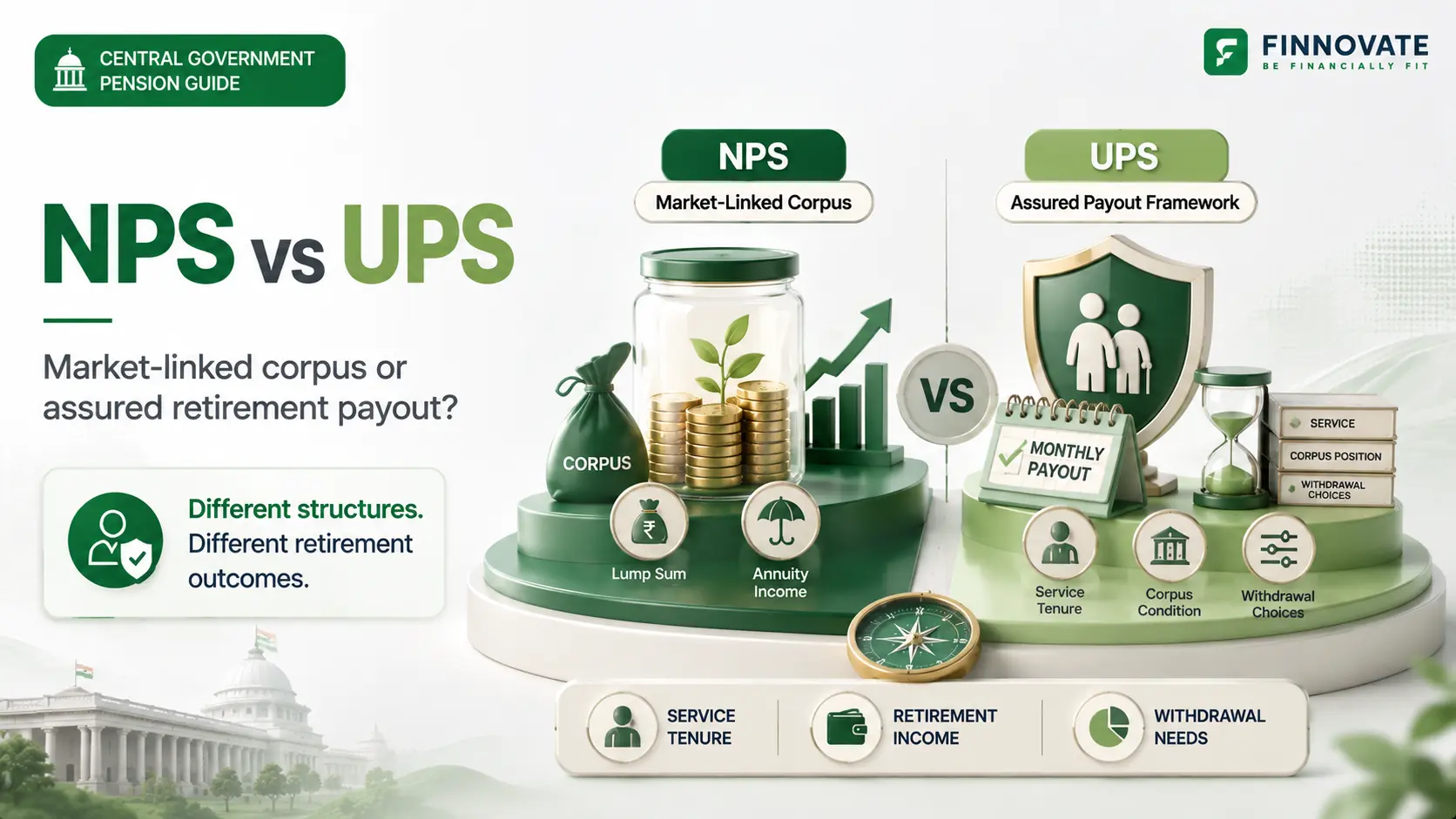
Compare NPS and UPS for Central Government employees, including contributions, pension cal...
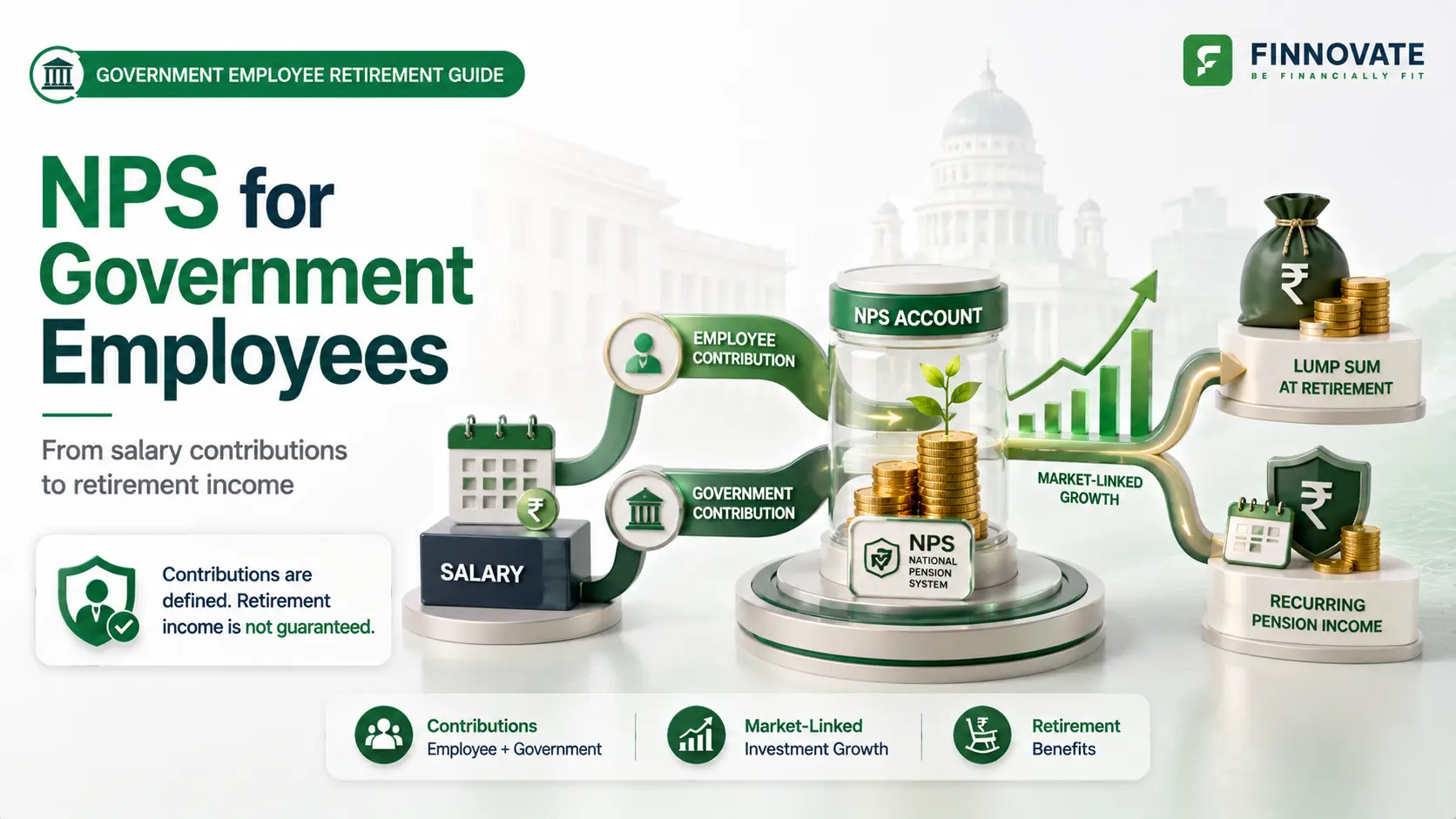
Understand NPS for government employees, including Central Government contributions, tax b...
Popular now

Learn how to easily download your NSDL CAS Statement in PDF format with our step-by-step g...

Looking for the best financial freedom books? Here’s a handpicked 2026 reading list with...
Learn what SIF investment means in India, SEBI rules, Rs 10 lakh minimum investment, avail...
Clear guide to mutual fund taxation in India for FY 2025–26 after July 2024 changes: equ...