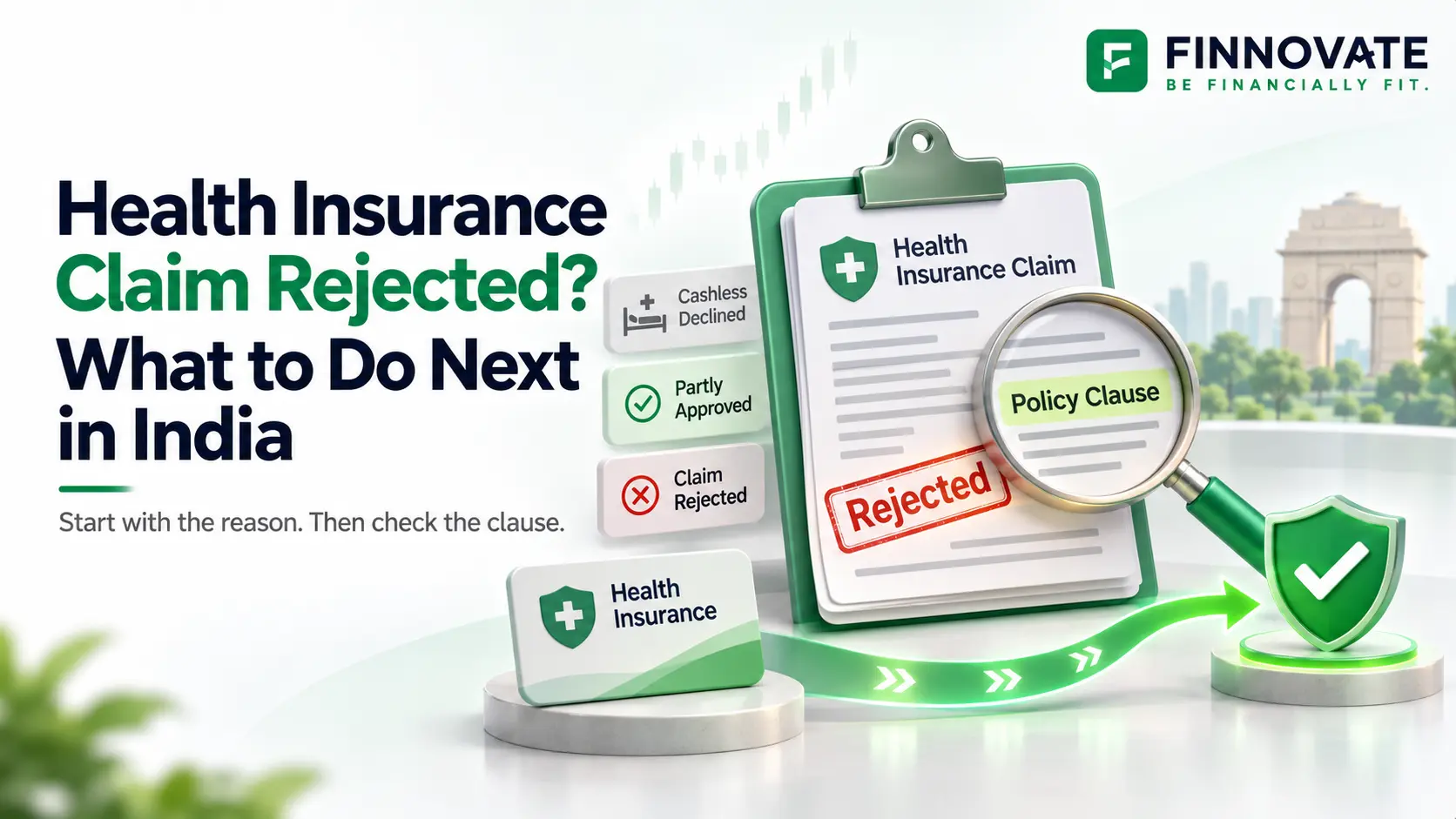
Health Insurance Claim Rejected? What to Do Next in India

Finnovate’s editorial team researches and creates financial content using trusted sources, regulatory references and inputs from subject experts.
You filed a health insurance claim. The insurer has either rejected it completely or paid only part of the amount.
Start with the reason the insurer has given and the exact policy condition used to support that decision.
Once you know the reason, you can check whether it matches your policy wording, medical records, proposal form and claim history.
First, Check What Was Actually Declined
Not every unsuccessful cashless request is a rejected health insurance claim.
The insurer has not authorised direct settlement with the hospital. Depending on the reason, reimbursement may still be possible.
The insurer has accepted part of the claim but disallowed some expenses.
The insurer has taken the position that the underlying claim is not payable under the policy.
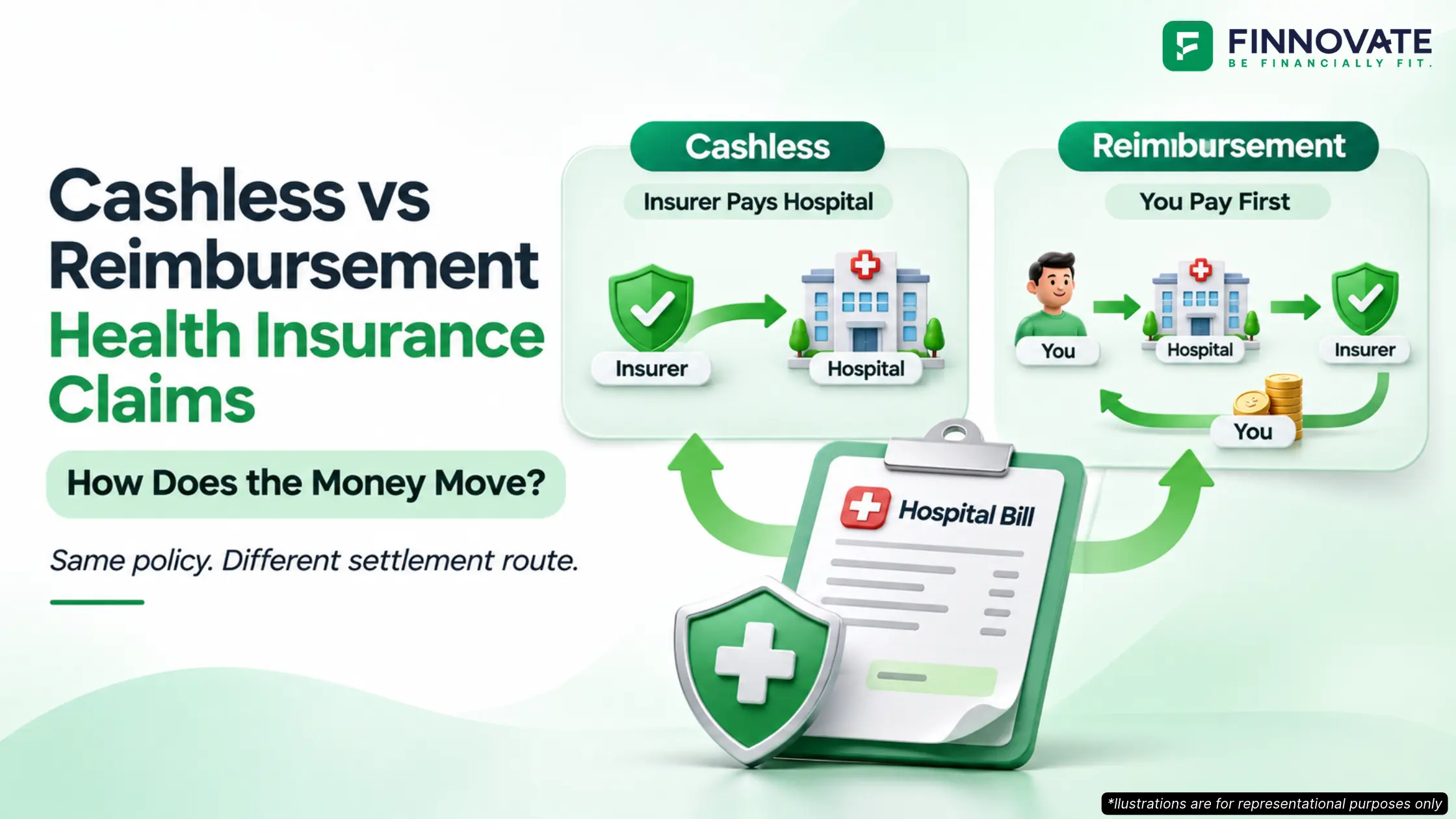
If only cashless authorisation was declined, read our guide on Cashless vs Reimbursement Health Insurance Claims .
1. Ask for the Exact Rejection Reason and Policy Clause
A health insurance claim should not end with a vague explanation such as:
- “claim not admissible”;
- “PED”;
- “excluded treatment”;
- “non-disclosure”.
Where a health claim is rejected, repudiated or partly disallowed, the insurer should provide the reason with reference to the specific policy terms and conditions applied.
Ask for:
- the written rejection or repudiation communication;
- the exact reason;
- the specific policy clause relied upon;
- a breakup of deductions if only part of the claim was paid.
For a claim that is being repudiated, the current health insurance framework also requires the repudiation decision to pass through the insurer's prescribed internal review mechanism, such as the Product Management Committee or Claims Review Committee.
2. Match the Rejection Reason With What You Need to Check
Different rejection reasons need different evidence. Start with the reason written in the insurer's communication.
Check:
- policy commencement date;
- date the condition was first diagnosed;
- previous medical advice or treatment;
- PED definition in the policy;
- the applicable waiting period;
- whether that waiting period was already completed;
- eligible portability or migration continuity credits.
Do not look only at the illness name. The dates and continuity of cover matter.
Check:
- what the proposal form actually asked;
- what answer was given;
- which medical fact the insurer says was omitted;
- when the condition was diagnosed or treated;
- whether the allegation is non-disclosure, misrepresentation or fraud;
- how long the relevant cover has been continuously in force.
The proposal form can become one of the most important documents in this type of dispute.
Also read 12 Things to Check Before Buying Health Insurance in India .
Ask for the exact exclusion and compare it with the diagnosis, discharge summary, treatment records and medical reports.
The question is not only whether the policy contains an exclusion. It is whether that exclusion actually applies to the treatment claimed.
Current IRDAI rules state that a health claim should not be rejected or closed merely because claim intimation was delayed.
Inform the insurer as early as possible. But if delayed intimation is the only reason given for rejection, ask for the decision to be reviewed.
Identify which documents the insurer says were unavailable.
After claim intimation, the insurer or TPA is expected to obtain required hospital-held documents directly from the hospital.
You may still need to provide information that comes from you, such as bank details, KYC records, explanations or documents that are not held by the hospital.
Check:
- premium payment date;
- renewal due date;
- applicable grace period;
- premium receipt;
- policy schedule;
- whether cover was active on the date of hospitalisation.
3. If Only Part of the Claim Was Paid, Ask for the Deduction Breakup
A partial settlement should also be checked against the policy terms.
Suppose:
| Particulars | Amount |
|---|---|
| Hospital bill | ₹4,00,000 |
| Amount paid by insurer | ₹3,10,000 |
| Amount disallowed | ₹90,000 |
Do not treat the ₹90,000 as one deduction.
Ask how much was reduced because of:
- co-payment;
- deductible;
- room-related deduction;
- treatment or disease sub-limit;
- excluded expense;
- non-payable item;
- available sum insured being exhausted.
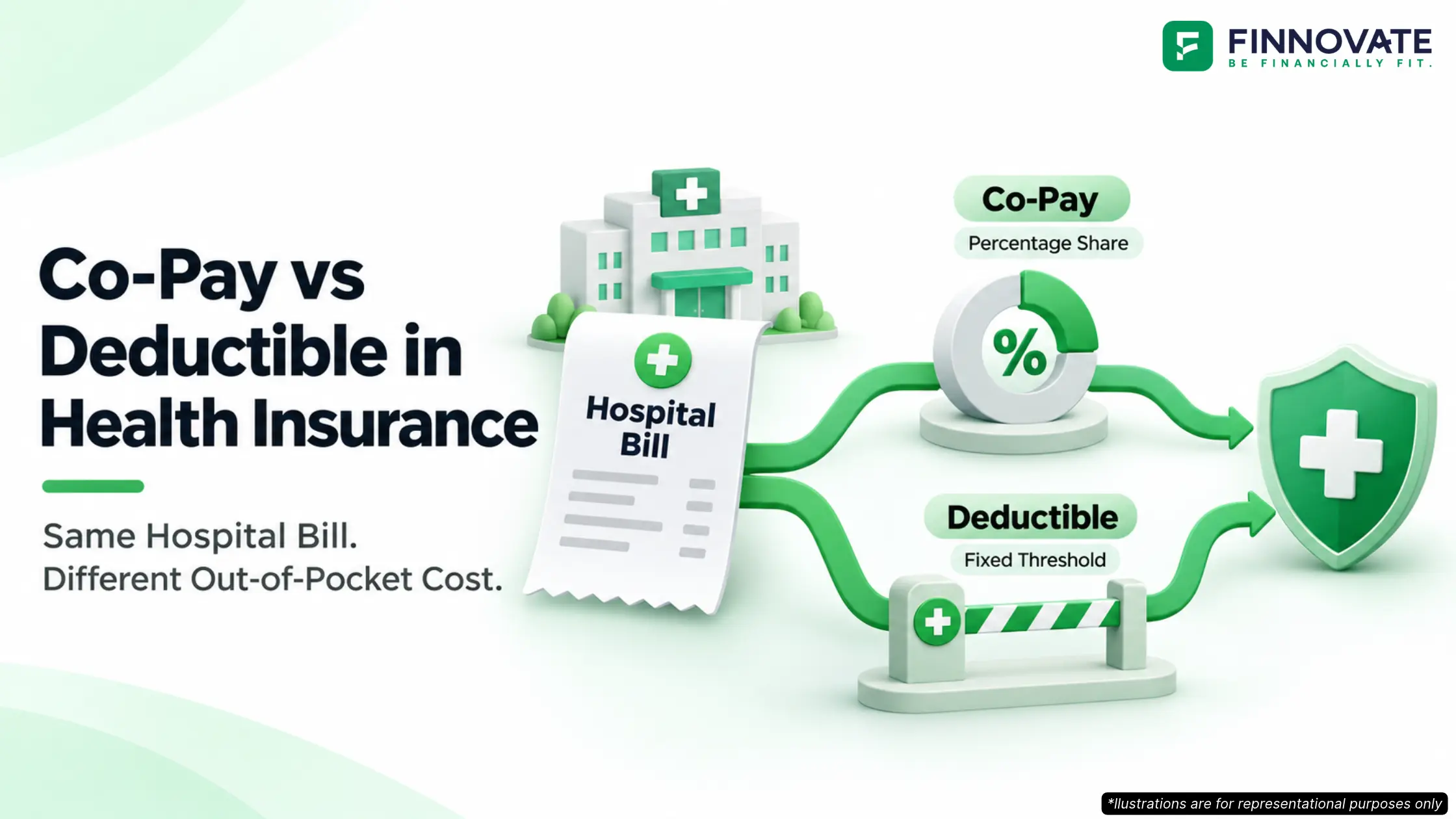
If co-pay or deductible is involved, read Co-Pay vs Deductible in Health Insurance .
4. For Non-Disclosure Rejections, Check the 60-Month Moratorium
The current health insurance framework provides a moratorium after 60 continuous months of coverage.
After the applicable moratorium period is completed, the policy or claim generally cannot be contested on grounds of non-disclosure or misrepresentation, except in cases of established fraud.
Eligible continuity from portability or migration can count toward this period.
If the sum insured was increased later, the enhanced portion can have its own 60-month moratorium period.
Has the relevant cover already completed the 60-month moratorium period?
The moratorium does not remove policy exclusions, co-payments, deductibles, sub-limits or other coverage conditions. Those terms can still apply.
5. If Documents Are Missing, Check Who Was Responsible for Them
A rejected claim can sometimes become a document dispute.
After claim intimation, the insurer or TPA is expected to obtain required hospital-held records directly from the hospital.
These may include hospital records such as discharge papers, bills, treatment records and investigation reports held by the hospital.
You may still need to provide information that only you hold, including KYC, bank details, explanations or other personal records.
6. Ask for Reconsideration in Writing
If the rejection or deduction appears inconsistent with the policy or records, ask the insurer to reconsider the decision in writing.
This is a practical review step. It is not a separate mandatory legal requirement before every grievance.
Keep the request focused. Include:
- policy and claim number;
- amount disputed;
- rejection reason and policy clause;
- why you believe the decision requires review;
- supporting records;
- a request for the reconsidered decision in writing.
Please review the claim against the enclosed policy terms and supporting records and provide the reconsidered decision in writing, including the policy clause applied to any amount that remains disallowed.
Keep copies of the request, attachments and acknowledgement.
7. Raise a Formal Grievance With the Insurer
If the review does not resolve the issue, or you want to formally contest the claim decision, raise a grievance with the insurer's Grievance Redressal Officer (GRO).
Use a channel that gives you a written acknowledgement or grievance reference number.
Attach:
- claim number;
- rejection or partial-settlement communication;
- supporting documents;
- earlier correspondence;
- a short explanation of what remains disputed.
8. Escalate Through Bima Bharosa
If the insurer's response is unsatisfactory or the grievance remains unresolved, you can use Bima Bharosa, IRDAI's grievance platform.
Complaints registered through Bima Bharosa flow to the insurer's system as well as IRDAI's repository. A token number is generated so the complaint can be tracked.
Keep ready:
- policy and claim details;
- insurer grievance reference;
- rejection or settlement communication;
- supporting records;
- previous correspondence.
If you remain dissatisfied with the insurer's resolution, the complaint can be escalated for IRDAI review of possible regulatory non-compliance.
9. When Can You Approach the Insurance Ombudsman?
The Insurance Ombudsman can deal with eligible disputes involving matters such as:
- total repudiation of a claim;
- partial repudiation;
- delay in settlement;
- disputes over policy terms relating to the claim;
- certain policy-servicing and policy-issuance disputes.
You must first complain to the insurer.
An Ombudsman complaint may then be made if:
- the insurer rejects your complaint;
- you are dissatisfied with the insurer's decision; or
- the insurer does not reply within one month.
Under the current Ombudsman rules, the amount in dispute must fall within the applicable ₹50 lakh limit.
The complaint generally needs to be made within one year from the insurer's rejection or unsatisfactory decision, or from expiry of one month where the insurer did not reply.
The Council for Insurance Ombudsmen also states that there is no provision under the Ombudsman Rules to engage a lawyer for filing the complaint.
10. Be Careful Before Starting Proceedings Elsewhere
Other legal remedies may be available depending on the dispute, including consumer-law or court routes.
But the sequence matters.
The Insurance Ombudsman generally cannot take up the same subject matter if proceedings are already pending before or have been disposed of by a court, consumer forum or arbitrator.
What Should You Keep in Your Claim-Rejection File?
Keep the records in three groups.
- Policy schedule
- Customer Information Sheet
- Full policy wording
- Proposal form
- Renewal and premium records
- Discharge summary
- Medical reports
- Bills and receipts
- Claim forms
- Relevant hospital records
- Rejection or settlement letter
- Insurer emails
- GRO complaint reference
- Bima Bharosa token
- Ombudsman correspondence, if applicable
Final Takeaway
A rejected health insurance claim is not automatically an incorrect decision.
But the rejection should be understandable and connected to the policy terms.
Start with three questions:
Which policy clause has the insurer relied on?
Do the policy wording, dates and medical records support that decision?
If they do not, ask for reconsideration in writing.
If the issue remains unresolved, use the formal grievance route with the insurer and then consider Bima Bharosa or the Insurance Ombudsman where applicable.
Do not challenge a claim only by saying the rejection is unfair. Challenge the reason, clause, calculation or medical conclusion that led to it.
FAQs
1. Can I Claim Reimbursement if My Cashless Request Is Declined?
Possibly. A declined cashless request is not always a final rejection of the underlying claim. Depending on the reason and policy terms, you may still be able to submit the claim for reimbursement.
2. Can a Health Insurance Claim Be Rejected Only Because Intimation Was Late?
Current IRDAI rules state that a health claim should not be rejected or closed merely because claim intimation was delayed. Follow the insurer's notification process as early as possible, but if delayed intimation is the only rejection ground, ask for a review.
3. What if the Insurer Says I Did Not Disclose a Pre-Existing Disease?
Check the proposal form, the question asked, the answer given, the date of diagnosis or treatment, and the medical evidence relied upon by the insurer. Also check whether the relevant cover has completed the 60-month moratorium period.
4. Can a Health Insurance Claim Be Rejected After Five Years?
After the applicable 60 continuous months of coverage, a policy or claim generally cannot be contested on grounds of non-disclosure or misrepresentation except established fraud. Other policy exclusions, limits and claim conditions can still apply.
5. How Long Does an Insurer Have to Resolve a Grievance?
Under the current grievance framework, insurers are expected to acknowledge grievances immediately and provide a resolution within 14 days.
6. When Can I Approach the Insurance Ombudsman?
You must first complain to the insurer. You may then approach the Ombudsman if the insurer rejects the complaint, you are dissatisfied with its decision, or no reply is received within one month, subject to the monetary, filing and other eligibility requirements.