
Nifty Sector Performance September 2026: IPO, Pharma & Metal Lead
Compare 19 sector and thematic indices with Nifty 50 for September 2026, covering monthly ...
01 October 2026
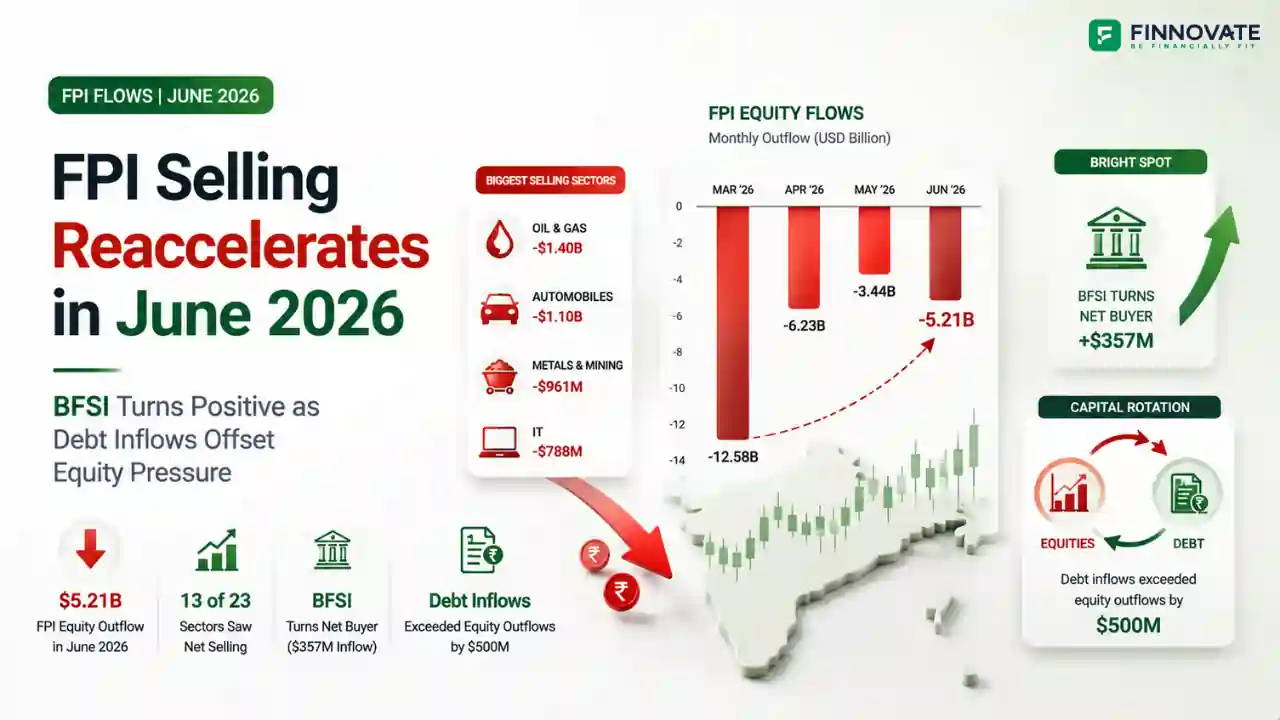
Data period: Full month June 2026 | Source: NSDL sectoral FPI investment data
After May 2026 offered a tentative stabilisation signal with outflows tapering to $3.44 billion, June reversed that trajectory. FPIs sold $5.21 billion from Indian equities in June, a 51% increase over May and the second-highest monthly outflow of 2026 after March's record $12.58 billion. The full-month picture, however, is more nuanced than the headline suggests: selling was heavily concentrated in the first half of June, and FPIs turned net buyers in the second half after the RBI's capital inflow measures (including the FCNR(B) concessional hedge scheme and expanded FAR route for debt) began to stabilise the rupee.
June 2026 FPI: Key numbers
| Sector | Net Flow (USD million) | Direction |
|---|---|---|
| Oil, Gas & Fuels | -1,403 | Selling: Strait of Hormuz normalisation timeline still uncertain |
| Automobile and Components | -1,095 | Selling: supply chain constraints hitting input costs |
| Metals & Mining | -961 | Selling: profit-taking after prior months of buying |
| Information Technology | -788 | Selling: AI disruption concerns persist |
| Power | -668 | Selling: capex cycle caution |
| Fast Moving Consumer Goods | -585 | Selling: muted purchasing power recovery expected |
| Capital Goods | -425 | Selling: capex cycle caution |
| Construction Materials | -325 | Selling |
| Healthcare | -323 | Selling: muted purchasing power recovery expected |
| Chemicals | -136 | Selling |
| Media & Entertainment | -37 | Selling |
| Telecommunication | -37 | Selling |
| Forest Materials | -2 | Selling |
| Diversified | 0 | Neutral |
| Textiles | +10 | Buying |
| Utilities | +24 | Buying |
| Realty | +85 | Buying |
| Consumer Services | +130 | Buying |
| Others | +157 | Buying |
| Consumer Durables | +204 | Buying |
| Construction | +305 | Buying: domestic demand driven |
| Services | +306 | Buying: transport and logistics interest continues |
| Financial Services (BFSI) | +357 | Buying: rate hike timeline pushed out |
| Grand Total | -5,207 | Net selling: 13 of 23 sectors |
Oil and Gas ($1.40 billion) and Automobiles ($1.10 billion) together accounted for nearly half of total equity outflows. Both reflect direct supply chain exposure to the Middle East. Brent crude has fallen from its peak but Strait of Hormuz shipping normalisation remains incomplete, with elevated insurance costs keeping downstream input cost pressure alive for Indian auto manufacturers. These two sectors have featured in the top outflow positions across every month since March 2026.
Metals and Mining saw net selling of $961 million in June after three consecutive months of net FPI buying (February through May). The reversal is consistent with profit-taking: metal prices remained elevated through the supply disruption period, and FPIs who bought during that rally have now taken some gains off the table. The sector remains structurally interesting for domestic infrastructure demand but the short-term momentum trade has unwound.
BFSI had been the largest outflow sector in every month from March through May 2026, bearing the heaviest passive ETF rebalancing pressure from India's declining MSCI EM weight. June marked a reversal: $357 million of net buying, driven by the market's reassessment of the rate hike timeline. With the RBI holding at 5.25% in June and market pricing pushing the next hike probability to October 2026 at the earliest, rate-sensitive financials attracted fresh FPI interest in the second half of the month. The BFSI reversal, alongside net buying in Construction ($305 million) and Services ($306 million), formed the buy-side cluster concentrated in H2 June.
For the first time in this selling cycle, FPI debt inflows exceeded equity outflows in absolute terms for the month. Two RBI measures drove this: the expansion of the Fully Accessible Route (FAR) list for FPIs, and the removal of tax on FPI interest income and LTCG on bond sales. Combined, these made Indian government bonds materially more attractive for global fixed income allocators. This structural rotation (FPIs selling equities while buying debt) reduces the rupee pressure from equity outflows and represents a partial recycling of capital within India rather than full repatriation.
| Metric | September 2024 Peak | June 2026 | Change |
|---|---|---|---|
| FPI Equity AUC | $931 billion | $726 billion | -22.0% / -$205 billion |
| FPI Total AUC (incl. debt) | $1,007 billion | $806 billion | -20.0% / -$201 billion |
| Net equity selling (cumulative) | ~$64 billion | Of which $27.7B in Mar-Jun 2026 |
The $205 billion reduction in FPI equity AUC reflects both active selling ($64 billion) and the decline in market prices and rupee value on the remaining holdings. The $27.7 billion sold in the four months of 2026 represents the most concentrated selling period on record for India, exceeding the pace of any prior FPI outflow episode including the 2013 taper tantrum and the 2020 COVID sell-off.
Four months of concentrated FPI selling affects sector valuations, market breadth, and rupee stability in ways that compound over time. The FinnFit Financial Fitness Test takes 3 minutes and shows how your portfolio's sector exposure compares to where FPI flows have been concentrated.
Take the FinnFit TestDisclaimer: This article is for general information and educational purposes only. It does not constitute investment advice, a recommendation, or an offer to buy or sell any securities or financial instruments. All FPI sectoral flow data is sourced from NSDL's monthly sectoral FPI investment data for June 2026. AUC figures are NSDL-reported monthly snapshots and reflect both active flows and market price changes on remaining holdings. Past FPI flow patterns are not indicative of future flows or market performance. Please consult a SEBI-registered investment adviser before making any investment decision.
No spam. Only new posts, simple explainers, and practical money checklists for busy professionals.
Finnovate is a SEBI-registered financial planning firm that helps professionals bring structure and purpose to their money. Over 3,500+ families have trusted our disciplined process to plan their goals - safely, surely, and swiftly.
Our team constantly tracks market trends, policy changes, and investment opportunities like the ones featured in this Weekly Capsule - to help you make informed, confident financial decisions.
Learn more about our approach and how we work with you:
No comments yet. Start the conversation. What would you add?
No spam. Only new posts, simple explainers, and practical money checklists.
You may also like
Compare 19 sector and thematic indices with Nifty 50 for September 2026, covering monthly ...

Understand the Growpital case, SEBI’s refund order, the LLP investment structure and wha...
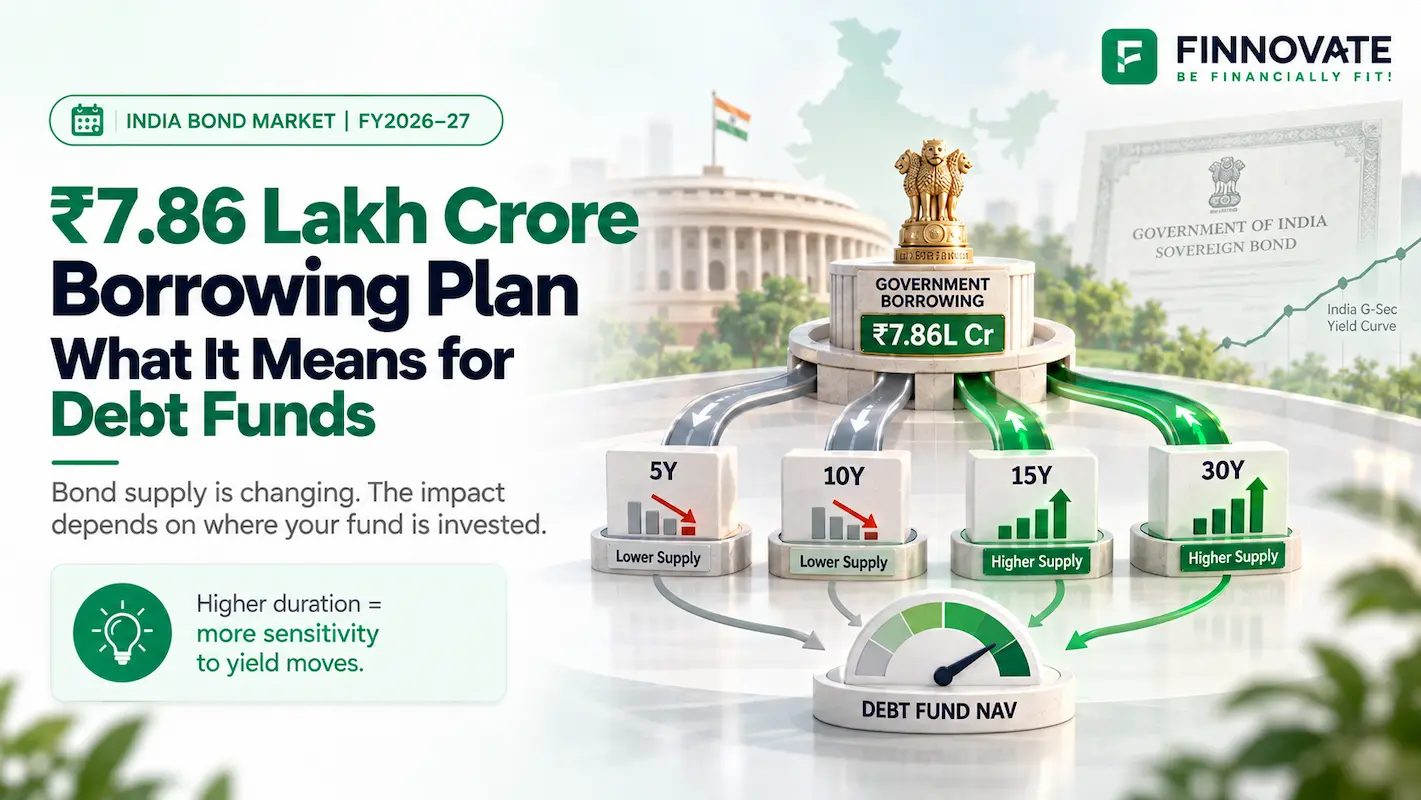
India plans to borrow ₹7.86 lakh crore in the second half of FY2026–27. Learn how the ...

Proposed EU scrap export curbs could affect India’s metal supply and manufacturing costs...
Popular now

Learn how to easily download your NSDL CAS Statement in PDF format with our step-by-step g...

Looking for the best financial freedom books? Here’s a handpicked 2026 reading list with...
Learn what SIF investment means in India, SEBI rules, Rs 10 lakh minimum investment, avail...
Clear guide to mutual fund taxation in India for FY 2025–26 after July 2024 changes: equ...