
EU Scrap Export Curbs: India’s Raw-Material Risk Explained
Proposed EU scrap export curbs could affect India’s metal supply and manufacturing costs...
24 September 2026

Finnovate’s editorial team researches and creates financial content using trusted sources, regulatory references and inputs from subject experts.
For years, one of UPI’s biggest advantages has been simple: scan, pay and move on.
No merchant fee. No card machine. No complicated payment setup.
That zero-cost model helped UPI become deeply embedded in everyday Indian payments. In FY2025-26 alone, UPI processed about 24,162 crore transactions worth ₹314.23 lakh crore. By June 2026, about 55.49 crore users had been onboarded.
Now, India is considering whether that model should change for some transactions.
Table of Contents
| Question | Current position |
|---|---|
| Is MDR currently being charged on normal UPI payments? | No |
| Will consumers directly pay MDR? | Current government messaging says consumers will remain protected |
| Will small merchants pay MDR? | Government says small traders will remain outside the proposed framework |
| Could large merchants face MDR? | Yes, this is being considered |
| Is ₹2,000 the final threshold? | No, it is part of proposals reported so far |
| Is the MDR rate final? | No |
| Will P2P transfers attract MDR? | Current indications suggest they will remain free |
| Has implementation started? | No final charging framework has been notified |
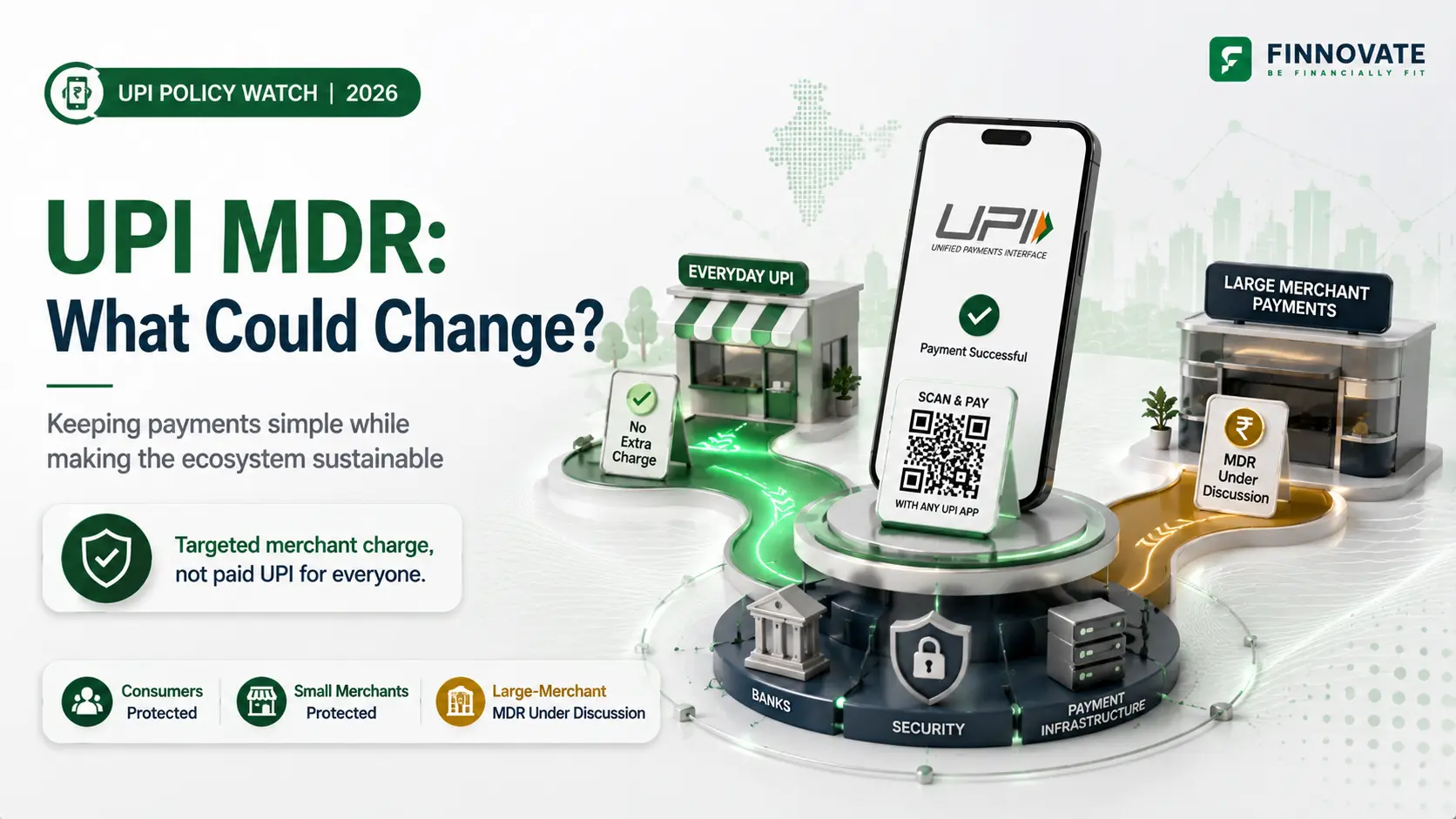
MDR stands for Merchant Discount Rate. It is a fee paid by a merchant for accepting a digital payment.
Suppose a customer pays a large retailer ₹10,000 through UPI and an MDR of 0.3% applies.
| Payment | Example |
|---|---|
| Customer pays | ₹10,000 |
| MDR at 0.3% | ₹30 |
| Merchant effectively receives | Around ₹9,970 |
The MDR can support banks, payment service providers and other participants involved in processing the transaction.
India’s policy framework had effectively required zero MDR on UPI and RuPay debit-card payments to encourage digital transactions and rapidly expand merchant acceptance.
Recent legislative changes have removed the blanket legal obstacle to permitting charges on selected digital-payment transactions. That gives the government flexibility to design a more targeted MDR framework later.
Based on the government’s latest messaging, everyday consumers are not the intended target.
Expected to remain free. Sending money to a family member, friend or another individual is different from a merchant payment.
The government has said small traders will continue to be protected under the proposed framework.
This is where a merchant charge is being considered, particularly for higher-value payments.
No.
₹2,000 has appeared repeatedly in proposals and industry discussions, but it should not yet be treated as a final rule.
Other reports have discussed possible rates in the 0.25%-0.4% range.
The answer lies partly in UPI’s own success.
At this scale, the ecosystem requires continuous spending on:
Because merchants do not pay MDR, the cost is currently spread across banks, payment-service providers and government incentives.
The Union Budget for FY2026-27 provided around ₹2,000 crore as incentives for low-value UPI and RuPay debit-card transactions.
A Parliamentary Standing Committee on Finance warned that existing support covered only a small part of the industry’s estimated cost and recommended exploring a more self-sustaining revenue model.
| Model | Who ultimately bears the cost? |
|---|---|
| Government subsidy | Taxpayer |
| Banks absorb the expense | Banks and indirectly customers/shareholders |
| MDR on merchants | Merchants |
| Merchants pass costs onward | Consumers indirectly |
Zero MDR solved one of the hardest problems in payments: merchant adoption.
For a small shopkeeper, paying a percentage on every digital transaction would have created an obvious reason to prefer cash. Zero MDR removed that friction.
QR acceptance became easy and inexpensive.
Customers could pay digitally almost everywhere.
Frequent use made UPI a default payment habit.
Each new merchant made the system more useful to every user.
Most merchant UPI transactions are still small.
| P2M transaction size | Approximate share of transactions |
|---|---|
| Below ₹500 | 86% |
| ₹501-₹2,000 | 10% |
| ₹2,000 and above | 4% |
If a future MDR were restricted to payments above ₹2,000, roughly 96% of merchant transactions by volume could remain outside it, based on the reported transaction mix.
Higher-value payments may represent only a small share of transaction count but a much larger share of the money transferred. That is why a targeted MDR can potentially raise revenue while leaving most everyday payments untouched.
Yes, but the impact depends heavily on where the charge is imposed.
| Argument for MDR | Argument against MDR |
|---|---|
| Creates sustainable revenue | Removes part of UPI’s zero-cost advantage |
| Funds cybersecurity and infrastructure | Merchants may discourage UPI |
| Reduces subsidy dependence | Some costs may indirectly reach consumers |
| Large merchants can absorb more | Payment behaviour could shift |
| Supports investment in future products | Poor design could slow merchant adoption |
Not necessarily.
UPI’s advantage is no longer only price.
Even with a modest merchant charge on selected transactions, UPI may remain economically attractive compared with many card acceptance models.
This is an important second-order effect.
UPI currently has a clear merchant-cost advantage over many card transactions. If that gap narrows, merchants and customers may compare payment methods more carefully.
A small UPI MDR would change the competitive equation, but it would not automatically reverse UPI’s dominance.
It sounds attractive, but the economics are more complicated.
Banks benefit indirectly from UPI through customer engagement, deposits and lower cash-handling friction. But the payment system also requires ongoing investment.
Government support helped accelerate digital-payment adoption. But UPI is now operating at enormous scale, and transaction volumes continue to grow rapidly.
They keep merchant acceptance inexpensive and protect small-value payments.
Budget support has an opportunity cost and may not fully cover the growing cost of the ecosystem.
The policy debate is increasingly about finding a balance between universal affordability and financial sustainability.
Technically, MDR is paid by the merchant. Economically, businesses may react in different ways.
No final rate has been notified.
₹2,000 is widely discussed, but not yet a final universal rule.
Turnover thresholds or merchant classifications still need to be finalised.
The full list beyond small-trader protection has not been announced.
There is no final start date for eligible MDR charges.
How the fee would be divided across ecosystem participants also remains important.
Nothing changes immediately.
Consumers can continue using UPI normally. Current government messaging says consumers and small traders will remain protected from the proposed MDR framework.
Large merchants should pay attention to four things:
For a large retailer processing ₹10 crore of eligible annual UPI sales:
| MDR rate | Annual cost on ₹10 crore |
|---|---|
| 0.1% | ₹1 lakh |
| 0.3% | ₹3 lakh |
| 0.5% | ₹5 lakh |
That is the wrong way to describe the debate.
UPI became successful because it removed friction.
Customers do not stop to think about payment rails. Merchants can accept money with a printed QR code. Banks interoperate. Money moves instantly.
Could create payment friction, merchant resistance and a shift back towards cash or other payment methods.
Could leave everyday small-value payments untouched while allowing large commercial transactions to contribute towards infrastructure costs.
For now, consumers should not read the MDR debate as the end of free UPI.
The final outcome will depend on who is charged, at what transaction size, at what rate and under what exemptions.
No. A final MDR framework for UPI has not yet been notified. Current government messaging continues to protect consumers and small merchants.
₹2,000 is being discussed as a possible threshold for payments to large merchants, but it is not yet a final universal rule.
MDR is generally a fee paid by the merchant to payment-system participants. It is different from a direct consumer transaction fee.
Current indications are that P2P transfers will continue to remain free.
The government has said small traders will remain protected under the proposed framework.
Banks and payment companies incur infrastructure, technology, fraud-prevention and processing costs. Policymakers are considering whether a revenue model is needed to make the UPI ecosystem financially sustainable.
UPI processed about 24,162 crore transactions worth ₹314.23 lakh crore in FY2025-26 and had approximately 55.49 crore onboarded users by June 2026.
Reported FY26 data suggests around 4% of P2M transaction volume was ₹2,000 or above.
Disclaimer: This article is for general information and educational purposes only. The MDR framework discussed above is still evolving. Final rates, thresholds, merchant categories and implementation rules may differ from proposals currently under consideration.
No spam. Only new posts, simple explainers, and practical money checklists for busy professionals.
Finnovate is a SEBI-registered financial planning firm that helps professionals bring structure and purpose to their money. Over 3,500+ families have trusted our disciplined process to plan their goals - safely, surely, and swiftly.
Our team constantly tracks market trends, policy changes, and investment opportunities like the ones featured in this Weekly Capsule - to help you make informed, confident financial decisions.
Learn more about our approach and how we work with you:
No comments yet. Start the conversation. What would you add?
No spam. Only new posts, simple explainers, and practical money checklists.
You may also like
Proposed EU scrap export curbs could affect India’s metal supply and manufacturing costs...
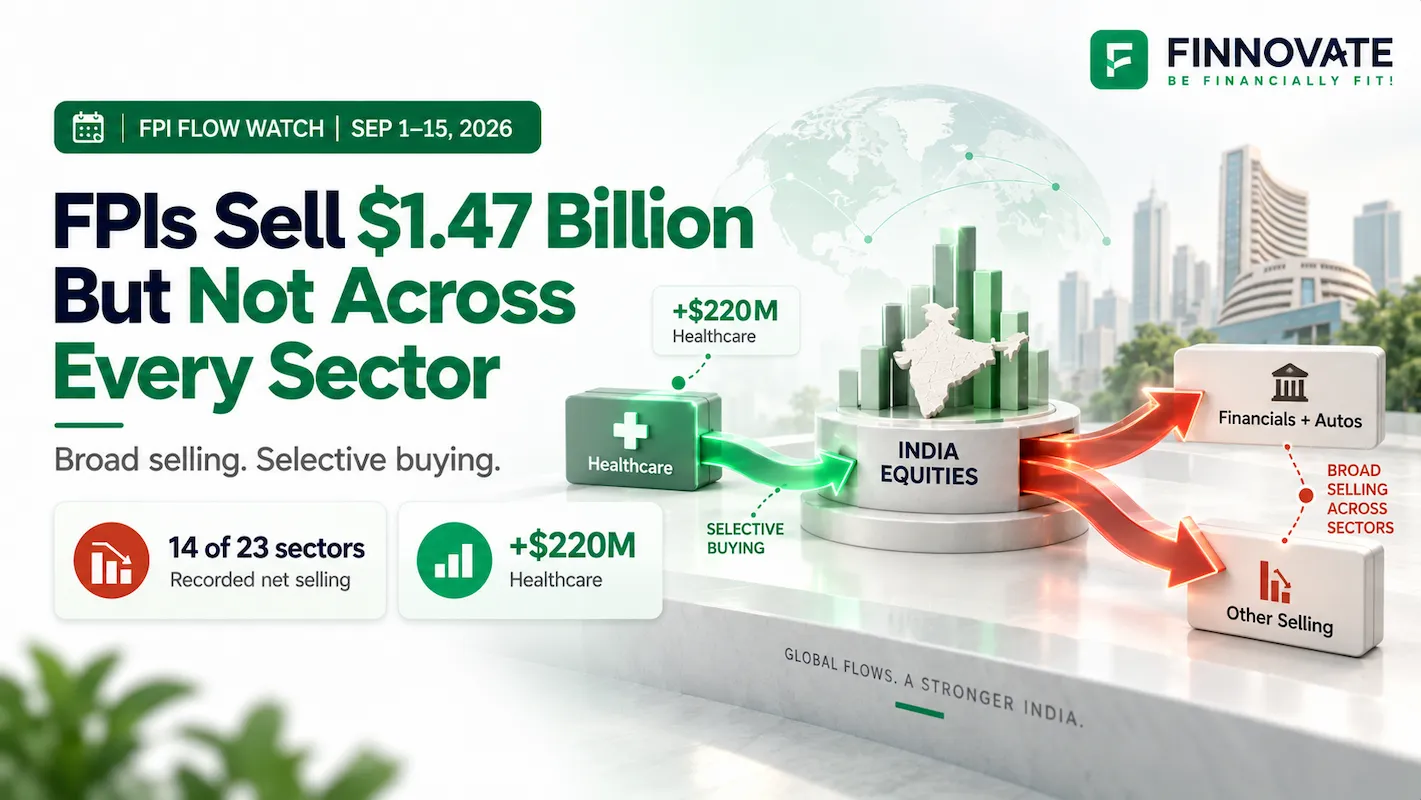
FPIs net sold $1.47 billion in Indian equities during September 1–15, 2026. Explore sect...
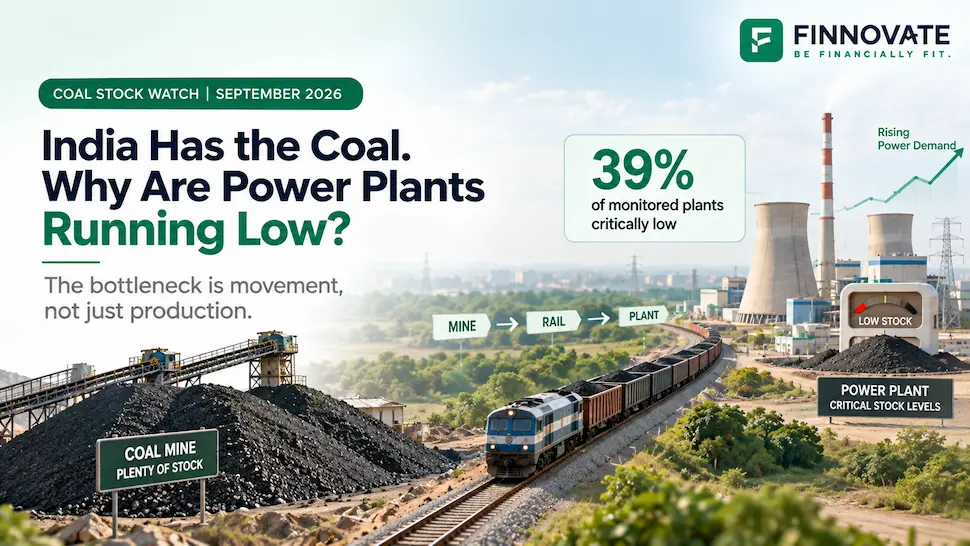
Nearly 39% of India’s monitored coal power plants were critically low on fuel in Septemb...
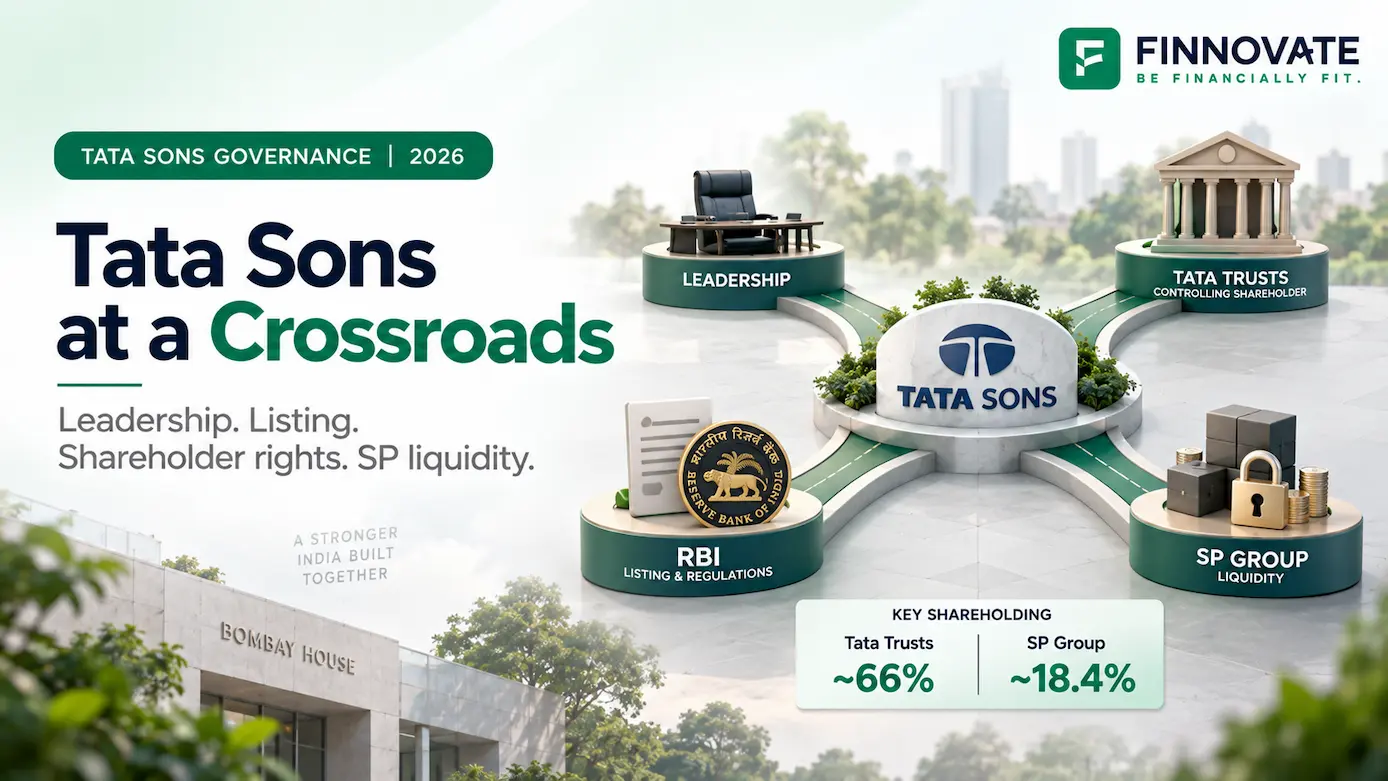
Tata Sons faces a major governance dispute over N Chandrasekaran’s reappointment, RBI li...
Popular now

Learn how to easily download your NSDL CAS Statement in PDF format with our step-by-step g...

Looking for the best financial freedom books? Here’s a handpicked 2026 reading list with...
Learn what SIF investment means in India, SEBI rules, Rs 10 lakh minimum investment, avail...
Clear guide to mutual fund taxation in India for FY 2025–26 after July 2024 changes: equ...