

NRI Capital Gains Tax in India: Shares, Property & MF
Understand NRI capital gains tax in India for 2026–27, including LTCG, STCG, shares, mut...
11 September 2026
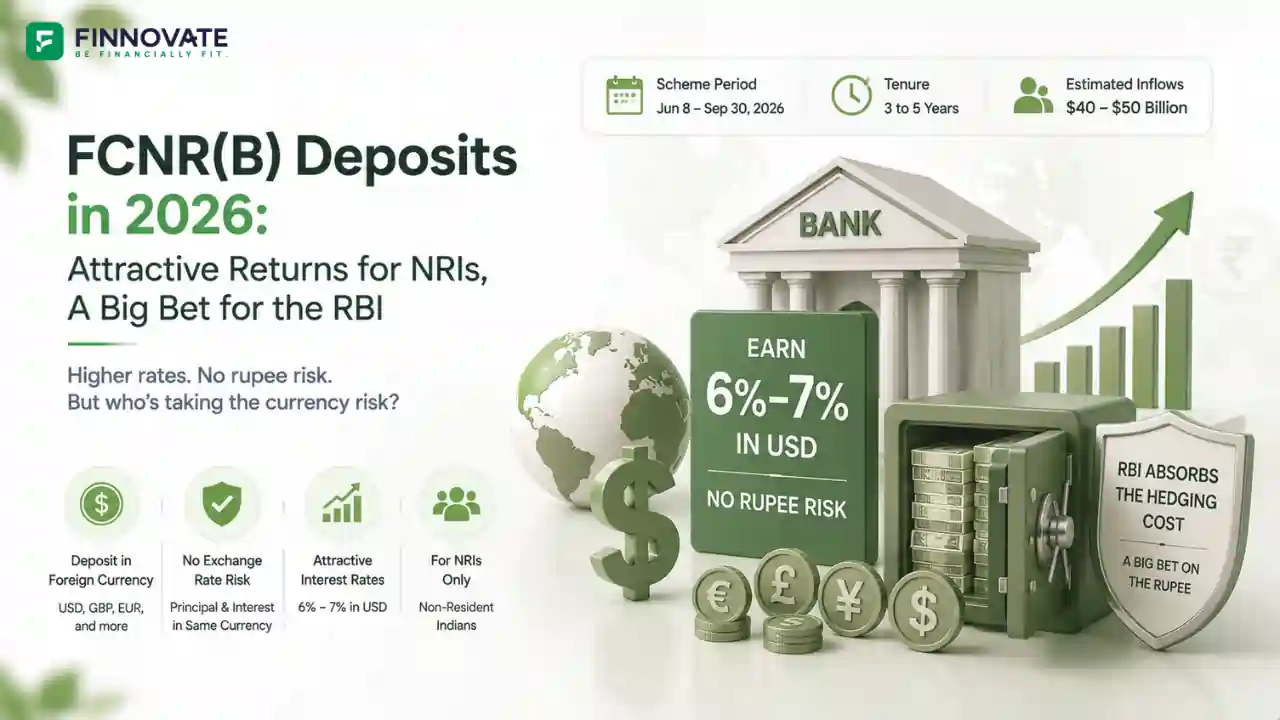
Announced: June 5, 2026 (Governor's policy statement) | Operational circular: June 8, 2026 | Window closes: September 30, 2026
The Reserve Bank of India announced a concessional swap facility on June 5, 2026, as part of the Governor's broader capital-inflow package. The operational circular, effective June 8, 2026, set the eligible deposit window from June 8 to September 30, 2026. Banks can offer these deposits in tenures of three to five years, and the rate environment it has created is the most attractive for NRI depositors since the 2013 taper tantrum.
Early estimates from analysts at Emkay Global and Motilal Oswal suggest the scheme could attract between $40 billion and $50 billion in NRI flows before the window closes. The question for NRIs evaluating the scheme is not just whether the rates are attractive: it is whether the spread over alternatives is large enough to justify a three-to-five-year lock-in. And the question for the RBI is whether it can manage the currency risk it is now absorbing on behalf of the banking system.
Quick read: RBI FCNR Deposit Scheme 2026
FCNR(B) stands for Foreign Currency Non-Resident (Bank). It is a term deposit held at an Indian bank in foreign currency, typically US dollars, but also GBP, EUR, CAD, AUD, and JPY. You deposit in your currency, earn interest in the same currency, and receive everything back in that currency at maturity. There is no rupee conversion at any stage, so the depositor bears no exchange rate risk.
Normally, when a bank accepts a dollar FCNR(B) deposit and deploys the funds in India, it must hedge its currency exposure. That hedging cost typically runs 2% to 3% per year, which caps the rate the bank can afford to offer. Under the June 5, 2026 Governor's announcement (operationalised via circular on June 8), the RBI agrees to absorb that hedging cost entirely for fresh deposits mobilised between June 8 and September 30, 2026. Banks swap their dollar exposure with the RBI at par, making their forex risk on FCNR(B) deposits zero. With the hedging cost removed, banks can offer materially higher deposit rates.
The rate increases since June 8, 2026 have been significant. Before the scheme, banks were typically offering 3.5% to 4% on dollar FCNR(B) deposits, reflecting the cost of hedging. With the hedging cost removed, rates have jumped sharply.
| Bank | Rate Before June 8 | Rate After Announcement | Increase |
|---|---|---|---|
| HDFC Bank | 3.65% | 6.00% | +2.35 percentage points |
| Other major banks | 3.50% to 4.00% | Up to 7.00% | +2.50 to +3.50 percentage points |
The RBI has used this playbook before. In 2013, then-Governor Raghuram Rajan launched a similar concessional FCNR(B) swap window during the taper tantrum, when the rupee was under severe pressure. That scheme attracted approximately $34 billion in NRI deposits. The rates offered and the competitive context were very different.
| Factor | 2013 Scheme | 2026 Scheme |
|---|---|---|
| US bank deposit rates | ~0.25% (near-zero) | ~4.5% (elevated) |
| FCNR(B) rates offered | ~5.5% on average | 6% to 7% |
| Spread over US alternatives | ~525 basis points | ~150 to 250 basis points |
| Inflows achieved | ~$34 billion | $40–50 billion estimated |
| NRI borrowing to invest | Economically viable | Economics do not fit at current spreads |
| Rupee macro context | Fragile Five: vulnerable | Stronger fundamentals, higher reserves |
The second lever that drove 2013 inflows was leverage: NRIs could borrow at low US rates and park the funds in high-yielding FCNR(B) deposits, generating an arbitrage. At current US rates of approximately 4.5%, that carry trade does not work. The economics of borrowing to invest in FCNR(B) at 7% simply do not generate a meaningful return after borrowing costs.
The scheme transfers the hedging cost from banks to the RBI. This is the mechanism that makes it work for NRI depositors and for the banking system. But it creates a contingent liability for the RBI that deserves scrutiny.
| Risk Type | Mechanism | Scale if the Scheme Attracts $50 Billion |
|---|---|---|
| Currency depreciation risk | If the rupee falls sharply against the dollar between deposit date and maturity, the RBI pays the difference on the swap. The higher the rupee depreciation, the larger the RBI's liability. | At $50 billion exposure, even a 10% rupee move creates a $5 billion liability |
| Concentration risk | If $50-70 billion arrives quickly, the reverse flow at maturity (3-5 years later) creates a large simultaneous dollar demand that the RBI must manage. | Maturity cliff risk; manageable with laddering but requires active planning |
| Market liquidity risk | If global dollar liquidity tightens or India's sovereign rating moves, the cost of the RBI managing its back-to-back cover rises. | Moderate: India's reserves provide a buffer |
India's Sovereign Gold Bond (SGB) scheme offers a cautionary parallel. The government issued SGBs at a fixed price and bore the price risk as gold values rose. As gold prices surged, the government's liability on SGBs grew substantially, eventually forcing the scheme to be discontinued in February 2026. The FCNR(B) swap carries a similar structural risk: the RBI is offering a fixed-cost guarantee in an environment where the underlying variable (the rupee-dollar rate) can move materially against it. In 2013, the macro environment cooperated; the rupee stabilised and the scheme unwound cleanly. That outcome is not guaranteed in 2026.
The government cannot afford another unhedged exposure at scale. If the scheme attracts $70 billion and the rupee depreciates 15% over the deposit tenure, the RBI's liability runs into tens of billions of dollars. The risk is real, even if not immediately visible in the headline rate numbers.
The 2026 FCNR(B) scheme offers a genuinely improved rate environment. Zero currency risk, tax-free interest in India, and rates of 6% to 7% on dollar deposits are attractive on paper. But the decision involves several trade-offs that NRIs should work through carefully.
Planning to act before the September 30 window closes?
Whether FCNR(B) fits your plan depends on your liquidity timeline, tax residency, and what you are already holding in NRE and NRO accounts. These are cross-border decisions that benefit from a structured review, not a one-size answer.
→ See how Finnovate helps NRIs structure their India investments
The 2026 FCNR(B) scheme is a genuine policy intervention, not a cosmetic measure. The rate improvement is real, the currency protection for the depositor is real, and the RBI's stated intent to replenish forex reserves through NRI flows is coherent. Whether it achieves the $40-50 billion target depends on two variables the RBI does not control: whether US interest rates stay high enough to make the spread unattractive for large-scale participation, and whether the monsoon and geopolitical environment keep the rupee under pressure. The risk the RBI is taking on, if the scheme scales to $70 billion and the rupee moves against it, is substantial. The government's experience with Sovereign Gold Bonds is a recent and relevant reminder that cost-of-carry guarantees at scale can become expensive liabilities. The scheme may work. But the RBI needs to get the back-to-back hedging right, and hope the macro environment cooperates, as it did in 2013.
If you are an NRI evaluating whether to move dollars into India before the deadline, a 30-minute call can help you assess the fit against your liquidity needs, tax position, and existing India exposure. No product selling. Fee-based advice only.
Book a 30-Minute NRI Planning CallFCNR(B) stands for Foreign Currency Non-Resident (Bank). It is a term deposit at an Indian bank held in foreign currency: US dollars, GBP, EUR, CAD, AUD, or JPY. Only NRIs and Persons of Indian Origin (PIOs) are eligible. The depositor faces no rupee risk: funds are deposited and returned in the same foreign currency. Interest is also paid in the same currency and is exempt from Indian income tax for qualifying NRIs.
Normally, banks bear a 2% to 3% annual hedging cost when they accept dollar FCNR(B) deposits and deploy funds in India. The measure was announced on June 5, 2026 in the Governor's policy statement and operationalised via circular on June 8. The RBI agrees to absorb this hedging cost entirely for fresh deposits mobilised between June 8 and September 30, 2026. With no hedging cost, banks can offer rates of 6% to 7% instead of the earlier 3.5% to 4%. The RBI announced a concessional dollar-rupee swap facility to facilitate this.
In 2013, US bank deposit rates were approximately 0.25%, making the 5.5% FCNR(B) rate enormously attractive: a spread of over 500 basis points. In 2026, US certificates of deposit offer approximately 4.5%, reducing the FCNR(B) spread to around 250 basis points at a 7% rate. NRIs in 2013 could also borrow cheaply in the US and invest in FCNR(B) for an arbitrage profit. That trade does not work at current US borrowing costs. Rates of 8% to 8.5% may be needed to replicate the 2013 scale of inflows.
The RBI is underwriting the currency risk on behalf of the banking system. If the rupee depreciates sharply against the dollar between deposit date and maturity, the RBI absorbs the cost of that depreciation on its swap with the banks. At $50 billion of deposits, a 10% rupee move creates a notional $5 billion exposure. The Sovereign Gold Bond parallel is relevant: unhedged government guarantees at scale can become substantial liabilities if the underlying asset moves unfavourably.
The scheme offers a genuinely attractive rate with zero currency risk for the depositor. Whether it makes sense depends on each NRI's liquidity needs, the tax treatment in their country of residence, their assessment of the Indian banking system over a 3 to 5 year horizon, and how 6-7% compares to available alternatives at home. NRIs who do not need liquidity for several years and are comfortable with an Indian bank counterparty may find this an attractive fixed income allocation. Please consult a SEBI-registered investment adviser and a tax professional before deciding.
Disclaimer: This article is for general information and educational purposes only. It does not constitute investment advice, a recommendation, or an offer to buy or sell any securities or financial instruments. FCNR(B) deposit rates referenced are indicative and sourced from publicly available bank announcements as of June 2026; actual rates offered by individual banks may differ and are subject to change. The scheme window, RBI circular terms, and deposit eligibility are subject to regulatory revision. Tax treatment depends on individual residential status and should be verified with a qualified tax adviser. Please consult a SEBI-registered investment adviser before making any financial decision.
No spam. Only new posts, simple explainers, and practical money checklists for busy professionals.
Finnovate is a SEBI-registered financial planning firm that helps professionals bring structure and purpose to their money. Over 3,500+ families have trusted our disciplined process to plan their goals - safely, surely, and swiftly.
Our team constantly tracks market trends, policy changes, and investment opportunities like the ones featured in this Weekly Capsule - to help you make informed, confident financial decisions.
Learn more about our approach and how we work with you:
No comments yet. Start the conversation. What would you add?
No spam. Only new posts, simple explainers, and practical money checklists.
You may also like
Understand NRI capital gains tax in India for 2026–27, including LTCG, STCG, shares, mut...

Returning to India with a 401(k)? Learn whether to keep it, roll it into an IRA or withdra...

Planning to retire in India as an NRI? Learn how to plan your retirement corpus, overseas ...
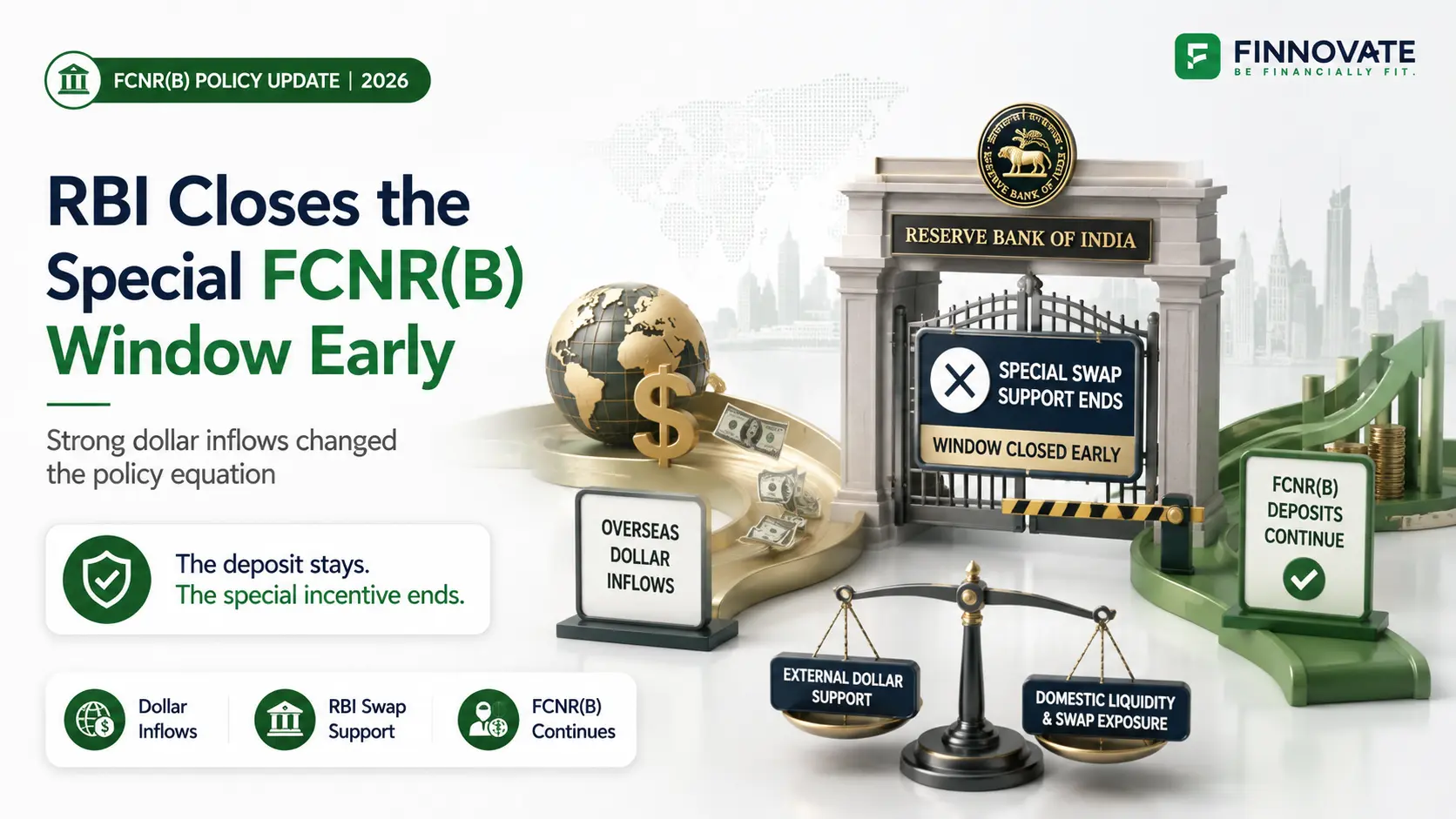
RBI will close the special FCNR(B) swap window on August 31, 2026 after $52.3 billion in d...
Popular now

Learn how to easily download your NSDL CAS Statement in PDF format with our step-by-step g...

Looking for the best financial freedom books? Here’s a handpicked 2026 reading list with...

Learn what SIF investment means in India, SEBI rules, Rs 10 lakh minimum investment, avail...

Clear guide to mutual fund taxation in India for FY 2025–26 after July 2024 changes: equ...