
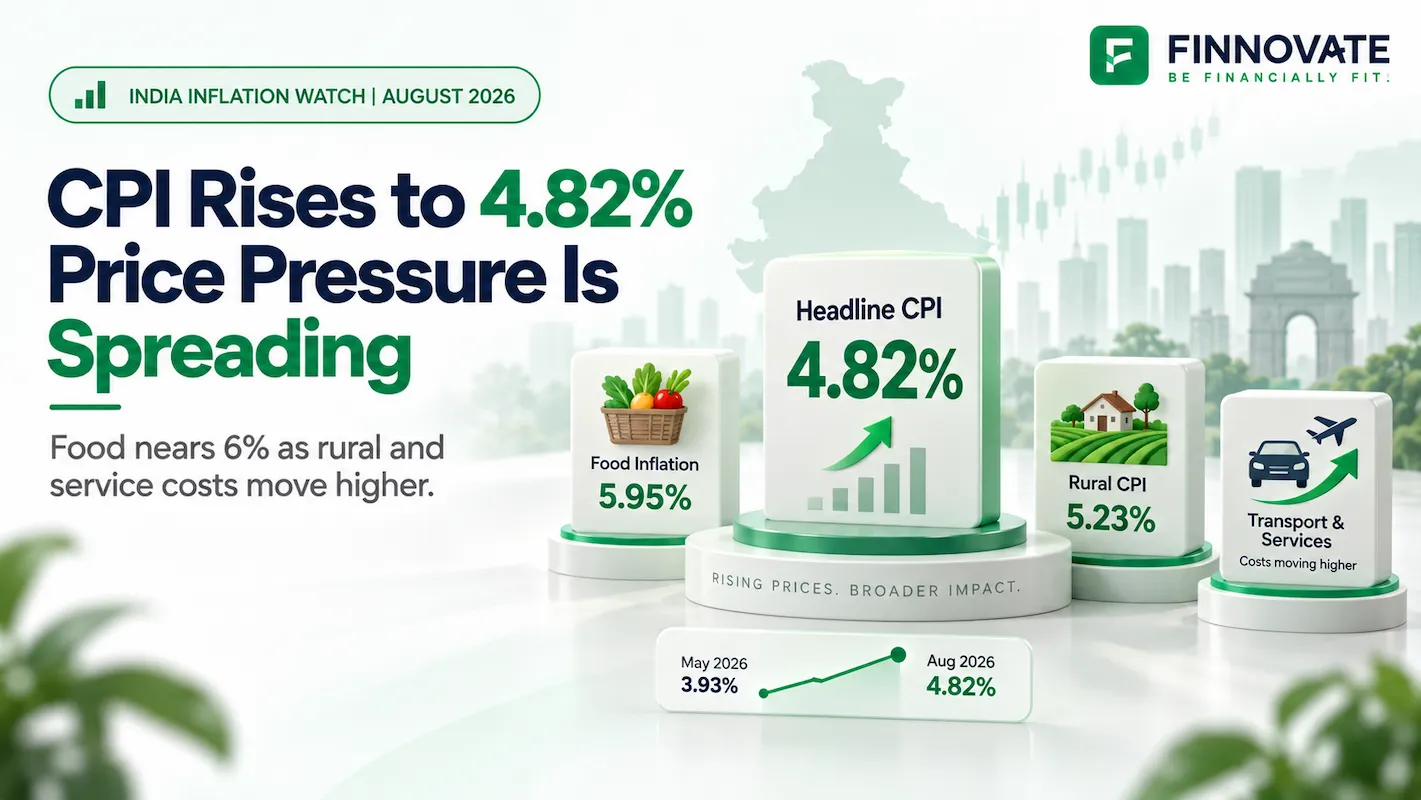
India CPI Inflation August 2026: Food Nears 6% as Rural Inflation Rises
India’s CPI inflation rose to 4.82% in August 2026 as food inflation neared 6% and rural...
21 September 2026

Finnovate’s editorial team researches and creates financial content using trusted sources, regulatory references and inputs from subject experts.
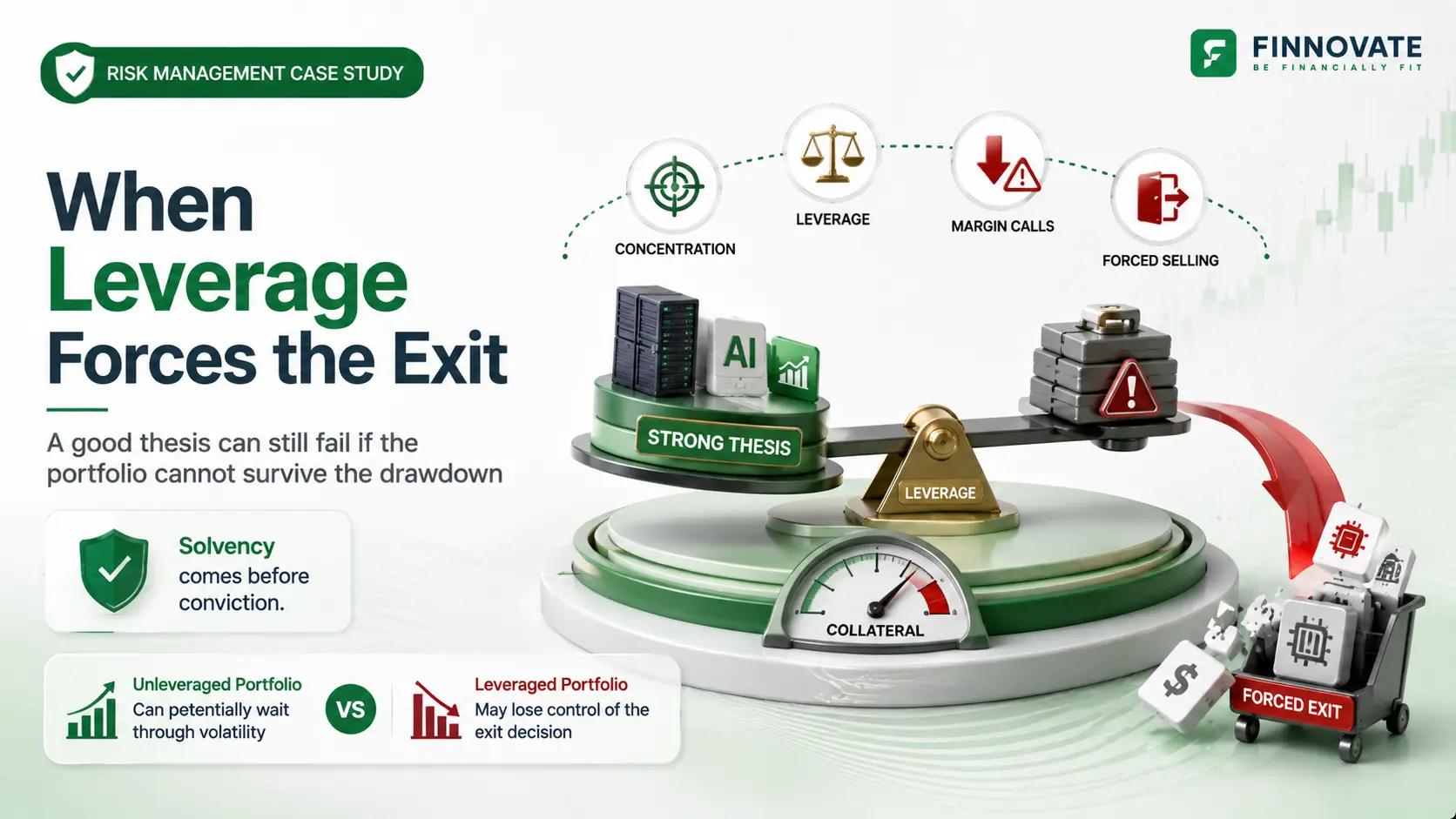
Leopold Aschenbrenner built one of the fastest-growing AI-focused hedge funds in the market. Then July 2026 exposed how fragile a high-conviction strategy can become when leverage, concentrated positions and margin calls arrive at the same time.
Situational Awareness lost about 67% in July 2026, according to an investor letter reported by Reuters. The fund then sold most of its public-equity portfolio, with Citadel buying a large part of those positions.
The important lesson is not simply that AI stocks fell.
Table of Contents
| Indicator | Position |
|---|---|
| Founder | Leopold Aschenbrenner |
| Background | Former OpenAI researcher |
| Fund strategy | Concentrated AI and AI-infrastructure investing |
| July 2026 portfolio decline | About 67% |
| Public-equity response | Most positions sold |
| Buyer of a large part of the book | Citadel |
| Leverage after crisis | Removed |
| Private holdings | Retained, including Anthropic exposure |
| 2026 return after July loss | Still about +80%, according to investor communication |
The fund had generated extraordinary gains before the July reversal. Public reporting said it had grown to more than $20 billion in assets under management by June 2026 after gains of more than 1,000% since launch.
Aschenbrenner previously worked on OpenAI’s Superalignment team.
In June 2024, he published a long essay series titled Situational Awareness: The Decade Ahead. It argued that rapid improvements in compute, algorithms and AI systems could push capabilities towards artificial general intelligence and eventually much more capable systems before the end of the decade.
His investment strategy grew out of the same thesis.
The fund treated AI as an infrastructure build-out, not only a software story.
Chips, memory and hardware required to train and run advanced AI models.
Physical infrastructure required to host large-scale computing systems.
Electricity generation and supporting infrastructure needed for rising AI energy demand.
Cloud capacity and private AI companies positioned around growing enterprise adoption.
Publicly discussed positions included companies such as CoreWeave, Nebius, Bloom Energy, SK Hynix and other AI-infrastructure names.
The fund also held private investments, including Anthropic. Public regulatory filings therefore did not show every part of the portfolio.
Situational Awareness grew unusually fast.
By June 2026, reports said assets under management had crossed $20 billion, while performance since launch had exceeded 1,000% after fees.
The rise was supported by:
Rapid gains can attract more capital and make both managers and investors more comfortable with concentration and leverage. That becomes dangerous when the same positions begin falling together.
AI-linked equities corrected sharply during July.
Reuters reported that the fund’s portfolio fell about 67% for the month as losses in AI-related stocks triggered a forced reduction in exposure. Situational Awareness sold most of its public-equity holdings, with Citadel buying a substantial portion.
The problem was the interaction between three risks:
Leverage allows a fund to control more market exposure than the investor capital actually committed.
| Example | Fully funded portfolio | 4× market exposure |
|---|---|---|
| Investor capital | ₹100 | ₹100 |
| Market exposure | ₹100 | Approximately ₹400 |
| 20% adverse move | About ₹20 loss | Potentially about ₹80 loss before hedges and financing effects |
| Capital remaining | About ₹80 | Potentially around ₹20 |
The exact result depends on gross and net exposure, hedges, borrowing terms and the positions held. The example shows why the same market decline can have a much larger impact on investor equity when borrowed exposure is involved.
Leveraged funds usually finance part of their positions through prime brokers or other lenders. Those lenders require collateral.
If portfolio values fall, the lender may ask the fund to:
Forced selling can create a self-reinforcing cycle.
Aschenbrenner compared the July episode to a bank-run dynamic, where liquidity pressure compounds once confidence and available collateral disappear.
The portfolio was concentrated around the AI theme.
Several holdings could therefore react to the same underlying factors:
Citadel did not acquire the entire Situational Awareness business.
Reports indicate that Situational Awareness sold most of its public stock portfolio, with Citadel buying a large portion of those positions.
Most of the public-equity portfolio following the margin-driven unwind.
Private investments, including exposure to Anthropic and other private AI assets.
The fund also removed leverage from the remaining portfolio after the July crisis.
The episode is therefore better described as a forced restructuring of the public-equity book than a complete shutdown of the fund.
One month of market performance cannot answer that question.
| Question | What July tells us |
|---|---|
| Was the long-term AI thesis wrong? | Not established |
| Were some AI stocks overvalued? | Possibly |
| Was the portfolio concentrated? | July exposed that risk |
| Was the leverage aggressive? | The forced unwind suggests the capital structure became unsustainable |
An investor can identify a powerful technological shift and still lose money if position size, leverage or liquidity leaves too little room for temporary losses.
The comparison with Long-Term Capital Management is useful, but only at the level of risk management.
Relied heavily on leveraged relative-value and convergence trades across global markets.
Built concentrated exposure around AI and technology-related investments.
The strategies were very different. The common issue was that leverage shortened the amount of time available for the investment thesis to work.
| Situation | Effect of a 40% portfolio decline |
|---|---|
| Fully funded portfolio | ₹100 becomes ₹60 |
| Highly leveraged portfolio | The loss can consume most or all investor equity depending on exposure |
| Fully funded investor | Usually controls whether to continue holding |
| Leveraged investor | May face collateral demands and forced sales |
A 40% fall is serious in both cases. The key difference is control over the exit decision.
Leverage becomes especially dangerous when positions are difficult to sell quickly.
Investors may assume positions can be reduced whenever needed.
Buyers can disappear, spreads widen and large orders can push prices lower.
During a broad sell-off:
That is why leverage risk and liquidity risk are closely connected.
An investment has to survive long enough for the thesis to work.
Even an excellent company can cause severe damage if the position is too large.
The same market move can have a much larger effect on investor equity.
Several securities can still represent one underlying economic bet.
The ability to sell during normal markets says little about the price available during forced liquidation.
Most individual investors will never operate a hedge fund, but the same risks appear in simpler forms.
Examples include:
Before using leverage, three questions matter:
Situational Awareness became one of the most closely watched AI investment stories because Aschenbrenner identified the AI-infrastructure opportunity early and backed it aggressively.
For a long period, that conviction produced exceptional returns.
July 2026 showed the other side of the strategy. Falling AI positions, leverage and collateral pressure combined to force most of the public-equity book to be sold.
The long-term AI thesis may still prove correct.
The fund lost about 67% during July as AI-related positions fell and leverage contributed to margin pressure. It then sold most of its public-equity portfolio.
The fund was founded by Leopold Aschenbrenner, a former OpenAI researcher and author of the essay series Situational Awareness: The Decade Ahead.
No. Citadel bought a large portion of the public-equity positions sold during the unwind. The fund retained private investments, including Anthropic exposure.
Leverage allows a fund to control more market exposure than the investor capital committed. This can magnify both gains and losses.
A margin call occurs when a lender or prime broker requires additional collateral or a reduction in positions because the value supporting a leveraged trade has fallen.
No. The July loss showed that the portfolio structure could not withstand the drawdown. It did not establish whether the long-term AI thesis will ultimately prove correct or incorrect.
Position sizing, leverage, diversification and liquidity can matter as much as investment selection. Being right eventually is of limited value if the portfolio cannot survive the interim losses.
Disclaimer: This article is for general information and educational purposes only. It does not constitute investment advice or a recommendation regarding leverage, hedge funds, securities or derivatives. Hedge-fund structures, leverage calculations and reported asset values can differ based on gross exposure, net exposure, private assets and reporting methodology.
No spam. Only new posts, simple explainers, and practical money checklists for busy professionals.
Finnovate is a SEBI-registered financial planning firm that helps professionals bring structure and purpose to their money. Over 3,500+ families have trusted our disciplined process to plan their goals - safely, surely, and swiftly.
Our team constantly tracks market trends, policy changes, and investment opportunities like the ones featured in this Weekly Capsule - to help you make informed, confident financial decisions.
Learn more about our approach and how we work with you:
No comments yet. Start the conversation. What would you add?
No spam. Only new posts, simple explainers, and practical money checklists.
You may also like
India’s CPI inflation rose to 4.82% in August 2026 as food inflation neared 6% and rural...
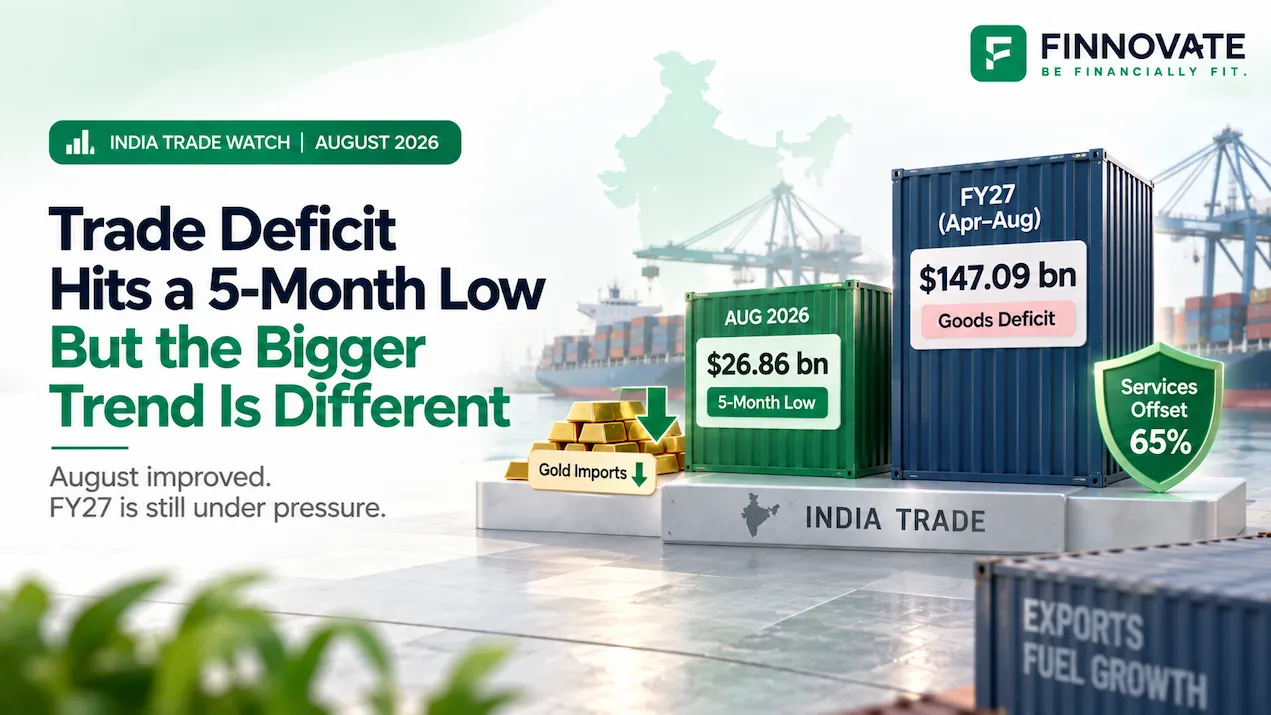
India’s trade deficit narrowed to $26.86 billion in August 2026. See what drove the impr...
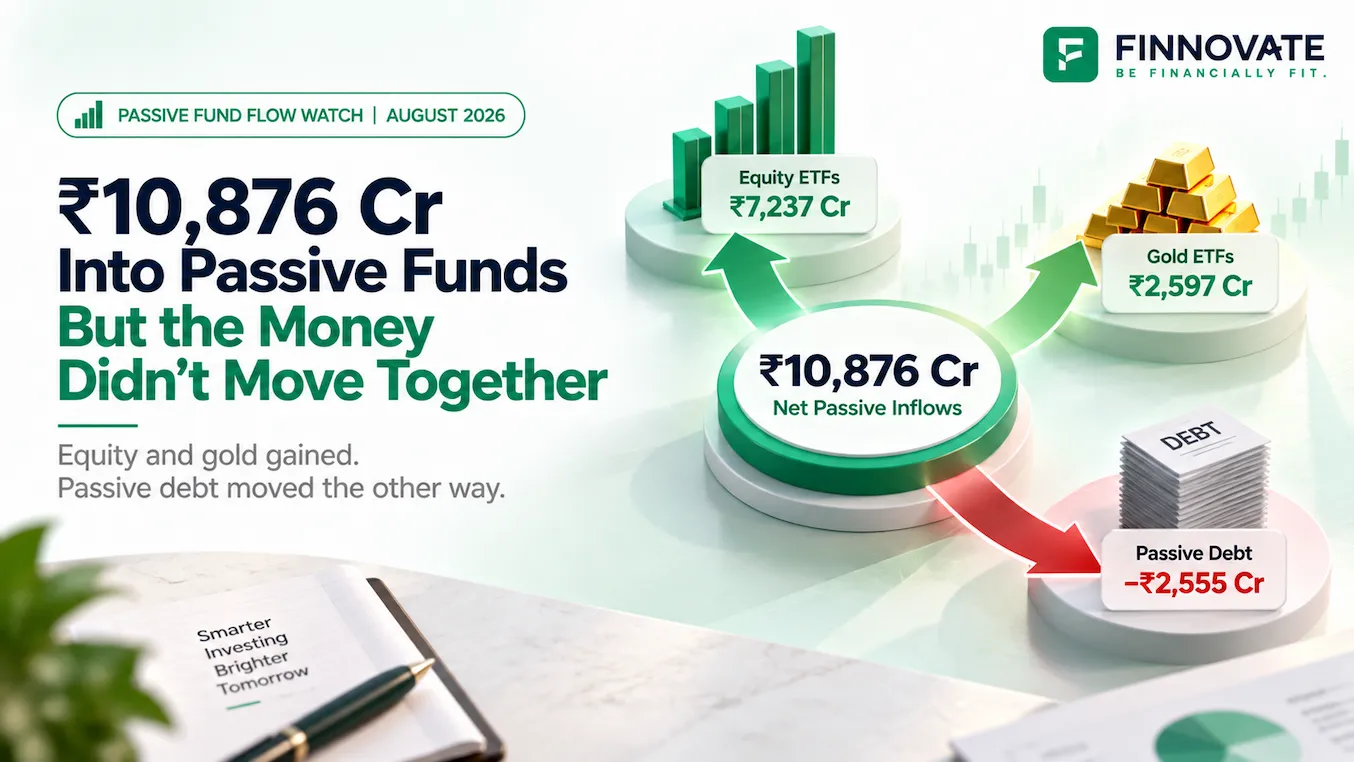
Passive funds saw ₹10,876 crore of net inflows in August 2026. See which categories led,...

India’s semiconductor push is expanding beyond fabs. See how Applied Materials, Tata, Ne...
Popular now

Learn how to easily download your NSDL CAS Statement in PDF format with our step-by-step g...

Looking for the best financial freedom books? Here’s a handpicked 2026 reading list with...
Learn what SIF investment means in India, SEBI rules, Rs 10 lakh minimum investment, avail...

Clear guide to mutual fund taxation in India for FY 2025–26 after July 2024 changes: equ...