

Gold Loans India 2026: The Hidden Risks in a ₹14 Trillion Market
Global gold has fallen ~27% from its January 2026 peak. India's gold loan market is estima...
29 June 2026

Finnovate’s editorial team researches and creates financial content using trusted sources, regulatory references and inputs from subject experts.
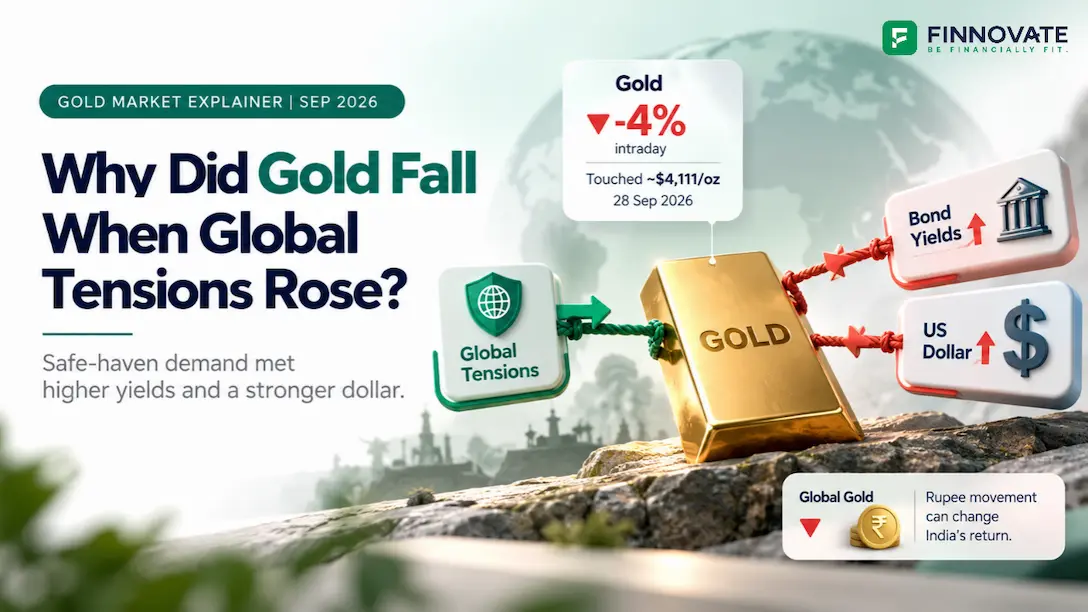
On September 28, 2026, gold fell as much as 4% during trading, touching roughly $4,111 an ounce, its lowest level since August 5.
At the same time, a stalemate in US–Iran negotiations was pushing oil prices higher and keeping concerns about energy supplies alive.
For anyone who bought gold as protection against global uncertainty, that combination could seem puzzling. Tensions were rising. Oil was getting more expensive. Yet gold was falling.
Gold recovered some ground the following day. But the sharp decline raised a useful question: why had the demand for safety failed to support its price?
The answer lies in how the same event can affect several parts of the financial system at once. Geopolitical tension can make gold more attractive, while its effect on inflation and interest rates pushes in the opposite direction.
Gold has long attracted investors during periods of uncertainty. Physical gold is not a company’s promise to pay, and its value does not depend on a single business remaining profitable.
That can make it appealing when confidence in other assets weakens.
But conflict also affects the price of energy. When markets fear that oil supplies could be disrupted, buyers may be willing to pay more for available supplies.
Higher energy costs can then spread through the economy. Transport becomes more expensive. Businesses face higher production costs. Some of those costs may eventually reach consumers.
That brings central banks into the picture.
If inflation looks likely to remain high, investors may expect central banks to raise interest rates or keep them elevated for longer. Bond markets can respond immediately, before another policy decision takes place.
So the same geopolitical event can encourage people to seek protection in gold while also increasing the appeal of investments that pay interest.
On September 28, rising US bond yields and expectations of further rate increases were weighing on gold despite the tense backdrop.
A gold bar pays no interest. Its investment return depends on the price at which it can eventually be sold, after costs.
A bond offers a different proposition: scheduled payments and repayment terms, subject to the issuer meeting its obligations.
When the yields available on bonds rise, investors reassess the choice.
Consider a simple illustration. If an interest-paying investment offers a higher return than before, holding gold means giving up more potential income. Gold may still appeal for other reasons, but the comparison has changed.
Economists call this the opportunity cost of holding gold. In simple, it is what you could earn elsewhere with the same money.
On September 28, the benchmark US 10-year Treasury yield reached its highest level since June 2007 before easing.
The Federal Reserve had already raised its policy-rate range by 0.25 percentage point to 3.75%–4% on September 16, citing elevated inflation. Investors were therefore assessing the possibility of additional increases.
The distinction matters: the September increase was an announced decision. Further increases were expectations, and those expectations could change with incoming data.
Gold was reacting to that changing investment landscape.
Gold is often described as an inflation hedge. Yet its response to inflation depends partly on what happens to interest rates at the same time.
Suppose prices are expected to rise faster, but the returns available on savings and bonds barely change. Holding those assets becomes less rewarding after accounting for inflation, which can strengthen gold’s appeal.
Now consider a different situation. Inflation concerns lead investors to expect a stronger response from the central bank, and bond yields rise substantially.
Gold then faces greater competition.
This is why investors also watch real yields, which reflect returns after allowing for inflation. For forward-looking comparisons, expected inflation matters.
The relationship is not fixed. Jewellery demand, central-bank purchases, investment flows and other factors can also influence gold.
The useful point is that “inflation is rising” does not fully explain what should happen to gold. Investors are also judging the policy response and the returns available elsewhere.
Gold is quoted internationally in US dollars.
When the dollar strengthens against a buyer’s currency, the same dollar price of gold becomes more expensive in that buyer’s local money. That can restrain demand.
A stronger dollar can therefore add to the pressure from rising bond yields. Both were part of the market backdrop leading into the September 28 sell-off.
These forces can overlap. Expectations of higher US interest rates can affect both bond yields and demand for dollars.
But gold does not follow either one mechanically. Its price reflects the combined decisions of investors, central banks, jewellery buyers and other participants.
The September fall illustrates why a single headline, even a major geopolitical one, cannot explain the whole market.
An Indian investor’s gold return also depends on the rupee.
Before taxes and local price adjustments, the basic relationship is:
Gold price in rupees = Gold price in dollars × Rupees needed to buy one dollar
If dollar gold falls while the rupee weakens, the currency movement can soften the decline in rupee terms.
Consider this hypothetical example:
| Movement | Change |
|---|---|
| International gold price in dollars | Falls 4% |
| Rupees needed to buy one dollar | Rises 2% |
| Converted gold value in rupees | Falls 2.08% |
The calculation is:
0.96 × 1.02 = 0.9792, equivalent to a decline of 2.08%.
The rupee’s weakness offsets part of the international price fall. If the rupee strengthened instead, it could deepen the decline.
This example isolates the currency effect. It does not represent India’s actual return on September 28.
Domestic prices also reflect import duties and local premiums or discounts. A jewellery bill includes further elements, such as making charges and applicable taxes.
That is why a global headline showing gold down 4% need not translate into an identical change in an Indian gold investment or jewellery quote.
Gold can respond differently from shares and bonds, which gives it a role in diversification. That role is assessed across different market conditions and periods.
It does not require gold to rise every time another investment falls.
The September 28 sell-off showed how several forces can compete. Geopolitical tension increased concerns about safety, but its effect on oil prices also reinforced inflation worries. Higher yields and interest-rate expectations then weighed on an asset that pays no income.
For Indian investors, currency movements add another layer.
The useful question is therefore broader than whether the world feels uncertain. It is how that uncertainty changes inflation expectations, interest rates, currencies and demand for gold.
Gold’s reputation as a haven explains why investors may want to own it. The alternatives available to them help explain the price they are willing to pay.
Disclaimer: This article is for educational purposes and is not an investment recommendation. Gold prices can fluctuate, and diversification does not eliminate the risk of loss. The currency example is hypothetical.
No spam. Only new posts, simple explainers, and practical money checklists for busy professionals.
Finnovate is a SEBI-registered financial planning firm that helps professionals bring structure and purpose to their money. Over 3,500+ families have trusted our disciplined process to plan their goals - safely, surely, and swiftly.
Our team constantly tracks market trends, policy changes, and investment opportunities like the ones featured in this Weekly Capsule - to help you make informed, confident financial decisions.
Learn more about our approach and how we work with you:
No comments yet. Start the conversation. What would you add?
No spam. Only new posts, simple explainers, and practical money checklists.
You may also like
Global gold has fallen ~27% from its January 2026 peak. India's gold loan market is estima...
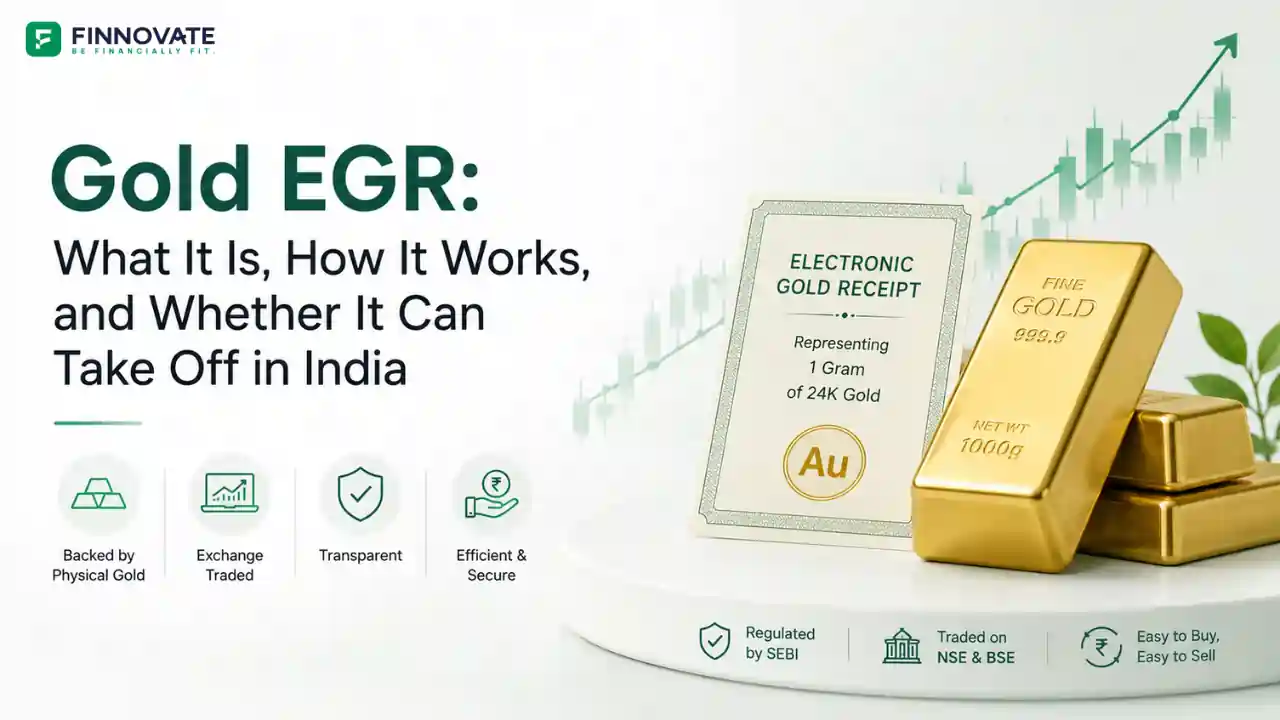
NSE launched Electronic Gold Receipts on May 4, 2026. EGRs offer physical delivery and a 1...

January 2026 gold ETF inflows hit ₹24,040 crore, nearly matching active equity inflows. ...

Silver ETFs traded at steep premiums over spot prices, leading to a sharp correction. Here...
Popular now

Learn how to easily download your NSDL CAS Statement in PDF format with our step-by-step g...

Looking for the best financial freedom books? Here’s a handpicked 2026 reading list with...
Learn what SIF investment means in India, SEBI rules, Rs 10 lakh minimum investment, avail...
Clear guide to mutual fund taxation in India for FY 2025–26 after July 2024 changes: equ...