

Tax Planning and Benefits for Married Couples in India: 2026 Guide
Tax planning for married couples in India explained for 2026. Compare tax regimes, deducti...
05 September 2026


Finnovate’s editorial team researches and creates financial content using trusted sources, regulatory references and inputs from subject experts.

Section 80C is still the most used tax-saving section in India because it covers common, real-life items like PF, PPF, school fees, life insurance premium, ELSS, and home-loan principal.
But Section 80C only “helps” when two things line up:
This guide explains what 80C covers, how the limits actually work, and the deductions people most often get wrong.
Examples: EPF/VPF, PPF, ELSS, life insurance premium, home loan principal, 5-year tax-saving FD, tuition fees, Sukanya Samriddhi deposit, etc.
Most people say “80C limit is ₹1.5 lakh” and stop there. The more accurate way to understand it is:
Your overall ₹1.5 lakh cap is shared across:
So even if you invest in multiple items, the total deduction across these buckets usually cannot exceed ₹1.5 lakh in a year.
So if you’re planning last-minute 80C investments mainly to save tax, first confirm if OTR even beats NTR for you.
If you want a broader framework to think about deductions and planning, you can also read: Tax planning for salaried employees in India (2025).
In FY 2025–26, under the New Tax Regime:
That’s why many salaried taxpayers effectively see “zero tax” up to around ₹12.75 lakh under NTR in practical terms.
So if your income is around this level and you are anyway better off in NTR, then doing 80C investments “only for tax saving” can become irrelevant.
To claim 80C, you need proof. Typically:
Keep a clean payment trail and receipts. Even if something was paid, it becomes hard to claim if proof is weak.
Before filing your ITR, it’s also smart to cross-check your tax credits and reported income using: AIS vs TIS vs Form 26AS before filing ITR.
Simple rule: buy insurance for protection first, tax benefit second.
Tax on redemption: Gains are taxed as equity capital gains when you redeem. If it qualifies as long-term, LTCG rules apply, including the annual exemption threshold and applicable rate.
If you want to understand how capital gains taxation works in simple terms, refer: Capital gains tax in India explained.
Also eligible under 80C (only in the year you pay them):
Big rule people miss: If you sell the property before the minimum holding condition is met, the principal deductions you claimed earlier can get reversed and become taxable.
Rates are notified by the government and are typically revised quarterly.
| 80C Item | Lock-in / Holding | Returns: Tax Treatment | Proof to Keep | Common Gotcha |
|---|---|---|---|---|
| EPF / VPF (employee contribution) | Till exit/withdrawal rules | Interest tax-free up to limits | PF statement / Form 12BA details | High contributions can make part of interest taxable |
| PPF | Long-term (scheme rules apply) | Generally EEE (as per rules) | Passbook / account statement | Liquidity is limited, plan cash flow first |
| Life insurance premium (Term/Endowment/ULIP) | ULIP typically 5-year lock-in | Depends on product and conditions | Premium receipt / policy document | Don’t buy the wrong product only for 80C |
| ELSS | 3 years (each SIP instalment has its own lock-in) | Taxed as equity capital gains on redemption | AMC statement / CAS | Lock-in ends, but equity risk still exists |
| Home loan principal + stamp duty/registration (year of payment) | Holding condition applies (to avoid reversal) | Principal is a deduction, interest is separate | Bank certificate + stamp duty receipts | Selling early can reverse deductions |
| 5-year tax-saving FD | 5 years | Interest is taxable | FD certificate / bank statement | Deduction now, tax on interest every year |
| SCSS | Lock-in as per scheme | Interest is taxable | Account statement | Good return, but tax impact is real |
| NSC | Lock-in as per scheme | Interest is taxable | Certificate / statement | Understand how interest is treated each year |
| Sukanya Samriddhi (SSY) | Long-term (scheme rules apply) | Generally tax-free as per scheme rules | Passbook / deposit proof | Deduction claimed by parent/legal guardian who pays |
| Tuition fees (up to 2 children) | None | Not about returns, it’s an expense deduction | Tuition fee receipt | Only tuition fee, not donation/transport/development fees |
Many salaried taxpayers unknowingly fill up 80C through EPF alone. In that case:
A lot of people invest in the last quarter to “complete 80C”, then later realise one of these: their 80C was already exhausted via EPF, the New Tax Regime would have been better, or they chose a product with the wrong lock-in.
In a short consultation, we help you:
Book a 15-Minute Tax Clarity Call
Useful if your salary structure changed, you switched jobs, or you are planning a new investment only for tax saving.
Section 80C is useful, but only when used with context:
Use 80C as a tax tool, but choose products based on your goals and time horizon first.
Tax Planning in India: Definition, Types, Benefits & Common Methods
Tax Planning for Salaried Employees in India (2026 Guide)
Disclaimer: This article is for informational and educational purposes only. It does not constitute tax, legal, or financial advice. Tax rules can change and the right treatment depends on your facts. Consult a qualified tax professional for advice specific to your situation.
No spam. Only new posts, simple explainers, and practical money checklists for busy professionals.
Finnovate is a SEBI-registered financial planning firm that helps professionals bring structure and purpose to their money. Over 3,500+ families have trusted our disciplined process to plan their goals - safely, surely, and swiftly.
Our team constantly tracks market trends, policy changes, and investment opportunities like the ones featured in this Weekly Capsule - to help you make informed, confident financial decisions.
Learn more about our approach and how we work with you:
No comments yet. Start the conversation. What would you add?
No spam. Only new posts, simple explainers, and practical money checklists.
You may also like
Tax planning for married couples in India explained for 2026. Compare tax regimes, deducti...
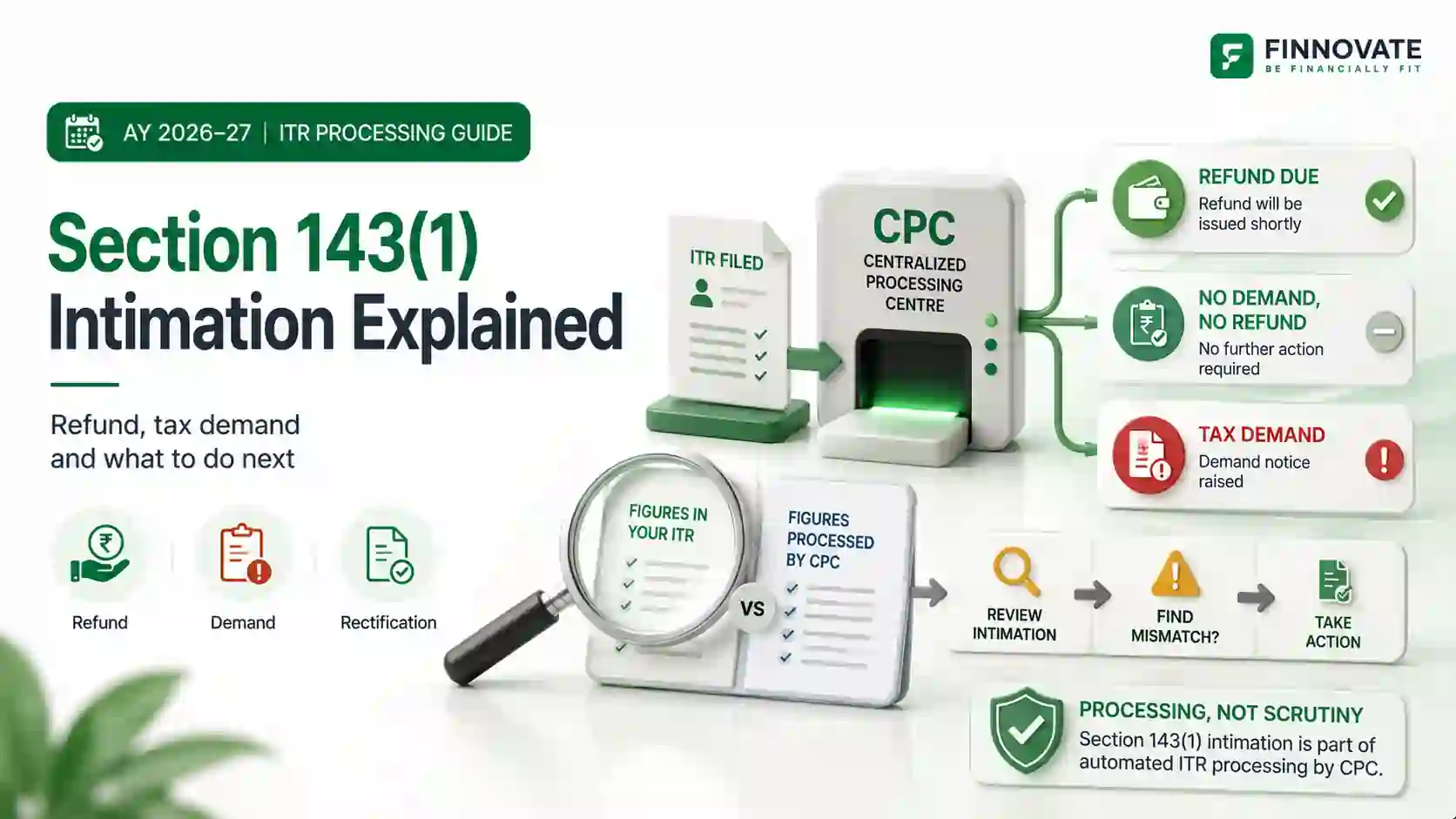
Received a Section 143(1) intimation? Understand CPC adjustments, refunds, tax demands, re...
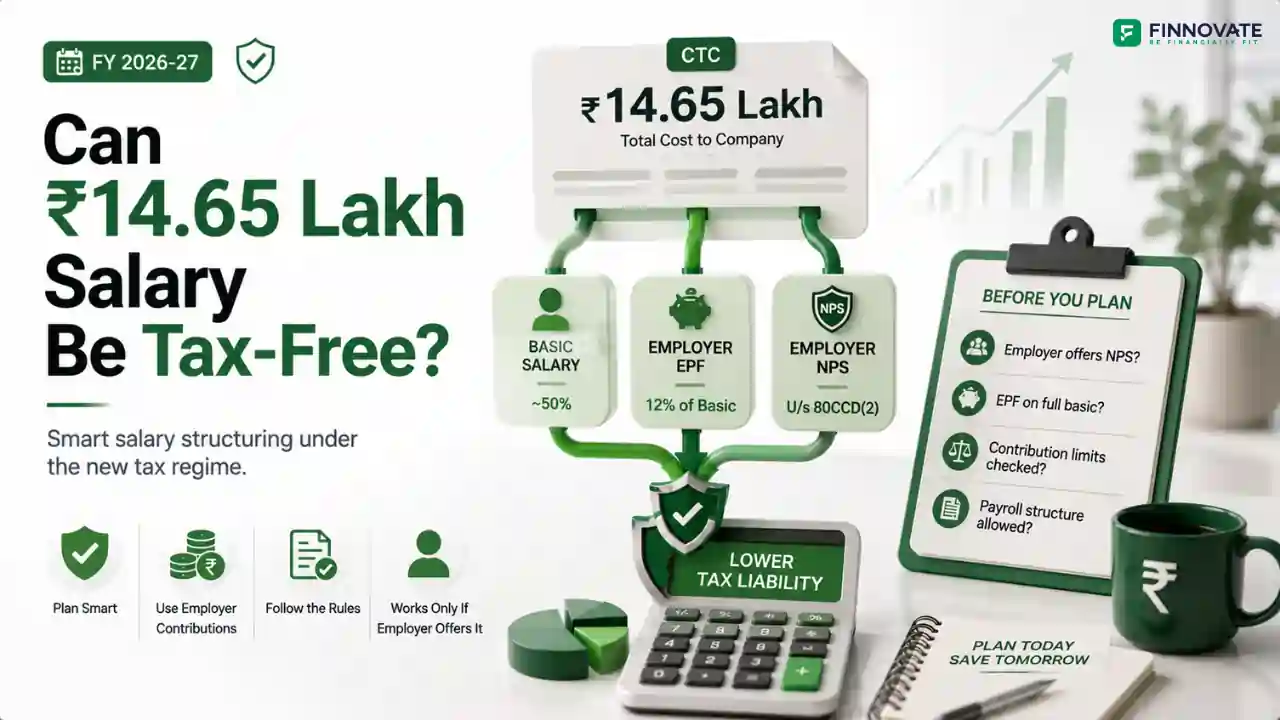
Zero tax on a ₹14.65 lakh salary is real, but only if your employer contributes EPF on f...
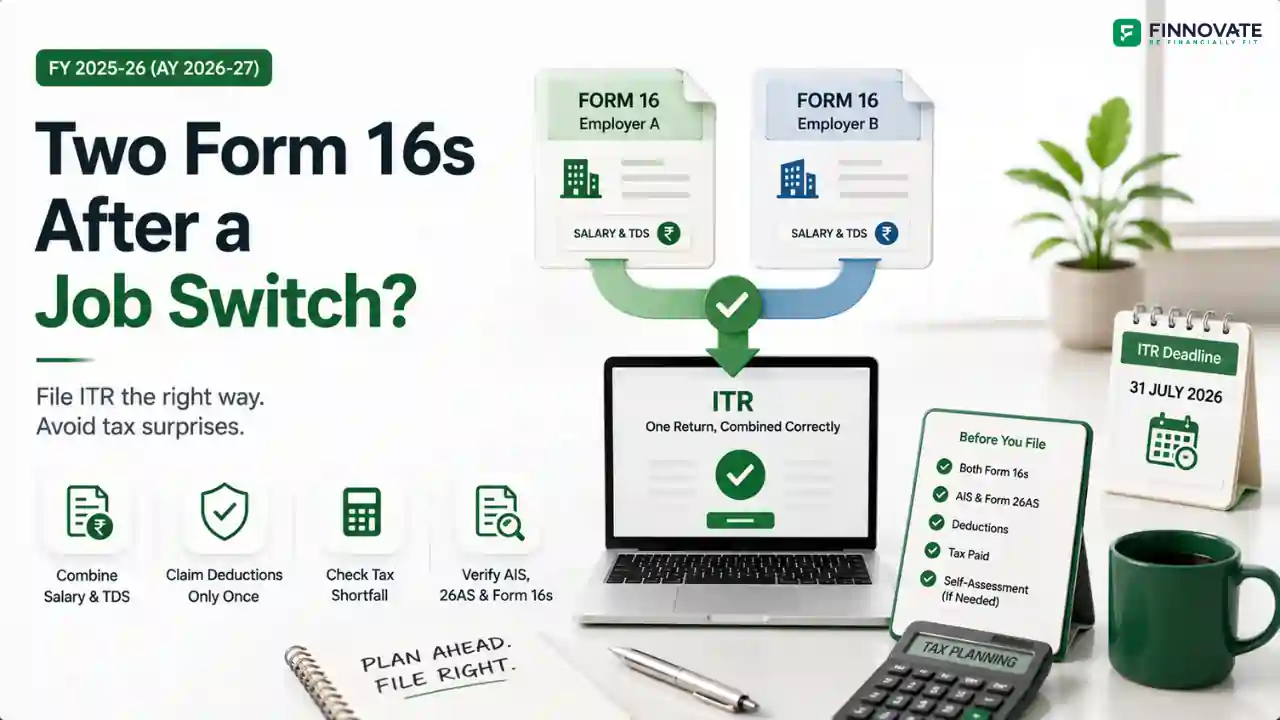
Changed jobs in FY 2025-26? See why combining two Form 16s can create a tax shortfall past...
Popular now

Learn how to easily download your NSDL CAS Statement in PDF format with our step-by-step g...

Looking for the best financial freedom books? Here’s a handpicked 2026 reading list with...
Learn what SIF investment means in India, SEBI rules, Rs 10 lakh minimum investment, avail...
Clear guide to mutual fund taxation in India for FY 2025–26 after July 2024 changes: equ...