
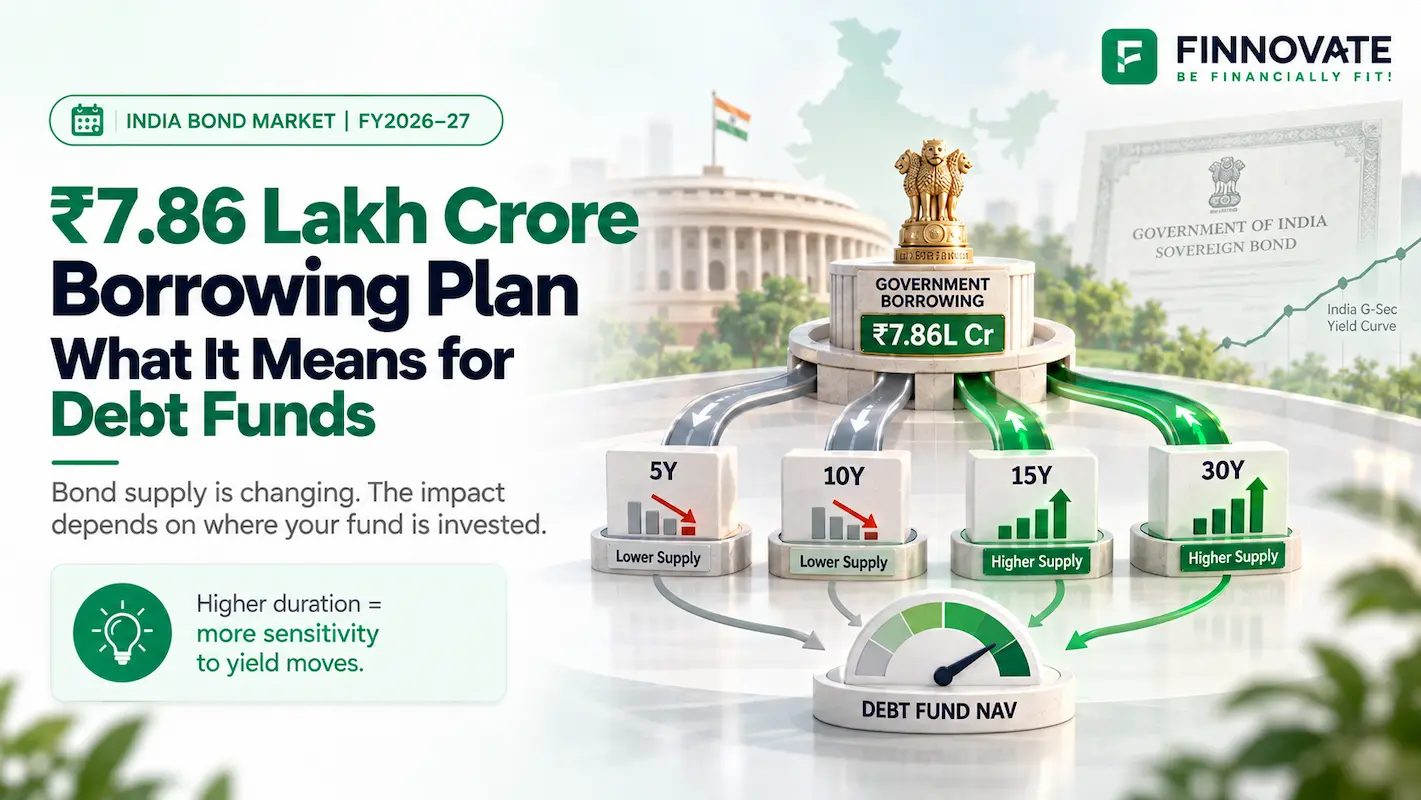
Government Borrowing Plan FY2026–27: Impact on Debt Funds
India plans to borrow ₹7.86 lakh crore in the second half of FY2026–27. Learn how the ...
28 September 2026


Finnovate’s editorial team researches and creates financial content using trusted sources, regulatory references and inputs from subject experts.
An investment starting at ₹5,000, with assured returns from farming and profits advertised as tax-free. That was the proposition Growpital presented to investors.
The appeal was straightforward. Investors would contribute money, professionals would manage agricultural operations, and the resulting income would fund their payouts. They could participate without buying farmland or running a farm themselves.
Across the 18 investment plans examined by SEBI, promised annual returns ranged from 10% to 18.5%. By January 29, 2024, the platform had collected ₹192.88 crore from 5,208 unique investors.
But the investment documents contained a detail that mattered: investors were being enrolled as partners in limited liability partnerships, or LLPs.
What did that partnership actually give them? Who controlled the money? And did they have rights over the assets supposed to generate their returns?
Those questions sit at the centre of SEBI’s final order dated September 28, 2026. The regulator directed the schemes to be wound up and outstanding investor money to be refunded, with 12% annual interest from January 29, 2024 until the date of refund.
Its findings extend beyond the absence of regulatory registration to how investor money was moved and where assets were held.
Through Growpital, investors contributed money to one of three entities: ZF Project 1 LLP, ZF Project 2 LLP or ZF Project 3 LLP.
Their money was recorded as a capital contribution, and they became partners in the relevant LLP. The platform presented this as participation in an agricultural business.
For an investor, the arrangement could appear simple: contribute capital, let the farming professionals handle operations, and receive a share of the returns.
Being named a partner did not mean investors controlled how their money was used.
The designated partners handled the operations and financial decisions. Investors did not exercise day-to-day control over the arrangement.
SEBI also found no evidence that investor money was segregated for individual projects. The three LLPs were organised around investor profiles, rather than distinct farming projects, and the funds were pooled.
This distinction mattered because an LLP’s legal existence did not, by itself, settle whether the investment arrangement required SEBI registration.
SEBI examined the arrangement against the four conditions for a collective investment scheme under Section 11AA(2) of the SEBI Act:
| The condition | What SEBI found in Growpital’s arrangement |
|---|---|
| Investor contributions are pooled for the scheme | Money collected through the plans was pooled without project-level segregation. |
| Investors contribute with an expectation of profits, income or other benefits | Investors subscribed to plans promising returns. |
| The contributions or scheme assets are managed on investors’ behalf | The arrangement was managed by those running the entities. |
| Investors lack day-to-day control over its management | Operational and financial control rested with the designated partners. |
SEBI concluded that the arrangement met these conditions and was operating as an unregistered collective investment scheme.
An LLP is a legitimate business structure, and passive participation alone does not make every partnership an unlawful investment scheme. In this case, the combination of pooling, expected returns, central management and lack of investor control was central to SEBI’s finding.
Calling the contributors “partners” did not remove the regulatory obligations arising from how the arrangement actually operated.
The next question was whether the money was being used in the way investors had been led to expect.
SEBI found that approximately ₹95.60 crore moved from the ZF LLPs to Yotta Agro Venture Private Limited through entities presented as suppliers or sources of revenue, without underlying business activities supporting those transfers.
The order also found that most funds raised through the ZF LLPs were transferred directly or indirectly to Yotta, or spent on acquiring capital assets in Yotta’s name.
That created an important gap between the entity investors had joined and the entities holding the assets.
The properties presented during the proceedings belonged to Yotta or its subsidiary, Winsome. None was in the name of the three ZF LLPs.
Further, SEBI found that no arrangement had been demonstrated between Yotta and the ZF LLPs for conducting agricultural activities or sharing revenue from the purported farmland.
For investors, this was more consequential than the word “partner” on their documents. Their membership in an LLP did not establish ownership of the properties held elsewhere or rights over the revenues received by Yotta.
For an investment linked to physical assets, investors need to establish their enforceable rights over those assets and their income.
SEBI first intervened through an interim order on January 29, 2024. The September 2026 final order now sets out a process for winding up the schemes and returning outstanding money.
The principal eight individuals and entities covered by the directions must refund money collected under the schemes that remains outstanding, along with 12% annual interest from January 29, 2024 until repayment.
They are also barred from accessing the securities market for five years or until the refunds are completed, whichever is later.
The refund process involves several stages:
The order requires the verified investor list to be published. Investors whose names are missing, or whose details or outstanding amounts are incorrect, will have 30 days from publication to raise a grievance with the Nodal Refund Officer, supported by documents.
Refunds will be distributed in stages as money is verified and recovered. The order does not confirm that investors have already been repaid or that the entire amount is immediately available.
For affected investors, contribution records, agreements, bank statements and payout histories will therefore be important when checking their recorded claims.
Growpital’s pitch brought together three attractive features: agricultural assets, assured returns and a claimed tax benefit.
Each needed to be examined separately.
A tax-free claim does not establish the safety of the investment. A reference to farmland does not establish ownership. And an assured payout still depends on someone having both the obligation and the financial capacity to pay.
Before committing money to a similar arrangement, investors should be able to answer five questions:
The Growpital case shows why those answers matter. Investors entered as LLP partners, but SEBI found that control, assets and revenues sat elsewhere in the arrangement.
Before comparing the advertised return with other investments, establish what the agreement entitles you to receive, from whom, and how that obligation can be enforced.
Disclaimer: This article is for educational purposes and is not investment, tax or legal advice. The case details reflect SEBI’s final order dated September 28, 2026. Affected investors should follow official SEBI notices for refund procedures and deadlines.
No spam. Only new posts, simple explainers, and practical money checklists for busy professionals.
Finnovate is a SEBI-registered financial planning firm that helps professionals bring structure and purpose to their money. Over 3,500+ families have trusted our disciplined process to plan their goals - safely, surely, and swiftly.
Our team constantly tracks market trends, policy changes, and investment opportunities like the ones featured in this Weekly Capsule - to help you make informed, confident financial decisions.
Learn more about our approach and how we work with you:
No comments yet. Start the conversation. What would you add?
No spam. Only new posts, simple explainers, and practical money checklists.
You may also like
India plans to borrow ₹7.86 lakh crore in the second half of FY2026–27. Learn how the ...
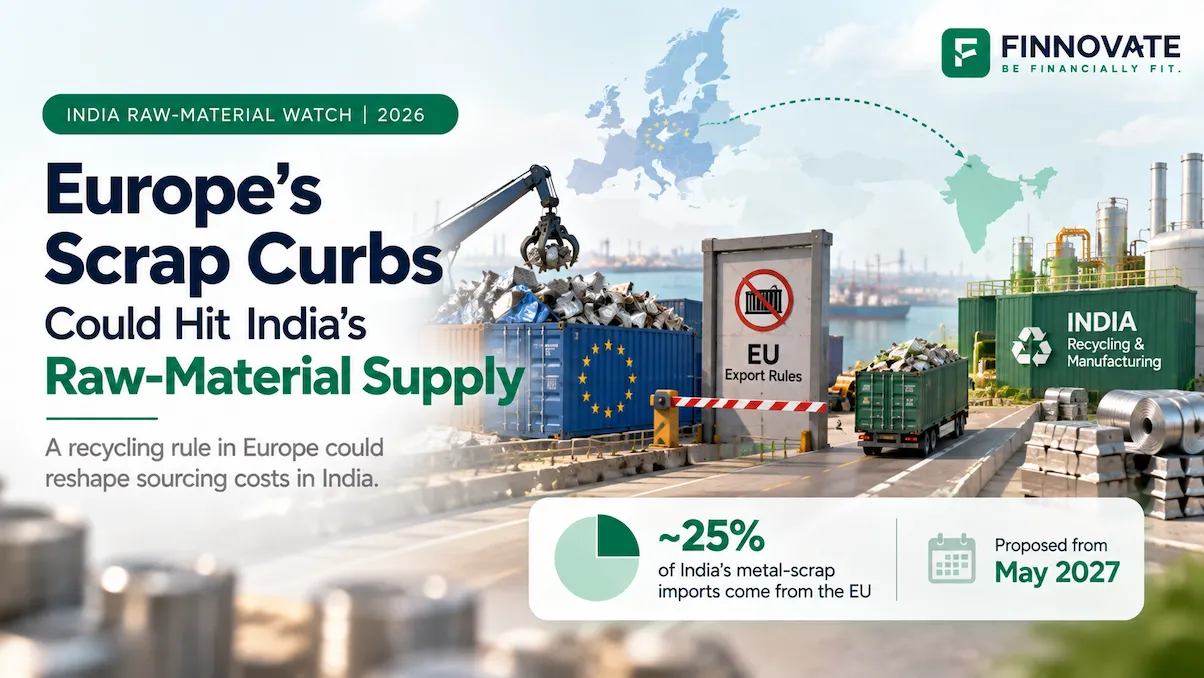
Proposed EU scrap export curbs could affect India’s metal supply and manufacturing costs...
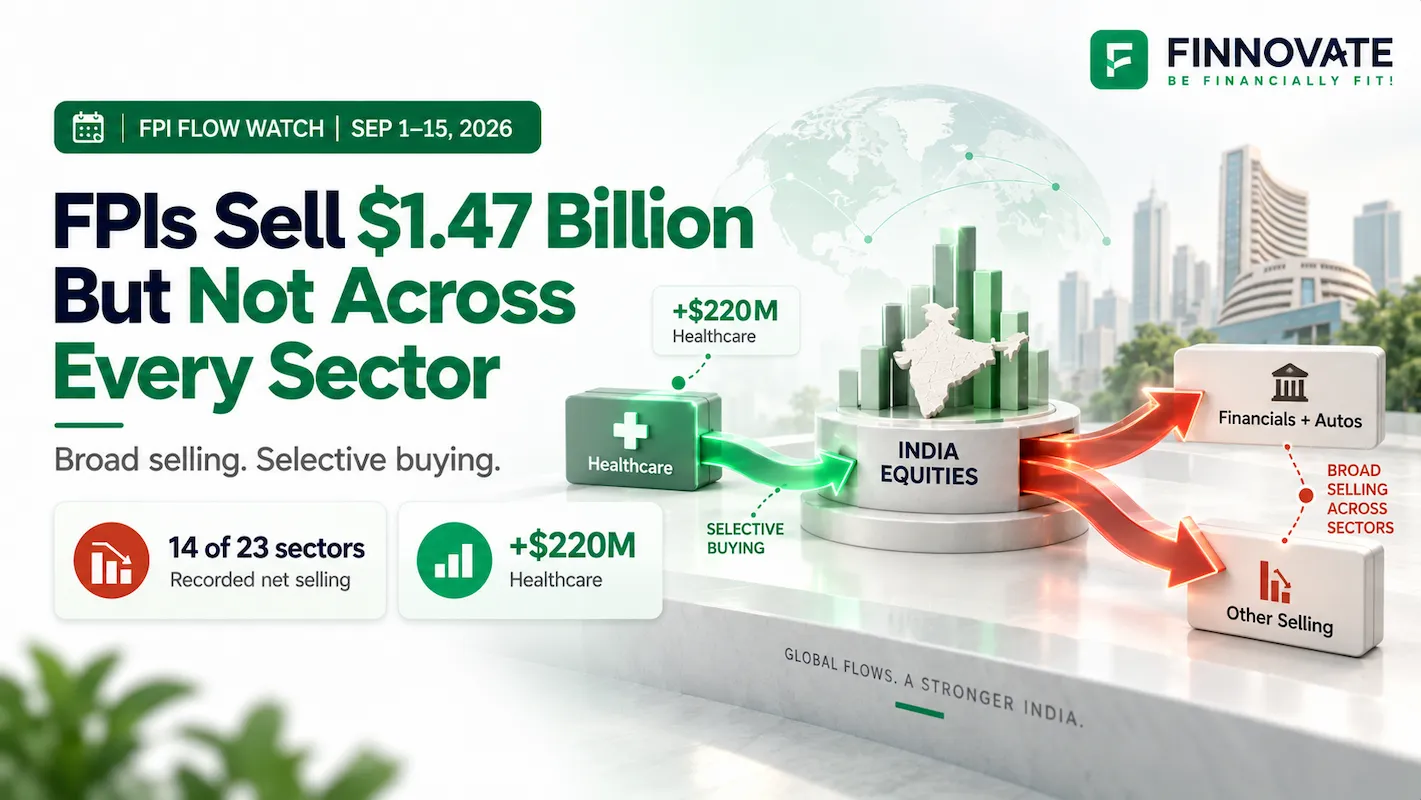
FPIs net sold $1.47 billion in Indian equities during September 1–15, 2026. Explore sect...
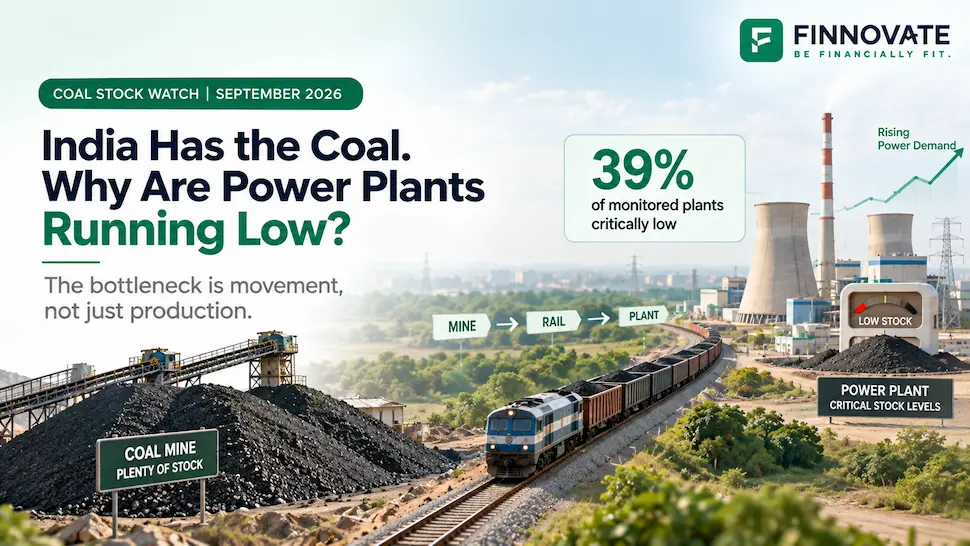
Nearly 39% of India’s monitored coal power plants were critically low on fuel in Septemb...
Popular now
Learn how to easily download your NSDL CAS Statement in PDF format with our step-by-step g...

Looking for the best financial freedom books? Here’s a handpicked 2026 reading list with...
Learn what SIF investment means in India, SEBI rules, Rs 10 lakh minimum investment, avail...
Clear guide to mutual fund taxation in India for FY 2025–26 after July 2024 changes: equ...