

The Great Economic Decoupling of 2026: Oil, AI & India
Rising oil prices and booming AI investment are shaping an uneven global economy in 2026. ...
24 October 2026

Finnovate’s editorial team researches and creates financial content using trusted sources, regulatory references and inputs from subject experts.
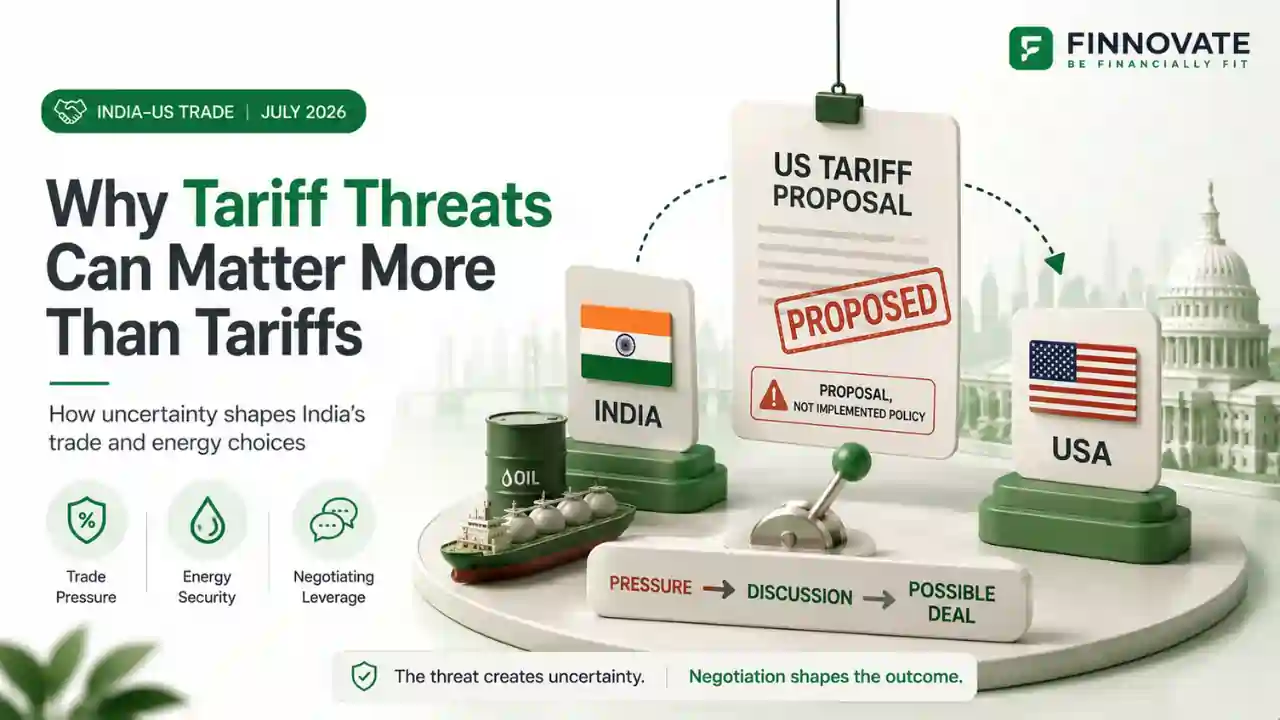
The latest US tariff threat against India is serious, but it is not yet an implemented policy.
On 14 July 2026, US senators introduced a revised Russia sanctions bill that could authorise tariffs of up to 100% on the five largest buyers of Russian oil and gas. India and China are among the countries that could be affected.
An earlier version of the proposal had mentioned tariffs of up to 500%. Neither the earlier 500% tariff nor the revised 100% tariff has been imposed. The legislation must still pass through the US Congress and includes provisions allowing the US president to waive or delay the measures when considered necessary in the national interest.
The distinction is important because much of Donald Trump's negotiating leverage often emerges before a tariff is implemented. The possibility of economic action creates uncertainty for governments, exporters and investors. That uncertainty can influence decisions even before formal restrictions take effect.
The India-US trade relationship over the past year shows how tariff pressure can be used as part of a wider negotiation.
| Period | Development |
|---|---|
| August 2025 | The US imposed an additional 25% tariff on Indian goods linked to India's purchase of Russian oil |
| February 2026 | The additional Russia-linked tariff was removed |
| February 2026 | The broader reciprocal tariff on Indian goods was reduced from 25% to 18% |
| July 2026 | A revised sanctions bill proposed tariffs of up to 100% on major Russian-energy buyers |
The February 2026 trade understanding also involved Indian commitments relating to tariffs on American products, non-tariff barriers and purchases of US energy, technology, coal and other goods.
This sequence shows how tariffs can operate as bargaining tools rather than only as permanent trade barriers. The initial threat creates pressure, negotiations follow, and the eventual outcome may involve a lower tariff combined with market-access or purchase commitments.
An implemented tariff creates visible costs on both sides.
Indian exporters may lose orders, but American importers can also face higher prices. Supply chains may shift, affected countries may retaliate and broader political relationships can deteriorate.
A tariff threat gives the US administration greater flexibility.
It can encourage governments to negotiate while keeping open the option to reduce, delay or waive the final measure. Businesses may reconsider sourcing decisions even before the policy takes effect. Exporters may pause investments, buyers may demand protection against future price increases and governments may offer concessions to avoid escalation.
In this way, uncertainty itself becomes part of the negotiating strategy.
The revised Russia sanctions proposal reflects this approach. The headline tariff has been reduced from 500% to 100%, its scope has been narrowed mainly to the largest energy buyers, and presidential waiver powers have been retained. The proposal remains severe, but it also leaves significant room for negotiation.
India has faced unusually direct tariff pressure, although tariffs and trade investigations remain part of a wider US strategy involving several major trading partners.
The US has also applied tariffs, restrictions or trade investigations involving China, Canada, Vietnam, Thailand and European economies.
What makes India's situation different is the direct connection between its energy purchases and access to the US market.
In August 2025, the US imposed an additional 25% tariff on Indian goods because India continued purchasing Russian oil. That measure was removed in February 2026 after India agreed to reduce those purchases. The related US order also left open the possibility of fresh action if Russian oil imports resumed.
India's energy policy has therefore become closely linked to its trade relationship with the US.
China's position is different. Its manufacturing scale, control over major supply chains and importance to US inflation give it greater negotiating leverage. The US-China relationship remains confrontational, but both economies also carry significant costs if trade restrictions are pushed too far.
India has less manufacturing leverage than China, but it remains a large consumer market, a major technology and services centre and an important strategic partner in the Indo-Pacific.
India's decision to reduce Russian oil purchases was made when Gulf supplies appeared to offer a practical alternative.
That calculation changed after the conflict involving the US, Israel and Iran disrupted shipments through the Strait of Hormuz.
In March 2026, India's Middle Eastern crude imports reportedly fell sharply from the previous month. Russian crude imports rose to approximately 2.25 million barrels per day and accounted for close to half of India's total oil imports.
By June, Russian crude purchases had increased further as refiners searched for reliable alternatives to disrupted Gulf supplies.
The shift was therefore not only political. It also reflected the practical requirements of energy security, availability and refinery economics.
An earlier Finnovate analysis examined the risk of secondary sanctions linked to India's purchase of Russian oil. The latest proposal makes that risk more specific, although the tariff remains subject to legislative approval.
The Middle East conflict also changed how Indian refiners approached procurement. Our analysis of India's increased use of spot crude oil purchases explains how flexible sourcing became more important when established supply routes were disrupted.
India has also raised concerns about the treatment of different buyers of Russian energy.
Several European countries continue to import Russian gas, although volumes have declined and some countries may qualify for exemptions under the proposed US framework. India and China, as two of the largest buyers of Russian crude, face greater exposure to tariff threats.
The distinction may be explained by the scale of purchases, the nature of the energy imports and the proposed exemption structure. Even so, the possibility of different treatment has strengthened India's argument that energy-security decisions should not be judged through a single standard.
India depends on the US for several export-oriented industries, including technology services, pharmaceuticals, textiles, engineering goods and gems and jewellery.
US immigration policies also have an outsized effect on Indian professionals because Indians represent a large share of H-1B visa holders and international students. These policies are global in design, but their impact on India is naturally larger.
At the same time, India has its own negotiating strengths.
It is one of the world's largest consumer markets, a major energy buyer, a growing manufacturing base and an important partner in technology, defence and regional security.
The US therefore cannot apply unlimited pressure on India without creating costs for American companies and wider strategic interests.
The challenge for India is to take tariff threats seriously without treating every announcement as a final policy decision.
India's long-term response must reduce the impact of future economic pressure.
Energy sourcing should remain diversified across Russia, the Middle East, the US, Africa, Latin America and the spot market. Dependence on one supplier or shipping corridor increases vulnerability.
Export markets must also expand beyond the US through stronger trade relationships with Europe, the UK, the Gulf, Africa and Asia.
Domestic manufacturing competitiveness will be equally important. Tariff threats become less effective when exporters can shift markets, maintain scale and protect margins.
India must also distinguish between political statements, legislative proposals and implemented policies. A proposed 100% tariff deserves serious attention, but it should not be treated as though it is already in force.
Trump's approach towards India appears to rely heavily on pressure, uncertainty and the possibility of escalation.
The immediate objective is likely to secure concessions on trade, energy, market access and strategic alignment before stronger action becomes necessary.
India's response does not need to be either complete resistance or immediate accommodation. A more effective approach is to negotiate where interests overlap while reducing the economic dependencies that make external pressure powerful.
Tariff threats work best when the targeted country believes it has limited alternatives. India's long-term strategy must therefore be to ensure that it always has several.
No. A revised US sanctions bill proposes tariffs of up to 100% on the largest buyers of Russian oil and gas. As of 21 July 2026, the proposal has not become an implemented tariff.
No. An earlier version of the sanctions proposal included potential tariffs of up to 500%, but those tariffs were never implemented. The revised proposal has reduced the maximum potential tariff to 100%.
India increased Russian oil purchases after the conflict in the Middle East disrupted supplies through the Strait of Hormuz. Russian crude became one of the most accessible alternatives for Indian refiners.
In August 2025, the US imposed an additional 25% tariff on Indian goods linked to Russian oil purchases. Combined with the reciprocal tariff, several Indian products faced tariffs of up to 50%.
The US removed the additional Russia-linked tariff and reduced the reciprocal tariff on Indian goods from 25% to 18%. India also made commitments relating to trade, energy purchases and market access.
The US can consider further tariff or sanctions measures, but any new action would require a separate policy, executive or legislative decision.
Disclaimer: This article is for general information and educational purposes only. It presents an analysis of evolving trade, energy and geopolitical developments and does not constitute investment, legal, tax or financial advice. Tariff policies and geopolitical developments can change quickly; the revised Russia sanctions bill remained a legislative proposal as of 21 July 2026 and its rates, exemptions, and scope may change during the legislative process. Please consult a SEBI-registered investment adviser before making any investment decision.
No spam. Only new posts, simple explainers, and practical money checklists for busy professionals.
Finnovate is a SEBI-registered financial planning firm that helps professionals bring structure and purpose to their money. Over 3,500+ families have trusted our disciplined process to plan their goals - safely, surely, and swiftly.
Our team constantly tracks market trends, policy changes, and investment opportunities like the ones featured in this Weekly Capsule - to help you make informed, confident financial decisions.
Learn more about our approach and how we work with you:
No comments yet. Start the conversation. What would you add?
No spam. Only new posts, simple explainers, and practical money checklists.
You may also like
Rising oil prices and booming AI investment are shaping an uneven global economy in 2026. ...
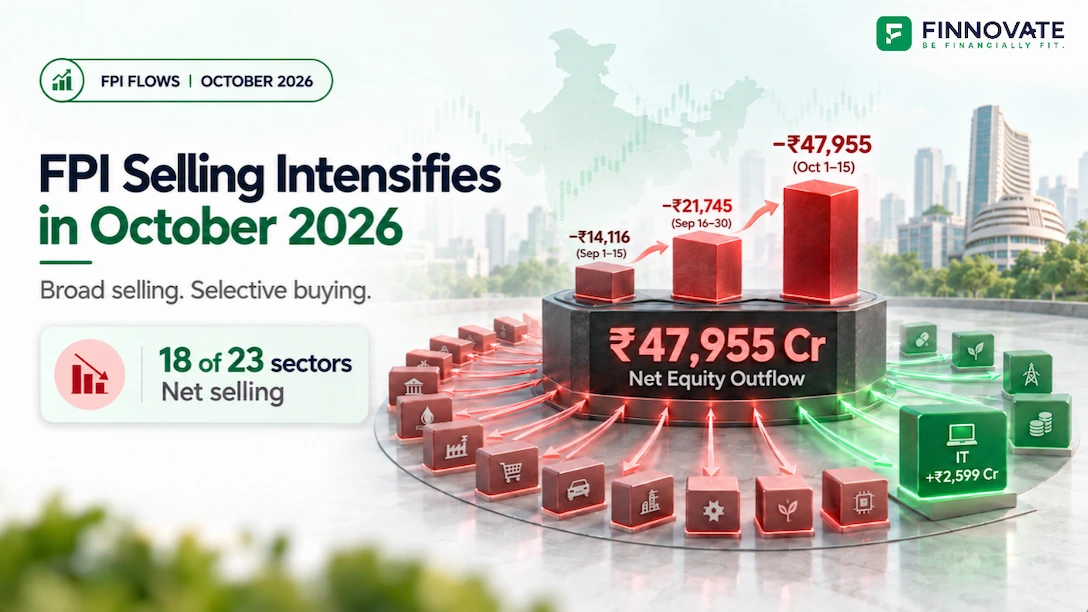
Explore FPI equity flows for October First Half, 2026: ₹47,955 crore in net outflows, th...
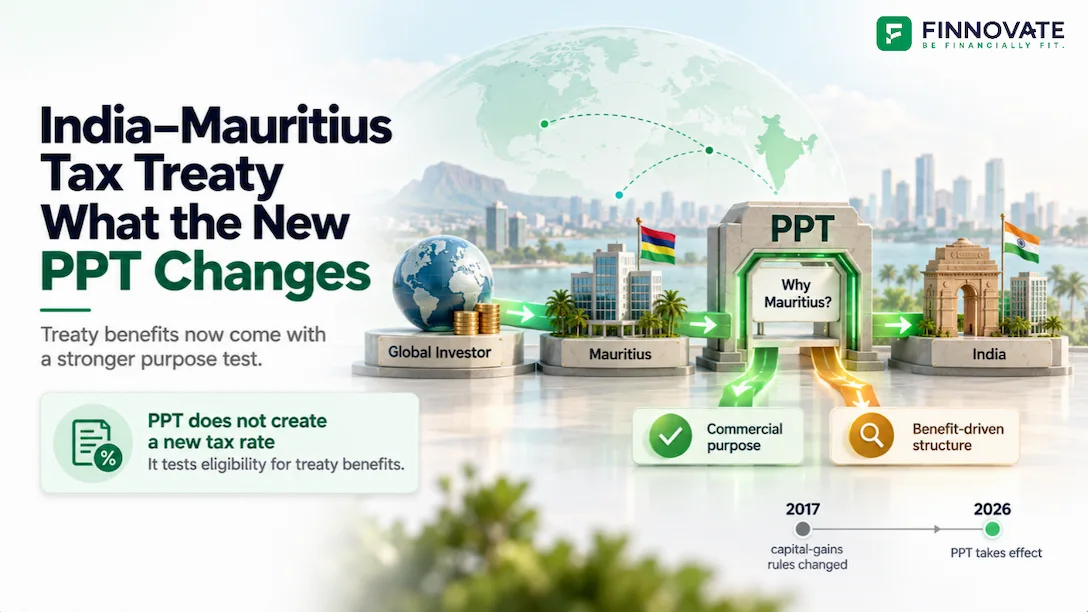
Understand the India–Mauritius tax treaty’s Principal Purpose Test, its August 2026 ef...

Explore India’s AI hardware opportunity through the proposed Adani–Jabil venture, from...
Popular now
Learn how to easily download your NSDL CAS Statement in PDF format with our step-by-step g...

Looking for the best financial freedom books? Here’s a handpicked 2026 reading list with...
Learn what SIF investment means in India, SEBI rules, Rs 10 lakh minimum investment, avail...
Clear guide to mutual fund taxation in India for FY 2025–26 after July 2024 changes: equ...