

HDFC Bank: What Must Change to Win Back Investors?
Can HDFC Bank win back investors? Explore how deposit costs, profit margins, loan quality ...
12 October 2026

Finnovate’s editorial team researches and creates financial content using trusted sources, regulatory references and inputs from subject experts.
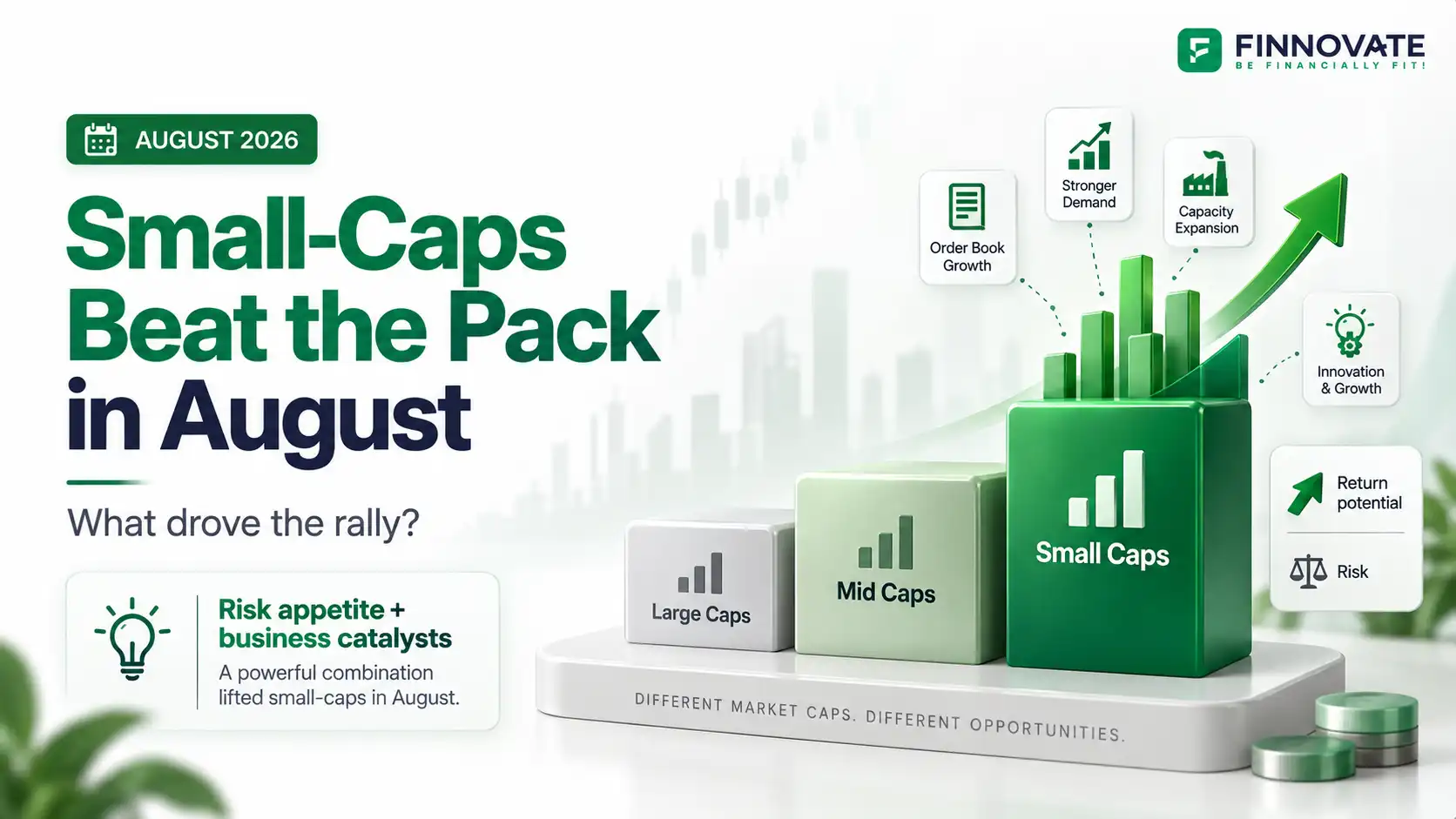
August 2026 rewarded investors for moving further down the market-cap curve.
The Nifty 50 fell 1.14%, while the Nifty Midcap 100 gained 2.15% and the Nifty Smallcap 100 rose 3.16%. Go even smaller, and the Nifty Microcap 250 gained 5.49%.
| Index | August 2026 Return |
|---|---|
| Nifty 50 | -1.14% |
| Nifty Midcap 100 | +2.15% |
| Nifty Smallcap 100 | +3.16% |
| Nifty Microcap 250 | +5.49% |
The smaller the companies became, the stronger August's index returns generally were.
But there is an important distinction.
Small-caps were not rising simply because investors suddenly decided they wanted more risk. Several of the month's biggest winners also received unusually strong company-specific triggers, from record orders to sharp earnings growth.
That is what makes the month's small-cap rally more interesting than the 3.16% index return alone.
Table of Contents
It is tempting to say that investor preference suddenly shifted from mid-caps to small-caps in August.
The data suggests the move started earlier.
In July:
So small-caps had already started outperforming mid-caps before August.
Actual mutual fund flows showed a similar pattern.
Small-cap mutual funds received a record ₹7,768 crore in July, while mid-cap funds attracted ₹6,192 crore. Large-cap funds, meanwhile, saw ₹1,322 crore of net outflows.
August therefore did not start the move.
It intensified it.
The Nifty 50 turned negative, while mid-caps remained positive, small-caps performed even better and micro-caps moved ahead of all three.
There is a measurement issue worth explaining first.
A “one-month return” can mean either:
For an article specifically analysing August, the cleaner comparison is:
These are price returns and do not include dividends.
The following are selected prominent performers from the small-cap screen, not an exhaustive ranking of every Nifty Smallcap 100 constituent.
| Company | August 2026 Price Return |
|---|---|
| Welspun Corp | +44.86% |
| Ather Energy | +36.29% |
| Jyoti CNC Automation | +23.04% |
| Neuland Laboratories | +20.83% |
| IFCI | +17.19% |
| Netweb Technologies | +14.69% |
| Navin Fluorine | +14.64% |
| Redington | +11.22% |
| Sai Life Sciences | +11.00% |
| City Union Bank | +10.99% |
Historical prices show, for example, Welspun Corp moving from ₹1,650.60 on July 31 to ₹2,391 on August 31, while Ather Energy moved from ₹1,260.30 to ₹1,717.70.
The important question, however, is not simply which stocks rose.
It is why some of them moved so sharply.
Welspun Corp was one of August's standout performers, gaining nearly 45% during the calendar month.
The biggest trigger came on August 20.
The company announced its largest-ever single order, valued at approximately $1.8 billion, or around ₹17,200 crore, for the supply of pipes from its US manufacturing facility.
The stock jumped more than 15% on the following trading day.
Ather Energy gained more than 36% during August.
Its Q1 FY27 results provided an important trigger.
The electric two-wheeler company reported a narrower quarterly loss, helped by strong demand for its Rizta scooter.
The stock then continued to build momentum through the month, including another sharp rise toward August-end.
Ather is clearly exposed to India's EV growth story.
But saying the stock rose simply because investors preferred “green autos” would miss the immediate catalyst.
The company was also showing better operating performance.
Navin Fluorine gained about 14.6% during August.
Its Q1 FY27 numbers were unusually strong:
The stock jumped after the results.
This is particularly interesting because the broader Nifty Chemicals index actually fell 0.11% in August.
Neuland Laboratories gained around 20.8% during August.
Its June-quarter numbers explain a large part of the interest.
Consolidated revenue increased 119% year-on-year to ₹641.58 crore, while net profit rose from ₹13.9 crore to ₹147.67 crore.
Healthcare was broadly positive in August, but Neuland's move had a far stronger company-specific earnings backdrop than a generic pharma-sector explanation.
NSE maintains a Nifty Smallcap250 Momentum Quality 100 index.
As the name suggests, this is not a pure momentum strategy. It combines price momentum with quality factors.
NSE separately maintains a Nifty Smallcap250 Quality 50 index.
Their performance changed sharply between July and August.
| Small-Cap Strategy | July 2026 | August 2026 |
|---|---|---|
| Smallcap250 Momentum Quality 100 | +1.34% | +4.29% |
| Smallcap250 Quality 50 | +2.67% | +0.48% |
In July, the pure quality basket did better.
In August, the combined momentum-quality basket accelerated sharply while the pure quality index barely moved.
A better interpretation is:
That fits what we saw in companies such as Welspun, Ather, Navin Fluorine and Neuland.
Strong price moves were being reinforced by business developments.
There was no single sector behind the winners.
The Nifty Capital Goods index gained 5.39% in August, reversing a 3.96% decline in July.
That backdrop fits names such as Welspun Corp, Jyoti CNC and other manufacturing-related companies appearing among the stronger small-cap names.
It also connects with a broader theme we have been tracking across the market: capital expenditure, industrial production and manufacturing investment have all been receiving greater attention.
Netweb Technologies gained around 14.7% during August.
The broader Nifty MidSmall IT & Telecom index rose 6.60%, making it one of the strongest market themes during the month.
August's small-cap leadership therefore also included businesses linked to computing, digital infrastructure and technology.
Several financial names appeared among the stronger stocks:
But calling all of them one “financial inclusion” trade would be too broad.
They include banks, NBFCs, housing financiers and capital-market businesses.
The broader data was also mixed.
| Financial Index | August 2026 Return |
|---|---|
| Nifty MidSmall Financial Services | +3.24% |
| Nifty PSU Bank | +2.90% |
| Nifty Private Bank | +1.99% |
| Nifty NBFC | -0.22% |
| Nifty Housing Finance | -0.84% |
So selected financial stocks worked.
The whole financial complex did not move in one direction.
Healthcare was another recurring theme.
Sai Life Sciences, Neuland Laboratories and other pharmaceutical businesses appeared among the stronger names.
The broader Nifty Pharma index gained 2.50%, while Nifty MidSmall Healthcare rose 1.60%.
Longer-term trends such as CDMO growth, pharmaceutical outsourcing and global patent expiries remain relevant.
But for August specifically, company earnings often provided a better explanation than the long-term sector story alone.
There is evidence that investors were moving further down the market-cap curve.
But the timing matters.
It was already happening in July.
Small-cap funds received more money than mid-cap funds that month, and the Smallcap 100 had already outperformed the Midcap 100.
August then widened the performance gap:
So it is more accurate to describe this as an acceleration of existing risk appetite rather than a sudden switch.
Mid-caps themselves remained strong and reached record levels.
Small-caps simply moved faster.
There is another side to the market-cap ladder.
At August-end:
| Metric | Nifty 50 | Midcap 100 | Smallcap 100 |
|---|---|---|---|
| P/E | 20.36 | 30.95 | 31.57 |
| 1-year volatility | 13.24% | 16.30% | 17.92% |
The same part of the market delivering stronger recent returns also had higher historical volatility.
The valuation comparison needs care.
Different indices contain different industries and growth profiles, so a higher P/E does not automatically mean every small-cap stock is expensive.
That makes chasing recent winners particularly risky.
No.
A stock may have risen because:
But once the share price has already risen sharply, some or all of that positive development may already be reflected in the valuation.
Welspun gaining almost 45% in one month does not tell us what return it will generate from its new price.
Neither does Ather's 36% gain or Neuland's 21% gain.
Investors still need to consider:
Several of August's leaders benefited from strong results or business announcements. The next question is whether those developments translate into sustained earnings.
A healthy small-cap rally should eventually extend beyond a handful of exceptional winners.
Record small-cap fund inflows show strong investor interest, but continuing inflows can also make return-chasing more important to watch.
Capital goods, technology, financial services and healthcare all contributed differently. Whether leadership remains diversified matters.
At more than 31 times earnings for the index, future earnings growth has to do more of the work if valuations stop expanding.
Small-caps can be particularly sensitive when risk appetite changes. Crude oil, global rates and geopolitical developments therefore remain relevant.
The headline is straightforward.
Small-caps beat mid-caps and large caps in August.
But the more useful lesson lies underneath.
The move toward smaller companies had already begun before August. July fund flows and market performance were pointing in the same direction.
August accelerated that trend.
At the same time, some of the month's strongest small-cap performers were not simply riding a broad market wave.
Welspun received its largest order ever. Ather reported improving operating performance. Navin Fluorine delivered sharply stronger earnings. Neuland's revenue more than doubled and profit rose dramatically.
That combination can produce exceptional short-term returns.
It can also make investors more tempted to chase them.
The Nifty Smallcap 100 returned 3.16% in August 2026 on a Total Return Index basis. It was up 16.40% over one year as of August 31.
Yes. The Nifty Smallcap 100 gained 3.16%, compared with 2.15% for the Nifty Midcap 100 and a 1.14% decline in the Nifty 50.
Among selected prominent performers, Welspun Corp gained about 44.9%, Ather Energy 36.3%, Jyoti CNC 23.0%, Neuland Laboratories 20.8% and IFCI 17.2% between July 31 and August 31.
Welspun announced its largest-ever single order on August 20, valued at approximately $1.8 billion, or about ₹17,200 crore, for pipe supply from its US facility.
Yes. Small-cap mutual funds received a record ₹7,768 crore of net inflows in July, compared with ₹6,192 crore for mid-cap funds. Small-cap stocks also outperformed mid-caps during July.
Yes. At August-end, the Nifty Smallcap 100 had one-year volatility of 17.92%, compared with 16.30% for the Nifty Midcap 100 and 13.24% for the Nifty 50.
Not necessarily. Historical returns and recent business catalysts do not determine future performance. Investors also need to assess valuation, earnings sustainability, balance-sheet strength, liquidity and portfolio suitability.
Disclaimer: This article is for educational and informational purposes only. References to individual stocks, sectors, historical returns, valuations and company developments are not investment recommendations or advice to buy, sell or hold any security. Small-cap stocks can carry higher volatility, liquidity and business risk. Past performance does not indicate or guarantee future returns.
No spam. Only new posts, simple explainers, and practical money checklists for busy professionals.
Finnovate is a SEBI-registered financial planning firm that helps professionals bring structure and purpose to their money. Over 3,500+ families have trusted our disciplined process to plan their goals - safely, surely, and swiftly.
Our team constantly tracks market trends, policy changes, and investment opportunities like the ones featured in this Weekly Capsule - to help you make informed, confident financial decisions.
Learn more about our approach and how we work with you:
No comments yet. Start the conversation. What would you add?
No spam. Only new posts, simple explainers, and practical money checklists.
You may also like
Can HDFC Bank win back investors? Explore how deposit costs, profit margins, loan quality ...
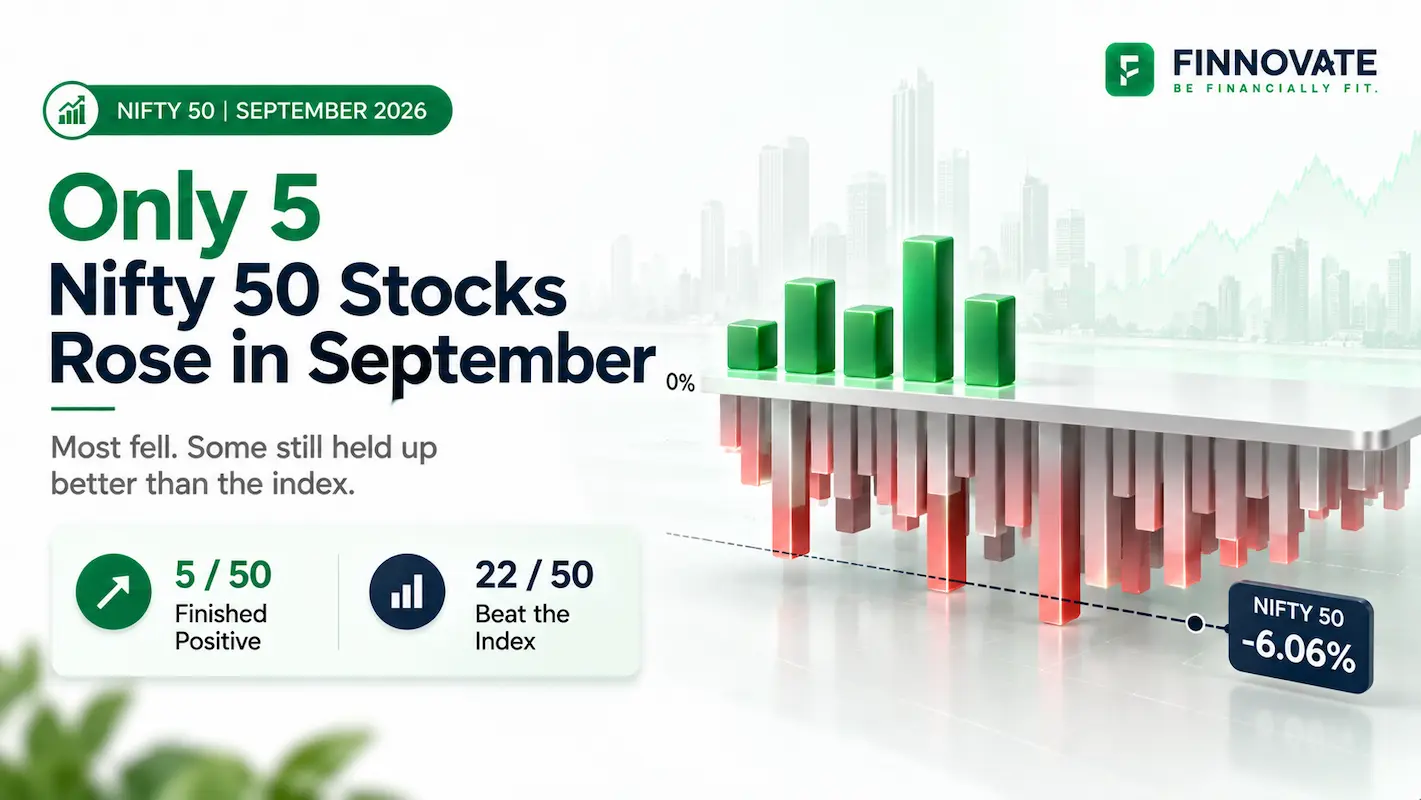
Only five Nifty 50 stocks rose in September 2026 as the index fell 6.06%. Compare monthly ...
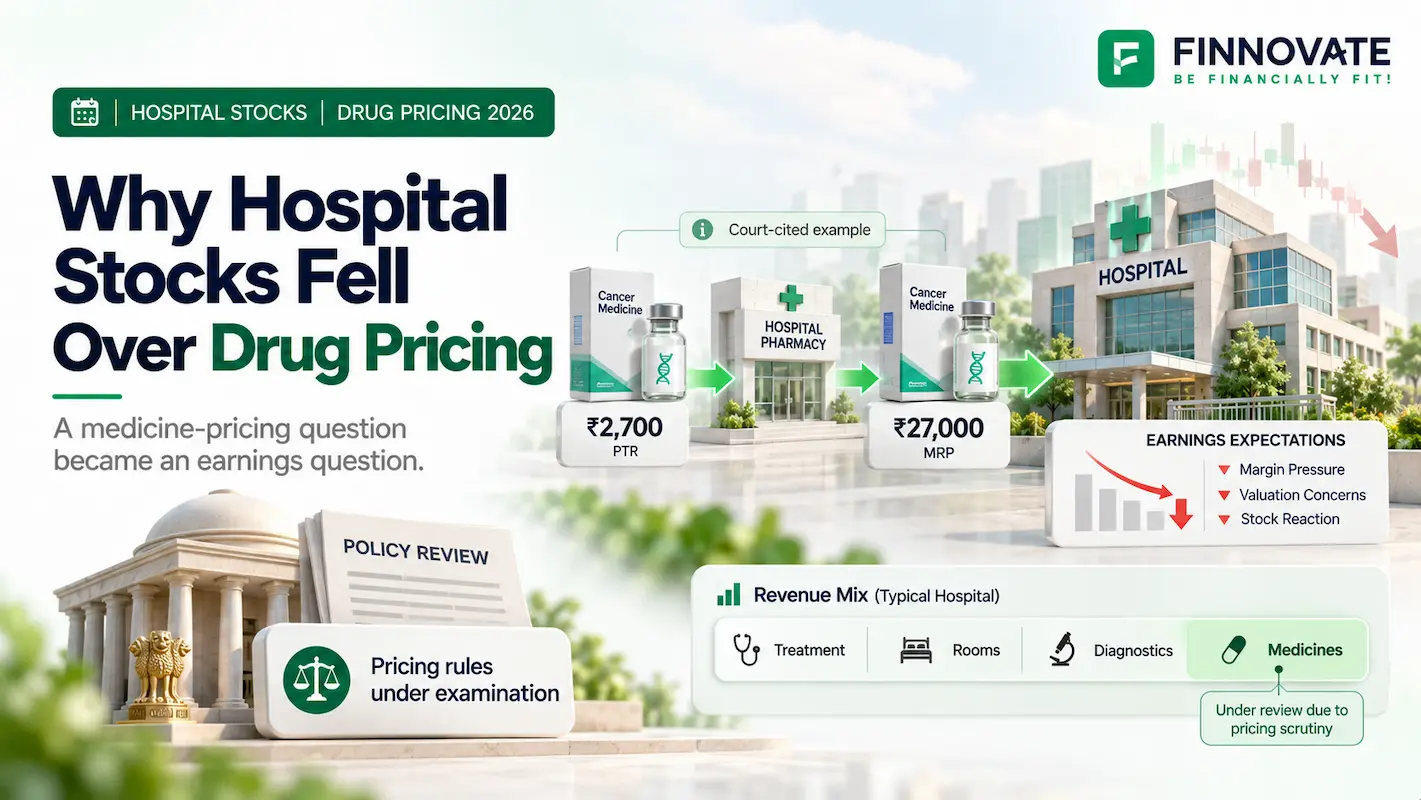
Why did hospital stocks fall after Supreme Court scrutiny of medicine prices? Understand d...
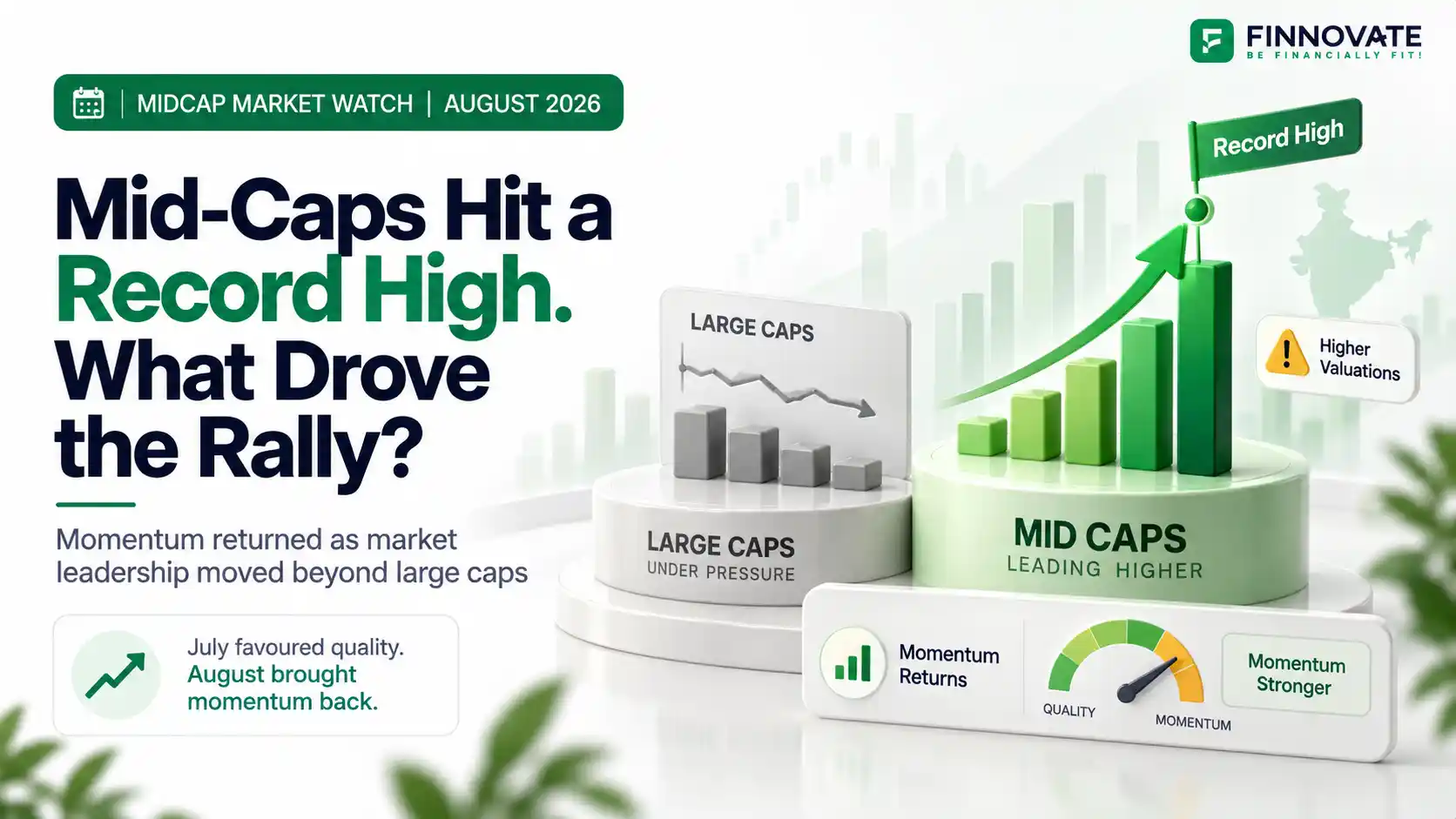
Nifty Midcap 100 rose 2.15% in August 2026. See which mid-cap stocks led the rally, key se...
Popular now
Learn how to easily download your NSDL CAS Statement in PDF format with our step-by-step g...

Looking for the best financial freedom books? Here’s a handpicked 2026 reading list with...
Learn what SIF investment means in India, SEBI rules, Rs 10 lakh minimum investment, avail...

Clear guide to mutual fund taxation in India for FY 2025–26 after July 2024 changes: equ...