

EU Scrap Export Curbs: India’s Raw-Material Risk Explained
Proposed EU scrap export curbs could affect India’s metal supply and manufacturing costs...
24 September 2026
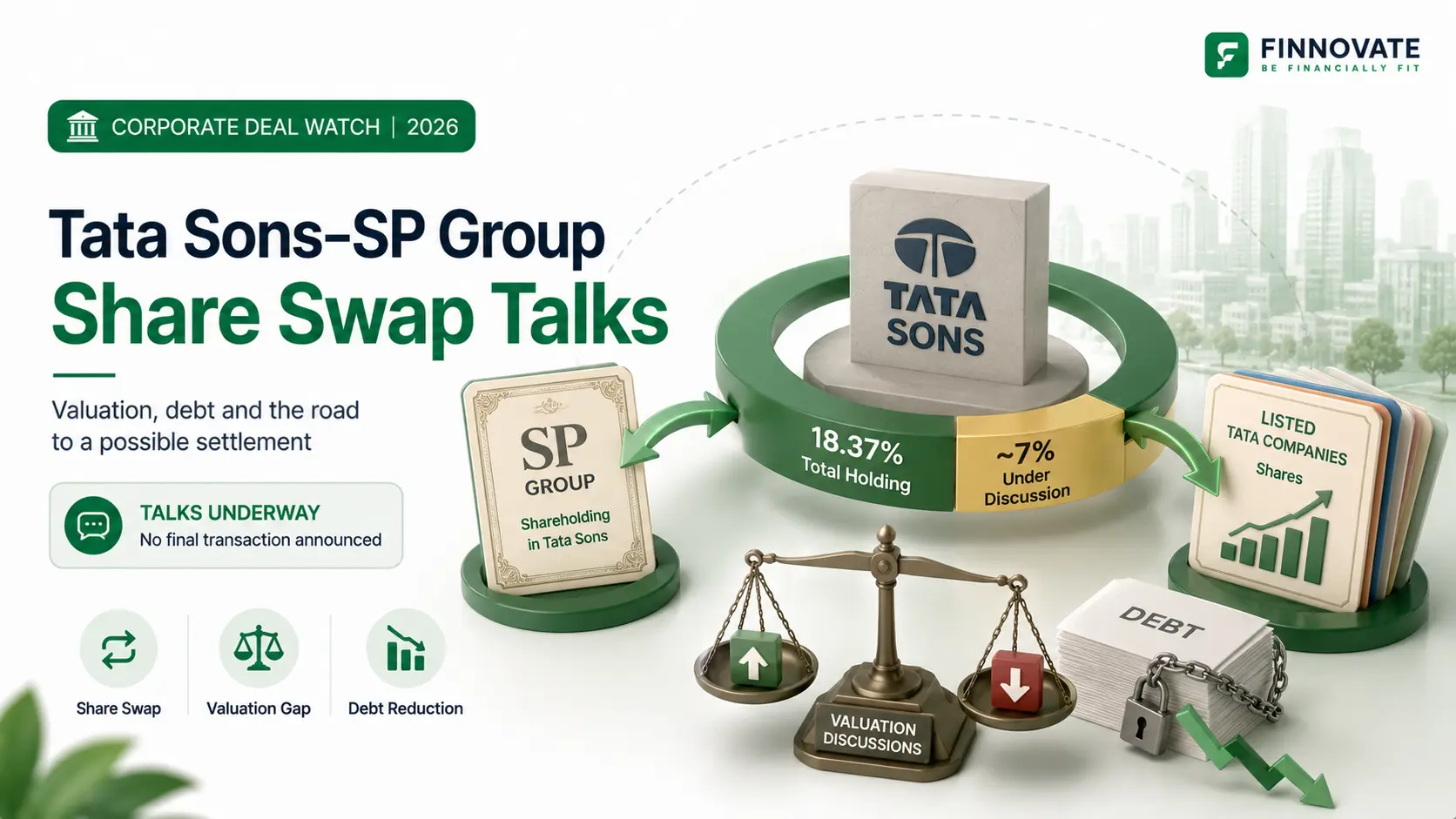
Fresh discussions between Tata Sons and the Shapoorji Pallonji Group have reopened the possibility of resolving one of India’s longest-running corporate ownership disputes.
The two sides are reportedly exploring ways to monetise an estimated 7% stake in Tata Sons, out of SP Group’s total holding of approximately 18.37%. One option under discussion is a share swap in which SP Group would surrender part of its Tata Sons holding in exchange for a basket of shares in listed Tata companies.
However, no transaction has been announced. The two groups reportedly remain divided over the structure of the arrangement and the value of both the unlisted Tata Sons shares and the listed Tata shares that could form part of the swap.
The reopening of discussions is an important development. It is not yet evidence that the dispute is approaching a final settlement.
The present discussions concern the possible monetisation of an estimated 7% stake in Tata Sons.
| Deal point | Current reported position |
|---|---|
| SP Group’s total Tata Sons holding | Approximately 18.37% |
| Stake being discussed | Estimated 7% |
| Possible transaction structure | Swap for listed Tata company shares |
| Cash payment | Not publicly established |
| Agreed valuation | Not yet reported |
| Full exit by SP Group | Not part of the current reported proposal |
| Tata Sons listing | Remains unresolved |
| Final agreement | Not announced |
Tata reportedly prefers a structure under which Tata Sons would not have to raise debt to finance the transaction. SP Group, meanwhile, has historically considered a Tata Sons listing the cleanest route for unlocking the value of its holding.
These positions explain why a share swap has emerged as a possible middle path.
SP Group owns one of the most valuable minority stakes in corporate India. It is also among the most difficult to monetise.
Tata Sons is an unlisted private company, and its shares cannot be sold as easily as shares traded on a stock exchange. SP Group’s stake is also pledged as security for borrowings, adding lenders and financing conditions to any potential transaction.
Recent reports estimate SP Group’s total debt at approximately ₹60,000 crore. The group has repeatedly refinanced its borrowings while seeking a long-term route to unlock value from its Tata Sons stake.
This creates a contrast at the centre of the story:
SP Group owns an exceptionally valuable asset, but the asset does not provide immediate liquidity.
In July 2026, SP Group completed a major debt fundraising through a combination of rupee and dollar-denominated bonds.
The rupee component involved ₹21,500 crore of three-year zero-coupon bonds yielding approximately 18.95%. A group entity had separately raised $650 million through three-year dollar bonds at a yield of 14.5%. Most of the proceeds were intended to refinance existing debt, and the rupee bonds were secured by SP Group’s Tata Sons holding.
| Refinancing component | Approximate amount | Yield |
|---|---|---|
| Rupee bonds | ₹21,500 crore | 18.95% |
| Dollar bonds | $650 million | 14.50% |
| Earlier 2023 rupee bonds | ₹14,300 crore | 18.75% |
These are expensive borrowing costs. They also show why reducing debt through asset monetisation remains important for SP Group.
The latest financing terms reportedly require SP Group to establish a route for monetising part of its Tata Sons stake within 18 months, either through a Tata Sons listing or a private share transaction.
This condition should not be interpreted as a commitment by Tata Sons or the Reserve Bank of India to complete a listing or private sale. It is part of SP Group’s financing arrangement with its lenders.
It nevertheless creates a practical deadline for SP Group.
Tata Sons is the principal holding company and promoter of the Tata Group. Its value is derived from several different components:
This means its value cannot be calculated by applying a single percentage to the market capitalisation of the Tata Group.
As of July 16, 2026, the combined market capitalisation of 16 listed Tata companies was reported at approximately ₹25.28 lakh crore. Tata Sons’ stakes in these listed businesses were valued at around ₹11.9 lakh crore.
Applying SP Group’s full 18.37% holding to ₹11.9 lakh crore produces a gross look-through value of approximately ₹2.19 lakh crore.
Applying the estimated 7% stake currently under discussion to the same listed-investment value produces approximately ₹83,000 crore.
Neither number represents an agreed transaction price.
The gross look-through calculation considers Tata Sons’ listed-company holdings. A transaction would require several additional adjustments.
| Valuation factor | Why it affects the price |
|---|---|
| Valuation date | Tata group share prices can change during negotiations |
| Holding-company discount | Holding companies often trade below the value of their underlying assets |
| Minority discount | SP Group does not control Tata Sons |
| Illiquidity discount | Tata Sons shares are not publicly traded |
| Transfer restrictions | A buyer cannot freely acquire or sell the holding |
| Tata Sons liabilities | Debt and commitments reduce equity value |
| Tax consequences | Transferring listed shares can create significant tax costs |
| Block-sale discount | Large share disposals may occur below the prevailing market price |
| Unlisted businesses | Airlines, electronics, digital and semiconductor investments need separate valuation |
| Brand economics | Brand value must be connected to royalty income and commercial rights |
| Residual SP holding | A partial transaction leaves SP Group as a continuing shareholder |
The valuation gap may therefore remain substantial even if both sides agree on the broad structure of a share swap.
Under a share-swap arrangement, SP Group would surrender a portion of its Tata Sons stake and receive shares in one or more listed Tata companies.
The possible advantages are clear.
For SP Group, listed shares would be more liquid than an unlisted Tata Sons holding. They could potentially be sold over time, used to repay debt or provided as collateral under less restrictive financing arrangements.
For Tata Sons, a share swap could reduce the need for a large cash-funded buyout. It could also provide an exit route without immediately listing Tata Sons.
However, the structure creates several questions:
The choice of listed shares would also matter. A portfolio dominated by one company would expose SP Group to concentration risk, while a diversified basket would make valuation and execution more complicated.
A complete cash acquisition of SP Group’s 18.37% stake could involve a very large funding requirement.
Tata reportedly favours a settlement that does not require Tata Sons to borrow for the transaction.
An all-cash transaction could:
A cash-plus-share structure may distribute these burdens more evenly, but no such combination has been publicly confirmed.
The latest discussions reportedly concern around 7% of Tata Sons, while SP Group owns approximately 18.37%.
A transaction involving only 7% would provide liquidity and reduce debt, but it would not completely separate the two groups. SP Group would continue to hold approximately 11.37% of Tata Sons, subject to the final percentage transferred.
This creates another set of questions:
A phased settlement may be easier to finance, but it leaves part of the ownership issue unresolved.
Not necessarily.
Tata Sons’ possible listing is connected to RBI’s framework for upper-layer non-banking financial companies. Tata Sons is registered as a core investment company and has been included in RBI’s upper-layer NBFC list, although its application for deregistration has remained under examination.
RBI’s revised framework has increased attention on large NBFCs and the circumstances under which listing requirements apply. Recent reporting has interpreted the revised rules as increasing pressure on Tata Sons to list, while uncertainty remains over their final company-specific application.
A private settlement could reduce SP Group’s need to rely on an IPO for liquidity. It would not, by itself, decide Tata Sons’ regulatory status.
Finnovate has previously examined both why the case for a Tata Sons listing has become harder to ignore and how RBI’s revised NBFC framework affects Tata Sons.
The relationship between the groups deteriorated after Cyrus Mistry was removed as Tata Sons chairman in 2016.
The dispute subsequently moved through the courts. In March 2021, the Supreme Court ruled in favour of Tata Sons in the corporate-governance litigation arising from Mistry’s removal.
Discussions over a possible SP Group exit were revived in 2025, when Tata Sons chairman N Chandrasekaran and SP Group chairman Shapoor Mistry reportedly began direct engagement over monetisation options.
The July 2026 discussions therefore represent the continuation of a longer negotiation process rather than an entirely new initiative.
Several issues could delay or prevent an agreement.
The two sides may apply different discounts to Tata Sons’ unlisted and minority-shareholder status.
SP Group may prefer the most liquid and valuable Tata companies, while Tata Sons may wish to preserve important promoter holdings.
A transfer of listed shares could create substantial tax costs and affect the economic value of the deal.
Because SP Group’s Tata Sons shares are pledged, lenders may need to approve any release, substitution or restructuring of collateral.
The final structure may require review under company law, securities regulations, tax rules and RBI requirements.
A partial transaction would leave SP Group as a significant Tata Sons shareholder.
Tata Trusts owns approximately 66% of Tata Sons. Any settlement must preserve the governance and control structure that the trusts consider important.
The resumption of discussions is meaningful because it brings together three pressures.
SP Group has expensive debt. Its lenders expect a credible Tata Sons monetisation route within 18 months. Tata Sons and SP Group are again considering a partial stake transaction.
A listed-share swap could help SP Group replace an illiquid holding with assets that can be monetised more easily, without forcing Tata Sons to fund an immediate cash buyout.
However, the core problem remains unresolved.
Both groups must agree on the value of an illiquid minority holding in a private holding company whose assets include listed shares, unlisted businesses, brand rights and major future investment commitments.
The talks are therefore a good start. The eventual outcome will depend on the valuation method, the composition of any share swap, tax treatment, lender approvals and whether the transaction provides a partial liquidity solution or a complete separation.
SP Group owns approximately 18.37% of Tata Sons, making it the company’s largest minority shareholder.
Recent reports indicate that the discussions concern monetising an estimated 7% stake in Tata Sons.
No final transaction has been announced. The two sides reportedly remain divided over valuation and structure.
A share swap would involve SP Group surrendering part of its Tata Sons holding in exchange for shares in listed Tata group companies.
A gross calculation based only on Tata Sons’ listed holdings produces a value of approximately ₹2.19 lakh crore for the full 18.37% stake. The actual transaction value could differ significantly after accounting for discounts, liabilities, taxation, unlisted businesses and transfer restrictions.
SP Group has substantial debt and has repeatedly used its Tata Sons stake as collateral. Monetisation could provide funds for debt reduction.
Not necessarily. The listing question is also connected to RBI’s NBFC framework and Tata Sons’ regulatory status.
Tata Sons is an unlisted private company, its shares have transfer restrictions, and SP Group’s holding is pledged to lenders.
Disclaimer: This article is for general information and educational purposes only. It does not constitute investment, legal, tax or financial advice. The proposed Tata Sons–SP Group transaction remains under discussion, and its final structure, valuation and regulatory treatment may differ from current reports.
No spam. Only new posts, simple explainers, and practical money checklists for busy professionals.
Finnovate is a SEBI-registered financial planning firm that helps professionals bring structure and purpose to their money. Over 3,500+ families have trusted our disciplined process to plan their goals - safely, surely, and swiftly.
Our team constantly tracks market trends, policy changes, and investment opportunities like the ones featured in this Weekly Capsule - to help you make informed, confident financial decisions.
Learn more about our approach and how we work with you:
No comments yet. Start the conversation. What would you add?
No spam. Only new posts, simple explainers, and practical money checklists.
You may also like
Proposed EU scrap export curbs could affect India’s metal supply and manufacturing costs...

FPIs net sold $1.47 billion in Indian equities during September 1–15, 2026. Explore sect...
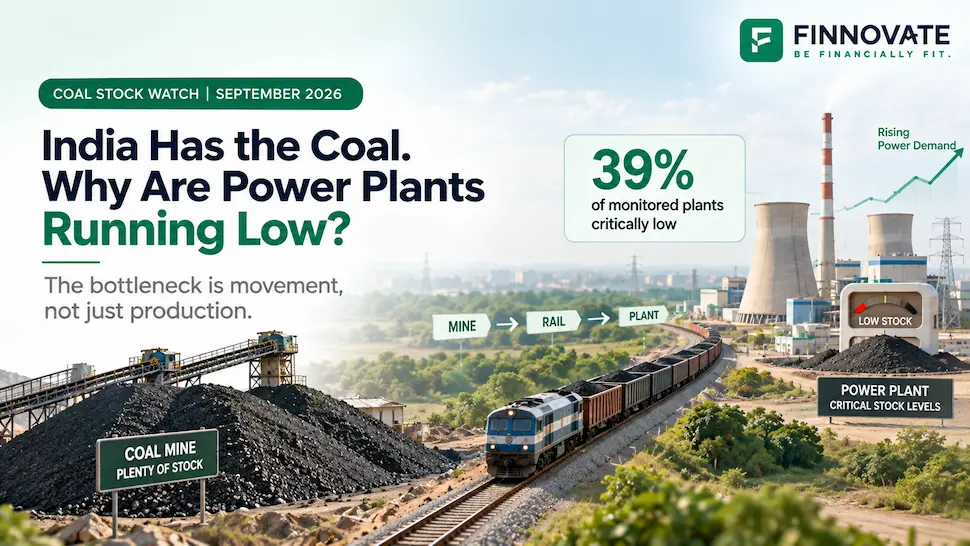
Nearly 39% of India’s monitored coal power plants were critically low on fuel in Septemb...
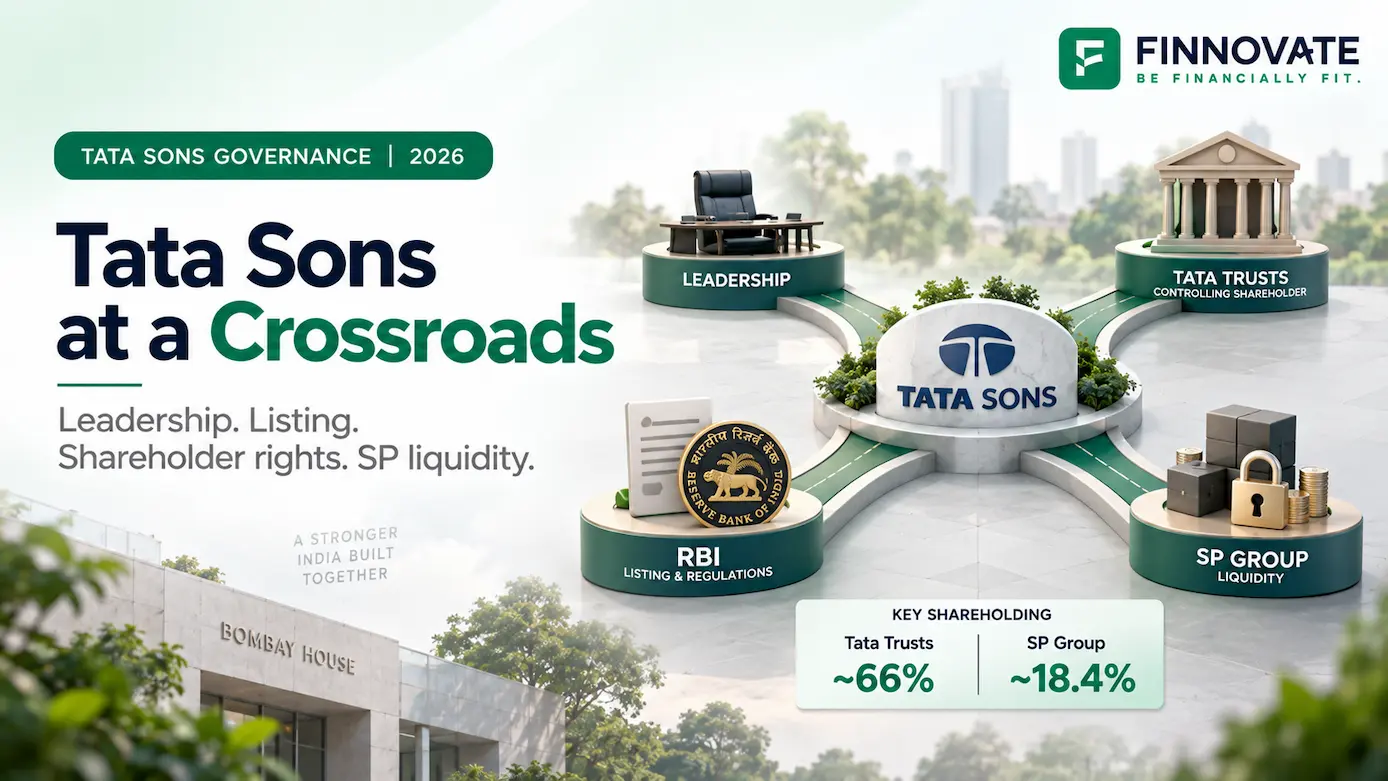
Tata Sons faces a major governance dispute over N Chandrasekaran’s reappointment, RBI li...
Popular now
Learn how to easily download your NSDL CAS Statement in PDF format with our step-by-step g...

Looking for the best financial freedom books? Here’s a handpicked 2026 reading list with...
Learn what SIF investment means in India, SEBI rules, Rs 10 lakh minimum investment, avail...
Clear guide to mutual fund taxation in India for FY 2025–26 after July 2024 changes: equ...