

The Great Economic Decoupling of 2026: Oil, AI & India
Rising oil prices and booming AI investment are shaping an uneven global economy in 2026. ...
24 October 2026

Finnovate’s editorial team researches and creates financial content using trusted sources, regulatory references and inputs from subject experts.
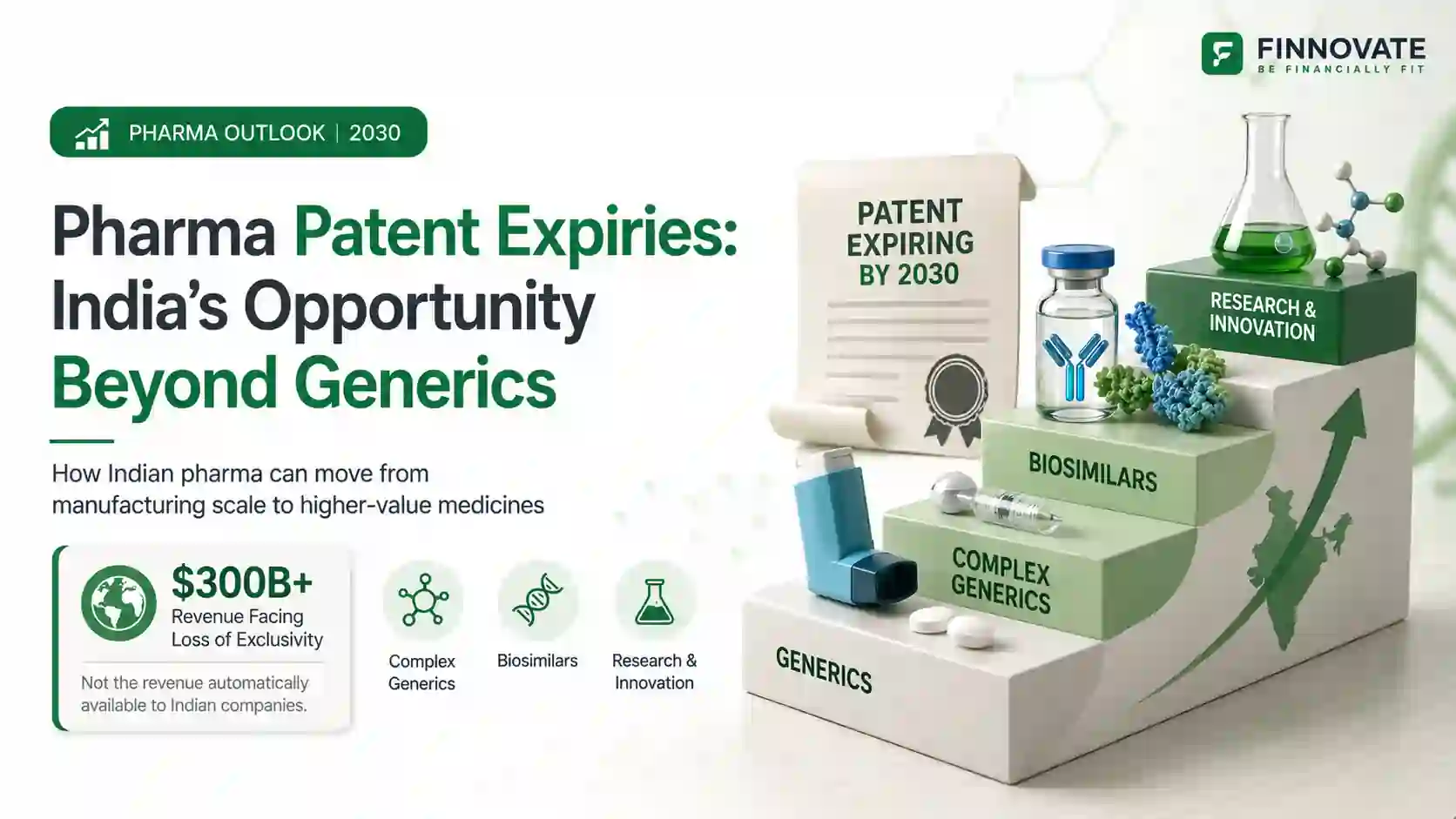
More than $300 billion in global prescription-drug revenue is expected to lose exclusivity between 2025 and 2030. The coming wave includes several blockbuster medicines, each generating more than $1 billion in annual sales.
For Indian pharmaceutical companies, this creates a significant opportunity. But the headline figure should not be read as a $300 billion market waiting to be captured.
The number represents the existing sales of patented medicines that may become exposed to generic or biosimilar competition. The revenue ultimately available to Indian companies will depend on regulatory approvals, competition, pricing, manufacturing capability and the type of medicine losing exclusivity.
We first covered the $300 billion pharmaceutical patent-expiry opportunity in our weekly news analysis. The larger question is how much of this opportunity Indian companies can convert into sustainable revenue.
A patent cliff refers to the period when a group of high-value medicines loses patent or regulatory protection, allowing competing products to enter the market.
However, the expiry of one patent does not always lead to immediate competition.
A medicine may be protected through several layers, including:
Generic or biosimilar entry may therefore happen months or years after the expiry of the primary patent.
The phrase "loss of exclusivity" is often more useful than "patent expiry" because it reflects the wider set of protections influencing the actual launch date.
India's pharmaceutical strength was built partly during the process-patent era, when domestic manufacturers developed alternative processes for producing established medicines.
The legal framework changed in 2005, when India introduced pharmaceutical product patents in line with its international obligations. Generic entry now depends on the expiry, licensing, invalidation or non-infringement of the relevant product protections.
Developing a generic medicine also involves more than changing the manufacturing process.
For regulated markets, a manufacturer may need to demonstrate:
This process is generally less expensive than developing a completely new medicine, but regulatory and manufacturing capabilities remain critical.
Generic competition normally causes prices to decline, but the extent of the reduction varies considerably.
The final market depends on:
A conventional tablet attracting several competitors may experience rapid price erosion. A complex injectable, inhaler or drug-device product may retain higher margins because fewer companies can manufacture and obtain approval for it.
The $300 billion figure is therefore best understood as the value of originator revenue exposed to future competition, rather than the expected size of the Indian generic opportunity.
The patent-expiry cycle creates opportunities across four levels.
| Segment | Opportunity | Capability required |
|---|---|---|
| Conventional generics | Large-volume medicines with established demand | Low-cost manufacturing, fast filings and regulatory compliance |
| Complex generics | Injectables, inhalers, ophthalmic products, peptides and drug-device combinations | Advanced formulation and specialised manufacturing |
| Biosimilars | Follow-on versions of biologic medicines | Bioreactors, analytical comparability, clinical evidence and global approvals |
| Novel therapies | Original drugs and differentiated platforms | Long-term R&D, intellectual property and clinical development |
Conventional generics will remain important, particularly for companies with strong manufacturing efficiency and regulatory filing experience.
However, margins can decline quickly when several manufacturers enter the same product. The larger strategic opportunity lies in products where technical, regulatory and capital barriers limit competition.
Complex generics sit between ordinary formulations and original drug discovery.
Products such as long-acting injectables, inhalation therapies, transdermal systems and specialised ophthalmic formulations require more advanced development and manufacturing capabilities.
They typically involve:
These barriers can reduce the number of competitors and support better economics than ordinary oral formulations.
For established Indian pharmaceutical companies, complex generics may offer a realistic path towards higher-value global markets without taking on the full cost and uncertainty of discovering a new molecule.
Biologic medicines are produced using living cells and are structurally more complex than conventional chemical drugs. A biosimilar must be shown to be highly similar to the reference biologic, with no clinically meaningful differences in safety or effectiveness.
Close to 100 biologic medicines representing around $120 billion in pre-expiry US sales were projected to lose exclusivity by 2030.
Capturing this opportunity requires:
Biosimilars therefore require substantially more capital and scientific capability than ordinary generics. They may, however, provide more durable opportunities because the barriers to entry are higher.
India remains dependent on imported active pharmaceutical ingredients, key starting materials and drug intermediates for several critical products.
The government's production-linked incentive scheme is intended to support domestic manufacturing of selected APIs, KSMs and intermediates.
Localisation can help Indian companies:
Fermentation-based manufacturing is especially relevant for selected antibiotics, vitamins and other biologically derived inputs.
API localisation is not itself a patent-cliff opportunity. It is an enabling layer that can make India's finished-formulation and biopharma businesses more resilient.
India already has a large scientific workforce, extensive manufacturing infrastructure and experience supplying regulated markets.
The remaining gap lies in converting these strengths into original intellectual property, differentiated drug-delivery systems, biosimilar platforms and new medicines.
NITI Aayog has highlighted the need for India to move further into complex generics, biosimilars and biopharmaceutical development, while also strengthening research intensity and integration into higher-value global supply chains.
This will require investment in:
The coming patent cliff will create a large pipeline of products open to competition. India's existing generic manufacturers are well placed to participate, but the largest headline drugs will also attract competitors from across the world.
The more important opportunity is to use this cycle to upgrade India's pharmaceutical model.
Conventional generics can provide scale. Complex generics can improve margins. Biosimilars can create entry into advanced biologic markets. Stronger API manufacturing can improve supply resilience. Original research can create longer-term intellectual property.
The $300 billion patent cliff is therefore less a guaranteed revenue opportunity and more a test of how quickly Indian pharma can move up the value chain.
A pharmaceutical patent cliff occurs when several high-revenue medicines lose patent or regulatory exclusivity within a relatively short period, exposing their sales to generic or biosimilar competition.
No. It represents existing global prescription-drug revenue expected to lose exclusivity. The opportunity available to Indian companies will be smaller and will depend on approvals, competition, pricing and manufacturing capabilities.
Yes. India introduced pharmaceutical product patents in 2005. Before that, the Indian pharmaceutical industry developed largely under a process-patent framework.
A conventional generic is a chemically equivalent version of a small-molecule medicine. A biosimilar is a highly similar version of a biologic medicine produced using living cells. Biosimilars require more complex manufacturing and regulatory evidence.
Complex generics are harder to develop and manufacture than ordinary tablets and capsules. Fewer competitors may enter these products, potentially supporting better margins and more durable market opportunities.
Domestic API and KSM production can reduce import dependence, improve supply security and give manufacturers greater control over quality, cost and availability.
Disclaimer: This article is for general information and educational purposes only and does not constitute investment, medical, legal or financial advice. Pharmaceutical patent protection, regulatory exclusivity, product approvals and market opportunities vary across countries and medicines.
No spam. Only new posts, simple explainers, and practical money checklists for busy professionals.
Finnovate is a SEBI-registered financial planning firm that helps professionals bring structure and purpose to their money. Over 3,500+ families have trusted our disciplined process to plan their goals - safely, surely, and swiftly.
Our team constantly tracks market trends, policy changes, and investment opportunities like the ones featured in this Weekly Capsule - to help you make informed, confident financial decisions.
Learn more about our approach and how we work with you:
No comments yet. Start the conversation. What would you add?
No spam. Only new posts, simple explainers, and practical money checklists.
You may also like
Rising oil prices and booming AI investment are shaping an uneven global economy in 2026. ...
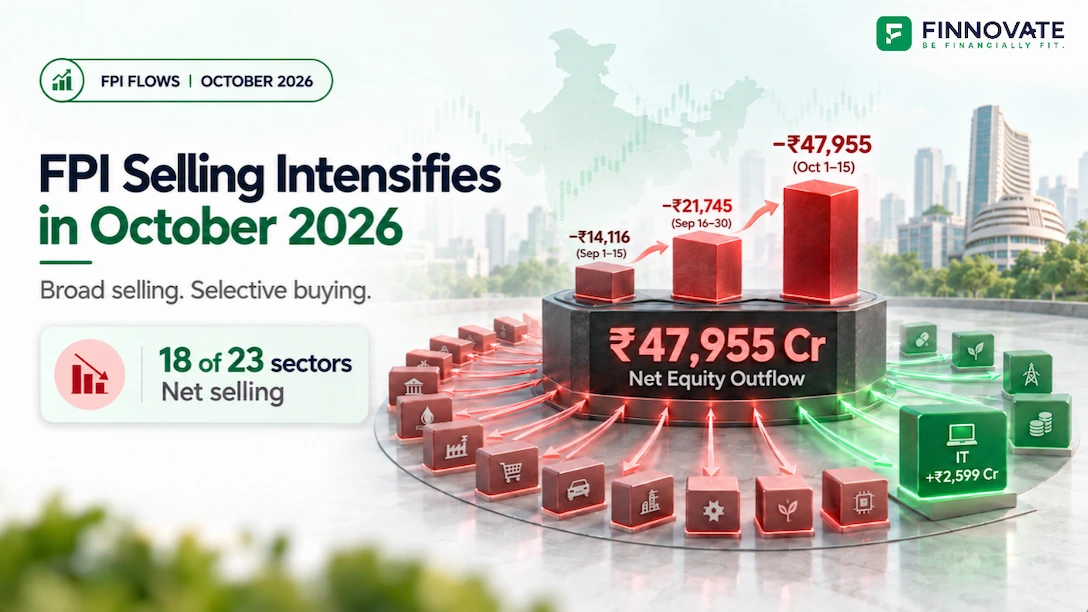
Explore FPI equity flows for October First Half, 2026: ₹47,955 crore in net outflows, th...
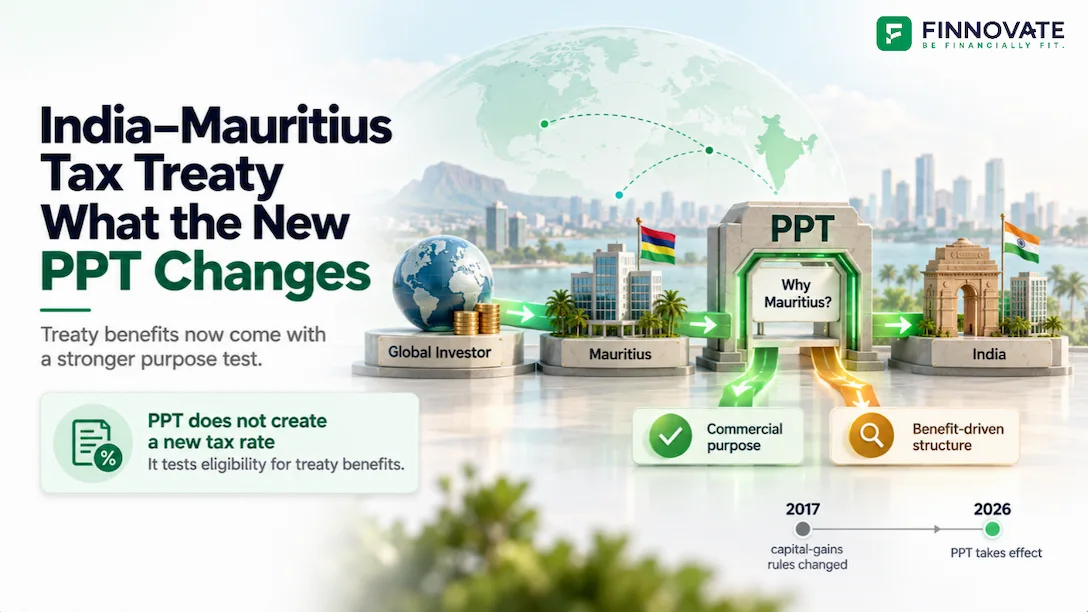
Understand the India–Mauritius tax treaty’s Principal Purpose Test, its August 2026 ef...

Explore India’s AI hardware opportunity through the proposed Adani–Jabil venture, from...
Popular now

Learn how to easily download your NSDL CAS Statement in PDF format with our step-by-step g...

Looking for the best financial freedom books? Here’s a handpicked 2026 reading list with...
Learn what SIF investment means in India, SEBI rules, Rs 10 lakh minimum investment, avail...

Clear guide to mutual fund taxation in India for FY 2025–26 after July 2024 changes: equ...