
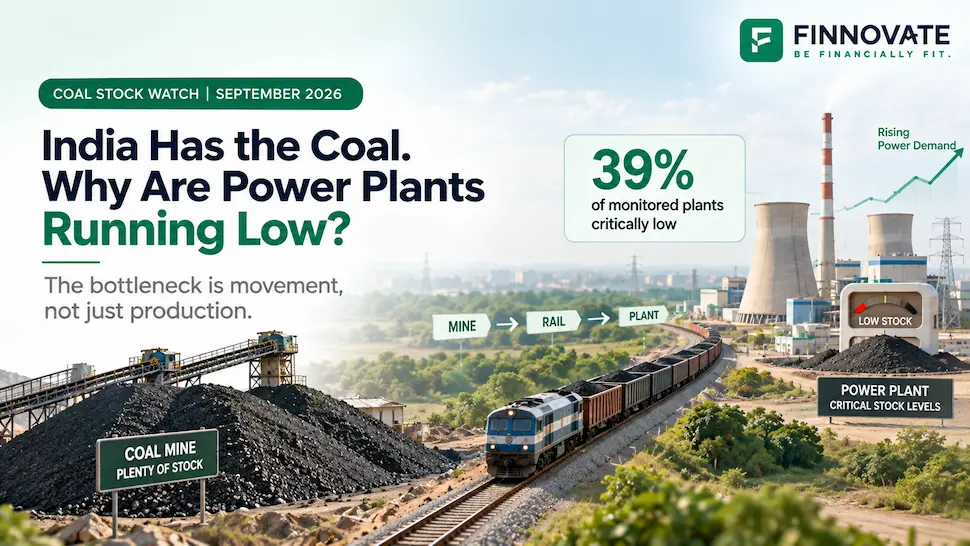
India Coal Stocks 2026: Why 39% of Power Plants Are Critically Low
Nearly 39% of India’s monitored coal power plants were critically low on fuel in Septemb...
22 September 2026

Finnovate’s editorial team researches and creates financial content using trusted sources, regulatory references and inputs from subject experts.
India’s Dedicated Freight Corridors are now moving from construction to commercial use.
The 1,337-km Eastern Dedicated Freight Corridor and the 1,506-km Western Dedicated Freight Corridor have been completed and commissioned. Together, they are designed to move large freight volumes faster and more reliably than the conventional rail network.
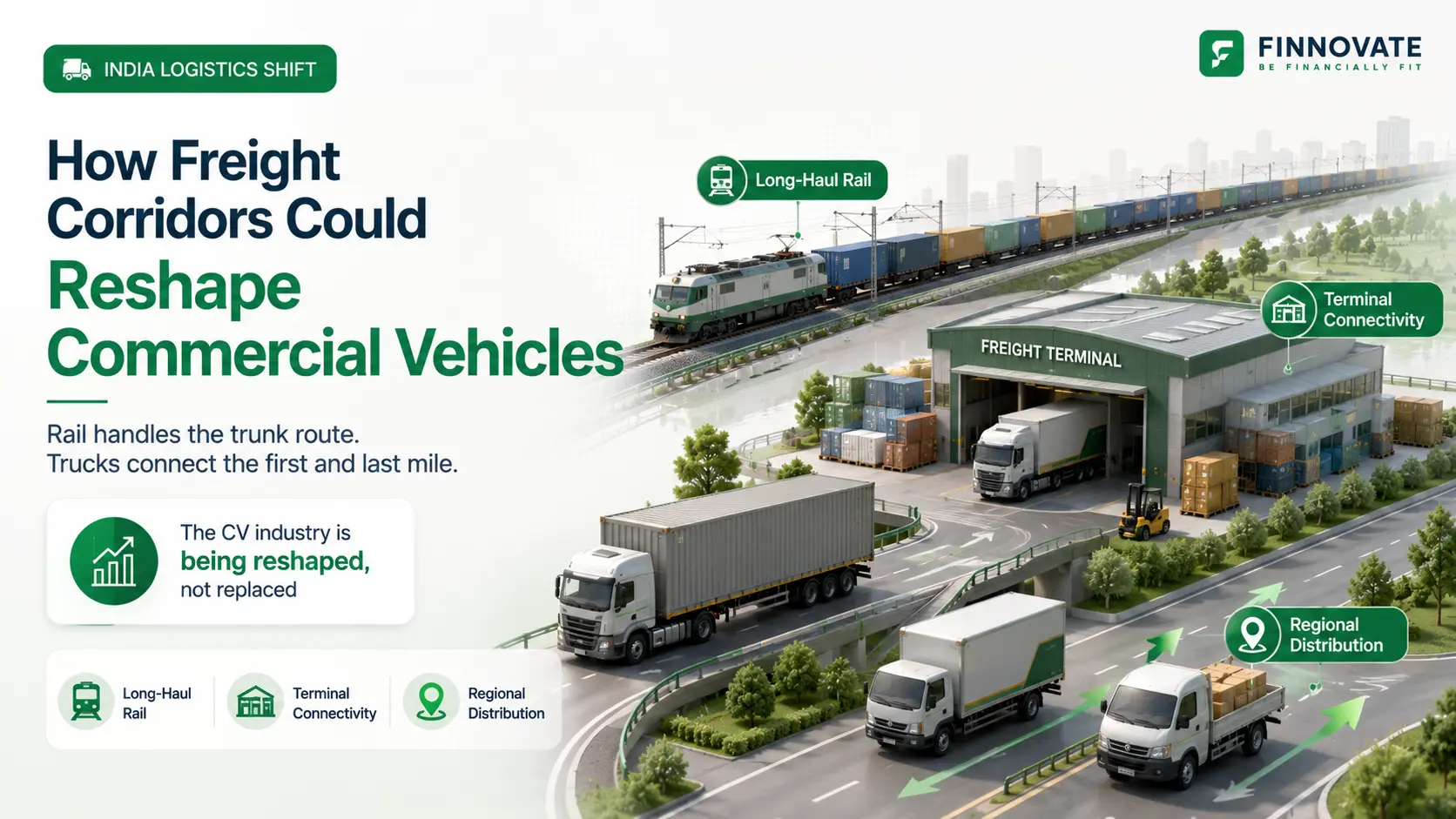
The likely result is not the end of trucking.
That means the commercial-vehicle industry may continue growing, but with a different mix of routes, applications and vehicle categories.
Table of Contents
A Dedicated Freight Corridor (DFC) is a railway line created mainly for goods movement.
Conventional railway tracks are shared by passenger and freight trains. This can slow freight movement and make transit times less predictable.
DFCs are designed to support:
The two corridors serve different parts of India’s freight economy.
| Corridor | Broad route | Main freight relevance | Likely road-connectivity needs |
|---|---|---|---|
| Eastern DFC | Ludhiana to Sonnagar | Coal, steel, power, cement and industrial cargo | Tippers, bulk carriers, haulage trucks and regional distribution vehicles |
| Western DFC | Dadri to JNPT | Containers, manufacturing cargo and export-import freight | Tractor-trailers, container carriers, MCVs and local distribution vehicles |
The Eastern DFC is closely linked to coal-producing and industrial regions. The Western DFC connects manufacturing centres and the National Capital Region with western ports.
Automobile transportation shows that the shift has already started.
This increase was supported by several changes:
Cars still need to move from factories to railway terminals and from destination terminals to dealerships. Rail reduces the long-distance road leg, but trucks remain necessary at both ends.
Rail becomes more competitive when freight is large, predictable and moving over long distances.
A container truck travelling between a port and a distant industrial hub may face more competition from rail.
A truck serving several warehouses around a freight terminal may see more demand.
The traditional model often involved one truck carrying cargo directly over a long distance.
The emerging multimodal model can look different:
This can increase road activity around:
| Commercial-vehicle segment | Possible DFC impact | Likely use case |
|---|---|---|
| Heavy long-haul trucks | Pressure on selected routes where rail becomes reliable and economical | Non-rail routes, urgent freight and specialised long-distance cargo |
| Tractor-trailers | Demand may shift from highway movement to terminal-based shuttles | Ports, inland depots, logistics parks and container terminals |
| Tippers and bulk carriers | Potential support from mining, power, cement and terminal connectivity | Mines, plants, railheads and industrial sites |
| Medium commercial vehicles | Possible benefit from regional hub-to-warehouse distribution | Regional freight and multiple delivery points |
| Light and small commercial vehicles | Possible benefit from local and last-mile distribution | Urban, retail, rural and e-commerce movement |
| Specialised vehicles | Potential growth as freight becomes more application-specific | Reefer, tanker, automobile, cement and container movement |
Not necessarily.
Rail can gain freight share while India’s total road-freight volumes continue rising.
Truck demand can still receive support from:
CV manufacturers may need to adjust their product mix rather than assume one category will dominate.
| Business area | Possible strategic response |
|---|---|
| Regional trucks | Develop vehicles suited to shorter, repetitive hub-to-warehouse routes |
| Container transport | Strengthen tractor-trailer and terminal-shuttle offerings |
| Specialised cargo | Expand products for cement, automobiles, chemicals, food and cold-chain movement |
| Telematics | Improve vehicle tracking, utilisation, scheduling and fuel monitoring |
| Service network | Build workshops and support centres near freight and industrial hubs |
| Alternative fuels | Target electric, LNG or other options for predictable terminal-linked routes |
The opportunity may increasingly depend on the freight application, not only on vehicle tonnage.
Fleet operators focused on long-distance contracts may need to adapt where customers move trunk freight to rail.
Possible new business models include:
Terminal-linked operations can reduce driver time away from home, improve trip frequency and make route planning more predictable. The benefit depends on efficient loading, unloading and terminal turnaround.
Larger manufacturers, ports and railway-linked terminals may also demand:
Total commercial-vehicle sales alone may not show the full impact of DFCs.
Dedicated Freight Corridors can make rail more competitive for long-distance, high-volume cargo.
This may reduce some direct highway movement, especially for containers, automobiles and bulk freight on routes connected efficiently by rail.
But rail cannot collect goods from every factory or deliver to every warehouse and customer.
Trucks will continue to handle first-mile, last-mile, regional and application-specific transport.
For commercial-vehicle manufacturers and fleet operators, the key question is whether their products and business models match the routes, terminals and cargo applications that are likely to grow.
Not automatically. They may reduce demand on selected long-haul routes, while supporting terminal connectivity, regional distribution and specialised commercial vehicles.
Heavy trucks used for predictable, long-distance movement of containers, automobiles and bulk cargo may face the most direct rail competition on overlapping routes.
Yes. Freight arriving at rail terminals must be distributed to warehouses, retailers and industrial customers. This can support regional MCV and last-mile LCV demand.
Containers must still move between ports, factories, inland depots, rail terminals and final customers. The journey may become shorter, but the road connection remains necessary.
The Eastern DFC is more closely linked to coal and industrial bulk cargo. The Western DFC is more important for containers, ports and export-import freight.
No. Rail is better suited to long-distance, high-volume movement. Road transport remains necessary for door-to-door, urgent, regional and fragmented freight.
Useful indicators include DFC utilisation, rail share by cargo category, terminal growth, CV sales mix, freight rates, fleet utilisation and manufacturers’ specialised-product portfolios.
Disclaimer: This article is for general information and educational purposes only. It does not constitute investment advice or a recommendation regarding any company, security or commercial-vehicle segment. Freight patterns, infrastructure utilisation and vehicle demand can change over time.
No spam. Only new posts, simple explainers, and practical money checklists for busy professionals.
Finnovate is a SEBI-registered financial planning firm that helps professionals bring structure and purpose to their money. Over 3,500+ families have trusted our disciplined process to plan their goals - safely, surely, and swiftly.
Our team constantly tracks market trends, policy changes, and investment opportunities like the ones featured in this Weekly Capsule - to help you make informed, confident financial decisions.
Learn more about our approach and how we work with you:
No comments yet. Start the conversation. What would you add?
No spam. Only new posts, simple explainers, and practical money checklists.
You may also like
Nearly 39% of India’s monitored coal power plants were critically low on fuel in Septemb...
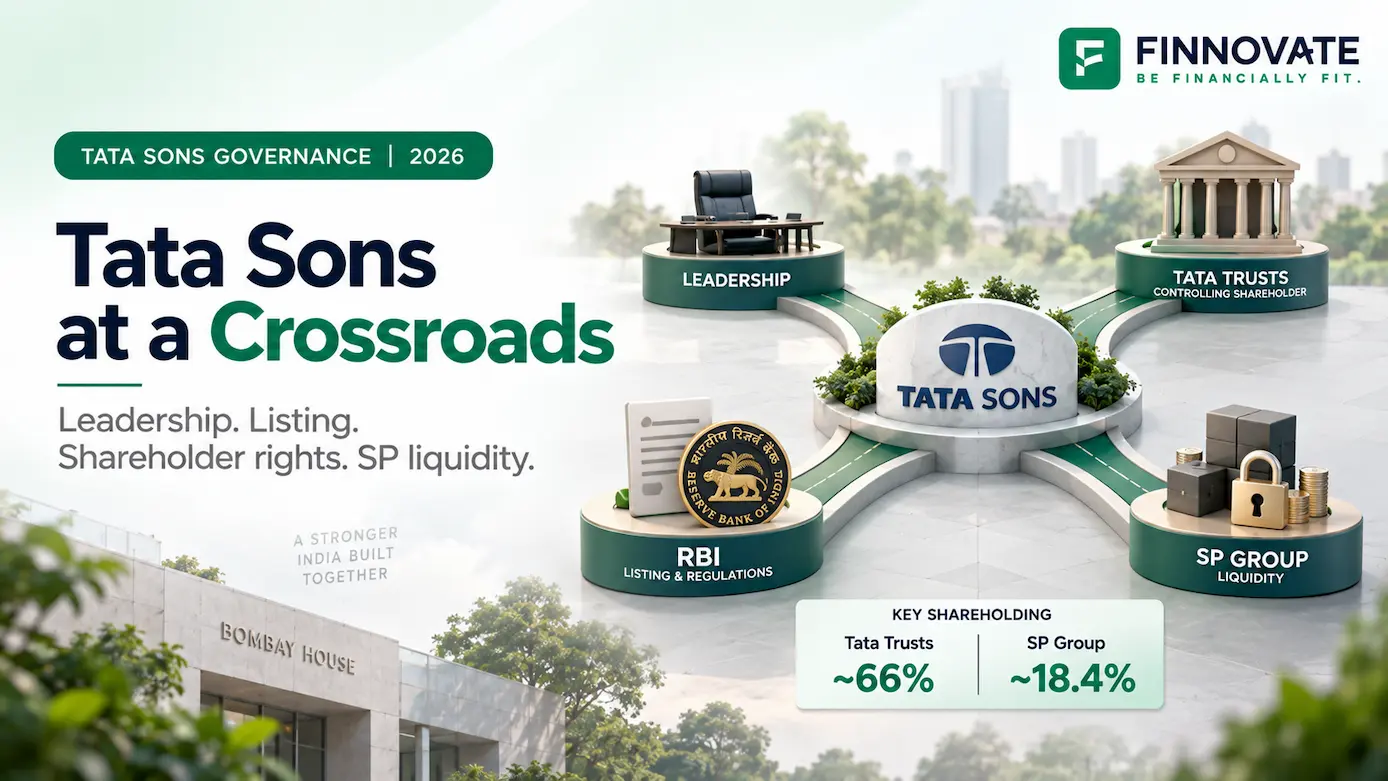
Tata Sons faces a major governance dispute over N Chandrasekaran’s reappointment, RBI li...
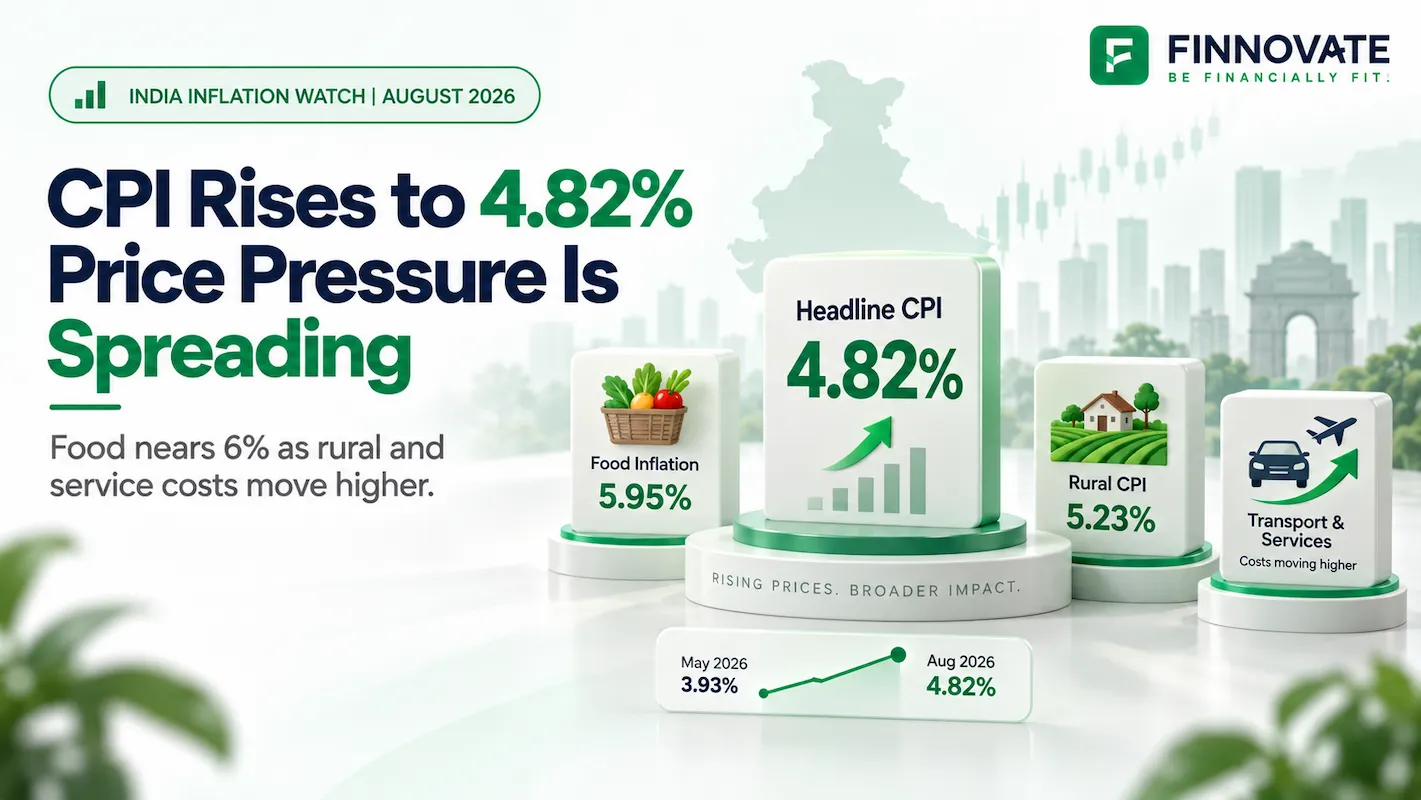
India’s CPI inflation rose to 4.82% in August 2026 as food inflation neared 6% and rural...
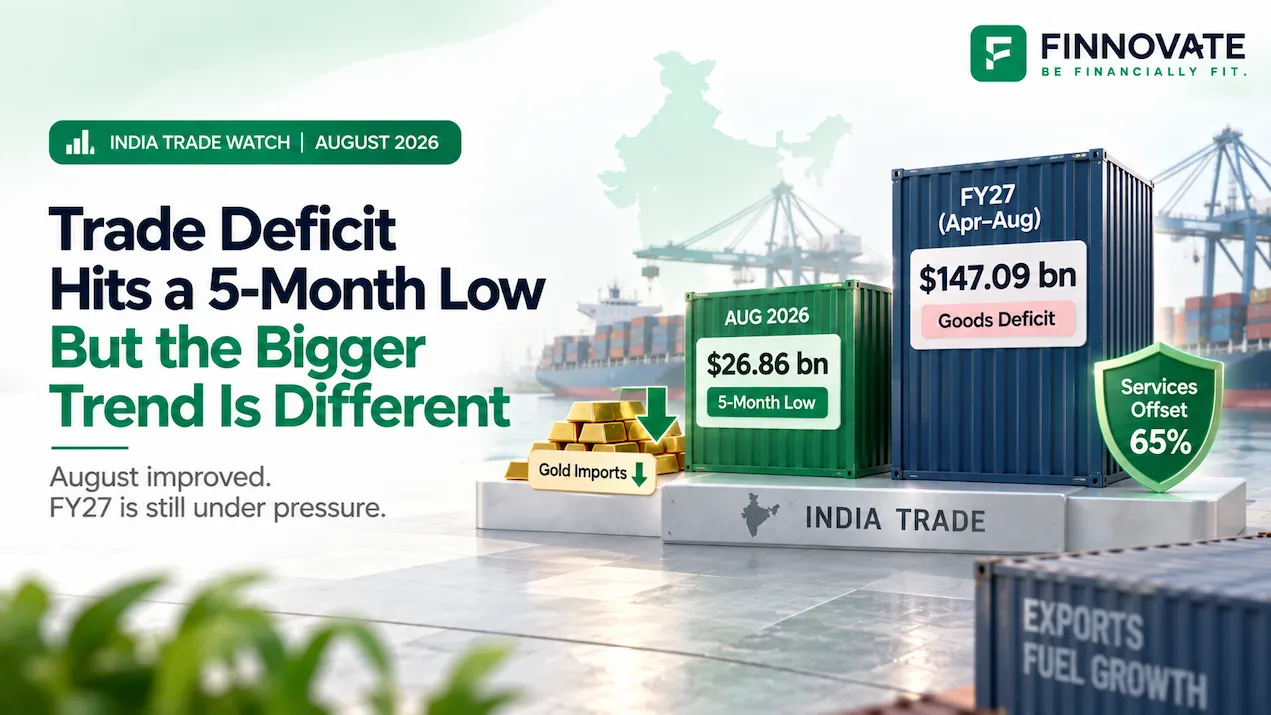
India’s trade deficit narrowed to $26.86 billion in August 2026. See what drove the impr...
Popular now

Learn how to easily download your NSDL CAS Statement in PDF format with our step-by-step g...

Looking for the best financial freedom books? Here’s a handpicked 2026 reading list with...
Learn what SIF investment means in India, SEBI rules, Rs 10 lakh minimum investment, avail...
Clear guide to mutual fund taxation in India for FY 2025–26 after July 2024 changes: equ...