
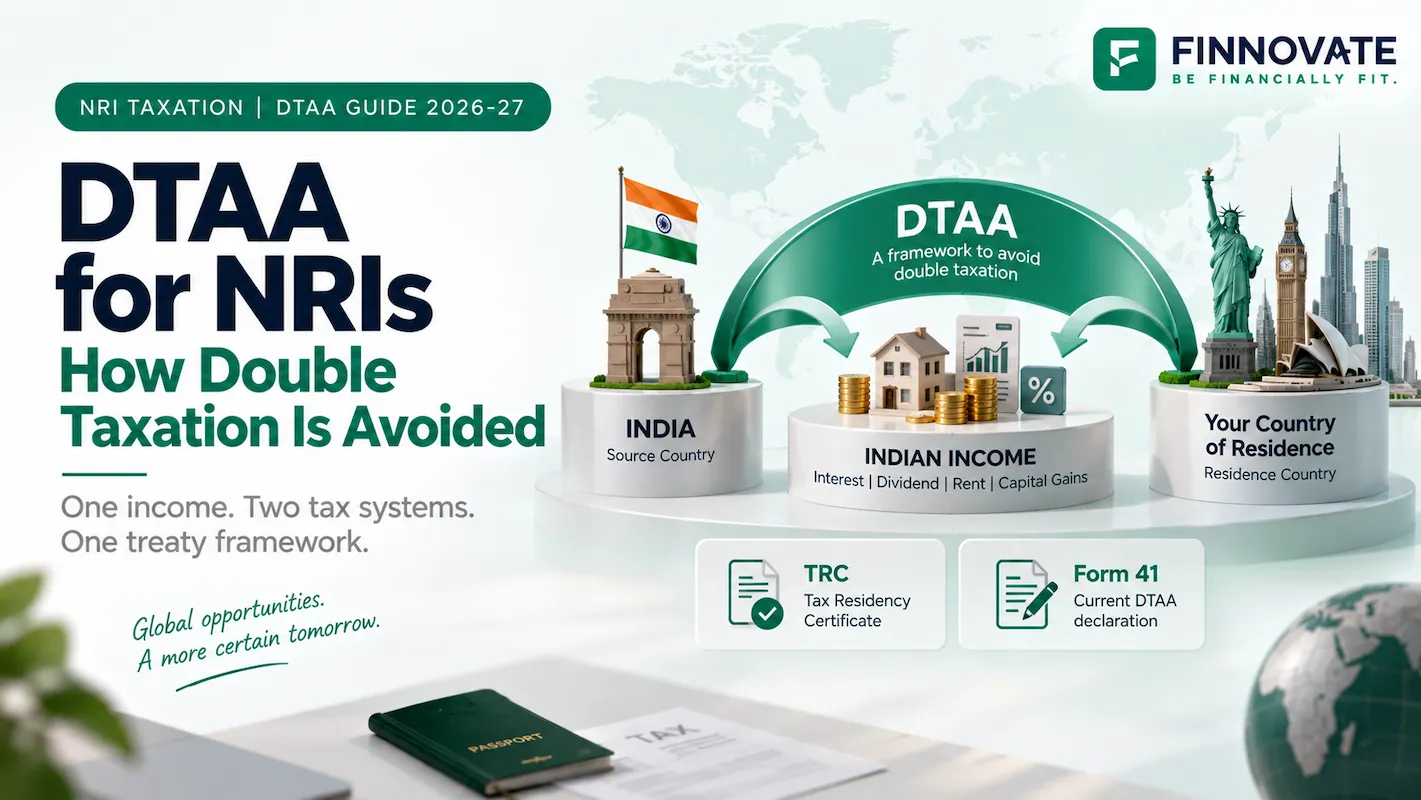
DTAA for NRIs in India: TRC, Form 41, TDS & Tax Relief
Understand DTAA for NRIs in India for 2026–27, including TRC, Form 41, TDS, NRO interest...
23 September 2026

NRIs are good at building wealth. They are often not prepared for what happens if they are not around.
Assets spread across countries, bank accounts that can’t be accessed, nominees who don’t know their role, and families stuck in paperwork. These problems don’t arise because people didn’t care. They arise because estate planning was postponed.
Estate planning is not about pessimism. It is about making life easier for the people you care about. For NRIs, it becomes even more important because assets and laws don’t sit in one country.
Estate planning for NRIs is harder than for residents because of three reasons.
This combination creates confusion at the worst possible time.
A nominee is not the owner of the asset.
A nominee is usually a custodian, someone authorised to receive the asset on behalf of the rightful heirs. Ownership is typically decided by:
Nomination decides who can claim. A will decides who owns.
From 1 Nov 2025, banks can allow you to name up to four nominees for a single deposit account, either simultaneously (share in percentages) or successively (priority order). This helps distribute claims among children or heirs. It still does not replace a will for ownership.
Relying only on nomination shifts the burden to your family later.
If you hold assets in India, a will usually helps significantly.
Indian assets include:
Without a will, families often need to rely on processes like legal heir documentation or court-driven certificates, which can take time and patience.
There is no one-size answer, but the general idea is:
The key is clarity and coordination, not complexity.
Power of Attorney is often used by NRIs to manage operations from abroad. It can be very useful, but it has limits.
PoA is useful for operations. It is not a substitute for succession planning.
When NRIs return to India, estate planning needs a review because:
Things worth reviewing after return:
Many NRIs hold assets that are “invisible” unless someone has access: email accounts, online banking logins, broker platforms, cloud storage, even crypto wallets. A practical add-on is a digital access clause in your estate plan, including where to find credentials and how access should be handled. Keep it secure and avoid writing passwords directly inside the will.
Estate planning is not about age. It is about order.
If you hold assets in more than one country, a basic estate structure review can help ensure your family doesn’t struggle later. Keep it simple, keep it documented, and keep it updated.
Estate planning is not about predicting outcomes. It is about reducing uncertainty.
For NRIs, the real risk is not lack of wealth. It is lack of access and clarity. A basic, well-thought-out estate structure reduces stress for your family and avoids avoidable delays.
Disclaimer: This article is for informational purposes only and does not constitute legal advice. Estate planning rules vary by jurisdiction and individual circumstances. Consult qualified professionals before making decisions.
No spam. Only new posts, simple explainers, and practical money checklists for busy professionals.
Finnovate is a SEBI-registered financial planning firm that helps professionals bring structure and purpose to their money. Over 3,500+ families have trusted our disciplined process to plan their goals - safely, surely, and swiftly.
Our team constantly tracks market trends, policy changes, and investment opportunities like the ones featured in this Weekly Capsule - to help you make informed, confident financial decisions.
Learn more about our approach and how we work with you:
No comments yet. Start the conversation. What would you add?
No spam. Only new posts, simple explainers, and practical money checklists.
You may also like
Understand DTAA for NRIs in India for 2026–27, including TRC, Form 41, TDS, NRO interest...

Understand NRI capital gains tax in India for 2026–27, including LTCG, STCG, shares, mut...

Returning to India with a 401(k)? Learn whether to keep it, roll it into an IRA or withdra...

Planning to retire in India as an NRI? Learn how to plan your retirement corpus, overseas ...
Popular now

Learn how to easily download your NSDL CAS Statement in PDF format with our step-by-step g...

Looking for the best financial freedom books? Here’s a handpicked 2026 reading list with...

Learn what SIF investment means in India, SEBI rules, Rs 10 lakh minimum investment, avail...

Clear guide to mutual fund taxation in India for FY 2025–26 after July 2024 changes: equ...