El Niño’s Double Squeeze: Why Food and Power Could Get More Expensive

Finnovate’s editorial team researches and creates financial content using trusted sources, regulatory references and inputs from subject experts.
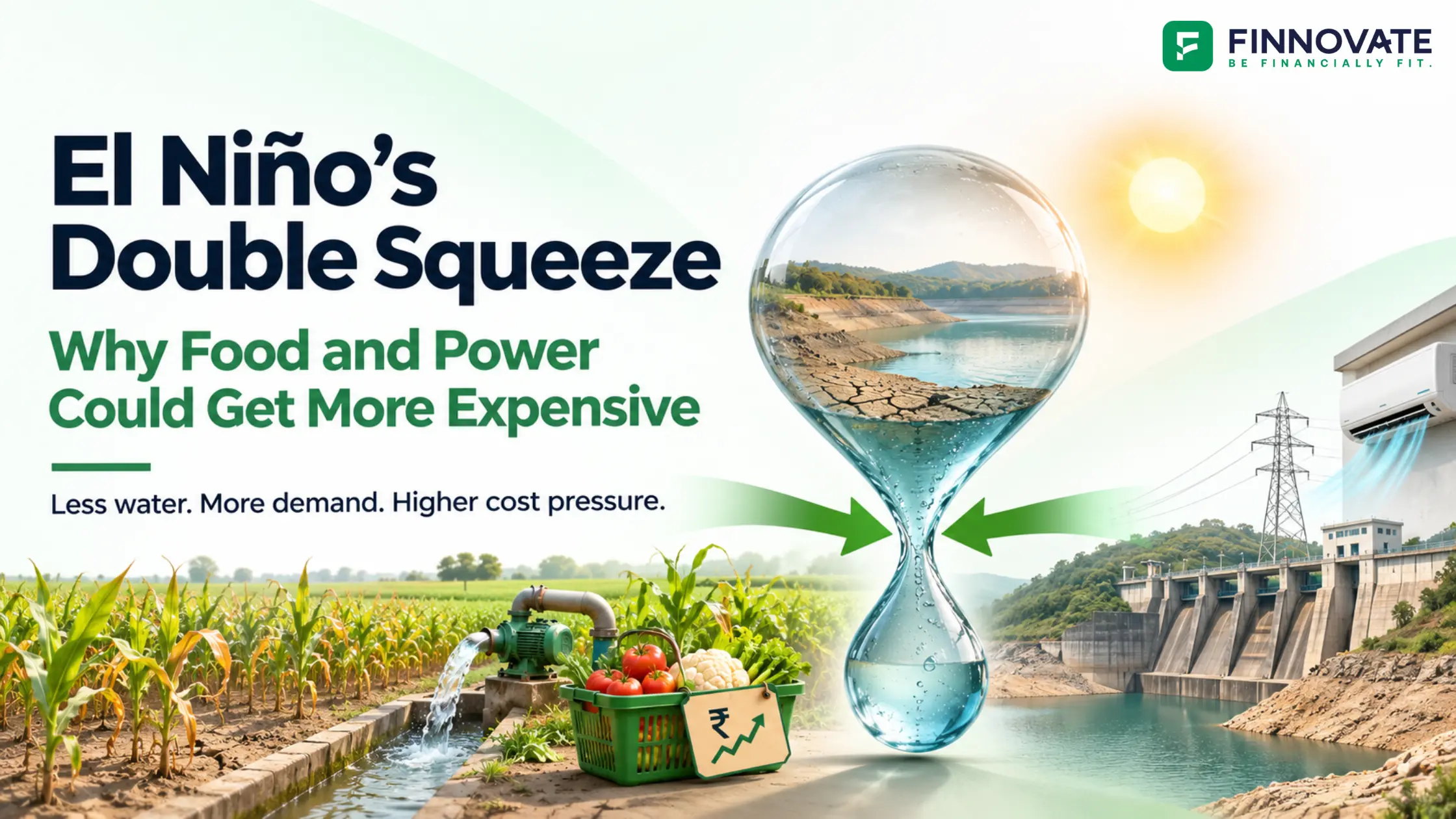
A farmer needs more water when the rains fail. A hydroelectric plant needs that same water to generate electricity. Meanwhile, hotter weather sends households and businesses reaching for air conditioners.
That is how a weather shock can squeeze an economy from several directions. Food becomes harder to grow, electricity demand rises, and some sources of power become less dependable.
An unusually strong El Niño could bring that combination into sharper focus over the coming months.
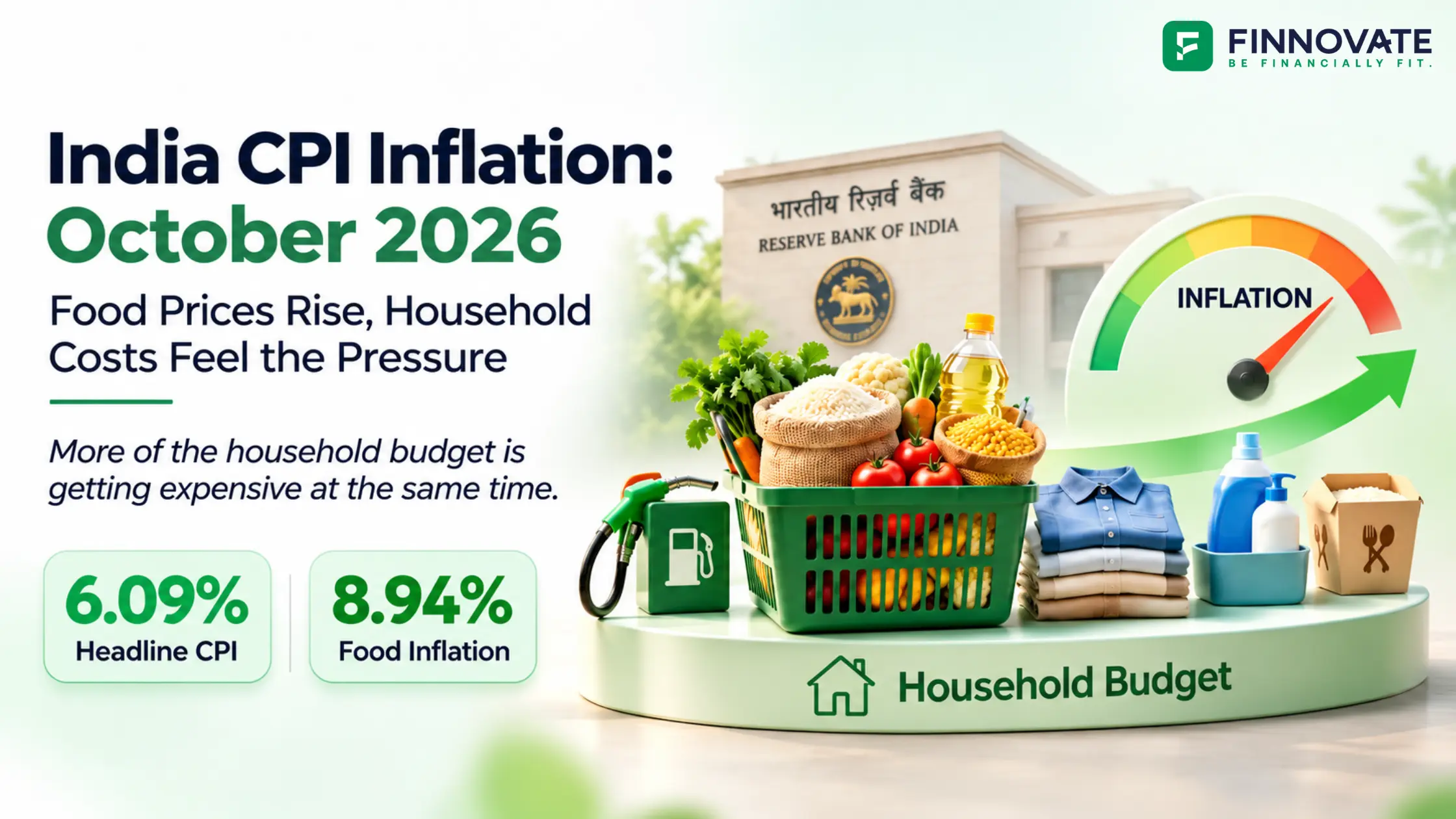
The November 12, 2026 climate outlook puts the probability of strong-to-very-strong El Niño conditions continuing through January–March 2027 at more than 79%. For India, the warning arrives when food prices are already rising. October’s food inflation reached 8.94%, while overall retail inflation climbed to 6.09%.
The economic risk stretches from farms and reservoirs to factory costs, household budgets and spending in rural markets.
What Is Happening in the Pacific?
El Niño develops when surface waters in the central and eastern equatorial Pacific become unusually warm, accompanied by changes in winds and rainfall.
Those changes can influence weather far beyond the Pacific. Some regions become wetter, while others experience drier conditions. The effect depends on location, season and other weather systems.
The latest seasonal outlook projects a sea-surface temperature anomaly of approximately 3.8°C above normal in the Niño 3.4 region for November 2026–January 2027.
That figure measures warming in a specific part of the Pacific against its normal temperature. Global temperatures and local temperatures in India are separate measurements.
A warmer Pacific can shift where rain falls and where heat builds. For the economy, the consequences depend on whether those shifts reach farming regions, water supplies and electricity systems at vulnerable times.
The timing of the weather can matter as much as its intensity.
A dry spell during planting creates a different problem from heat during grain development. Heavy rain can replenish a reservoir but damage a crop ready for harvest.
The First Pressure Point Is Food
Farming needs water at the right stages of a crop’s life.
Too little moisture can delay sowing or discourage farmers from planting water-intensive crops. A shortage later in the season can reduce output from land already planted. Excessive rain can damage standing crops and disrupt harvesting, storage or transport.
For India’s winter crops, the condition of soil and available irrigation water matters alongside rainfall during the growing season. Reservoirs, canals and groundwater help carry the effects of one season into the next.
Farmers may respond by changing crops, reducing the area planted or spending more on irrigation. Each choice has a different financial outcome.
Higher spending can protect production but reduce the farmer’s earnings. Cutting the planted area may lower costs while also limiting the eventual harvest.
Weekly sowing figures provide an early view of these decisions. However, planting can catch up, and yields can still change considerably before harvest. The final food supply depends on both the area harvested and the output produced per hectare.
That is why the economic impact develops over months, rather than arriving with a single weather forecast.
The Second Pressure Point Is Electricity
Hot weather increases the need for cooling. Air conditioners, refrigerators and cold-storage facilities place more demand on the electricity system.
At the same time, dry conditions can reduce water available for hydropower in affected regions.
Stronger El Niño conditions could increase cooling demand while reducing hydropower and wind generation in some regions.
Power systems then need other sources of electricity to fill the gap.
Where extra coal- or gas-fired generation is available, supply may hold up, but fuel requirements can increase. Where capacity, fuel or transmission is constrained, meeting peak demand becomes harder.
The effect on electricity bills depends on local tariffs, contracts and government decisions. Some costs may reach consumers quickly; others may initially sit with power companies or public finances.
Higher electricity demand creates a business opportunity only when companies can meet it at a workable cost.
A generator facing lower water availability has a different exposure from one with available capacity and dependable fuel supplies.
Where Farming and Power Meet
The connection becomes especially important when farmers need electricity to make up for a lack of rain.
Dry soil increases irrigation needs. More pumping requires more power. If electricity supply becomes unreliable, irrigation schedules can be disrupted. Where farmers use diesel pumps or backup systems, fuel spending can rise.
The same pressure can extend beyond the field.
Cold storage needs electricity to preserve produce. Processing plants need power to operate. Transport and distribution depend on functioning roads and supply networks, which severe weather can also disrupt.
This creates several routes through which costs can rise before food reaches a shop.
A crop may become more expensive because less of it was harvested. It may also become more expensive because growing, storing or moving it costs more.
Reliable irrigation and electricity can limit the damage. So can adequate stocks, alternative supplies and timely imports. The strength of these buffers helps determine how much of a weather shock reaches consumers.
India Already Has a Food-Price Problem
October’s inflation release shows why another potential supply shock deserves attention.
| Inflation measure | September 2026 | October 2026 |
|---|---|---|
| Overall retail inflation | 5.54% | 6.09% |
| Food inflation | 7.74% | 8.94% |
| Rural retail inflation | 6.08% | 6.63% |
| Urban retail inflation | 4.88% | 5.41% |
Scroll horizontally to view the full table on smaller screens.
Source: Ministry of Statistics and Programme Implementation, October 2026 CPI release, published November 12, 2026. September figures are final; October figures are provisional. Rates are year-on-year.
Food inflation rose by 1.20 percentage points in a month. Rural retail inflation was also higher than urban inflation. The October 2026 CPI inflation breakdown shows how price changes varied across food, transport, housing-related costs and other spending categories.
These figures describe the current price backdrop. Establishing El Niño’s contribution would require evidence linking particular weather conditions to production and prices.
Food prices also respond to stocks, transport costs, trade decisions and the previous year’s comparison base.
Even so, further disruption would arrive when household budgets are already absorbing faster food-price increases. Families spending more on essentials have less money available for other purchases.
That is how an agricultural problem can reach businesses far removed from farming.
The Impact on Companies Will Be Uneven
Food manufacturers may face higher agricultural input costs. Their response depends on how much they can pass on through prices without losing customers.
If they absorb the increase, margins can narrow. If they raise prices, sales volumes may come under pressure. Existing inventory and purchase contracts can delay the effect.
Rural demand brings another layer.
A farmer who produces less may earn less even if market prices rise. A farmer with a healthy harvest may benefit from those higher prices. Households buying more food than they sell can face a higher cost of living without an offsetting gain.
Those differences influence spending on packaged goods, two-wheelers, farm equipment and other purchases.
Power-intensive businesses face a separate question: whether electricity remains available and how its cost changes. Cooling equipment companies may see stronger demand, but higher demand alone says little about their margins, supply capacity or valuation.
For investors, the useful work lies in examining each company’s costs, contracts, customers and ability to pass on price increases.
Why Interest Rates Enter the Picture
A food-price shock also complicates monetary policy.
Higher interest rates cannot produce rainfall or replenish a reservoir. But persistent food inflation can affect wage demands, business pricing and expectations about future inflation.
Policymakers therefore watch whether the pressure remains concentrated in a few items or spreads more widely through the economy.
A brief supply disruption and a prolonged rise in prices call for different assessments. Growth, underlying inflation and the wider economic outlook also influence policy decisions.
El Niño adds a risk to that calculation. Its arrival alone cannot determine the next interest-rate move.
For borrowers and businesses, the concern is that persistent inflation could make an early reduction in borrowing costs harder to justify.
What Will Determine the Economic Damage?
The next stage of this story will be visible in actual conditions: rainfall across important crop regions, water available for irrigation, planting progress, crop development and electricity supply during periods of high demand.
Food stocks and trade responses will matter too. They can help bridge a local shortage, although import costs depend on global supply and exchange rates.
A strong El Niño raises the likelihood of disruption, but the size of the economic loss depends on how exposed each region is and how well its systems respond.
The central risk is a squeeze on production and purchasing power at the same time.
Farmers and businesses may spend more to produce the same output, while households spend more on food and electricity. That leaves less room for investment and discretionary spending.
The Pacific provides the warning. What happens to water, crops and power will determine how much of that warning reaches the economy.
Sources
- NOAA Climate Prediction Center: ENSO Diagnostic Discussion, November 12, 2026
- World Meteorological Organization: Seasonal Climate Outlook, November 2026–January 2027
- Ministry of Statistics and Programme Implementation: October 2026 CPI Release
- International Energy Agency: Electricity Mid-Year Update 2026
- NOAA: El Niño and La Niña
Disclaimer: This article is for general information and education only and is not a recommendation to buy or sell any investment. Weather forecasts and economic conditions can change. Investments are subject to market risks.