

FPI Flows First Half October 2026: ₹47,955 Crore Outflow
Explore FPI equity flows for October First Half, 2026: ₹47,955 crore in net outflows, th...
23 October 2026
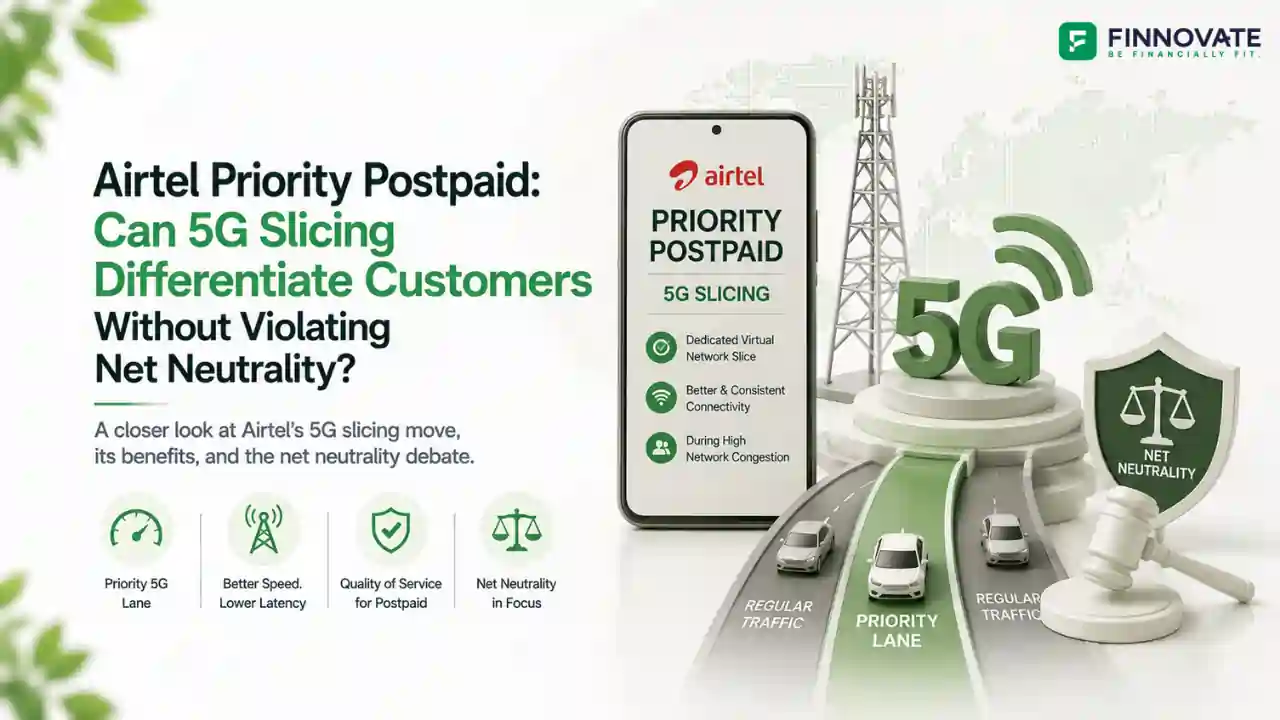
On May 19, 2026, Bharti Airtel launched Priority Postpaid, India's first commercial consumer 5G slicing service. The plan gives postpaid customers a dedicated virtual lane on the 5G network, ensuring better and more consistent connectivity during periods of high congestion. Airtel has positioned it as a quality-of-service upgrade rather than a content-based preference. Regulators and digital rights advocates have positioned it as a net neutrality question that the government has not yet answered.
This is not India's first encounter with this debate. A decade ago, Airtel's zero-rating platform Airtel Zero, and separately, Facebook's Free Basics running on Reliance Communications, triggered a national conversation about network operators preferring certain apps and originators over others. The furor led to TRAI issuing net neutrality recommendations in November 2017, which DoT formalised in its regulatory framework in July 2018. Those regulations are now the lens through which Priority Postpaid is being examined.
Quick answer: Priority Postpaid is technically not content-neutral in the classical net neutrality sense: it does differentiate access quality based on customer category. Airtel's defence is that the differentiation is user-based, not content-based, and that its 5G network has sufficient headroom to accommodate Priority Postpaid without degrading the prepaid experience. The debate turns on whether the 2018 net neutrality framework was designed to prohibit this kind of differentiation or only content-based discrimination.
Two distinct developments in 2015 sparked India's first net neutrality crisis. Airtel Zero was Airtel's own zero-rating platform: a commercial arrangement under which app developers could pay Airtel to make their services free for users. It was challenged as a commercial distortion of the open internet, favouring apps that could afford to pay over those that could not.
Facebook's Free Basics was a separate but simultaneous controversy, running on Reliance Communications and offering free access to a curated set of websites including Facebook's own. Both were challenged on net neutrality grounds. TRAI's 2016 regulation banned zero-rating for data services. The 2018 DoT framework went further, barring any form of data discrimination based on content, platform, user, or device.
Priority Postpaid is different in mechanism from Airtel Zero. It does not involve content partnerships or preferential treatment of specific apps. What it does involve is preferential treatment of a class of users, specifically postpaid subscribers, by giving them a guaranteed slice of network capacity during congestion. Whether that distinction is meaningful enough to place Priority Postpaid outside the 2018 regulation's scope is the question the DoT has not yet formally answered.
Network slicing is a core architectural feature of 5G. It allows a telecom operator to divide a single physical 5G network into multiple virtual networks, each with its own performance parameters, quality-of-service guarantees, and isolation from other slices.
In industrial applications, slicing has been used to create dedicated networks for hospitals, manufacturing lines, and mission-critical communications within shared physical infrastructure. Priority Postpaid is the first consumer-facing deployment of slicing in India, and one of a growing number globally. Similar services have already launched in the United States, Singapore, the United Kingdom, and Malaysia.
Airtel has created a dedicated virtual network tunnel for its postpaid customers. During periods of network congestion, postpaid users are served from this reserved slice, ensuring consistent speed and latency. Prepaid users are served from the shared capacity pool. Airtel's plan pricing runs from ₹449 per month for a single user to ₹1,749 per month for a family of five, all with unlimited data and calling. Existing postpaid customers receive the upgrade automatically.
Airtel has defended Priority Postpaid before the Department of Telecommunications panel, arguing the service operates within existing regulatory boundaries. Specifically, Airtel has stated that the service is content-neutral (no specific app or website is favoured), involves no blocking or throttling of any content, and that 5G network utilisation during busy hours currently sits at approximately 38%. Postpaid traffic accounts for roughly 4% of that total. With Priority Postpaid, that share may rise to approximately 6%, a marginal increase that Airtel argues does not meaningfully affect the prepaid user experience.
The net neutrality debate in India cannot be separated from the financial reality of the telecom sector. Indian ARPUs have historically been among the lowest globally, though the gap has been narrowing after successive tariff hikes from 2022 onwards.
India blended ARPU per month
(₹200-210 approx.)
China blended ARPU per month
(approx. 3-4x India)
US/Western ARPU per month
(approx. 20x India)
With ARPUs at a fraction of global levels and massive 5G capital expenditure on the books, Indian telecom operators face a structural pressure to find premium revenue streams. Priority Postpaid is one response to that pressure, creating a monetisable differentiation within the existing customer base rather than relying solely on tariff hikes that face regulatory and competitive constraints.
The 2018 net neutrality framework was designed for a 4G internet world where the dominant concern was content-based discrimination. The specialised services exception carved out space for managed services with strict quality-of-service requirements, such as healthcare or industrial IoT. What it did not explicitly contemplate was consumer-grade user-class differentiation enabled by 5G slicing technology.
The argument for a regulatory update is that technology has outpaced the 2018 framework, and that a rigid application of content-neutrality principles to a fundamentally different technical architecture may produce outcomes that neither protect consumers meaningfully nor allow the telecom sector to generate returns that justify continued 5G investment.
The 2018 framework was deliberately broad in its non-discrimination principle. Any carve-out for user-class differentiation creates a template that can be progressively expanded. A "pragmatic" net neutrality that accommodates Priority Postpaid today may become the foundation for more aggressive differentiation tomorrow. The history of Airtel Zero suggests that commercial pressure tends to expand, not contract, once a regulatory opening exists.
The Norway analogy from the RBI dividend debate is useful here too: just because 5G slicing makes user differentiation technically possible does not settle whether it should be permitted in a market where 95% of users are prepaid. Regulatory frameworks are expressions of social and economic priorities, not merely technical feasibility assessments. India's 2018 rules were among the strongest net neutrality protections in the world precisely because policymakers made a deliberate choice about whose interests the framework would prioritise.
Telecom sector developments, regulatory changes, and 5G monetisation directly affect how Indian operators are valued. The FinnFit Financial Fitness Test takes 3 minutes and shows you where your portfolio's sector exposure stands.
Take the FinnFit TestPriority Postpaid is Airtel's commercial 5G network slicing service, launched on May 19, 2026. It creates a dedicated virtual network slice for postpaid customers, ensuring more consistent speeds and lower latency during periods of high congestion. It is available across all Airtel postpaid plans, which start at ₹449 per month for a single user.
Network slicing allows a telecom operator to divide a single physical 5G network into multiple virtual networks, each with distinct performance parameters. Different slices can be configured for different purposes: one for low-latency industrial applications, another for high-bandwidth consumer services. Each slice operates in isolation from others on the same physical infrastructure.
This is the central unresolved regulatory question. The 2018 DoT net neutrality framework bars preferential speeds or treatment to any content or user. Airtel argues the service is content-neutral and that the user-class distinction is outside the framework's intent. Critics argue that differentiated access for paying customers, regardless of content, violates the non-discrimination principle. The DoT has not issued a definitive ruling as of the time of writing.
Airtel's stated position is that postpaid traffic accounts for approximately 4% of busy-hour 5G usage, rising to approximately 6% with Priority Postpaid, within a network running at approximately 38% peak utilisation. At these levels, Airtel argues the prepaid experience is not materially affected. However, as postpaid adoption grows or network utilisation increases, the headroom narrows and the trade-off becomes more visible.
Yes. Consumer 5G slicing services have been commercially launched in the United States, Singapore, the United Kingdom, and Malaysia before India's deployment. Airtel's Priority Postpaid is the first such service in India but follows a pattern that has been established in other markets.
Airtel Zero, announced in 2015, was a commercial platform where app developers could pay Airtel to make their services free for users, a form of zero-rating. It was challenged as a net neutrality violation because it gave preferential commercial treatment to specific content. TRAI banned zero-rating platforms in 2016. Priority Postpaid is different in mechanism: it does not involve content partnerships or app-specific preferences. The differentiation is between user classes (postpaid vs prepaid), not between content providers, though critics argue the practical effect on equitable access is similar.
Disclaimer: This article is for general information and educational purposes only. It does not constitute investment advice, a recommendation, or an offer to buy or sell any securities or financial instruments. Regulatory positions described reflect publicly available information as of May 2026. Net neutrality regulations are subject to change and the DoT's formal ruling on Priority Postpaid was pending at the time of writing. Please consult a SEBI-registered investment adviser before making any investment decision related to telecom sector companies discussed in this article.
No spam. Only new posts, simple explainers, and practical money checklists for busy professionals.
Finnovate is a SEBI-registered financial planning firm that helps professionals bring structure and purpose to their money. Over 3,500+ families have trusted our disciplined process to plan their goals - safely, surely, and swiftly.
Our team constantly tracks market trends, policy changes, and investment opportunities like the ones featured in this Weekly Capsule - to help you make informed, confident financial decisions.
Learn more about our approach and how we work with you:
No comments yet. Start the conversation. What would you add?
No spam. Only new posts, simple explainers, and practical money checklists.
You may also like
Explore FPI equity flows for October First Half, 2026: ₹47,955 crore in net outflows, th...
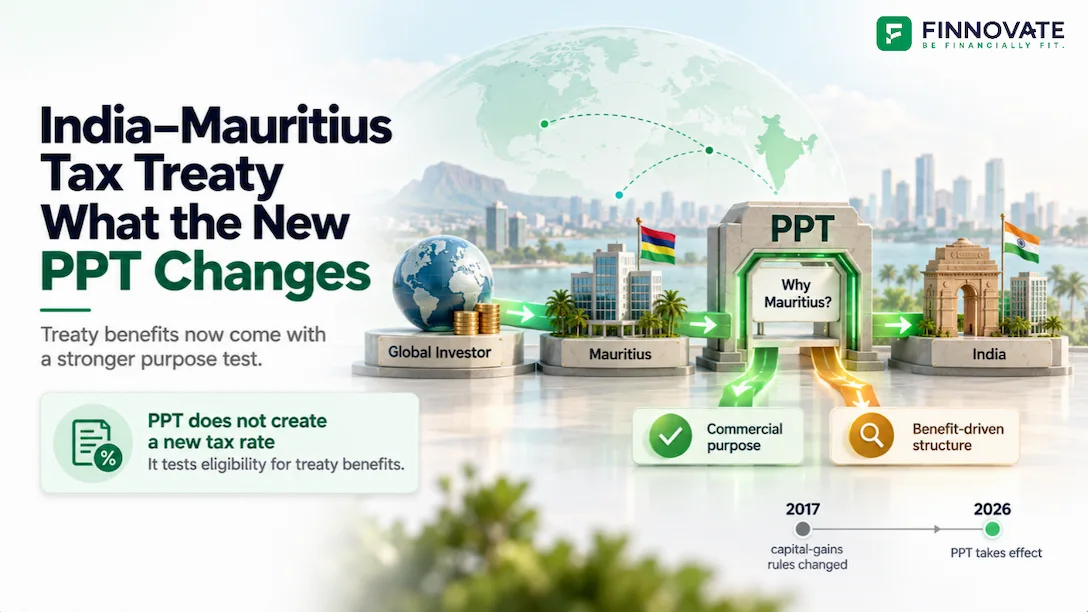
Understand the India–Mauritius tax treaty’s Principal Purpose Test, its August 2026 ef...

Explore India’s AI hardware opportunity through the proposed Adani–Jabil venture, from...
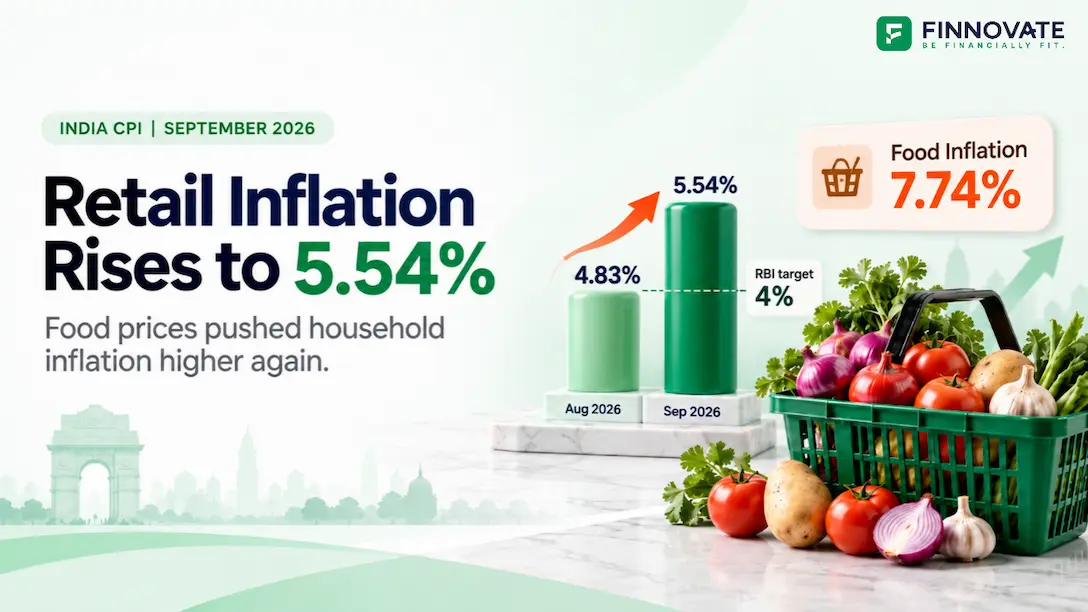
India’s CPI inflation rose to 5.54% in September 2026. Compare monthly trends, food pric...
Popular now
Learn how to easily download your NSDL CAS Statement in PDF format with our step-by-step g...

Looking for the best financial freedom books? Here’s a handpicked 2026 reading list with...
Learn what SIF investment means in India, SEBI rules, Rs 10 lakh minimum investment, avail...

Clear guide to mutual fund taxation in India for FY 2025–26 after July 2024 changes: equ...