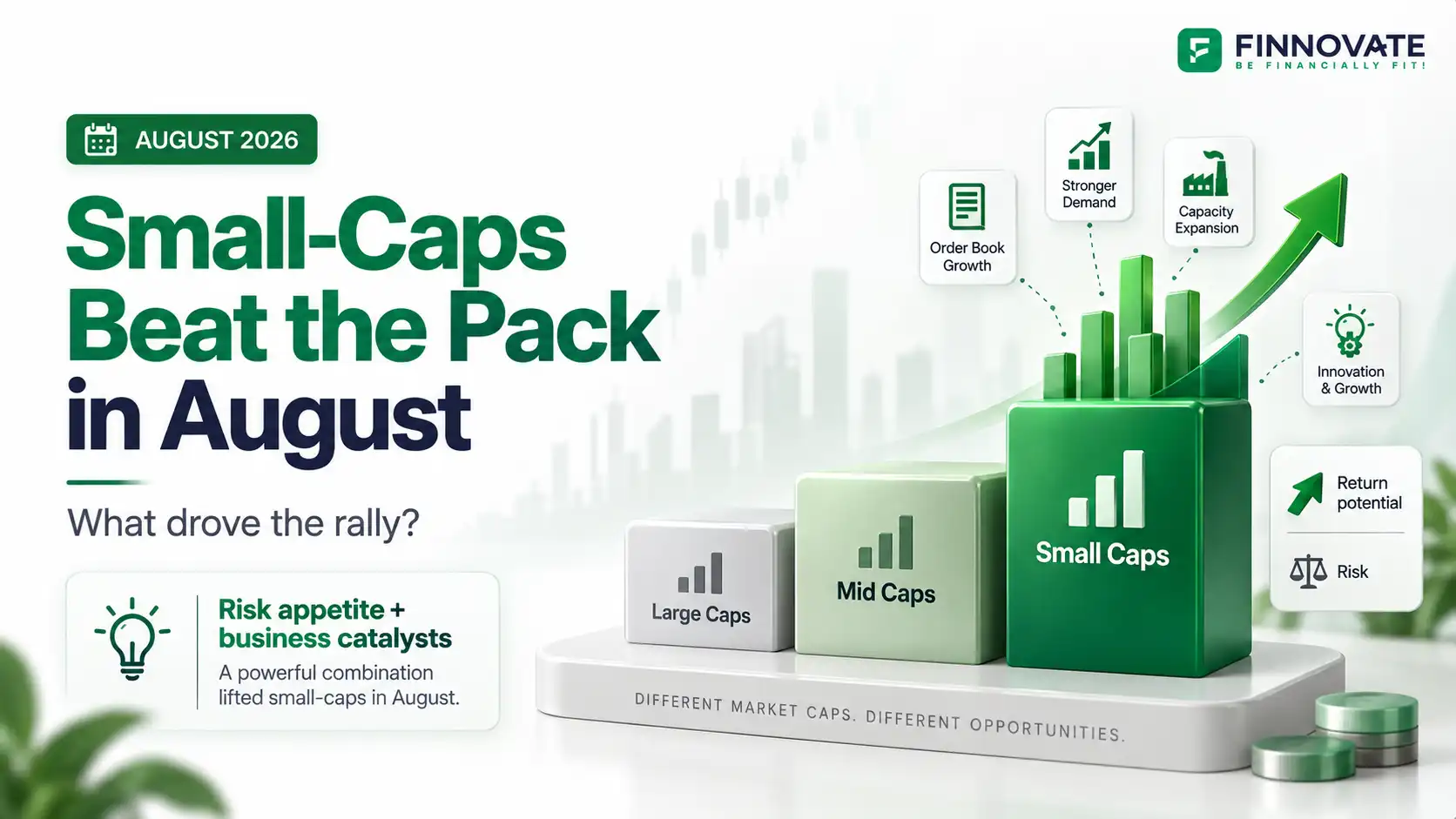
Top Small-Cap Stocks in August 2026: Why Small Caps Outperformed
Nifty Smallcap 100 rose 3.16% in August 2026. See which small-cap stocks led, what drove t...
08 September 2026
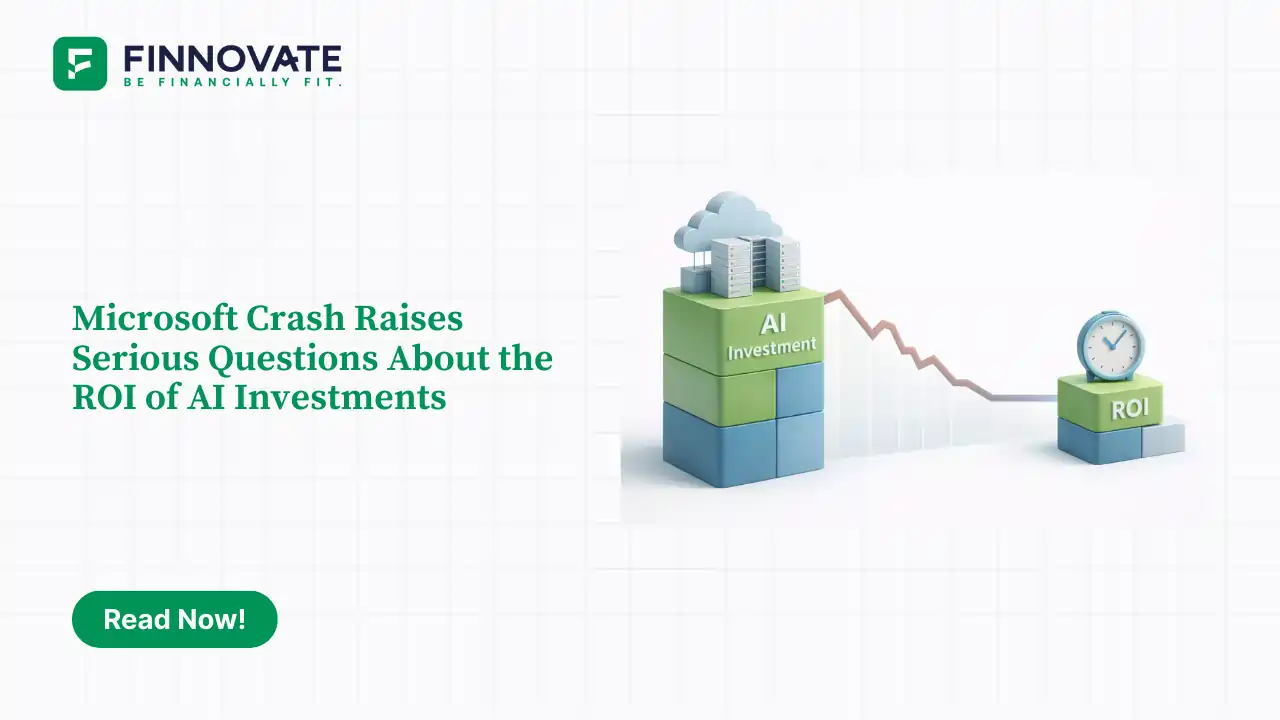
During the week, Microsoft reported strong quarterly results. Revenues and operating metrics were solid, and the broader business narrative remained intact. Yet, despite this, Microsoft’s stock fell sharply, declining by as much as 12% intraday.
In the process, nearly $424 billion in market capitalisation was wiped out. This marked the largest single-day value erosion for a stock since NVIDIA lost $593 billion in one day last year. The reaction raised an obvious question. If the results were good, what exactly spooked the markets?
The answer was not in the earnings. It was in the guidance.
During its quarterly commentary, Microsoft guided for a massive $37 billion investment into cloud and artificial intelligence infrastructure. This figure immediately caught investor attention.
Just a few quarters ago, announcements like this would have driven stock prices higher. Large AI spending was seen as a signal of future dominance. This time, the reaction was the opposite.
Markets did not question Microsoft’s ability to spend. They questioned the return on that spend.
Investor sentiment around artificial intelligence has clearly evolved.
Earlier, AI investments were viewed through a simple lens:
That logic is now being challenged.
Markets are increasingly asking a more uncomfortable but logical question:
What is the return on investment, and when does it show up?
A $37 billion outlay is not small, even for a company like Microsoft. When capital expenditure reaches this scale, investors want visibility on:
When that visibility is limited, caution sets in.
This episode reflects a broader shift in global markets.
AI is no longer just a story. It is now a balance sheet decision.
Investors are moving from:
This shift does not mean AI has lost relevance. It means expectations have matured. Markets now want evidence, not just ambition.
To understand why investors reacted the way they did, it is important to distinguish between Generative AI and Agentic AI.
This is the simpler and more visible form of AI adoption.
For businesses, generative AI benefits are easier to explain and easier to measure.
This is where complexity increases.
According to surveys, the ROI from agentic AI can take anywhere from 3 to 6 years to materialise. This long timeline is where investor discomfort begins.
Markets thrive on clarity and timelines.
A company saying, “We are investing heavily in AI,” is a strong story.
A company saying, “This investment may deliver returns in five years,” is a harder sell.
Two realities make this challenging:
Agentic AI success is not just about technology. It depends on:
These factors are difficult to model, which makes markets cautious.
It is important to separate market reaction from business reality.
Microsoft has:
The issue is not capability. It is timing.
Agentic AI is not a “plug and play” upgrade. It requires structural changes across organisations. The process is slow, uneven, and difficult to quantify quarter by quarter.
A helpful way to view agentic AI is through history.
When factories shifted from steam power to electricity, productivity did not jump overnight. Entire factory layouts had to change. Processes had to be redesigned. Workers had to adapt.
AI adoption follows a similar path.
Not every company succeeds. Among those that do, the scale of success varies widely.
The Microsoft episode sends a clear signal.
Markets are not rejecting AI.
They are reassessing how and when AI creates value.
Going forward, investors are likely to:
This marks a move from enthusiasm to evaluation.
Disclaimer: This article is for general information and educational purposes only. It does not constitute investment advice, a recommendation, or an offer to buy or sell any securities. Any references to companies or financial figures are for discussion and understanding of business models and reported results. Please consider consulting a qualified professional before taking any financial decision.
No spam. Only new posts, simple explainers, and practical money checklists for busy professionals.
Finnovate is a SEBI-registered financial planning firm that helps professionals bring structure and purpose to their money. Over 3,500+ families have trusted our disciplined process to plan their goals - safely, surely, and swiftly.
Our team constantly tracks market trends, policy changes, and investment opportunities like the ones featured in this Weekly Capsule - to help you make informed, confident financial decisions.
Learn more about our approach and how we work with you:
No comments yet. Start the conversation. What would you add?
No spam. Only new posts, simple explainers, and practical money checklists.
You may also like
Nifty Smallcap 100 rose 3.16% in August 2026. See which small-cap stocks led, what drove t...
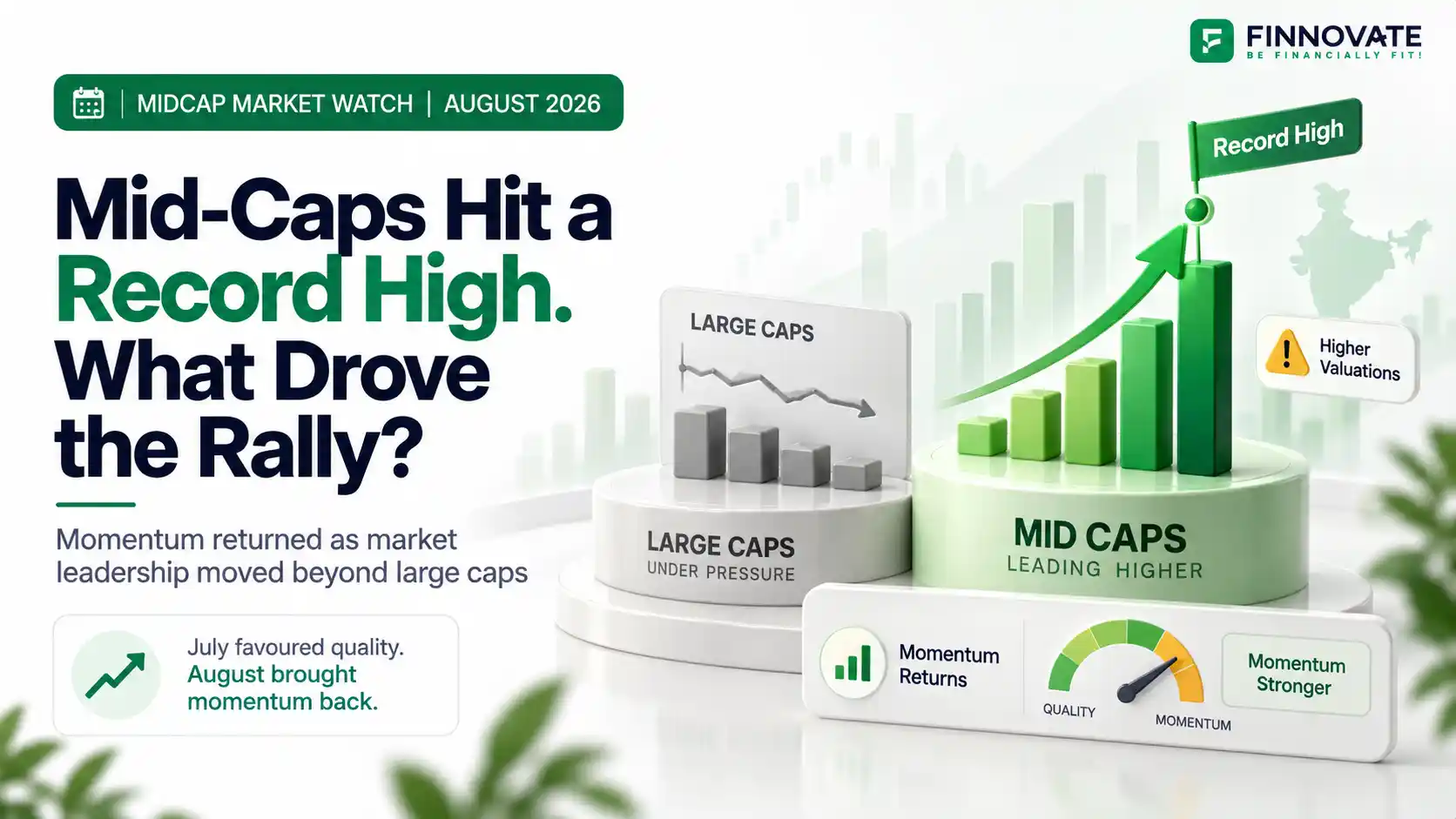
Nifty Midcap 100 rose 2.15% in August 2026. See which mid-cap stocks led the rally, key se...
See the best-performing Nifty 50 stocks in August 2026, which sectors led the market, and ...
Nifty Midcap 100 gained 1.81% in July 2026 and moved near its yearly high. See the top mid...
Popular now
Learn how to easily download your NSDL CAS Statement in PDF format with our step-by-step g...

Looking for the best financial freedom books? Here’s a handpicked 2026 reading list with...
Learn what SIF investment means in India, SEBI rules, Rs 10 lakh minimum investment, avail...

Clear guide to mutual fund taxation in India for FY 2025–26 after July 2024 changes: equ...