

Tax Planning and Benefits for Married Couples in India: 2026 Guide
Tax planning for married couples in India explained for 2026. Compare tax regimes, deducti...
05 September 2026
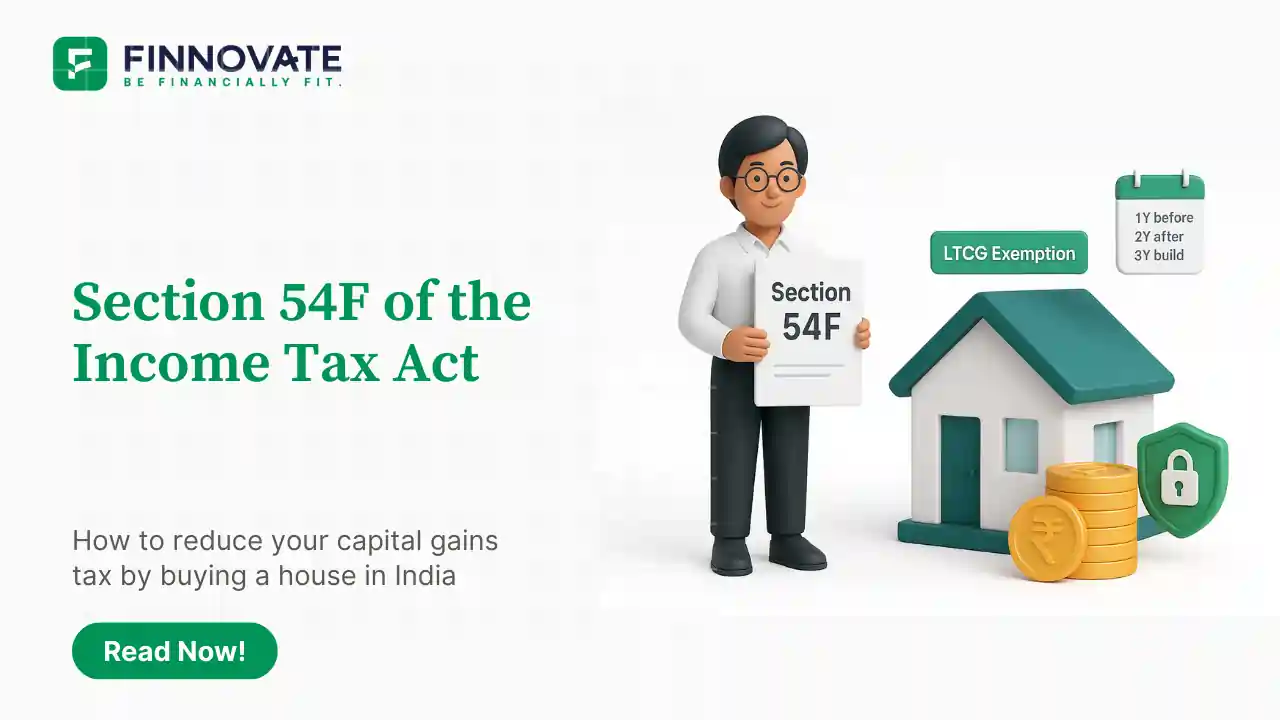
You sold a long-term capital asset: gold, shares, mutual fund units, land, commercial property, bonds, REITs, or any other asset that is not a residential house. You now have long-term capital gains. Section 54F of the Income Tax Act allows you to reduce or eliminate that capital gains tax liability by reinvesting the net sale proceeds into one residential house in India, within a defined time window.
This guide covers the eligibility conditions, the exemption formula, the ₹10 crore cap, how the Capital Gains Account Scheme works, what triggers reversal, and two worked examples showing how the calculation plays out in practice.
Table of Contents
Section 54F provides an exemption on long-term capital gains, not on the entire sale amount. The key distinction matters for the calculation. The exemption is proportionate: if you reinvest 100% of the net sale consideration, you can exempt 100% of the LTCG. If you reinvest only part, a proportionate share of the LTCG is exempt and the balance remains taxable.
Section 54F applies to the sale of any long-term capital asset other than a residential house. The range of qualifying assets is broad.
Section 54F applies only when the asset sold qualifies as a long-term capital asset. The holding period threshold varies by asset type.
| Asset Type | Holding Period for Long-Term Status |
|---|---|
| Listed equity shares, equity mutual funds (STT paid) | More than 12 months |
| Gold, gold jewellery, gold coins, digital gold | More than 24 months |
| Land, commercial property, unlisted shares | More than 24 months |
| Bonds and debentures (listed) | More than 12 months |
| Debt mutual funds and bond ETFs | Check classification first. If covered by Section 50AA, gains are treated as short-term regardless of holding period. If not covered, normal holding-period rules may apply (more than 24 months for unlisted units) |
| REITs and InvITs (listed units) | More than 12 months |
If the holding period is not met, the gain is short-term and Section 54F cannot be claimed. Most assets that generate large gains relevant to Section 54F, such as gold, land, and commercial property, require more than 24 months of holding.
Companies, partnership firms, LLPs, trusts, and other entities cannot claim Section 54F.
| Route | Time Limit |
|---|---|
| Purchase of existing residential house | Within 1 year before OR 2 years after the date of transfer of the original asset |
| Construction of new residential house | Within 3 years after the date of transfer of the original asset |
Section 54F contains strict conditions on house ownership at the time of the sale and in the period after it. These conditions are commonly misunderstood.
On the date you sell the original asset, you must not own more than one residential house other than the new house being purchased. If you already own two or more residential houses on that date (apart from the new one), Section 54F is not available for that transaction.
Section 54F uses "net consideration" as the denominator in the exemption formula, not the capital gain. This distinction is critical because the net consideration is always larger than the capital gain for assets that have appreciated.
Net consideration = Full sale value received minus expenses directly incurred in connection with the transfer (brokerage, legal fees, registration charges paid by the seller, commission, and similar costs).
It does not mean the profit. It is the net amount you received from the sale after deducting transfer costs. The cost of acquisition of the original asset is not subtracted here.
The formula determines how much of the LTCG is exempt based on the proportion of net consideration reinvested.
Three outcomes based on reinvestment level:
Sale of commercial property. Net consideration: ₹5.25 crore. LTCG: ₹1.40 crore. Amount reinvested in new residential house: ₹3.50 crore.
| Particulars | Amount |
|---|---|
| Net consideration | ₹5.25 crore |
| LTCG | ₹1.40 crore |
| Amount invested in new house | ₹3.50 crore |
| Eligible investment (₹10 crore cap: not triggered) | ₹3.50 crore |
| Exempt LTCG = ₹1.40 × (3.50 ÷ 5.25) | ₹0.933 crore |
| Taxable LTCG | ₹0.467 crore (₹1.40 − ₹0.933) |
Since only ₹3.50 crore of the ₹5.25 crore net consideration was reinvested, two-thirds of the LTCG is exempt and one-third remains taxable.
Sale of land. Net consideration: ₹15 crore. LTCG: ₹14 crore. Amount reinvested in new residential house: ₹12 crore.
| Particulars | Amount |
|---|---|
| Net consideration | ₹15 crore |
| LTCG | ₹14 crore |
| Amount invested in new house | ₹12 crore |
| Eligible investment after ₹10 crore cap | ₹10 crore (cap applied; ₹2 crore excess ignored) |
| Exempt LTCG = ₹14 × (10 ÷ 15) | ₹9.333 crore |
| Taxable LTCG | ₹4.667 crore (₹14 − ₹9.333) |
Even though ₹12 crore was reinvested, only ₹10 crore counts toward the exemption formula. The additional ₹2 crore above the cap produces no incremental tax benefit.

If you have sold the original asset but have not yet purchased or completed construction of the new house before the due date for filing your ITR, you can preserve your 54F exemption eligibility by depositing the unutilised amount in the Capital Gains Account Scheme with an authorised bank under the scheme.
Any amount remaining in CGAS at the end of the applicable time limit (2 years for purchase, 3 years for construction) that has not been used for the house purchase or construction is treated as taxable LTCG in the financial year in which the time limit expires. The exemption on that portion is reversed.
A correctly claimed Section 54F exemption can be withdrawn retrospectively if any of the following occur after the claim is made:
Section 54F involves specific timelines, a proportionate formula, and a ₹10 crore cap that can affect large transactions significantly. Our advisory team can help you map the numbers before you commit capital.
Book a Tax Planning CallYes, but the exemption becomes proportionate. The formula divides the amount invested by the net consideration (full sale value minus transfer expenses), not by the capital gain. So investing only the gain and not the full proceeds will leave a portion of the LTCG taxable. Full exemption requires reinvestment of the entire net consideration.
Yes. Section 54F allows purchase of the new house up to 1 year before the date of transfer of the original asset. The purchase date and transfer date are both tracked for the 1-year pre-sale window.
Section 54F is available to individuals and HUFs. NRIs who are individuals can potentially claim it. However, the new residential house must be located in India, and NRI-specific considerations including residency rules, FEMA compliance, and applicable DTAA provisions may affect the overall tax and investment position. Consulting a qualified tax professional who is familiar with NRI taxation is advisable before acting on this.
Yes. Under-construction property can qualify if the statutory conditions are met and the investment fits within the 3-year construction window from the date of transfer of the original asset. In delayed-construction cases, the final tax treatment can depend on the facts and supporting documentation. Consulting a qualified Chartered Accountant is advisable where project timelines are uncertain.
There is no explicit cap on the exempt LTCG amount itself. However, the investment that counts toward the formula is capped at ₹10 crore. For very large transactions, even a full reinvestment above ₹10 crore will produce a proportionate rather than full exemption because the ₹10 crore cap limits the numerator. This cap applies from AY 2024-25 onwards.
The taxable LTCG that remains after the 54F exemption is a capital gain, not a loss. It is taxable at the applicable LTCG rate. If the sale produces a capital loss rather than a gain (unlikely for assets sold at a premium), normal capital gains set-off rules apply. Please consult a SEBI-registered investment adviser or qualified Chartered Accountant for transaction-specific guidance.
The previously exempt LTCG from the 54F claim is added back to your income in the year you sell the new house. It becomes taxable as LTCG in that year at the applicable rate, as if the exemption had never been claimed. This reversal applies regardless of whether the new house is sold at a profit or a loss.
Disclaimer: This article is for general information and educational purposes only. It does not constitute investment advice, a recommendation, or an offer to buy or sell any securities or financial instruments. Section 54F provisions, eligibility conditions, time limits, and the ₹10 crore cap referenced here are based on the Income Tax Act, 1961 as amended, applicable for FY 2025-26 (AY 2026-27). Rules may change in subsequent budgets or notifications. Worked examples are simplified illustrations. Please consult a SEBI-registered investment adviser or qualified Chartered Accountant before making any investment or tax filing decision. Capital asset investments are subject to market risks.
No spam. Only new posts, simple explainers, and practical money checklists for busy professionals.
Finnovate is a SEBI-registered financial planning firm that helps professionals bring structure and purpose to their money. Over 3,500+ families have trusted our disciplined process to plan their goals - safely, surely, and swiftly.
Our team constantly tracks market trends, policy changes, and investment opportunities like the ones featured in this Weekly Capsule - to help you make informed, confident financial decisions.
Learn more about our approach and how we work with you:
No comments yet. Start the conversation. What would you add?
No spam. Only new posts, simple explainers, and practical money checklists.
You may also like
Tax planning for married couples in India explained for 2026. Compare tax regimes, deducti...
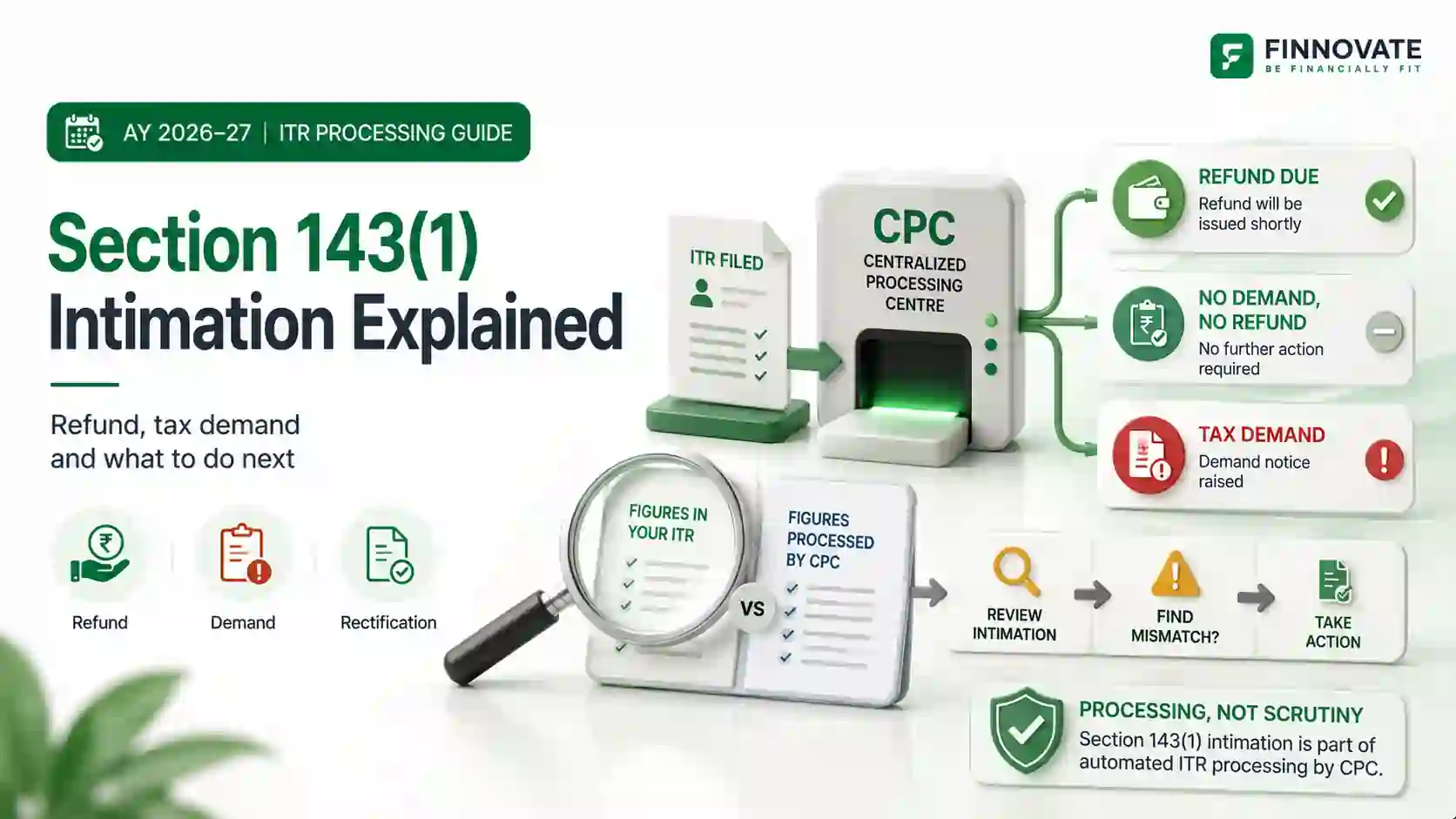
Received a Section 143(1) intimation? Understand CPC adjustments, refunds, tax demands, re...
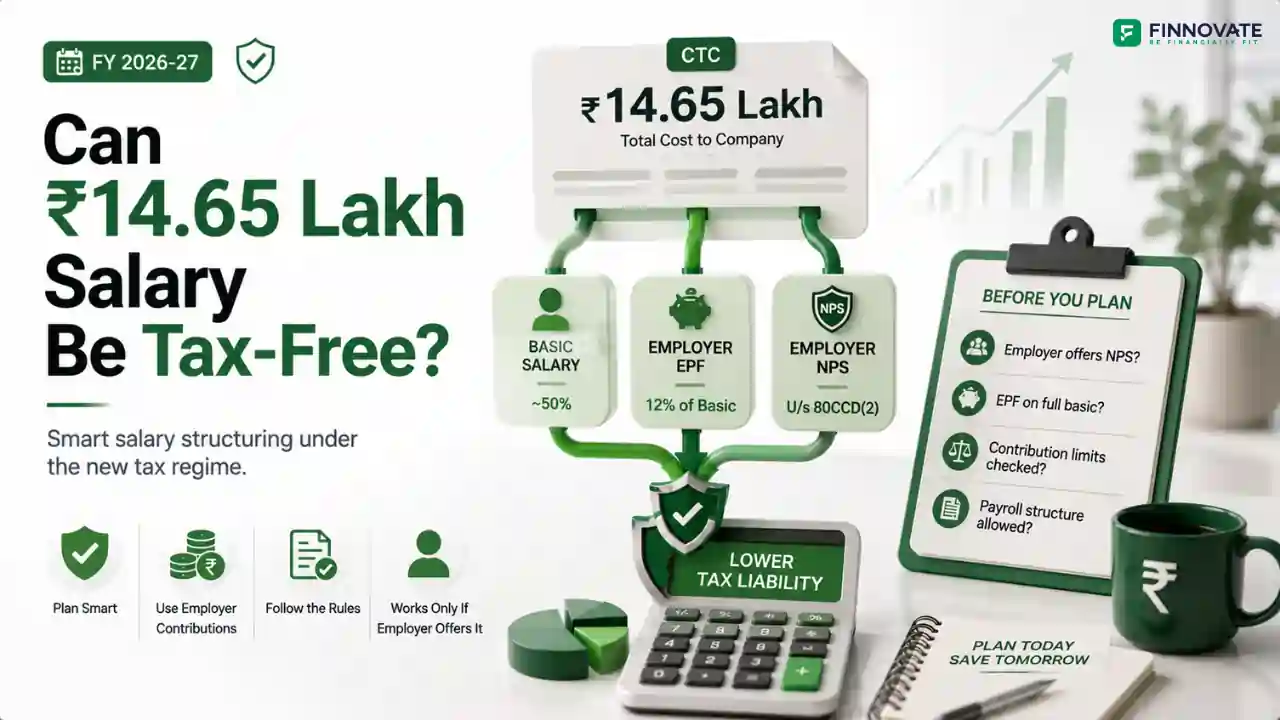
Zero tax on a ₹14.65 lakh salary is real, but only if your employer contributes EPF on f...
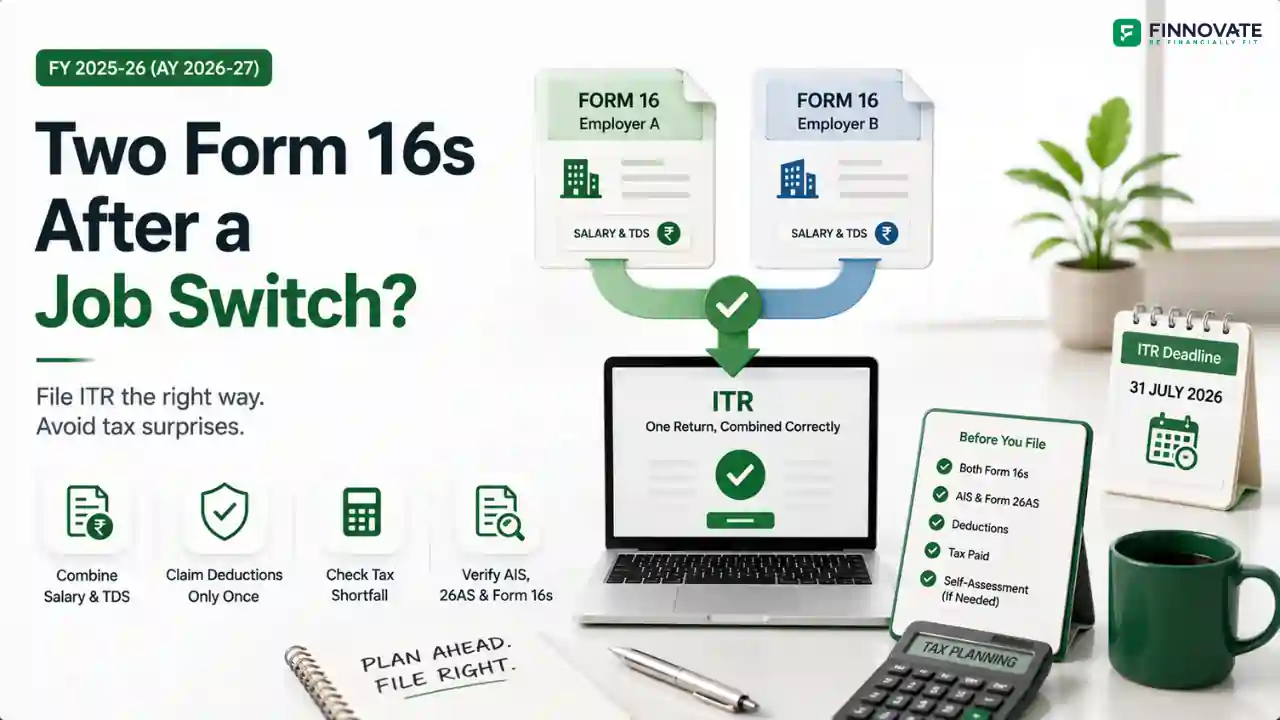
Changed jobs in FY 2025-26? See why combining two Form 16s can create a tax shortfall past...
Popular now

Learn how to easily download your NSDL CAS Statement in PDF format with our step-by-step g...

Looking for the best financial freedom books? Here’s a handpicked 2026 reading list with...
Learn what SIF investment means in India, SEBI rules, Rs 10 lakh minimum investment, avail...
Clear guide to mutual fund taxation in India for FY 2025–26 after July 2024 changes: equ...