
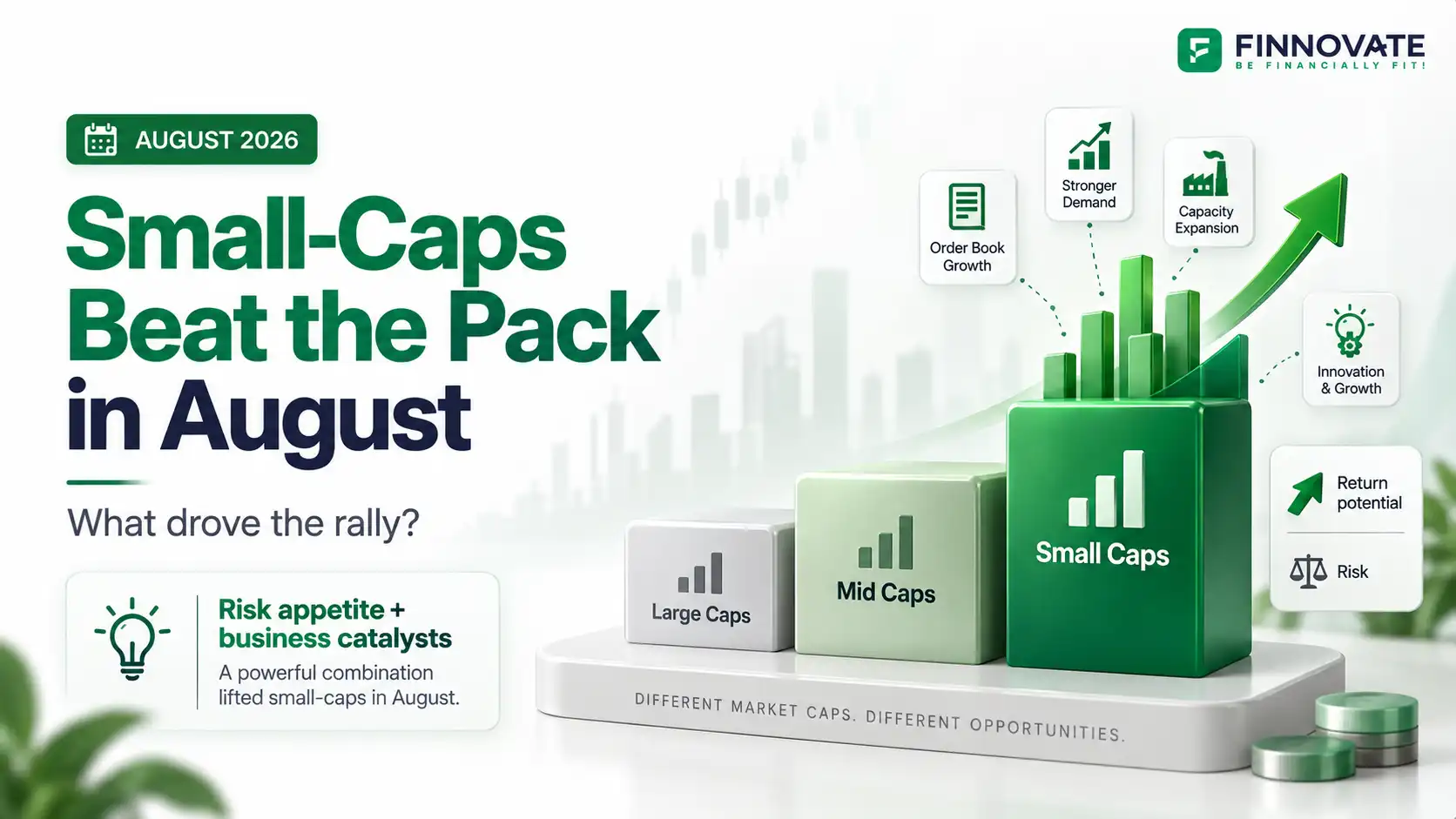
Top Small-Cap Stocks in August 2026: Why Small Caps Outperformed
Nifty Smallcap 100 rose 3.16% in August 2026. See which small-cap stocks led, what drove t...
08 September 2026
For the December 2025 quarter, the financial performance of Swiggy and Eternal (Zomato) diverged sharply. This was unexpected on the surface. Both companies operate in the same food delivery and quick commerce ecosystem. Both have invested aggressively in Q-commerce. And both are competing for the same urban consumer.
Yet, the outcomes could not have been more different.
Swiggy reported widening losses, while Eternal managed to report a small profit. This contrast raises a critical question. If the business models are similar, what explains such a stark difference in performance?
Quick commerce has been the dominant narrative driving valuations and investor interest over the last few years. Speed, convenience, and frequency-based consumption have pushed companies to build dense networks of dark stores and last-mile delivery fleets.
However, the December 2025 results show that execution, not intent, is the differentiator.
Both Swiggy and Eternal are incurring heavy costs due to Q-commerce. But Eternal appears to be closer to making the model work economically, while Swiggy is still absorbing significant losses.
The contrast becomes clear when we look at the numbers.
For the December 2025 quarter:
In contrast:
Both companies are investing heavily in quick commerce. The difference is not the absence of cost pressure for Eternal, but its ability to absorb those costs more effectively.
The most important factor working in Eternal’s favour is scale.
Quick commerce is a fixed-cost heavy business. Dark stores, warehousing, delivery riders, and technology infrastructure do not scale down easily. The only way to improve margins is to spread these fixed costs over higher revenues.
The quarterly numbers highlight this clearly.
While both companies are operating close to break-even at a gross level, Eternal’s larger revenue base allows it to absorb fixed costs far more efficiently.
This is also the logic behind Swiggy’s recent ₹10,000 crore QIP, which was oversubscribed by more than four times. The expectation is that higher revenues in the future will improve operating leverage. The question is how quickly that leverage can materialise.
Revenue scale does not happen automatically. It is driven by how efficiently assets are utilised.
A comparison between Instamart and Blinkit illustrates this point.
As of December 2025:
Blinkit was roughly double Instamart on most operating metrics.
But the real divergence appears in revenue.
This nearly 12× difference in revenue highlights the importance of asset sweating. It is not just about how many dark stores or users a platform has. What matters is how much revenue each store, rider, and user generates.
Quick commerce has become the biggest valuation driver in the consumer internet space. At the same time, it is also the biggest drain on profitability.
Revenues can always be boosted in the short term by:
Such strategies can be funded for a while. But they do not create durable economics unless they lead to higher order values, higher frequency, and better utilisation of assets.
This is where Eternal appears to be ahead. Blinkit’s numbers suggest stronger revenue per customer and better utilisation of its network. Swiggy’s challenge is not demand, but monetisation and operating efficiency.
The valuation gap between the two companies reflects this difference in execution.
However, valuation itself is not the core issue.
The real question for both companies is the same. When will quick commerce show clear and sustained visibility of profits?
Growth funded by discounts is easy to achieve. Profitable growth in a fixed-cost heavy business is far harder. At present, quick commerce remains the biggest idea and the biggest risk on both balance sheets.
Eternal appears closer to cracking the Q-commerce model, primarily due to:
Swiggy still has work to do. Its investments are significant, and the opportunity is large, but the path to operating leverage is not yet visible.
Quick commerce is powerful, but it is unforgiving. Execution, not capital, will decide who ultimately wins.
Disclaimer: This article is for general information and educational purposes only. It does not constitute investment advice, a recommendation, or an offer to buy or sell any securities. Any references to companies or financial figures are for discussion and understanding of business models and reported results. Please consider consulting a qualified professional before taking any financial decision.
No spam. Only new posts, simple explainers, and practical money checklists for busy professionals.
Finnovate is a SEBI-registered financial planning firm that helps professionals bring structure and purpose to their money. Over 3,500+ families have trusted our disciplined process to plan their goals - safely, surely, and swiftly.
Our team constantly tracks market trends, policy changes, and investment opportunities like the ones featured in this Weekly Capsule - to help you make informed, confident financial decisions.
Learn more about our approach and how we work with you:
No comments yet. Start the conversation. What would you add?
No spam. Only new posts, simple explainers, and practical money checklists.
You may also like
Nifty Smallcap 100 rose 3.16% in August 2026. See which small-cap stocks led, what drove t...
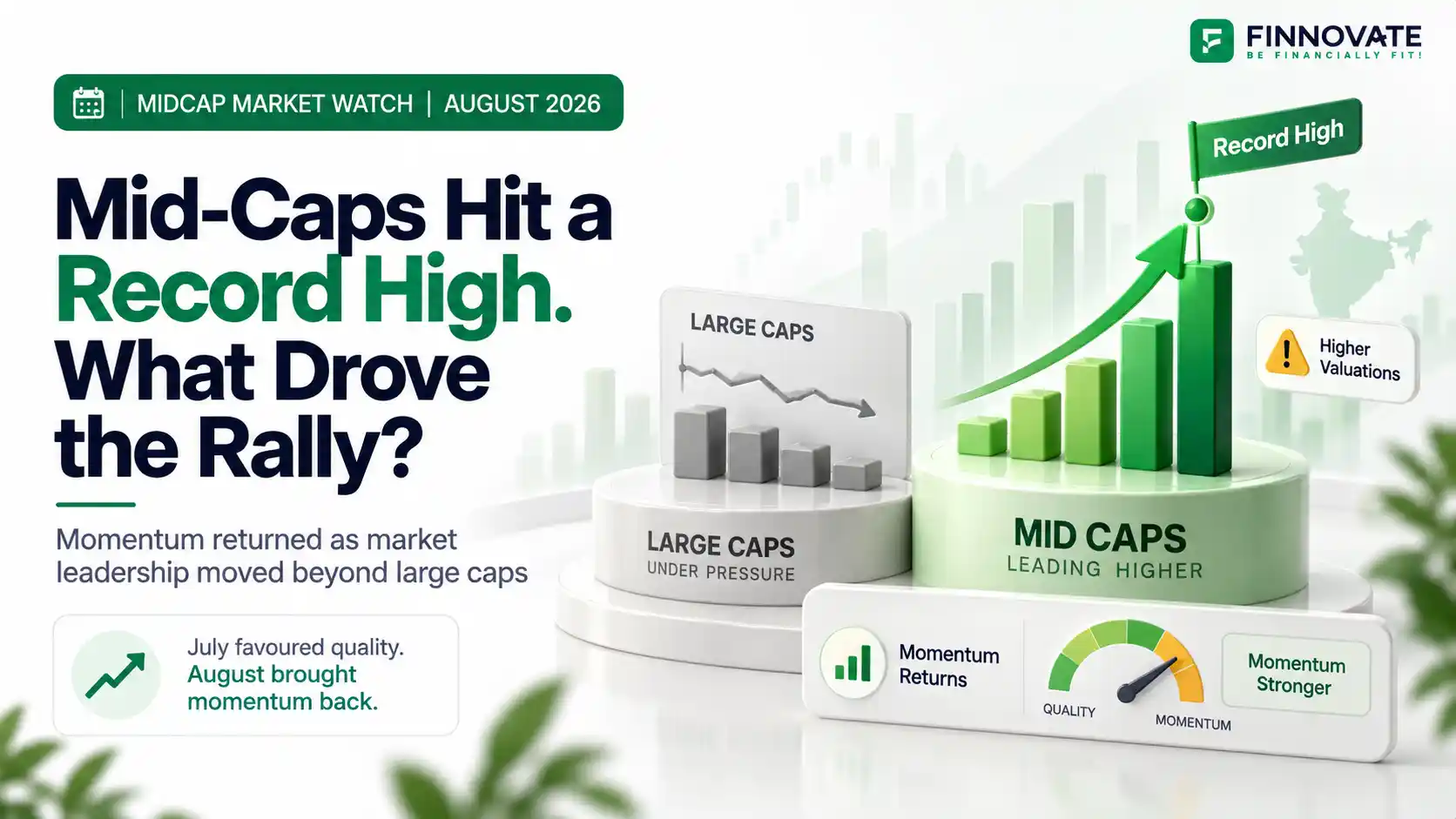
Nifty Midcap 100 rose 2.15% in August 2026. See which mid-cap stocks led the rally, key se...
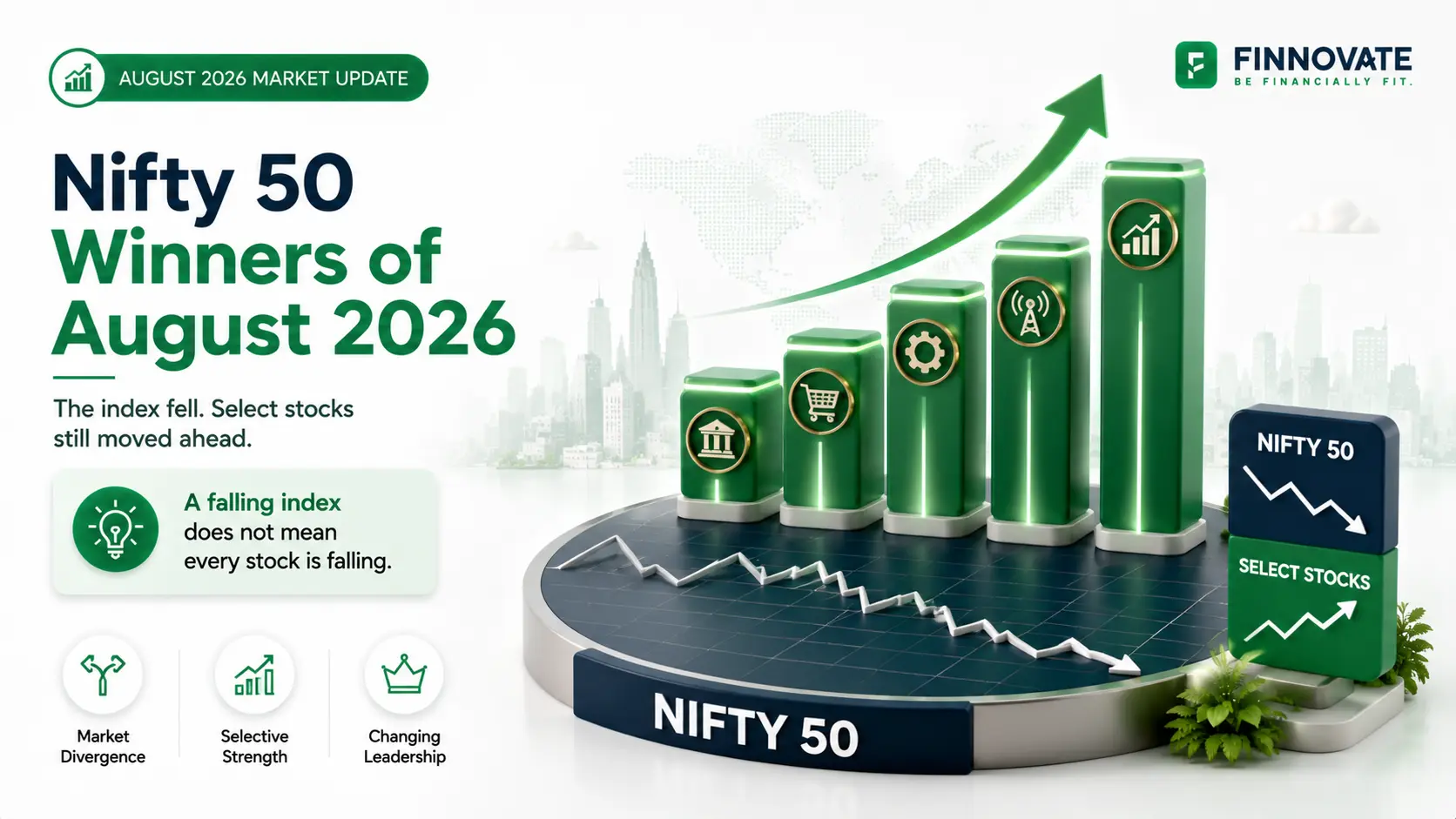
See the best-performing Nifty 50 stocks in August 2026, which sectors led the market, and ...
Nifty Midcap 100 gained 1.81% in July 2026 and moved near its yearly high. See the top mid...
Popular now
Learn how to easily download your NSDL CAS Statement in PDF format with our step-by-step g...

Looking for the best financial freedom books? Here’s a handpicked 2026 reading list with...
Learn what SIF investment means in India, SEBI rules, Rs 10 lakh minimum investment, avail...
Clear guide to mutual fund taxation in India for FY 2025–26 after July 2024 changes: equ...