

Why the AI Boom Could Make Your Next Phone More Expensive
AI demand is pushing up memory chip prices. Here's why the shortage could make smartphones...
08 October 2026
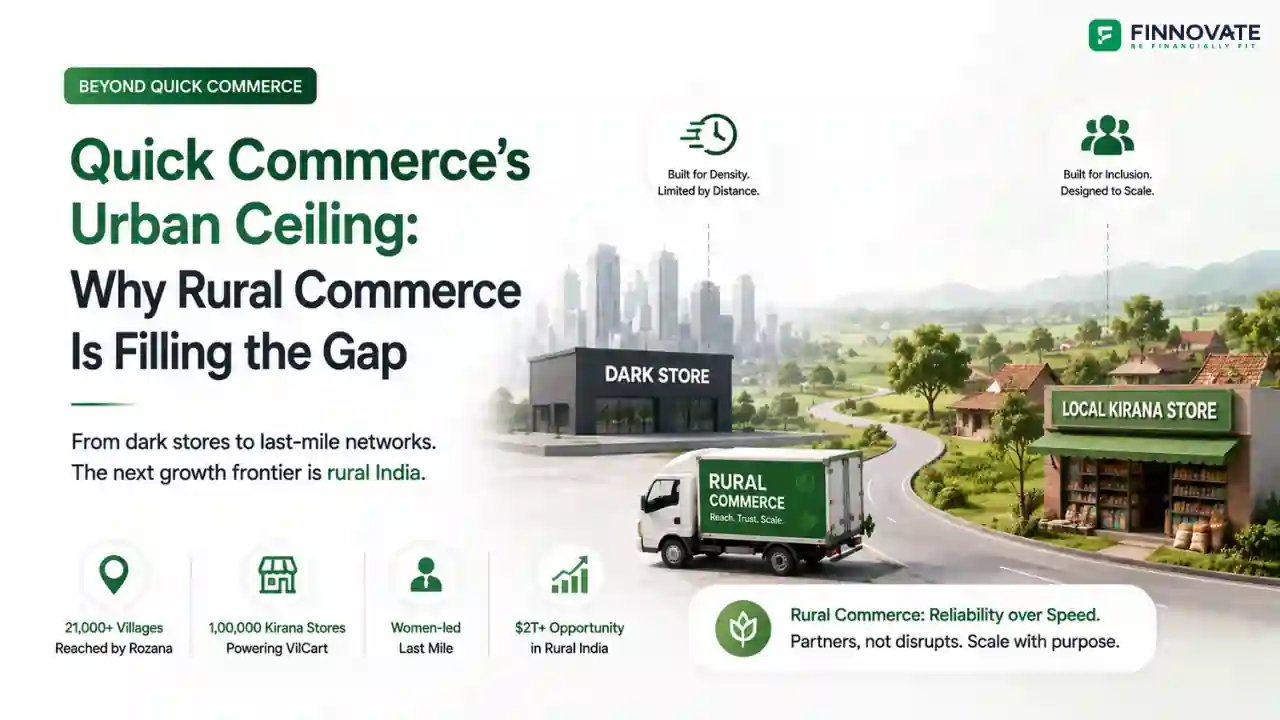
Source: Rozana Series B announcement, March 2026; VilCart funding data; publicly available rural commerce research
Quick commerce was built on a single precondition: enough people living close enough together to justify a dark store every two to three kilometres. That precondition exists in Mumbai, Delhi-NCR, Bengaluru, Hyderabad, and Pune. It does not exist across most of India. The same structural feature that made quick commerce a breakthrough urban model is now its growth ceiling, and a new wave of rural commerce platforms is building something structurally different in its place.
Quick read
The economics of quick commerce require high order density within a small delivery radius. Dark stores in urban clusters can serve 2,000 to 3,000 orders per day across a two-kilometre catchment area, making the unit economics viable. Move thirty kilometres outside a metro and the same model requires a dark store serving a tenth of the orders; the economics collapse.
India's top six cities (Mumbai, Delhi-NCR, Bengaluru, Hyderabad, Pune, and Chennai) together account for roughly 8% of India's population but have been the primary battleground for Blinkit, Zepto, and Swiggy Instamart. With those clusters largely covered, the remaining growth opportunity lies in Tier 2, Tier 3, and rural markets where population density makes the dark store model unviable. PE capital, which has already absorbed significant losses funding urban quick commerce expansion, is now being deployed against a fundamentally different problem.
Rozana raised ₹290 crore in a Series B round led by Bertelsmann India Investments, with participation from Fireside Ventures, Spark Growth Ventures, Bikaji Family Office, and FE Securities. Founded in 2021, the platform operates in Uttar Pradesh and Haryana, currently covering 21,000 villages in the Gangetic plains, a region that is home to over 50% of India's rural population. Rozana has grown revenue 4x since its last funding round. Its last-mile network is built around 35,000 women partners who operate as trusted intermediaries within their local communities, helping customers browse, order, and receive deliveries. The company runs 75+ physical retail experience centres alongside its digital platform, and plans to expand to 200+ stores across 2 to 3 additional northern states. The long-term target is 130,000 villages.
VilCart, founded in 2018 and based in Bengaluru, operates a B2B rural supply chain platform that links Kirana stores to farmer producer organisations, brands, rural SME manufacturers, and FMCG companies. Rather than replacing the local retailer, VilCart digitises and strengthens them, turning traditional Kirana stores into what it calls "Grameen Super Markets." The platform has raised total funding of approximately $31.4 million, with its Series A led by Asia Impact and NABVentures (the NABARD-backed equity fund). Its most recent round was a $10 million bridge from AI-X B.V., Spark Capital, and NABVentures in February 2025. VilCart reported a topline of ₹883 crore in FY24 and projected ₹1,200 crore for FY25.
| Parameter | Quick Commerce | Rural Commerce |
|---|---|---|
| Primary promise | Speed (under 20 minutes) | Reliability (consistent access to goods) |
| Infrastructure model | Dark stores in urban clusters | Multi-tier network with physical retail nodes |
| Local retailer relationship | Displaces Kirana stores | Integrates Kirana stores as network nodes |
| Last-mile delivery | Gig workers, centrally managed | Community-embedded partners (women SHGs, local agents) |
| Basket size required | High-value baskets to cover delivery cost | Small-ticket, high-frequency orders viable |
| Geographic viability | Dense urban clusters only | Sparsely distributed rural population |
| Stakeholder model | Two-party (platform + customer) | Multi-stakeholder (platform, retailers, FPOs, manufacturers) |
| Addressable market | ~8% of India's population (top metros) | ~65% of India's population (rural) |
The Open Network for Digital Commerce (ONDC) provides a level playing field that benefits rural commerce disproportionately. Urban quick commerce built proprietary closed platforms; the network effects accumulated within each app. ONDC's open protocol allows rural commerce platforms to plug into a shared discovery and transaction layer without rebuilding the full stack. For platforms like Rozana and VilCart that are solving for supply chain and reliability rather than app-level consumer engagement, ONDC reduces the barrier to scale across geographies where building a proprietary consumer base would be prohibitively expensive.
The shift of PE capital from urban quick commerce to rural commerce is not sentiment; it is a structural reassessment of where the remaining addressable market lies. Quick commerce's urban clusters are covered, the easy growth is behind it, and the cash required to extend the dark store model into Tier 2 and beyond is difficult to justify. Rural commerce is not trying to replicate quick commerce in the village. It is building a different model altogether: multi-tier, reliability-first, retailer-inclusive, and community-embedded. Rozana's 35,000 women partners and VilCart's 1 lakh Kirana stores are not delivery mechanisms; they are the network itself. Whether that model generates the returns PE capital expects is a different question. But the structural logic of moving where the population actually is, rather than competing for a saturated urban cluster, is sound.
Rural commerce refers to e-commerce and supply chain platforms designed to serve India's rural population, where low population density makes the quick commerce dark store model unviable. The key difference is the value proposition: quick commerce promises delivery in under 20 minutes to dense urban customers; rural commerce promises reliable access to goods for customers spread across thousands of villages. Rural commerce models are typically multi-tier, integrate existing Kirana stores as nodes, and rely on community-embedded delivery agents rather than centralised gig workers.
Rozana is a rural omnichannel retail platform founded in 2021 and operating in Uttar Pradesh and Haryana. It combines a consumer-facing app with 75+ physical retail experience centres and a last-mile delivery network of 35,000 women partners. It raised ₹290 crore in a Series B round in March 2026 led by Bertelsmann India Investments. Its current coverage is 21,000 villages in the Gangetic belt, with a long-term target of 130,000 villages.
VilCart is a Bengaluru-based B2B rural supply chain platform founded in 2018. It connects Kirana stores in villages to brands, farmer producer organisations, and rural SME manufacturers, turning local shops into better-stocked, digitally-managed retail nodes. It operates across 30,000 villages in South India through a network of over 1 lakh Kirana stores and reported a topline of ₹883 crore in FY24.
Quick commerce requires high order density within a small catchment area to make dark store economics viable. In dense urban clusters, a single dark store can handle thousands of orders per day within a 2 to 3 kilometre radius. In Tier 2 cities and rural areas, the same store would serve a fraction of those orders, making the model economically unviable. The model is structurally dependent on urban density, not a preference but a precondition.
A dark store is a small warehouse located in an urban area that is designed exclusively for online order fulfilment; it is not open to the public for walk-in shopping. Quick commerce platforms like Blinkit, Zepto, and Swiggy Instamart operate networks of dark stores positioned within 2 to 3 kilometres of their target customers to enable sub-20-minute delivery. Dark stores require high order volumes to justify their operating costs, which is why they are only viable in densely populated urban areas.
Structural shifts in consumer spending (rural vs urban, quick commerce vs reliable commerce) affect listed FMCG, retail, and logistics stocks in ways that may not be immediately visible in quarterly earnings. The FinnFit Financial Fitness Test takes 3 minutes and shows whether your portfolio is positioned for India's consumption story.
Take the FinnFit TestDisclaimer: This article is for general information and educational purposes only. It does not constitute investment advice, a recommendation, or an offer to buy or sell any securities or financial instruments. Company funding data and financial figures are sourced from publicly available press releases, company announcements, and news reports as cited. Rural consumption market size estimates are from Rozana's Series B press release (March 2026) and publicly available research. Please consult a SEBI-registered investment adviser before making any investment decision.
No spam. Only new posts, simple explainers, and practical money checklists for busy professionals.
Finnovate is a SEBI-registered financial planning firm that helps professionals bring structure and purpose to their money. Over 3,500+ families have trusted our disciplined process to plan their goals - safely, surely, and swiftly.
Our team constantly tracks market trends, policy changes, and investment opportunities like the ones featured in this Weekly Capsule - to help you make informed, confident financial decisions.
Learn more about our approach and how we work with you:
No comments yet. Start the conversation. What would you add?
No spam. Only new posts, simple explainers, and practical money checklists.
You may also like
AI demand is pushing up memory chip prices. Here's why the shortage could make smartphones...
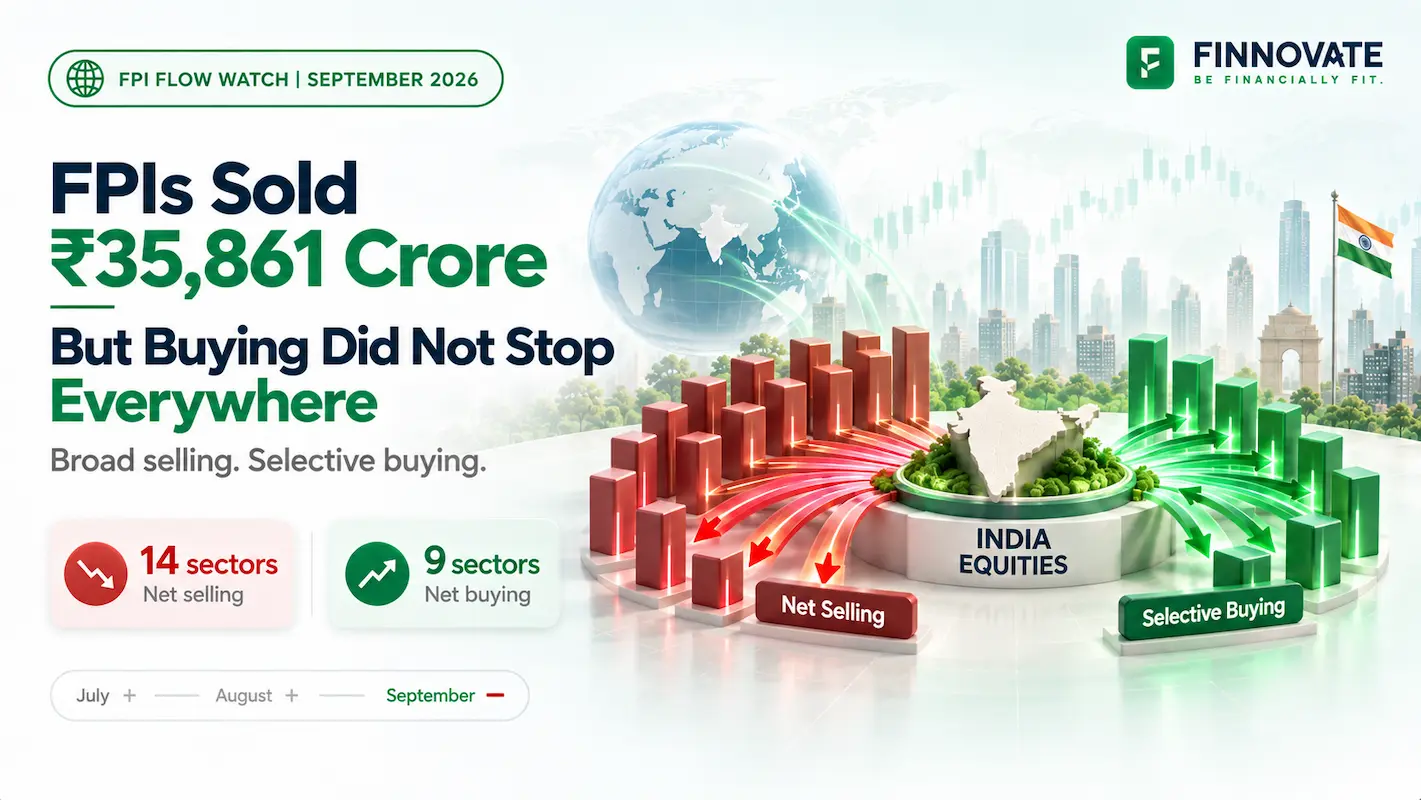
FPIs sold ₹35,861 crore in Indian equities in September 2026. See which sectors saw outf...
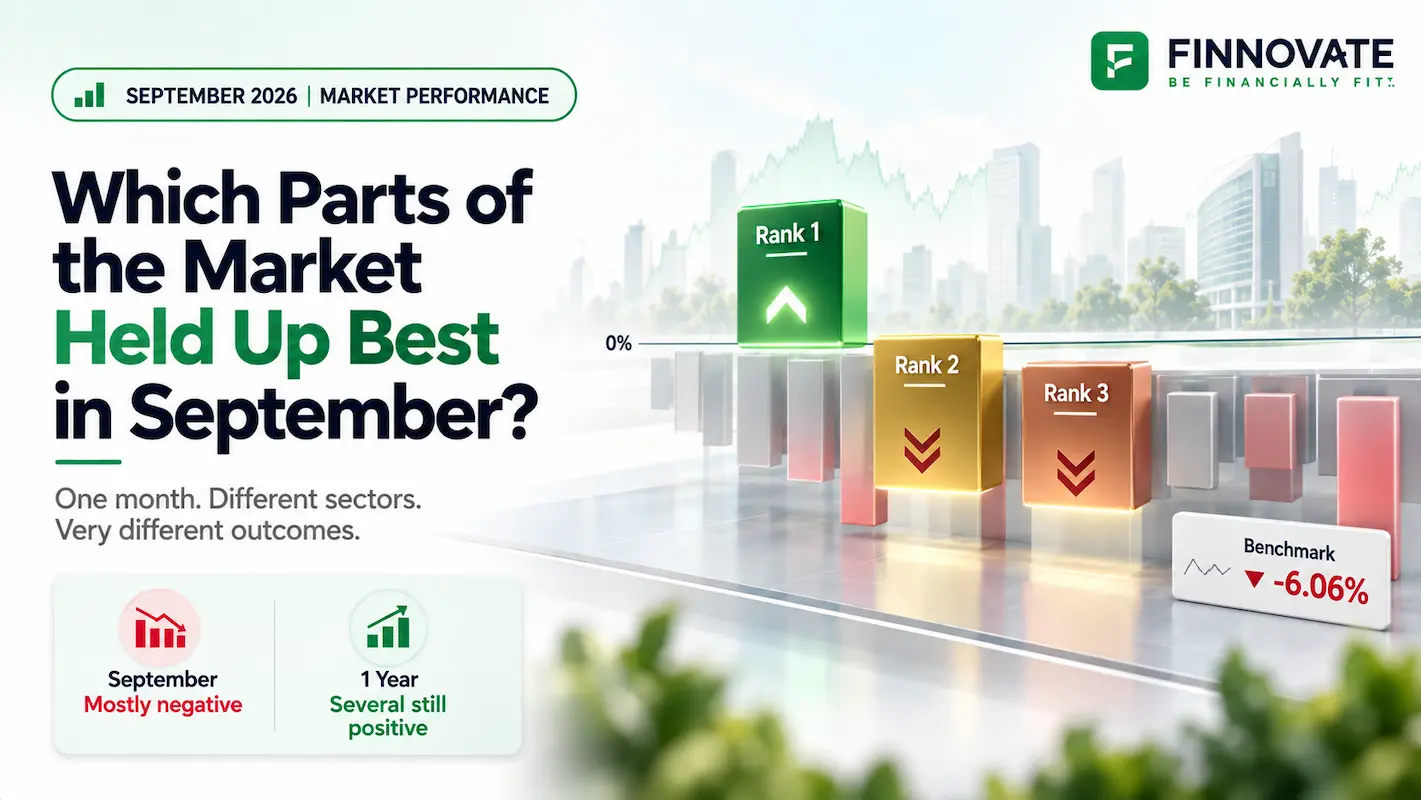
Compare 19 sector and thematic indices with Nifty 50 for September 2026, covering monthly ...

Understand the Growpital case, SEBI’s refund order, the LLP investment structure and wha...
Popular now

Learn how to easily download your NSDL CAS Statement in PDF format with our step-by-step g...

Looking for the best financial freedom books? Here’s a handpicked 2026 reading list with...
Learn what SIF investment means in India, SEBI rules, Rs 10 lakh minimum investment, avail...
Clear guide to mutual fund taxation in India for FY 2025–26 after July 2024 changes: equ...