
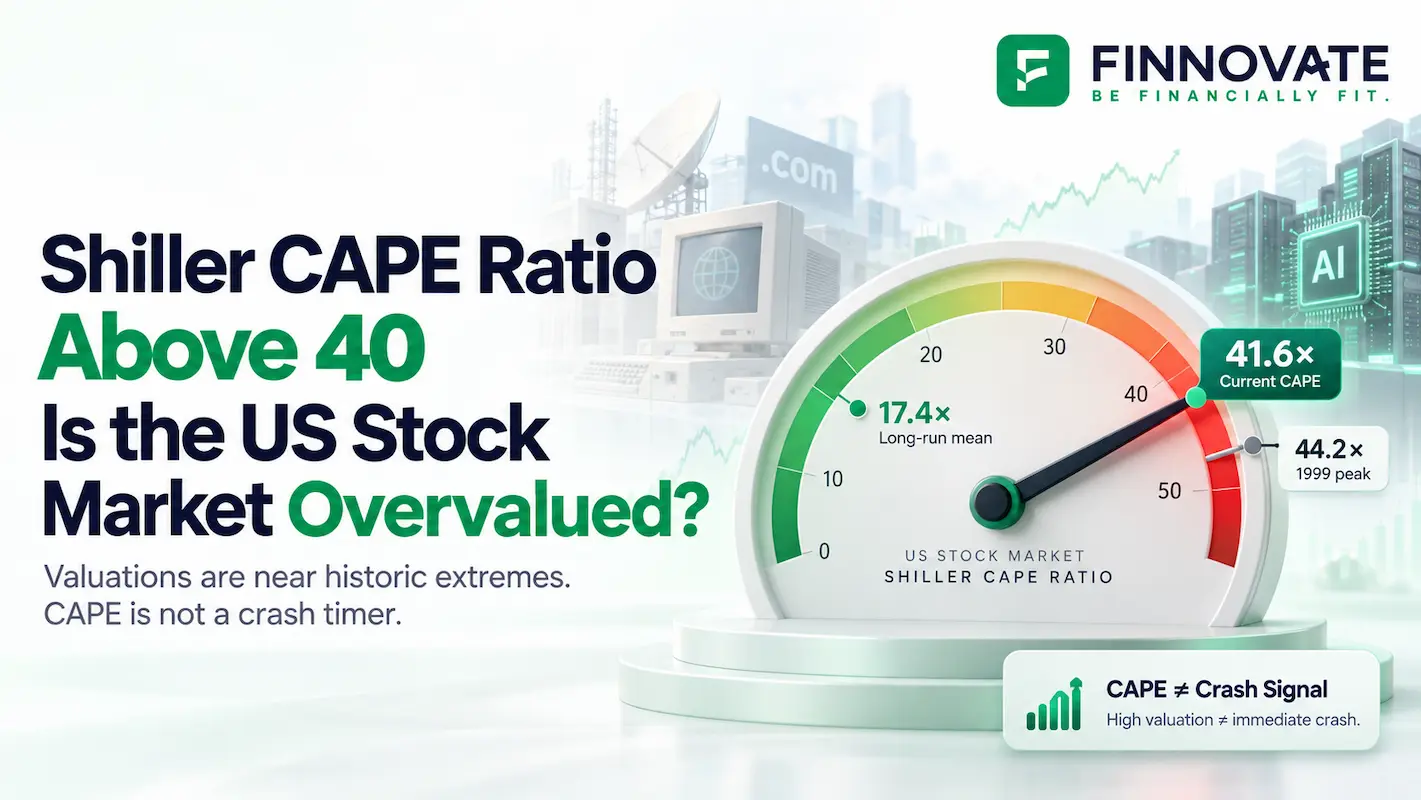
Shiller CAPE Ratio Above 40: Is the US Stock Market Overvalued?
The Shiller CAPE ratio is near its 1999 peak. Explore what it means for US stock valuation...
09 October 2026
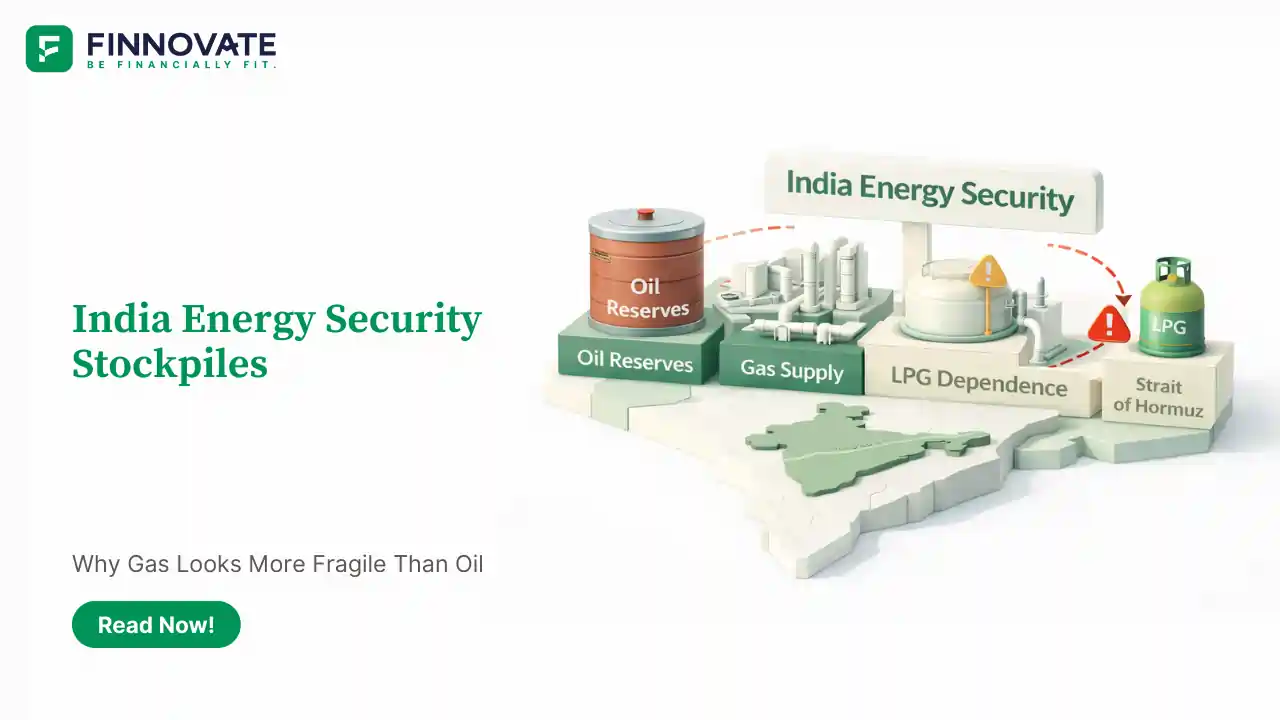
The current West Asia disruption has brought India’s energy security back into focus. The key question is no longer theoretical. If shipping stress around the Strait of Hormuz lasts, does India have enough internal buffer to handle it without major economic pain? The short answer is this: India’s oil position is stronger than the old “ship-to-mouth” comparison suggests, but gas and LPG-linked vulnerability still looks much sharper.
That distinction matters for readers, businesses, and policymakers. India now buys crude from a much wider set of countries than before, and the government says about 70% of crude imports are currently routed outside the Strait of Hormuz. But that does not remove exposure. It only reduces it. On the gas and LPG side, route dependence and import sensitivity remain much harder to manage in a prolonged disruption.
The present risk is not only about higher oil prices. It is also about route concentration. The Strait of Hormuz remains one of the world’s most important energy chokepoints, and current tensions have already forced India to actively monitor vessel movement, cargo routing, LPG supplies, and gas allocation. The government has held inter-ministerial briefings specifically on these disruptions, which shows this is being treated as an operational energy-security issue, not just a market headline.
For India, that matters because imported energy still plays a very large role in the economy. Even with better diversification in crude sourcing, a prolonged Gulf disruption can still affect shipping costs, availability, refinery planning, fuel prices, industrial supply chains, and investor confidence. That is why the debate has moved from price risk to resilience risk.
| Item | Current Position | What It Means |
|---|---|---|
| Strategic crude reserve sites | Visakhapatnam, Mangalore, Padur | India has dedicated SPR infrastructure in place |
| SPR capacity | 5.33 MMT | Covers roughly 9.5 days of crude requirement |
| Broader crude + product storage | 74 days | Better short-term resilience than SPR-only reading |
| Crude sourcing diversification | Around 40 countries | Lowers but does not remove disruption risk |
| Share of crude imports routed outside Hormuz | About 70% | Route diversification has improved |
| Total gas consumption | About 189 MMSCMD | Gas remains a major fuel input |
| Domestic gas production | 97.5 MMSCMD | Imported supply still matters heavily |
| Gas supply affected by force majeure | 47.4 MMSCMD | Large enough to trigger supply controls |
| Fully protected segments | Domestic PNG, CNG vehicles | Essential users protected first |
| LPG import dependence | About 60% of consumption | External dependence remains high |
| Share of LPG imports via Hormuz | About 90% | Route concentration is a major vulnerability |
| Domestic LPG production response | Increased after emergency measures | Helps cushion the shock, not remove it |
India’s strategic petroleum reserve system has three main sites: Visakhapatnam, Mangalore, and Padur. Their combined capacity is 5.33 million metric tonnes, and the government has said this covers about 9.5 days of India’s crude requirement based on the official consumption pattern used for the reserve calculation.
That is the dedicated strategic reserve number. But it is not the full oil cushion. The oil minister told Parliament in February 2026 that India’s broader storage position, including strategic reserves and stocks held by oil marketing companies, is enough for about 74 days. That number gives a better sense of short-term resilience than looking at SPR alone.
So the right way to frame India’s oil position is this: dedicated strategic reserves are still modest relative to national demand, but total crude-and-product stocks provide a much stronger short-term cushion. That means India looks better prepared for a limited disruption than many headline comparisons suggest. A prolonged or repeated supply shock, however, would still argue for deeper internal stockpiles over time.
Gas looks more sensitive than oil because the replacement options are harder and the system is already under visible strain. In the government’s March 2026 briefing, India’s total natural gas consumption was put at about 189 MMSCMD, while domestic production was about 97.5 MMSCMD. The same briefing said 47.4 MMSCMD of supply had already been affected by force majeure conditions. That is large enough to trigger supply controls and prioritisation.
The pressure is not only about raw volumes. It is also about allocation. The government issued a Natural Gas Control Order in March 2026 under which domestic PNG and CNG for vehicles were kept at 100%, while several industrial and commercial consumers were asked to absorb lower supply. Fertiliser units, manufacturing users, refineries, petrochemicals, and other grid-connected consumers were among the segments facing cuts or tighter allocation.
LPG adds another layer of vulnerability. The same official briefing said India imports about 60% of its LPG consumption, and about 90% of those imports move through the Strait of Hormuz. To manage the shock, refiners and petrochemical units were directed to divert more feedstock into the LPG pool, helping raise domestic LPG production. That response helps, but it also underlines the underlying vulnerability.
This is why gas and LPG security now look more fragile than oil security. Crude can be sourced from a wider mix of suppliers and routes. Gas and LPG-linked systems are more route-sensitive, less flexible in the short run, and harder to rebalance quickly if disruption lasts.
The PL-480 comparison works best as a strategic analogy, not a literal one. India once moved from deep food vulnerability to far stronger food security by building domestic capacity, procurement systems, and internal buffer strength. The present issue is not food. It is energy. The underlying lesson is still relevant: when a country depends heavily on external supply for an essential input, internal buffers matter.
India today is far more diversified than it was in the era often remembered through PL-480. But the current disruption is a reminder that supplier diversification alone is not the same thing as strong internal reserve protection. In an energy crisis, what matters is not only where you buy from, but how long you can hold out if routes fail or cargoes are delayed.
A useful oil benchmark comes from the IEA system. IEA members are required to maintain emergency oil stocks equal to at least 90 days of net oil imports. India is not bound by that rule, but it remains a helpful reference point when discussing long-duration energy resilience.
Against that benchmark, India’s dedicated SPR cover of roughly 9.5 days is still limited. Its broader combined storage position of 74 days is materially better, but still below the 90-day benchmark often treated as a strong emergency standard.
Gas comparisons are harder because countries use very different storage systems. Japan is widely seen as one of the stronger LNG-security models, and the IEA notes that Japan’s LNG storage capacity is equivalent to about 36 days of domestic natural gas demand. South Korea also has substantial LNG tank-based storage infrastructure. The broader lesson is less about copying another country line for line and more about recognising that heavy gas importers usually build deliberate storage and emergency systems around that dependence. India still has room to strengthen that part of its energy architecture.
In any supply squeeze, households and essential transport get protected first. That is exactly what the current gas allocation framework has done by keeping domestic PNG and CNG supply fully covered. The pressure therefore shifts to industrial and commercial users.
That makes sectors such as fertilisers, refineries, petrochemicals, manufacturing, restaurants, hotels, and other gas-linked users more exposed if the disruption persists. The issue is not only physical supply. It is also cost. Even when fuel remains available, tighter allocation and costlier replacement cargoes can quickly affect operating margins and production decisions. The longer the disruption lasts, the more likely the stress moves from ports and pipelines into factories and balance sheets.
The immediate priority is continuity of supply, rerouting, and allocation discipline. That is already underway. But the larger policy lesson goes beyond this episode. India may need to move faster on expanding crude storage beyond the current main reserve system and treat gas storage as a much more serious strategic priority than before. The government has already approved additional SPR capacity in principle under Phase II, which shows the direction is known. The issue is speed and scale.
Gas deserves even more attention than crude in the next phase of planning. A stronger long-term response would likely mean more LNG storage capability, more flexible supply contracts, better route diversification, and a clearer emergency framework for industrial users. The current disruption does not prove India is unprepared. It shows that India’s oil cushion is more manageable than its gas and LPG cushion, and that future energy security planning will need to focus more on internal stockpiles than it has in the past.
India looks reasonably placed for a short disruption, especially when broader crude-and-product stocks are included. But dedicated strategic reserves alone still cover only about 9.5 days, so a prolonged crisis would put much more pressure on the system.
India’s dedicated strategic petroleum reserve covers about 9.5 days of crude demand. Broader national crude and petroleum product storage capacity has been stated at 74 days.
Because gas disruptions are harder to replace quickly, imported supply still matters heavily, and the current shock has already forced supply prioritisation and cuts across industrial users.
It means greater vulnerability in LPG, shipping, insurance, and imported energy logistics, even though crude sourcing is now more diversified than before.
The main priorities are larger internal crude buffers, stronger gas and LNG storage capability, more flexible sourcing and routing, and a better long-duration emergency response framework.
1. Middle East War Impact on India: Oil, Trade and Rupee Risks
2. Indian Companies Gaining From the Iran War, But Oil and Macro Risks Remain
3. Iran War Economics: Is Tehran Imposing Higher Costs on the US and Its Allies?
Disclaimer: This article is for general information and educational purposes only. It does not constitute investment, legal, policy, tax, or financial advice. Energy supply conditions, prices, and policy responses can change quickly during geopolitical disruptions.
No spam. Only new posts, simple explainers, and practical money checklists for busy professionals.
Finnovate is a SEBI-registered financial planning firm that helps professionals bring structure and purpose to their money. Over 3,500+ families have trusted our disciplined process to plan their goals - safely, surely, and swiftly.
Our team constantly tracks market trends, policy changes, and investment opportunities like the ones featured in this Weekly Capsule - to help you make informed, confident financial decisions.
Learn more about our approach and how we work with you:
No comments yet. Start the conversation. What would you add?
No spam. Only new posts, simple explainers, and practical money checklists.
You may also like
The Shiller CAPE ratio is near its 1999 peak. Explore what it means for US stock valuation...

Can Starlink change internet access in India? Explore why Jio and Airtel signed deals, how...

AI demand is pushing up memory chip prices. Here's why the shortage could make smartphones...

FPIs sold ₹35,861 crore in Indian equities in September 2026. See which sectors saw outf...
Popular now

Learn how to easily download your NSDL CAS Statement in PDF format with our step-by-step g...

Looking for the best financial freedom books? Here’s a handpicked 2026 reading list with...
Learn what SIF investment means in India, SEBI rules, Rs 10 lakh minimum investment, avail...

Clear guide to mutual fund taxation in India for FY 2025–26 after July 2024 changes: equ...