
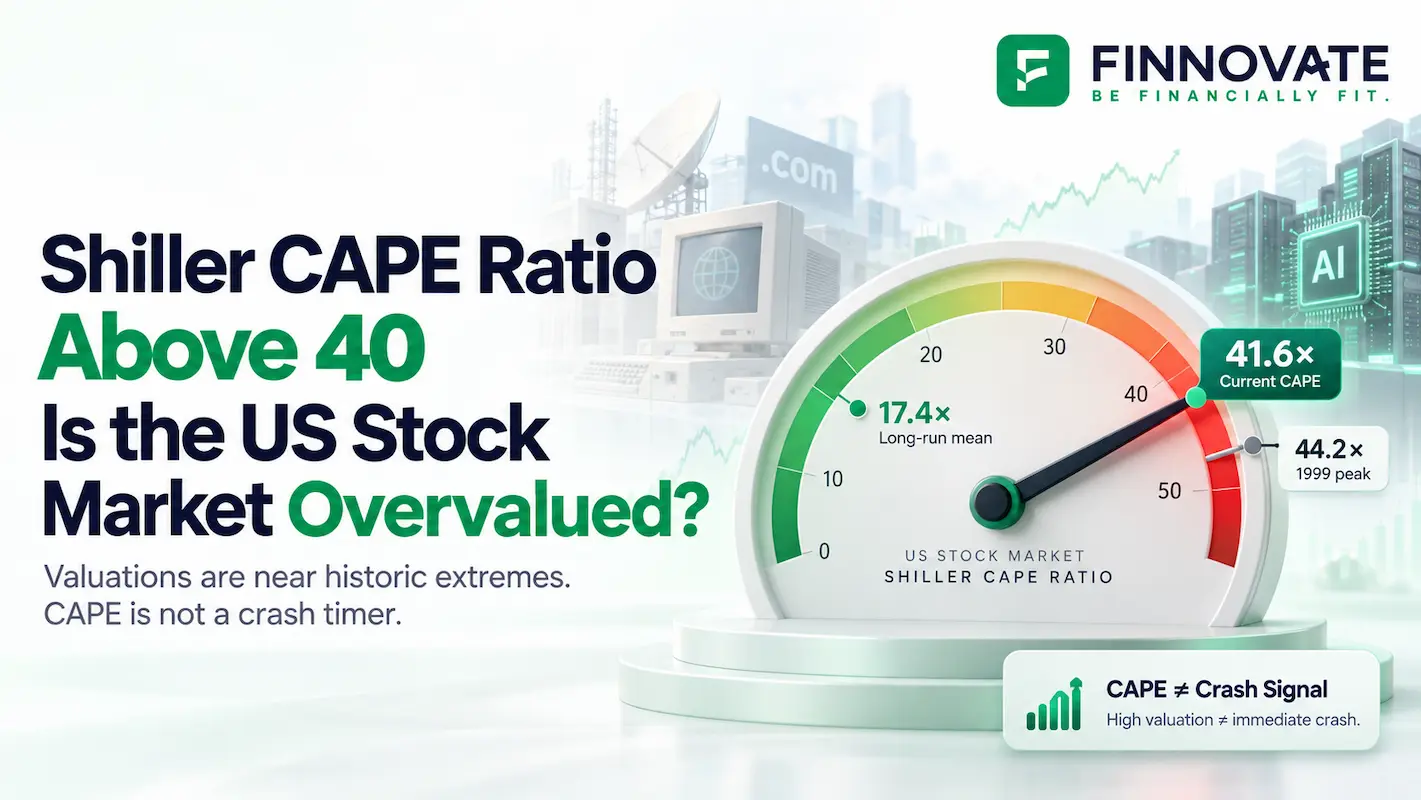
Shiller CAPE Ratio Above 40: Is the US Stock Market Overvalued?
The Shiller CAPE ratio is near its 1999 peak. Explore what it means for US stock valuation...
09 October 2026
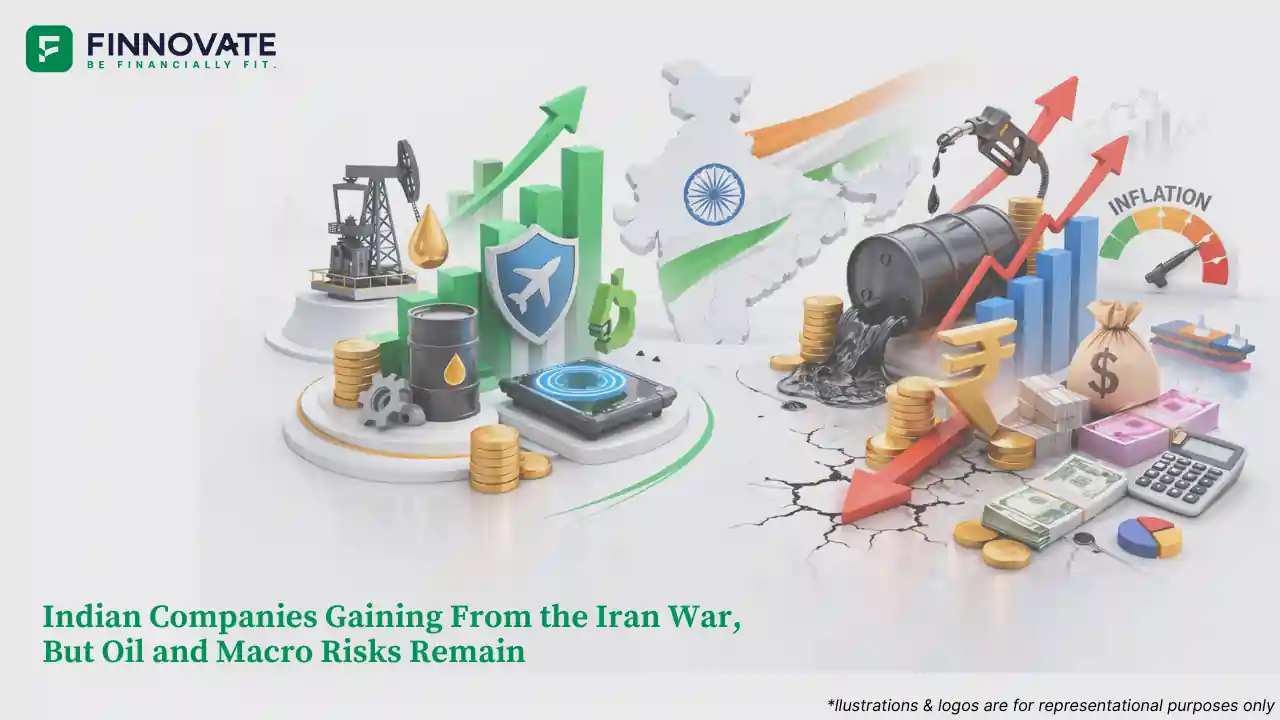
Some Indian companies are gaining from the Iran war, or at least holding up better than the broader market. That is happening because war-led disruption has pushed crude prices higher, improved sentiment around defence spending, and created demand for certain fuel alternatives.
But that is only one side of the story. India is still a large oil-importing economy. So while a few sectors may benefit in the short term, the broader impact of high crude, rupee weakness, inflation pressure, and slower growth remains the bigger issue for markets and for the economy.
War usually does not create broad-based winners. It creates selective beneficiaries.
In the current phase, the market is focusing on three pockets:
This is why some stocks can outperform even when the broader market remains under stress.
The most direct market beneficiaries of a crude spike are upstream oil producers. When oil prices rise sharply, companies that produce oil are usually in a better position than companies that consume oil as an input cost.
That is why names such as ONGC and Oil India have stayed in focus during this period. Vedanta has also remained part of this discussion because of its mix of oil and commodity exposure.
What is working in their favour:
But this still needs caution. This is a relative-strength story, not a safety story. If oil cools, if geopolitical risk eases, or if the market shifts focus, these moves can reverse quickly.
Defence is the second clear theme.
Whenever geopolitical tensions rise, investors start expecting:
That is why names such as Bharat Electronics and Bharat Dynamics have moved back into focus.
Still, the market can sometimes run ahead of reality. A defence stock may rise quickly on sentiment, but long-term value still depends on order execution, delivery timelines, margins, repeat business, and actual earnings conversion.
So the theme is real, but headlines alone are not enough.
One of the more interesting side stories in this phase has been the rise in demand for induction cooktops.
As fears around gas supply disruption increased, consumers started looking at alternatives. That brought attention to players such as:
This is a useful reminder of how quickly consumer behaviour can shift during a supply scare. When households worry about availability of one fuel source, they move to the next practical option.
But this is still a narrow trend. It should not be mistaken for a broad economic positive. Some of these products also rely on imported components, so cost pressure can rise here too.
This is the most important part of the entire story.
India may have a few market winners during a war-led oil spike, but the country as a whole remains vulnerable when crude prices stay high. That is because expensive oil affects much more than just fuel.
It can hurt India through:
That is why the broader market has remained cautious. This is not being treated as just a sector rotation story. It is being read as a macro risk phase.
A few stocks may look stronger. But if oil remains elevated for long, the negative effect on inflation, currency, and overall growth can become much larger than the gains seen in select names.
The rupee matters because India imports a large share of its energy needs. When oil rises and the rupee weakens at the same time, the pressure becomes heavier.
This matters in two ways:
That is one reason why foreign flows have turned cautious during this period. In a global risk-off environment, oil shock plus currency weakness usually becomes a difficult mix for emerging markets.
The first is thing to understand this - some Indian companies gaining from the Iran war does not mean India is benefiting from the war.
The second is that short-term winners can remain highly sensitive to headlines. If crude prices soften or geopolitical tensions cool, the same stocks may lose momentum quickly.
The third is that this is a market phase where the macro matters more than the excitement around individual names.
A practical way to read this phase is:
The main names being watched are upstream oil producers, defence companies, and some fuel-substitute consumer brands. These include ONGC, Oil India, Vedanta, Bharat Electronics, Bharat Dynamics, TTK Prestige, Havells, and Bajaj Electricals.
Because higher crude prices tend to improve the outlook for companies that produce oil. They benefit more directly from a price spike than sectors that use oil as an input cost.
Because geopolitical conflict often leads to expectations of faster procurement, stronger defence spending, and fresh orders.
Mainly through higher oil prices, inflation pressure, rupee weakness, and possible pressure on growth and market sentiment.
No. A few stocks may hold up well, but the broader macro effect of high oil on India remains the more important issue.
Disclaimer: This article is for general information and educational purposes only. It does not constitute investment, tax, legal, or financial advice. Market conditions and macro data can change quickly. Please check official disclosures and speak to a qualified professional before taking action.
No spam. Only new posts, simple explainers, and practical money checklists for busy professionals.
Finnovate is a SEBI-registered financial planning firm that helps professionals bring structure and purpose to their money. Over 3,500+ families have trusted our disciplined process to plan their goals - safely, surely, and swiftly.
Our team constantly tracks market trends, policy changes, and investment opportunities like the ones featured in this Weekly Capsule - to help you make informed, confident financial decisions.
Learn more about our approach and how we work with you:
No comments yet. Start the conversation. What would you add?
No spam. Only new posts, simple explainers, and practical money checklists.
You may also like
The Shiller CAPE ratio is near its 1999 peak. Explore what it means for US stock valuation...

Can Starlink change internet access in India? Explore why Jio and Airtel signed deals, how...

AI demand is pushing up memory chip prices. Here's why the shortage could make smartphones...

FPIs sold ₹35,861 crore in Indian equities in September 2026. See which sectors saw outf...
Popular now

Learn how to easily download your NSDL CAS Statement in PDF format with our step-by-step g...

Looking for the best financial freedom books? Here’s a handpicked 2026 reading list with...
Learn what SIF investment means in India, SEBI rules, Rs 10 lakh minimum investment, avail...

Clear guide to mutual fund taxation in India for FY 2025–26 after July 2024 changes: equ...