

EU Scrap Export Curbs: India’s Raw-Material Risk Explained
Proposed EU scrap export curbs could affect India’s metal supply and manufacturing costs...
24 September 2026
Published: May 2026
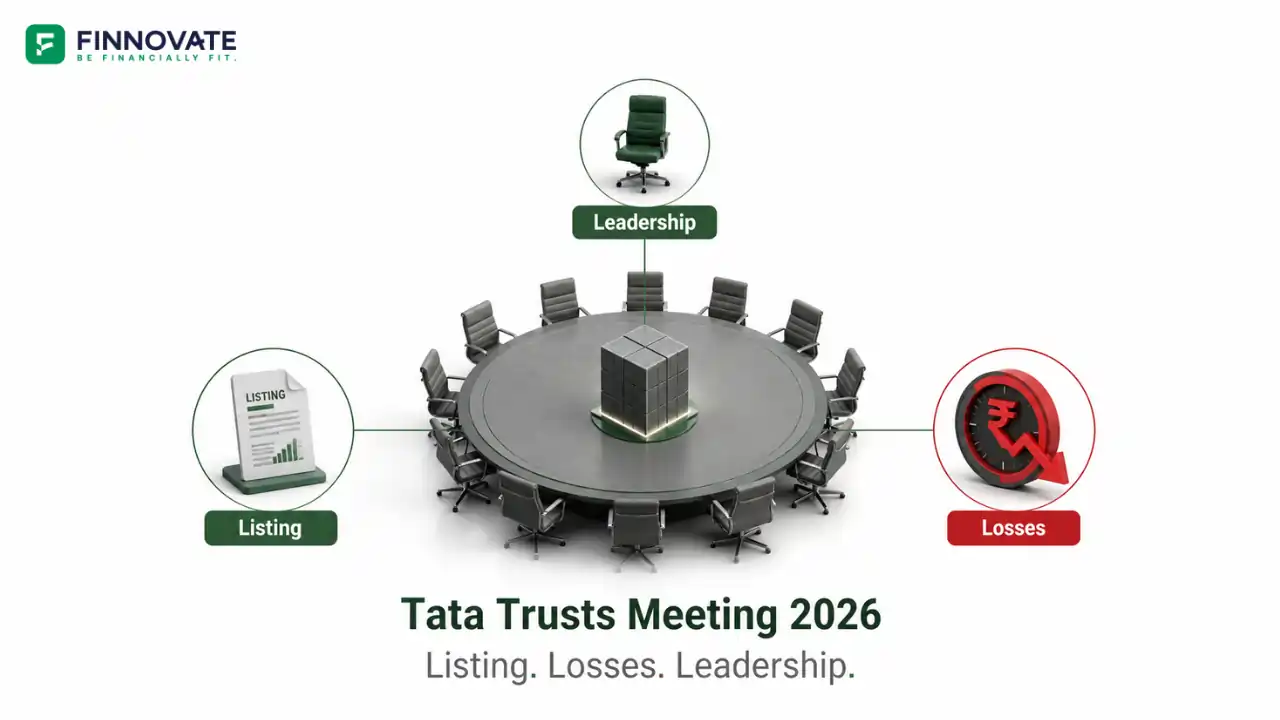
The boards of Sir Dorabji Tata Trust and Sir Ratan Tata Trust meet on May 8, 2026. Three issues sit on the agenda, each with consequences that extend well beyond the boardroom: whether Tata Sons will be compelled to list on public markets, how the group addresses mounting losses across its new businesses, and whether N. Chandrasekaran receives a third term as chairman of Tata Sons.
More than a governance meeting, this is an early measure of whether Noel Tata can consolidate authority over an institution that is, for the first time in decades, operating without consensus at the top.
| Parameter | Detail |
|---|---|
| Meeting date | May 8, 2026 |
| Trusts convening | Sir Dorabji Tata Trust and Sir Ratan Tata Trust |
| Tata Trusts stake in Tata Sons | ~66% |
| SP Group (Mistry family) stake | 18.37% |
| Tata Sons standalone assets (Mar 2025) | ₹1.75 lakh crore |
| RBI listing deadline (missed) | September 30, 2025 |
| FY26 new venture losses (projected) | ~₹29,000 crore |
| Air India FY26 reported loss (estimate) | Over ₹22,000 crore (per reports) |
Whether to list Tata Sons has been debated for years, but the regulatory and financial pressure has intensified sharply since 2025. Under the RBI's Scale-Based Regulation framework for NBFCs, upper-layer entities are required to list on stock exchanges. Tata Sons was classified as an upper-layer NBFC and missed its listing deadline of September 30, 2025.
To sidestep this obligation, Tata Sons applied in March 2024 to surrender its Certificate of Registration as a Core Investment Company, arguing that by retiring its NBFC-related debt it no longer met the classification threshold. The RBI confirmed it was reviewing the application in January 2025. As of May 2026, no ruling has been issued, and Tata Sons continues to appear on the RBI's upper-layer NBFC list.
The regulatory picture has since shifted further. On April 10, 2026, the RBI released draft amendment directions proposing to replace the current multi-parameter NBFC scoring system with a simpler asset-size threshold: any NBFC with standalone assets of ₹1 lakh crore or more would automatically qualify as upper layer. Tata Sons reported standalone assets of ₹1.75 lakh crore as of March 2025.
Corporate governance advisory firm InGovern has urged the RBI to formally reject Tata Sons' de-registration application and issue a clear directive to list by March 2027.
From outside the Trusts, the Shapoorji Pallonji Group, which holds 18.37% of Tata Sons as the single largest minority shareholder, has consistently called for listing. SP Group chairman Shapoorji Mistry has described listing as a "moral and social imperative." The group carries an estimated ₹55,000 to ₹60,000 crore in total debt, much of it collateralised against this stake. A listing would convert a completely illiquid holding into tradeable shares.
For a detailed analysis of the regulatory and financial case for a Tata Sons listing, see: Tata Sons Listing: Why the Case Is Getting Harder to Ignore
Four ventures incubated by Tata Sons are collectively projected to post losses of approximately ₹29,000 crore in FY26: Air India, Tata Digital, Tata Electronics, and Tejas Networks. This compares to ₹16,550 crore for the same group in FY25 and far exceeds an earlier internal estimate of ₹5,700 crore for FY26.
| Business | FY25 Loss | FY26 Loss (Projected) |
|---|---|---|
| Air India | ₹11,000 cr | Over ₹22,000 cr |
| Tata Digital | ₹4,610 cr | Over ₹5,000 cr |
| Tata Electronics | Profitable | ~₹3,000 cr |
| Tejas Networks | Profitable | Moving into red |
| Combined | ₹16,550 cr | ~₹29,000 cr |
Air India is projected to account for over ₹22,000 crore of the group's FY26 losses, against ₹11,000 crore in FY25. The surge reflects a convergence of external pressures: Pakistan's closure of its airspace to Indian carriers from April 2025, escalating fuel costs linked to the West Asia conflict, and the operational disruption following the Air India Flight AI171 crash in Ahmedabad in June 2025. Air India is now in discussions with Tata Group and co-owner Singapore Airlines, which holds a 25.1% stake, for a fresh capital infusion.
Tata Digital, which operates BigBasket, Tata 1mg, Croma, Tata CLiQ, and Tata Neu, is projected to post FY26 losses above ₹5,000 crore despite cumulative investments exceeding ₹24,000 crore. Analysts have pointed to leadership instability, slow product improvement, and over-reliance on the Tata Neu loyalty programme as structural weaknesses. Competitors in the quick-commerce segment gained market share by investing in delivery infrastructure, an area where Tata Digital lagged.
Chandrasekaran's position is that large, transformative businesses require long-term capital commitment before they can turn profitable. Noel Tata's stated concern is that the group needs a clearer framework for deciding when to persist with a loss-making venture and when to exit. This tension may be the most contested item at the May 8 meeting.
Chandrasekaran, who has led Tata Sons since January 2017 and was reappointed for a second five-year term in February 2022, is now being considered for a third term. His current term runs until February 2027. The Tata Sons board has been unable to reach unanimous agreement on the extension. Chandrasekaran is reported to have indicated that a third-term renewal should be a unanimous decision, consistent with Tata Sons' practice of avoiding split outcomes on leadership appointments.
Two conditions are reported to be complicating the renewal. First, Noel Tata is reported to have sought an assurance that Tata Sons will not be listed, a commitment Chandrasekaran has declined to give, since the final decision rests with the RBI. Second, the sharp escalation of losses across new businesses has become a point of contention among trustees assessing the group's strategic direction.
Chandrasekaran is expected to present a detailed turnaround plan at the June 2026 Tata Sons board meeting. How that plan is received will depend significantly on the alignment, or the absence of it, that emerges from the May 8 Trusts meeting.
Noel Tata became chairman of Tata Trusts after the death of Ratan Tata in October 2024. He inherited not just the role but a set of governance challenges that are arguably more structurally complex than those Ratan Tata managed when he first took charge three decades ago.
The dissent within Tata Trusts has become unusually visible. In October 2025, a trustee was voted out of the board for the first time in the institution's history. The board has since operated along two broad lines: those aligned with Noel Tata's position of keeping Tata Sons private, and those, including Vice-Chairmen Venu Srinivasan and Vijay Singh, who view listing as financially necessary and governance-positive.
Separately, Mehli Mistry, a trustee within Tata Trusts, represents an additional layer of internal dissent at a structural governance level. This is distinct from the Shapoorji Pallonji Group's position, which is driven by the SP Group's financial interest in monetising its 18.37% stake in Tata Sons.
The Noel-Shapoorji dynamic carries a further complication: Noel Tata is closely related to both the Tata and Mistry families. Managing a public disagreement with a shareholder holding 18.37% of Tata Sons, while keeping the Trusts board aligned on strategy, is a governance challenge with no direct precedent in recent Tata history.
Ratan Tata managed dissent decisively when it arose. Noel Tata's first year has been defined more by open contestation than resolution.
Tata Sons is classified as an upper-layer NBFC under the RBI's Scale-Based Regulation framework. Upper-layer NBFCs are required to list on stock exchanges. Tata Sons missed its deadline of September 30, 2025, and its application to de-register as a Core Investment Company remains unresolved as of May 2026. A new RBI draft framework released in April 2026 proposes an asset-size threshold of ₹1 lakh crore for automatic upper-layer classification. With standalone assets of ₹1.75 lakh crore, Tata Sons would qualify regardless of its de-registration application.
Four ventures account for combined projected losses of approximately ₹29,000 crore: Air India (over ₹22,000 crore), Tata Digital (above ₹5,000 crore), Tata Electronics (approximately ₹3,000 crore), and Tejas Networks. Air India's losses reflect the Pakistan airspace closure, elevated fuel costs from the West Asia conflict, and disruptions following the June 2025 crash. Tata Digital's losses stem from structural execution gaps including leadership instability, slow product improvement, and competition from better-capitalised quick-commerce operators.
No decision has been announced as of May 2026. Chandrasekaran has indicated that a third term requires a unanimous decision, consistent with Tata Sons' established practice. The board has not yet reached that consensus. The June 2026 Tata Sons board meeting, where Chandrasekaran is expected to present a turnaround plan, is the likely forum for a resolution.
The SP Group holds 18.37% of Tata Sons but faces strict transfer restrictions that render the stake completely illiquid. A public listing would convert the holding into tradeable shares, giving the group a market-based route to monetise the position. The group carries an estimated ₹55,000 to ₹60,000 crore in total debt, much of it collateralised against this very holding.
Article 121 is an internal governance rule that gives Tata Trusts veto power over significant strategic decisions at Tata Sons. Noel Tata's opposition to listing is partly grounded in the concern that going public would expose key group decisions to public shareholder pressure, diluting the Trusts' ability to act as long-term stewards of the group's direction. Please consult a SEBI-registered investment adviser before making any investment decisions related to listed Tata Group companies.
Disclaimer: This article is for general information and educational purposes only. It does not constitute investment advice, a recommendation, or an offer to buy or sell any securities or financial instruments. Information on Tata Sons, Tata Trusts, Air India, Tata Digital, and the RBI's NBFC regulatory framework is based on publicly available sources and is subject to revision. Past corporate performance and governance patterns are not indicative of future outcomes. Please consult a SEBI-registered investment adviser or qualified financial professional before making any investment decision. Investments in listed Tata Group companies are subject to market risks.
No spam. Only new posts, simple explainers, and practical money checklists for busy professionals.
Finnovate is a SEBI-registered financial planning firm that helps professionals bring structure and purpose to their money. Over 3,500+ families have trusted our disciplined process to plan their goals - safely, surely, and swiftly.
Our team constantly tracks market trends, policy changes, and investment opportunities like the ones featured in this Weekly Capsule - to help you make informed, confident financial decisions.
Learn more about our approach and how we work with you:
No comments yet. Start the conversation. What would you add?
No spam. Only new posts, simple explainers, and practical money checklists.
You may also like
Proposed EU scrap export curbs could affect India’s metal supply and manufacturing costs...

FPIs net sold $1.47 billion in Indian equities during September 1–15, 2026. Explore sect...

Nearly 39% of India’s monitored coal power plants were critically low on fuel in Septemb...
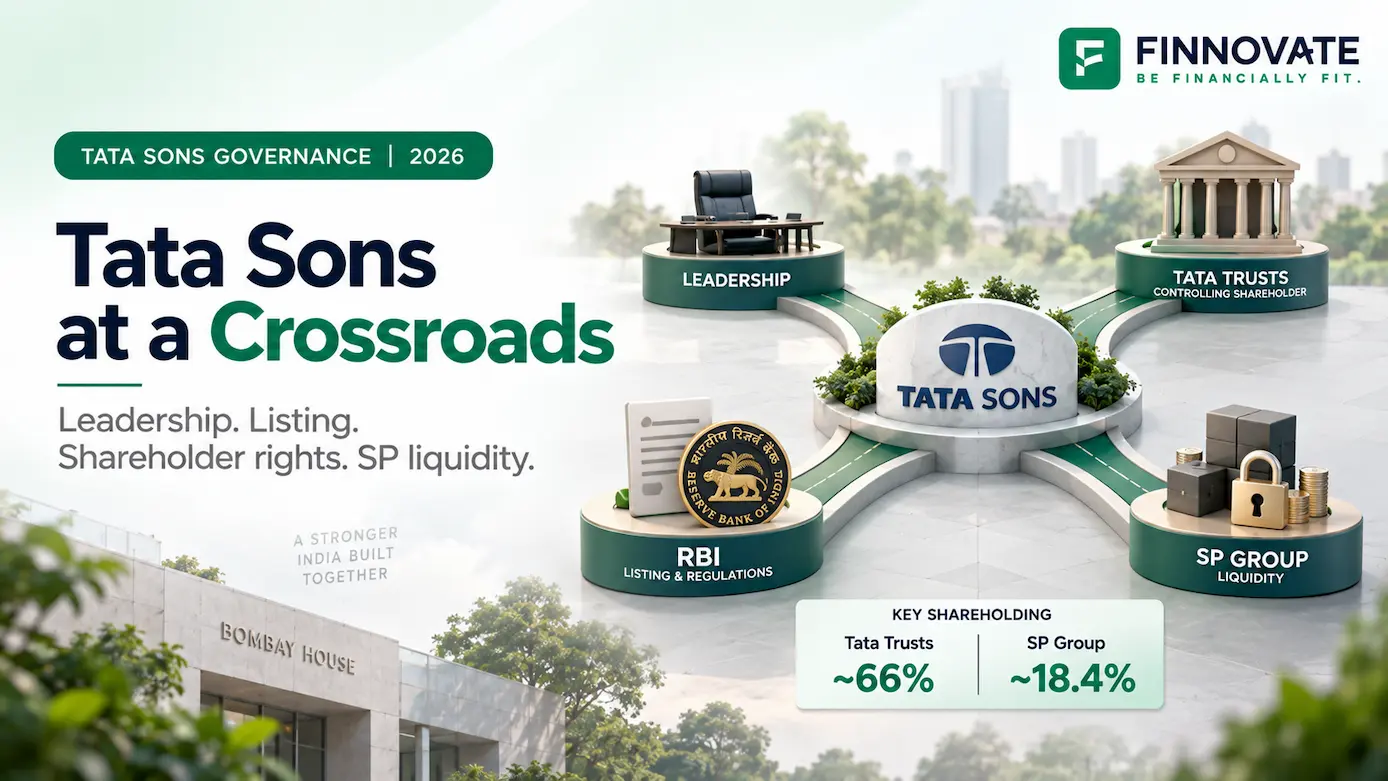
Tata Sons faces a major governance dispute over N Chandrasekaran’s reappointment, RBI li...
Popular now
Learn how to easily download your NSDL CAS Statement in PDF format with our step-by-step g...

Looking for the best financial freedom books? Here’s a handpicked 2026 reading list with...
Learn what SIF investment means in India, SEBI rules, Rs 10 lakh minimum investment, avail...
Clear guide to mutual fund taxation in India for FY 2025–26 after July 2024 changes: equ...