
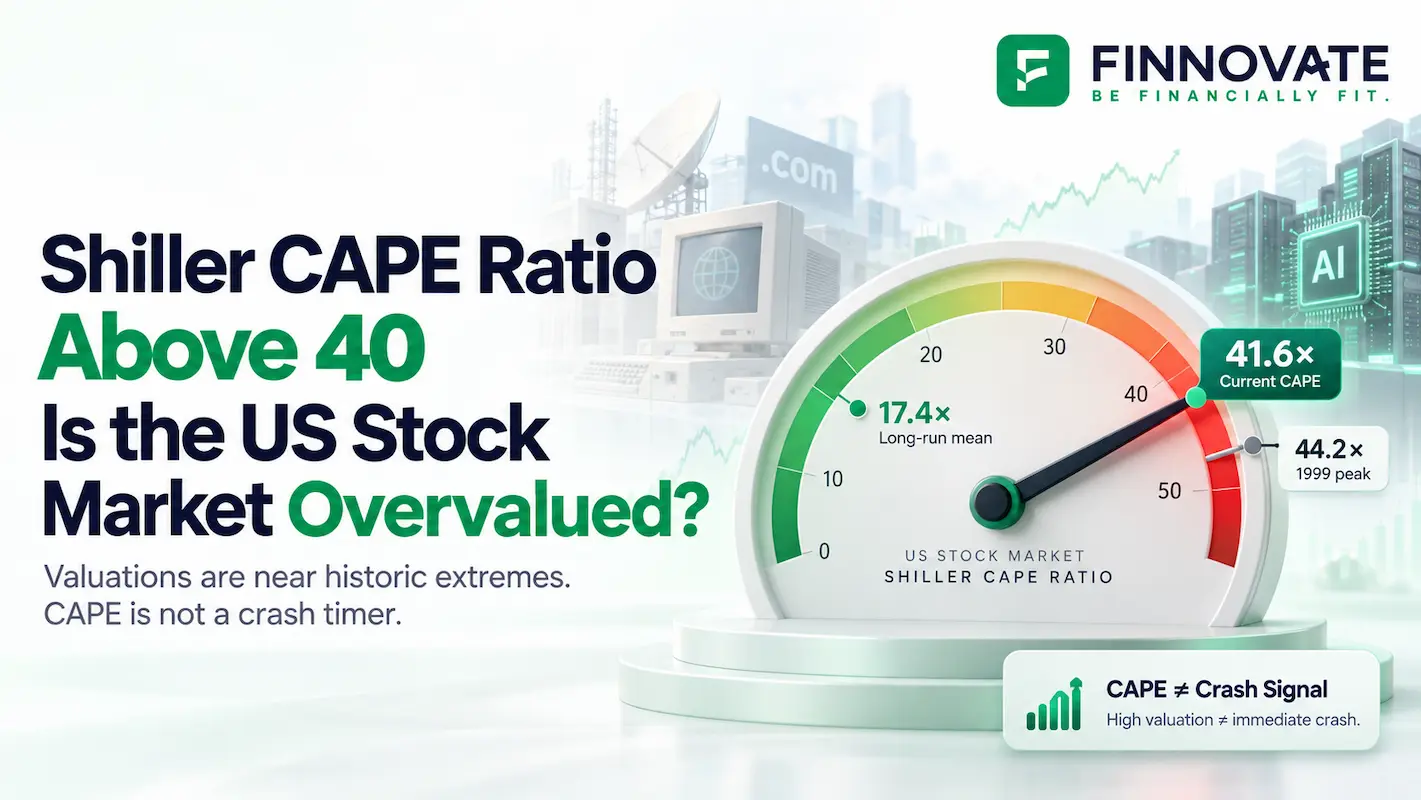
Shiller CAPE Ratio Above 40: Is the US Stock Market Overvalued?
The Shiller CAPE ratio is near its 1999 peak. Explore what it means for US stock valuation...
09 October 2026
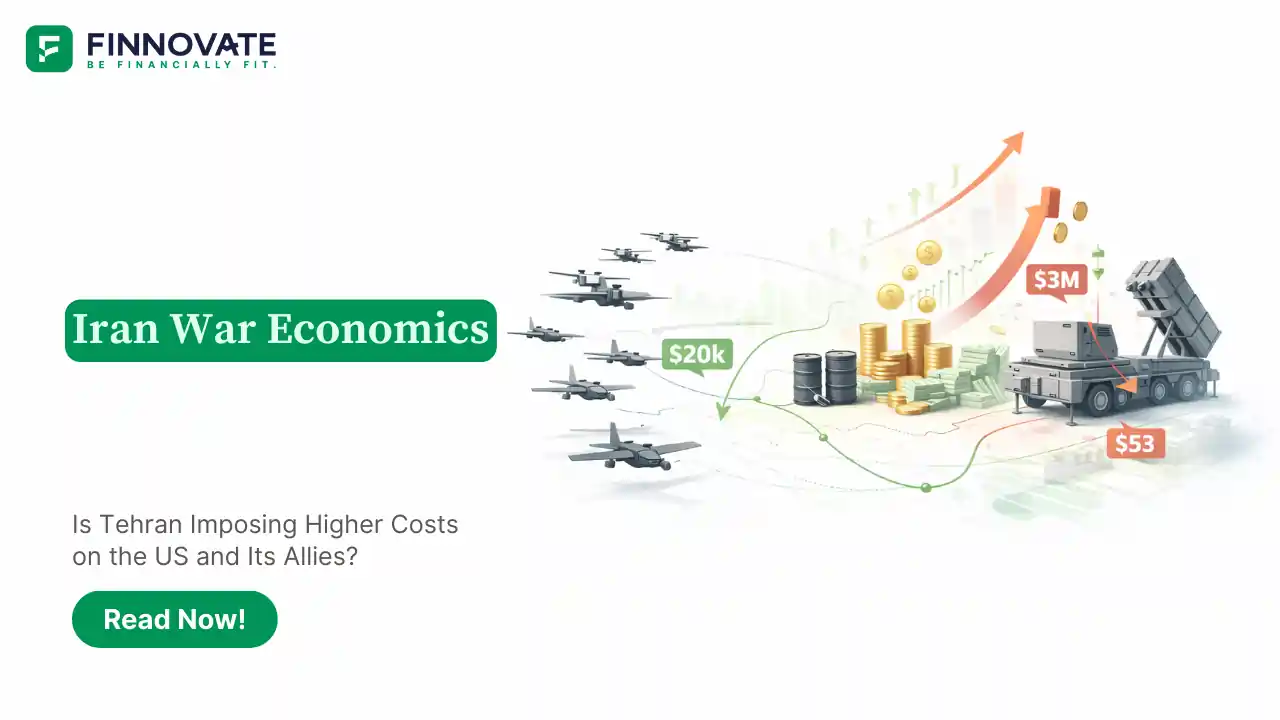
Iran is not stronger than the US or Israel in conventional military terms. But that is not the only way to shape a conflict. In wars like this, time, uncertainty, and cost can become weapons of their own. That is why the more useful question is not whether Iran is winning outright, but whether it is succeeding in making the conflict increasingly expensive for the US and its allies.
At this stage, the answer looks partly yes. Iran appears to be using an asymmetric cost-imposition strategy: relying on lower-cost drones and missile threats to force repeated defensive action, strain interceptor inventories, raise regional risk, and keep energy markets on edge. That does not amount to strategic victory by itself, but it does mean the economics of a prolonged conflict may be shifting pressure onto the better-funded side.
Modern war is not only about who has the bigger arsenal. It is also about how long that arsenal can be sustained, how expensive each response becomes, and how much uncertainty one side can impose on the other. This matters even more in a conflict where one side has deeper financial and military resources, because the weaker side often tries to offset that gap by making every round of defence disproportionately costly.
That is why the economics of war matter here. If a cheaper offensive weapon can repeatedly trigger a much more expensive defensive response, the burden does not show up only on the battlefield. It shows up in munitions budgets, stockpile depletion, deployment costs, fiscal pressure, and political patience.
This is the clearest part of the story. Low-cost Iranian Shahed-style drones are widely estimated in the tens of thousands of dollars per unit, with many outside estimates clustering around roughly $20,000 to $50,000, though exact costs vary by configuration and production conditions. By contrast, high-end missile interceptors can cost millions of dollars per shot. Public cost comparisons put a Patriot PAC-3 interceptor at roughly $3.7 million, while some field-use estimates are even higher.
That cost mismatch does not mean every drone is always met with a Patriot missile. Air defence is layered, and militaries can use jamming, guns, lower-cost interceptors, and other systems where available. But when high-value targets must be protected quickly, expensive interceptors often do get used. That is what makes cheap-drone saturation such an effective economic pressure tactic. Even successful defence can still be financially draining.
The mismatch matters for four reasons:
That is the heart of drone warfare economics.
The evidence points in that direction. Iran’s advantage does not appear to be battlefield dominance. Its advantage lies in forcing expensive defensive responses, stretching allied air-defence systems, and increasing the cost of keeping assets, bases, shipping lanes, and regional partners protected. That is a classic asymmetric approach.
This is why cost imposition is the better phrase than winning. Iran does not need to destroy major military platforms to create pressure. It only needs to keep the threat active enough that the US and its partners must stay mobilized, keep firing expensive interceptors, move more assets into theatre, and absorb a growing financial burden. In that sense, uncertainty and repeated low-cost attacks can generate leverage even without decisive battlefield gains.
Regional infrastructure risk is real, but this part needs precision. The broader conflict has affected Gulf infrastructure and energy facilities, with Saudi Arabia and the UAE among the most exposed regional states. There have also been repeated attacks on vessels and infrastructure linked to the wider conflict environment around the Gulf.
What is less clear in some cases is attribution and mode. Not every hit should be framed as a direct Iranian strike without strong evidence, because some actions may involve proxies, indirect escalation, or contested claims. The more accurate takeaway is that US-aligned regional assets and Gulf economic infrastructure have become more vulnerable, and that alone raises the cost of sustaining the conflict.
The burden is already large, and it is rising quickly. Early estimates indicate the first days of the war generated multibillion-dollar US costs, with heavy munitions spending and rapid operational deployment. Different estimates vary depending on the time period and which cost buckets they include, but the broad direction is clear: this is an extremely expensive campaign even in its early phase.
That burden is not only about strike costs. It includes interceptor use, deployment of additional air-defence systems, naval protection, logistics, repair and replenishment, and the opportunity cost of drawing munitions away from other theatres. It also creates a political problem. The longer a conflict continues without a clear end-state, the harder it becomes to justify tens of billions in additional spending and stockpile drawdowns.
There is also growing discussion around supplemental funding and replenishment needs. That makes the fiscal side of the war as important as the military side.
The largest economic effect may not come from direct damage alone. It may come from uncertainty.
Markets react not only to what has already been destroyed, but also to what could be disrupted next. In this conflict, that means tanker traffic, Gulf energy facilities, missile escalation, and the risk of a longer war. Iran’s ability to keep that uncertainty alive may itself be economically powerful.
This is where missile risk matters. Iran’s inventory of medium-range and longer-range missiles remains an important escalation factor, even if actual use and operational readiness are difficult to assess in real time. The point is not simply what Iran has fired so far. The point is that the possibility of broader escalation forces the US, Israel, and regional states to defend against a wider threat set than cheap drones alone. That expands the cost of staying ready.
This is where war economics moves directly into finance. The Strait of Hormuz remains one of the world’s most important energy chokepoints, handling a significant share of global oil and gas flows. Disruption there has pushed oil sharply higher and intensified concerns about supply security, shipping costs, and inflation risk.
For markets, the transmission channels are clear:
These effects matter well beyond the Middle East. For countries like India, the oil channel alone is enough to make this conflict economically relevant.
Not in any final or absolute sense. But Iran may be succeeding at something narrower and still important: making the conflict economically costly to sustain.
That is a different claim from saying Iran is strategically winning the war. The stronger powers still hold the advantage in firepower, finance, and alliance networks. But if Iran can keep using relatively low-cost systems to trigger high-cost responses, strain stockpiles, unsettle energy flows, and keep the uncertainty premium alive, then it can impose real pressure without achieving conventional dominance.
So the most accurate conclusion is this: Iran may not be winning militarily, but it may be proving that in modern conflict, making war expensive can itself be a form of leverage. That is the real lesson from the economics of this war.
Iran may be gaining an advantage in cost imposition by forcing expensive defensive responses and keeping regional energy and shipping risks elevated. That is not the same as outright strategic victory.
Because they can force defenders to use much more expensive systems to stop them. Even successful interception can become financially draining when attacks are repeated.
Costs vary by system, but high-end interceptors such as Patriot PAC-3 missiles can cost roughly $3.7 million each, while Shahed-style drones are often estimated in the tens of thousands of dollars.
Yes. Early war estimates point to multibillion-dollar costs within the first week, before counting the full longer-term burden of deployments, replenishment, and logistics.
Because the conflict affects the Strait of Hormuz, regional energy infrastructure, shipping confidence, and inflation expectations. That makes it relevant for oil prices, global risk sentiment, and import-dependent economies.
Disclaimer: This article is for general information and educational purposes only. It is not investment, legal, policy, defence, or financial advice. Geopolitical conflicts are fast-moving, and battlefield claims, casualty figures, attribution, and cost estimates may change as new official information emerges. Market prices, oil levels, and macro implications can also shift quickly during conflict periods. Readers should refer to official government sources, multilateral agencies, and qualified professionals before making decisions based on such developments.
No spam. Only new posts, simple explainers, and practical money checklists for busy professionals.
Finnovate is a SEBI-registered financial planning firm that helps professionals bring structure and purpose to their money. Over 3,500+ families have trusted our disciplined process to plan their goals - safely, surely, and swiftly.
Our team constantly tracks market trends, policy changes, and investment opportunities like the ones featured in this Weekly Capsule - to help you make informed, confident financial decisions.
Learn more about our approach and how we work with you:
No comments yet. Start the conversation. What would you add?
No spam. Only new posts, simple explainers, and practical money checklists.
You may also like
The Shiller CAPE ratio is near its 1999 peak. Explore what it means for US stock valuation...

Can Starlink change internet access in India? Explore why Jio and Airtel signed deals, how...

AI demand is pushing up memory chip prices. Here's why the shortage could make smartphones...

FPIs sold ₹35,861 crore in Indian equities in September 2026. See which sectors saw outf...
Popular now

Learn how to easily download your NSDL CAS Statement in PDF format with our step-by-step g...

Looking for the best financial freedom books? Here’s a handpicked 2026 reading list with...
Learn what SIF investment means in India, SEBI rules, Rs 10 lakh minimum investment, avail...

Clear guide to mutual fund taxation in India for FY 2025–26 after July 2024 changes: equ...