

Why the AI Boom Could Make Your Next Phone More Expensive
AI demand is pushing up memory chip prices. Here's why the shortage could make smartphones...
08 October 2026
Data released: June 12, 2026 | Source: MoSPI provisional CPI release, base year 2024
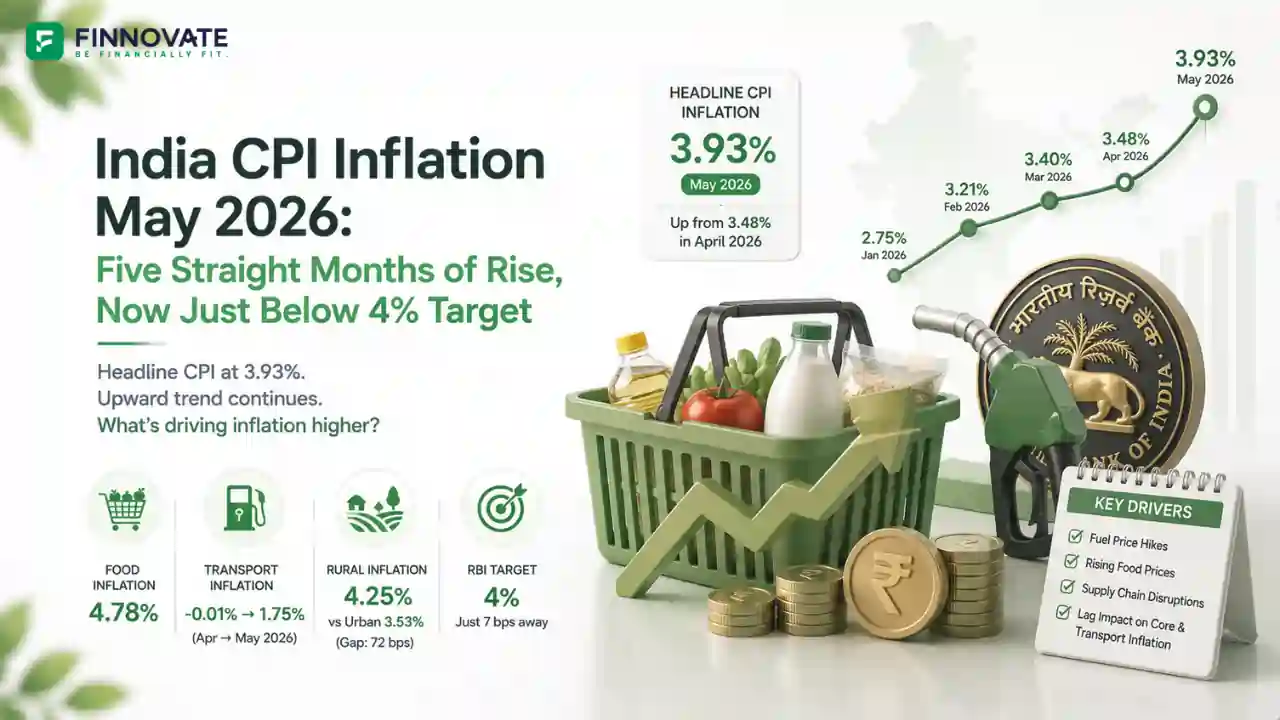
India's headline CPI inflation rose to 3.93% in May 2026, up from 3.48% in April, marking the fifth consecutive monthly increase since the new CPI series (base year 2024) began in January 2026. The reading is the highest in the new series and comes within 7 basis points of the RBI's 4% medium-term target.
The increase was driven by a combination of four rounds of OMC fuel price hikes in May (the first in four years) and a sharp rise in food prices. The lag effect of supply chain disruptions from the Middle East conflict is beginning to show up in core and transport inflation, raising the question of what the August and October monetary policy meetings will bring.
Quick read: Headline CPI rose to 3.93% in May 2026, food inflation hit 4.78%, and transport inflation swung from -0.01% to 1.75% in a single month on the back of four fuel price hikes. Silver jewellery inflation stood at 155.23% and tomato at 48.43%. Rural inflation at 4.25% exceeded urban inflation of 3.53% by 72 bps. The RBI's 4% target has not been breached, but the trend over five months is upward and the risks ahead (El Nino, fuel lag, supply chain) point higher.
India's CPI was rebased in January 2026. The base year shifted from 2012 to 2024, and basket weights were updated using the 2023-24 Household Consumption Expenditure Survey. Non-food items received a higher weight in the new basket, and food's share was reduced. MoSPI has been explicit that the new series is not directly comparable to the old one.
Within the new series, the five-month trend is clear: January 2.75%, February 3.21%, March 3.40%, April 3.48%, May 3.93%. Each print has been higher than the previous. The acceleration between April and May (45 bps) is the largest single-month increase in the new series so far.
| CPI Basket Component | May 2026 | Apr 2026 | Mar 2026 | Direction |
|---|---|---|---|---|
| Food & Beverages | 4.55% | 4.01% | 3.71% | Rising |
| Paan, Tobacco, Intoxicants | 4.83% | 4.76% | 4.23% | Rising |
| Clothing & Footwear | 2.98% | 2.80% | 2.75% | Gradually rising |
| Housing, Water, Power, Gas | 1.73% | 1.71% | 1.97% | Stable / easing |
| Furnishing & Home Equipment | 1.89% | 1.61% | 1.39% | Rising |
| Health | 1.49% | 1.64% | 1.75% | Easing |
| Transport | 1.75% | -0.01% | 0.00% | Sharp jump: fuel hikes |
| Information & Communication | 0.30% | 0.50% | 0.33% | Easing |
| Recreation, Sports & Culture | 1.98% | 2.11% | 2.28% | Easing |
| Education Services | 2.99% | 3.15% | 3.30% | Easing |
| Restaurants & Accommodation | 5.75% | 4.20% | 2.88% | Rising sharply |
| Personal Care, Gold & Silver | 18.46% | 17.66% | 18.65% | Persistently elevated |
| Food Inflation (CFPI) | 4.78% | 4.20% | 3.87% | Rising |
| Headline CPI | 3.93% | 3.48% | 3.40% | Rising |
State-owned OMCs raised petrol and diesel prices four times in May 2026, the first fuel price increases in four years. Transport inflation swung from -0.01% in April to 1.75% in May. This is the most dramatic single-month component swing in the new CPI series. The full lag effect may not yet be visible: secondary price increases in transport-dependent goods and services typically appear in the following month.
Food and beverages inflation rose from 3.71% in March to 4.55% in May. The CFPI (Consumer Food Price Index) moved from 3.87% to 4.78% over the same period. Tomato inflation stood at 48.43% in May, up from 35.26% in April. Ginger was at 32.49%. Potato provided partial relief at -23.71%. The El Nino concern adds a forward-looking risk: a deficit monsoon could reduce Kharif output and push food inflation significantly higher in the July to September period.
The Personal Care, Gold and Silver basket registered 18.46% inflation in May, the highest of any broad CPI component. At the item level, silver jewellery inflation stood at 155.23% and gold and diamond jewellery at 40.93% in May. Global precious metal price movements are the primary driver. This component directly affects savings patterns and jewellery purchase decisions for Indian households, particularly ahead of festive and wedding seasons.
Restaurants and Accommodation inflation nearly doubled in two months, from 2.88% in March to 5.75% in May. This is a services inflation signal: it reflects higher input costs from food and fuel feeding into consumer services pricing. Services inflation is stickier than goods inflation and tends to be slower to reverse once established. This is the component most likely to sustain inflationary pressure even if food and fuel costs moderate.
Silver jewellery inflation, highest single item in May 2026 CPI data
Tomato inflation, up from 35.26% in April; primary food pressure point
Potato deflation, single largest downward pull on food inflation
| Metric | Rural | Urban | Gap |
|---|---|---|---|
| Headline CPI (May 2026) | 4.25% | 3.53% | Rural higher by 72 bps |
| Food Inflation (CFPI) | 4.85% | 4.66% | Rural higher by 19 bps |
Rural inflation at 4.25% has already crossed the RBI's 4% target. Rural households face higher inflation across food and beverages, clothing, footwear, home fuels, home furnishings, transport, communication, recreation, and precious metals. Urban inflation leads in housing and select services. The rural-urban divergence matters for welfare policy targeting and wage indexation decisions.
| Factor | Current Reading | Direction | Key Risk |
|---|---|---|---|
| Food Inflation | 4.78% (CFPI, May) | Rising | El Nino effect on monsoon could reduce Kharif output and push food inflation higher in July-September |
| Fuel / Energy | Transport at 1.75% (May) | Moderating at source, lagging through chain | Brent has fallen from approximately $110 to $87 per barrel; further OMC hike rounds look unlikely near-term. Full fuel lag in secondary prices may show in June |
| Core Inflation | Approximately 3.9% (May) | Rising from approximately 3.7% | Supply chain constraints feeding into paints, chemicals, pharma pricing; secondary hikes have not yet fully materialised |
| Services Inflation | Restaurants at 5.75% (May) | Rising sharply | Services inflation is stickier than goods inflation; higher input costs from food and fuel are feeding through to consumer service prices |
The RBI held the repo rate at 5.25% at the June 5, 2026 policy meeting. With headline CPI now at 3.93% and rural inflation already above 4%, the comfort zone is narrowing. The June meeting statement acknowledged that inflation expectations need to be anchored while balancing growth support.
The debate around future rate action has intensified. One view among market participants is that the RBI may hold at the August 2026 policy meeting, watching the monsoon data, the full fuel lag effect, and whether FCNR(B) and other capital inflow measures provide rupee support. If food inflation crosses 5.5% and the monsoon deficit confirms, a rate hike at the October 2026 meeting becomes a more live possibility. This is a market expectation, not a commitment from the MPC, and the trajectory of crude oil and the monsoon will be the two most important variables between now and October.
Inflation erodes the real return on fixed deposits, affects bond valuations, and changes the math on every financial goal. The FinnFit Financial Fitness Test takes 3 minutes and shows you whether your portfolio is positioned to keep pace with the current inflation environment.
Take the FinnFit TestMoSPI rebased the CPI to 2024 in January 2026, updating basket weights using the 2023-24 Household Consumption Expenditure Survey. Non-food items received a higher weight; food's share was reduced. The new series reflects current consumption patterns more accurately but cannot be directly compared to the old series' historical readings. Year-on-year comparisons are valid only from January 2026 onwards within the new series.
State-owned oil marketing companies raised petrol and diesel prices four times in May 2026, the first fuel price increases in four years. This swung transport inflation from -0.01% in April to 1.75% in May in a single month. The full effect on transport-dependent goods and services typically appears with a lag of weeks to months, so the June and July CPI prints will be closely watched.
The Personal Care, Gold and Silver basket reflects global precious metal prices, which have risen sharply. At the item level, silver jewellery inflation stood at 155.23% and gold and diamond jewellery at 40.93% in May 2026. These are externally driven price movements and are not directly addressable through domestic monetary policy. However, they do affect consumer purchasing power and household savings patterns.
El Nino is a climate pattern that typically causes below-normal monsoon rainfall in parts of India. A deficit monsoon reduces water availability for Kharif (summer-sown) crops including rice, pulses, and oilseeds. Lower Kharif output pushes up prices for these staples. With food inflation already at 4.78% and rising, a monsoon shortfall would be a significant additional inflationary shock in the July to September period.
The RBI held rates at 5.25% on June 5, 2026. With headline CPI approaching 4% and rural inflation already above it, the rate hold is under increasing scrutiny. Market participants expect the RBI to monitor the August monsoon data and fuel lag effect before deciding. A rate hike at the October 2026 meeting is one scenario being discussed if food inflation climbs above 5.5% and the monsoon confirms a deficit. This remains a market expectation, not a commitment from the MPC.
Disclaimer: This article is for general information and educational purposes only. It does not constitute investment advice, a recommendation, or an offer to buy or sell any securities or financial instruments. All CPI data referenced in this article is sourced from MoSPI's provisional CPI release dated June 12, 2026, with base year 2024. Core inflation estimates are approximate and derived from publicly available commentary, as MoSPI does not separately publish core CPI under the new series. Forward-looking statements on RBI policy and monsoon impact reflect publicly available market commentary and are not Finnovate's forecasts or recommendations. Please consult a SEBI-registered investment adviser before making any financial decision.
No spam. Only new posts, simple explainers, and practical money checklists for busy professionals.
Finnovate is a SEBI-registered financial planning firm that helps professionals bring structure and purpose to their money. Over 3,500+ families have trusted our disciplined process to plan their goals - safely, surely, and swiftly.
Our team constantly tracks market trends, policy changes, and investment opportunities like the ones featured in this Weekly Capsule - to help you make informed, confident financial decisions.
Learn more about our approach and how we work with you:
No comments yet. Start the conversation. What would you add?
No spam. Only new posts, simple explainers, and practical money checklists.
You may also like
AI demand is pushing up memory chip prices. Here's why the shortage could make smartphones...
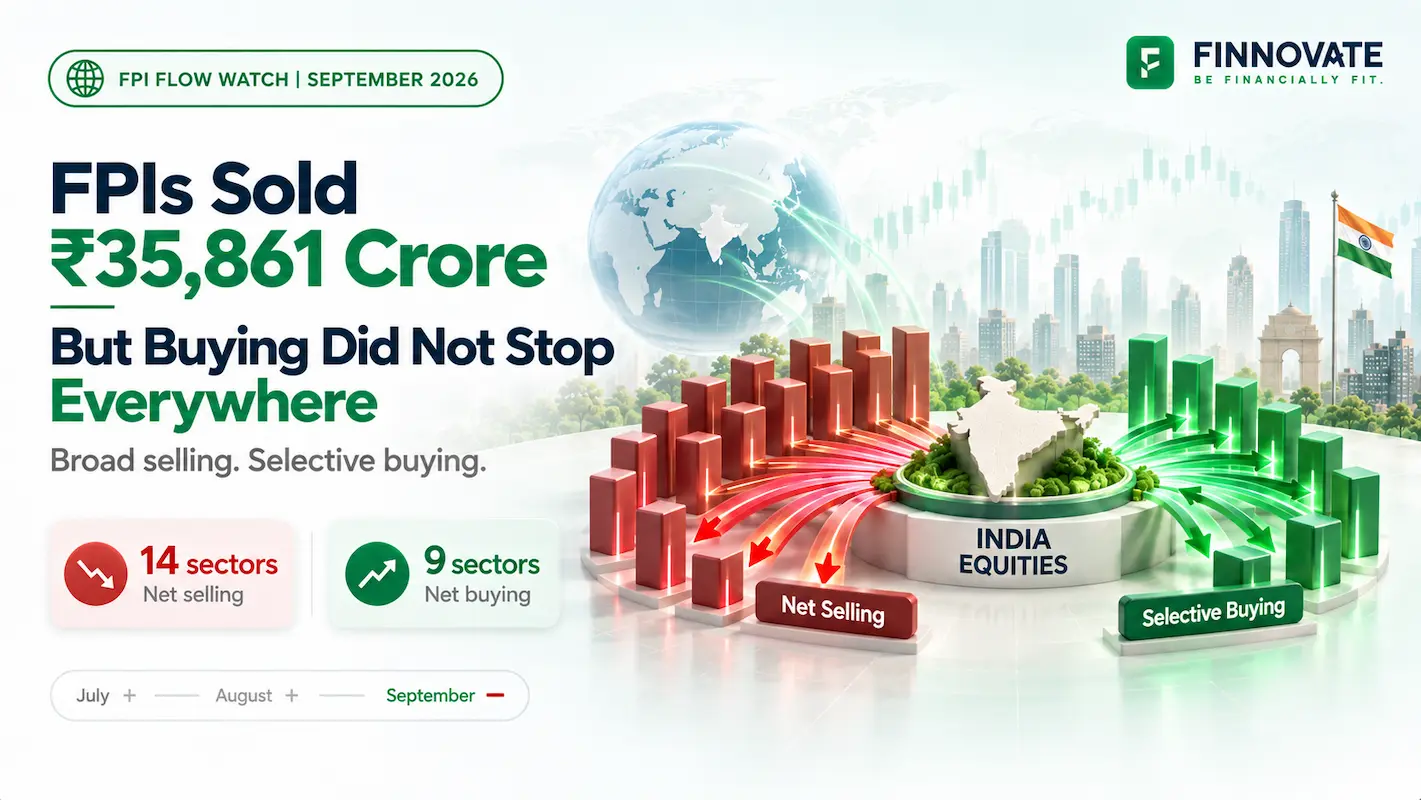
FPIs sold ₹35,861 crore in Indian equities in September 2026. See which sectors saw outf...
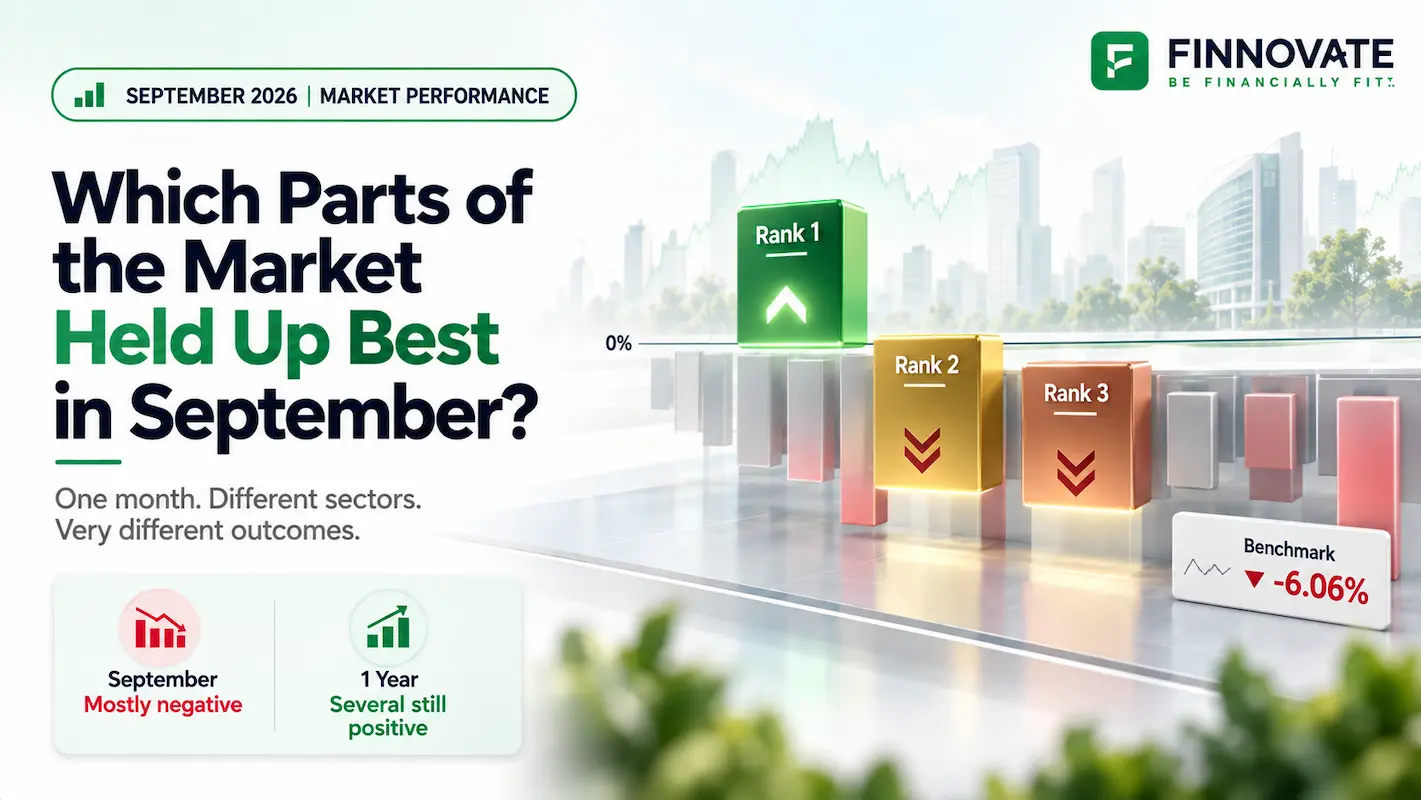
Compare 19 sector and thematic indices with Nifty 50 for September 2026, covering monthly ...

Understand the Growpital case, SEBI’s refund order, the LLP investment structure and wha...
Popular now

Learn how to easily download your NSDL CAS Statement in PDF format with our step-by-step g...

Looking for the best financial freedom books? Here’s a handpicked 2026 reading list with...
Learn what SIF investment means in India, SEBI rules, Rs 10 lakh minimum investment, avail...
Clear guide to mutual fund taxation in India for FY 2025–26 after July 2024 changes: equ...