

Why the AI Boom Could Make Your Next Phone More Expensive
AI demand is pushing up memory chip prices. Here's why the shortage could make smartphones...
08 October 2026
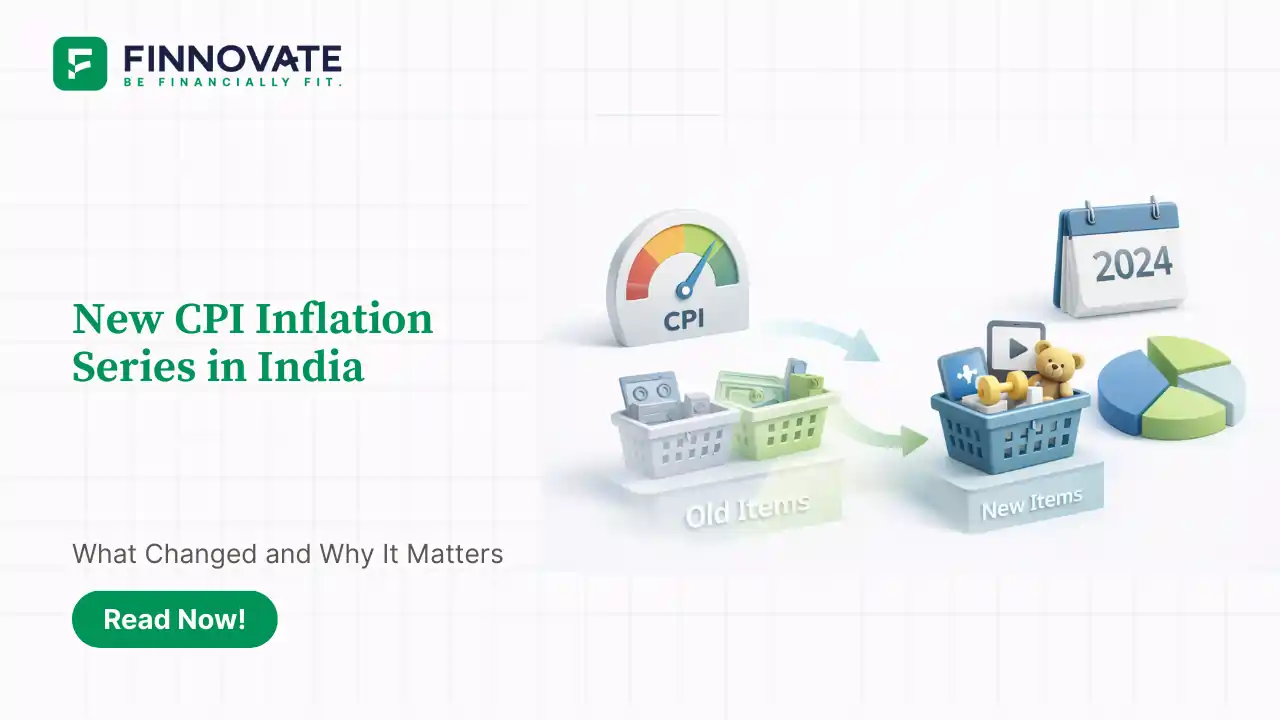
India’s consumer inflation data has undergone an important methodological update. The Ministry of Statistics and Programme Implementation (MOSPI) has begun reporting Consumer Price Index (CPI) inflation under a new series starting from the January 2026 inflation release.
The objective is straightforward. Inflation measurement must remain aligned with how households actually consume goods and services. As spending patterns evolve, the consumption basket used to calculate CPI must also change.
This transition explains why CPI inflation for January 2026 rose to 2.75%, compared to 1.33% in December 2025. The change does not indicate a sudden price spike. Instead, it reflects the shift to a revised inflation series and updated consumption weights.
Inflation indices are not static. Over time:
If the CPI basket does not reflect these changes, inflation data becomes less representative of reality.
MOSPI has therefore updated the CPI methodology to ensure that:
The January 2026 inflation reading under the new series marked the beginning of this transition.
One of the most visible changes in the new CPI series is the modification of the product basket.
MOSPI has removed products that are no longer meaningfully consumed:
These items were once relevant but have gradually disappeared from mainstream consumption.
In their place, modern consumption categories have been added, including:
These additions reflect how urban and semi-urban consumption patterns have evolved. Services and digital subscriptions now form a regular part of household budgets.
Updating the basket ensures that CPI inflation reflects real-world spending instead of outdated categories.
The most structural change in the new CPI series is the shift in base year from 2012 to 2024.
The updated weights are derived from the Expenditure Survey of 2023–24, which provides a more current snapshot of how Indian households allocate spending.
Updating the base year serves two key purposes:
Another important refinement is the expansion of CPI classification groups from 6 to 12 categories, following the COICOP 2018 (Classification of Individual Consumption According to Purpose) framework.
The 12 groups now include:
This expansion allows for a more granular and transparent view of inflation components. Instead of broad aggregates, policymakers and analysts now get a more micro-level picture of price trends.
One of the most significant changes in the new CPI series is the reduction in the weight of food.
Over time, as incomes rise, the proportion of household expenditure spent on food typically declines. Households allocate more toward services, education, healthcare, transport, and discretionary consumption.
Under the new CPI series:
This change has several implications:
The new CPI also increases the relative weight of rural consumption in the overall calculation. This aligns with recent trends where rural demand has been a meaningful driver of FMCG and essential goods consumption.
A common concern is whether reducing the food weight could mechanically push inflation higher.
The answer is not straightforward.
While food weight has declined:
In the current price environment:
It is important to remember that recent CPI readings in the past seven months were influenced by food deflation and favourable base effects. Under the revised series, inflation readings may appear higher compared to those recent months.
However, even after incorporating the new methodology, both MOSPI and the Reserve Bank of India (RBI) remain confident that inflation will remain comfortably below India’s 4% median inflation target.
The methodological update does not alter the inflation targeting framework. It improves measurement accuracy.
The new CPI series represents a structural improvement in inflation measurement.
It suggests:
For policymakers, it provides clearer insight into core inflation drivers.
For investors, it improves transparency in understanding inflation dynamics.
Importantly, the change does not signal a regime shift in inflation management. It signals a refinement in measurement.
Disclaimer: This article is for general information and educational purposes only. It does not constitute financial, investment, legal, or tax advice. Figures and interpretations are based on publicly stated methodology changes and may evolve with future official releases. Please consult a qualified professional before taking any financial decision.
No spam. Only new posts, simple explainers, and practical money checklists for busy professionals.
Finnovate is a SEBI-registered financial planning firm that helps professionals bring structure and purpose to their money. Over 3,500+ families have trusted our disciplined process to plan their goals - safely, surely, and swiftly.
Our team constantly tracks market trends, policy changes, and investment opportunities like the ones featured in this Weekly Capsule - to help you make informed, confident financial decisions.
Learn more about our approach and how we work with you:
No comments yet. Start the conversation. What would you add?
No spam. Only new posts, simple explainers, and practical money checklists.
You may also like
AI demand is pushing up memory chip prices. Here's why the shortage could make smartphones...

FPIs sold ₹35,861 crore in Indian equities in September 2026. See which sectors saw outf...
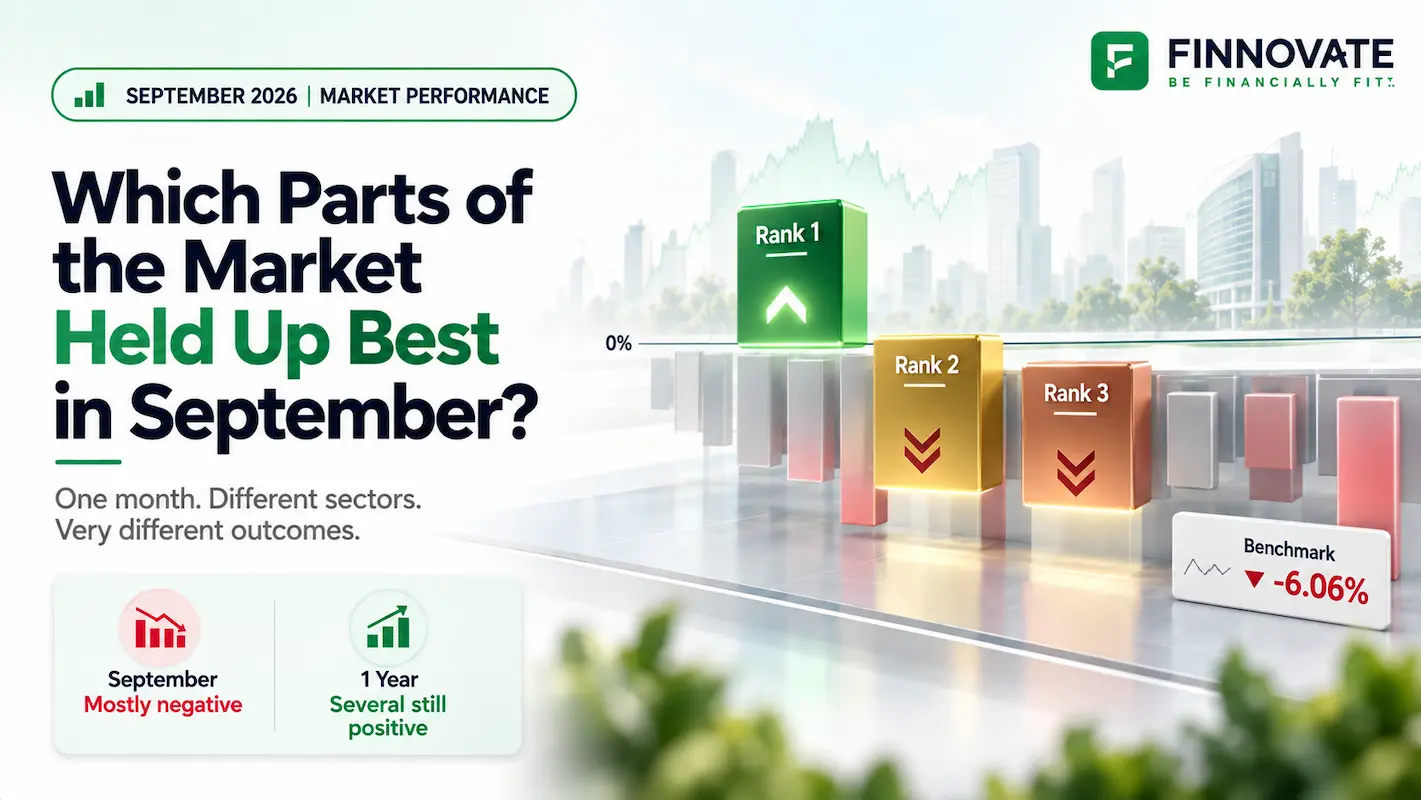
Compare 19 sector and thematic indices with Nifty 50 for September 2026, covering monthly ...

Understand the Growpital case, SEBI’s refund order, the LLP investment structure and wha...
Popular now

Learn how to easily download your NSDL CAS Statement in PDF format with our step-by-step g...

Looking for the best financial freedom books? Here’s a handpicked 2026 reading list with...
Learn what SIF investment means in India, SEBI rules, Rs 10 lakh minimum investment, avail...

Clear guide to mutual fund taxation in India for FY 2025–26 after July 2024 changes: equ...