
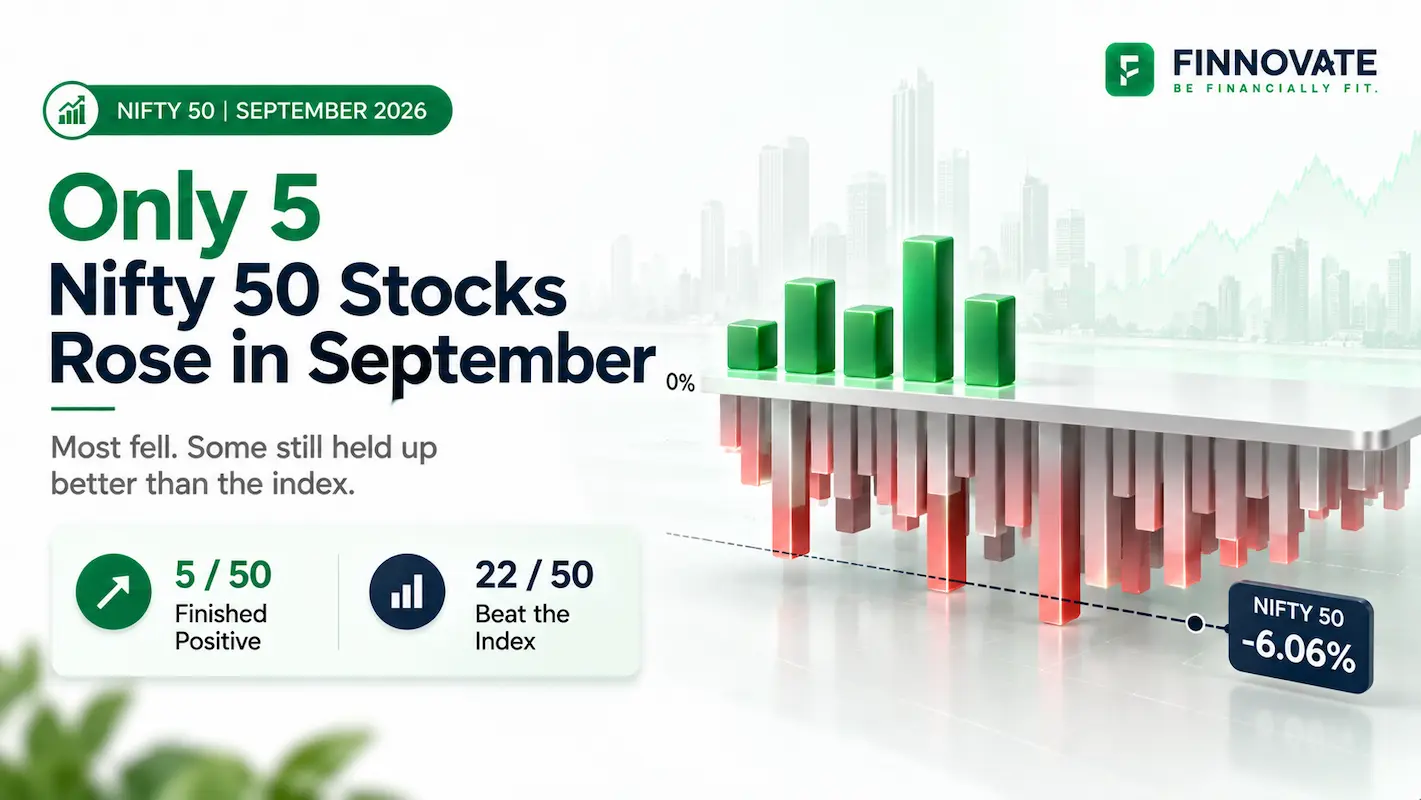
Top Performing Nifty 50 Stocks in September 2026
Only five Nifty 50 stocks rose in September 2026 as the index fell 6.06%. Compare monthly ...
08 October 2026
Hindustan Aeronautics Ltd (HAL) has been one of the biggest market surprises of the last five years. A PSU delivering 17× returns since mid-2020 isn’t something investors see often. The stock has compounded at an outstanding 69.17% CAGR, backed by rising defence orders and a strong “Make in India” push.
But now the conversation is shifting. The government is worried - not about HAL’s order book, but about something far more serious: execution capacity.
If India’s most important defence manufacturer can’t deliver on time, it becomes a national challenge, not just a corporate one.
Five years ago, few believed a PSU could outperform private-sector defence stocks. HAL proved everyone wrong. Backed by strong visibility, indigenous projects like Tejas, and India’s push to reduce imports, HAL became a market favourite.
But with great stock market success comes an obvious question - Can HAL now deliver on the massive order book it has built?
HAL’s latest Tejas order of ₹62,400 crore pushed its total order book to over ₹2,50,000 crore. On paper, that’s incredible. But the company’s annual sales growth tells a different story.
Despite a huge pipeline, HAL’s revenue has grown at just ~8% annually. There is a clear mismatch between inflow of orders and the company’s ability to execute them.
This slow execution is leading to:
With defence preparedness at stake, execution delays are no longer a minor operational issue - they have become a strategic concern.
Defence contracts work differently from regular business orders. Revenue isn’t recorded when HAL gets an order - it’s recorded when a project hits verifiable milestones.
That means: If HAL builds slower, it earns slower.
And when delivery timelines slip, the armed forces can impose penalties - which happened recently, dragging down HAL’s margins.
Execution delays are being driven by:

Even as new capacity comes online, HAL still depends heavily on foreign players like GE for critical components especially engines. That reliance weakens India’s indigenous defence ecosystem.
On manpower, the situation is equally challenging:
The issue isn’t short-term hiring. It is structural. To meet its growing commitments, HAL needs a deeper supply chain, faster capacity expansion, and enough skilled professionals to execute projects efficiently.
India’s vision of self-reliance in defence depends heavily on HAL. The government is committed to reducing imports and building domestic capability but that vision collapses if execution can’t keep pace.
Execution delays do more than hurt HAL’s revenue. They affect:
HAL's problem today is not a lack of orders. It’s the ability to deliver them on time.
Disclaimer: This article is for informational and educational purposes only and does not constitute investment advice. The discussion of HAL in this article is purely for information. It should not be interpreted as advice or a recommendation to invest. Always do your own research or consult a licensed professional before making investment decisions.
No spam. Only new posts, simple explainers, and practical money checklists for busy professionals.
Finnovate is a SEBI-registered financial planning firm that helps professionals bring structure and purpose to their money. Over 3,500+ families have trusted our disciplined process to plan their goals - safely, surely, and swiftly.
Our team constantly tracks market trends, policy changes, and investment opportunities like the ones featured in this Weekly Capsule - to help you make informed, confident financial decisions.
Learn more about our approach and how we work with you:
No comments yet. Start the conversation. What would you add?
No spam. Only new posts, simple explainers, and practical money checklists.
You may also like
Only five Nifty 50 stocks rose in September 2026 as the index fell 6.06%. Compare monthly ...

Why did hospital stocks fall after Supreme Court scrutiny of medicine prices? Understand d...
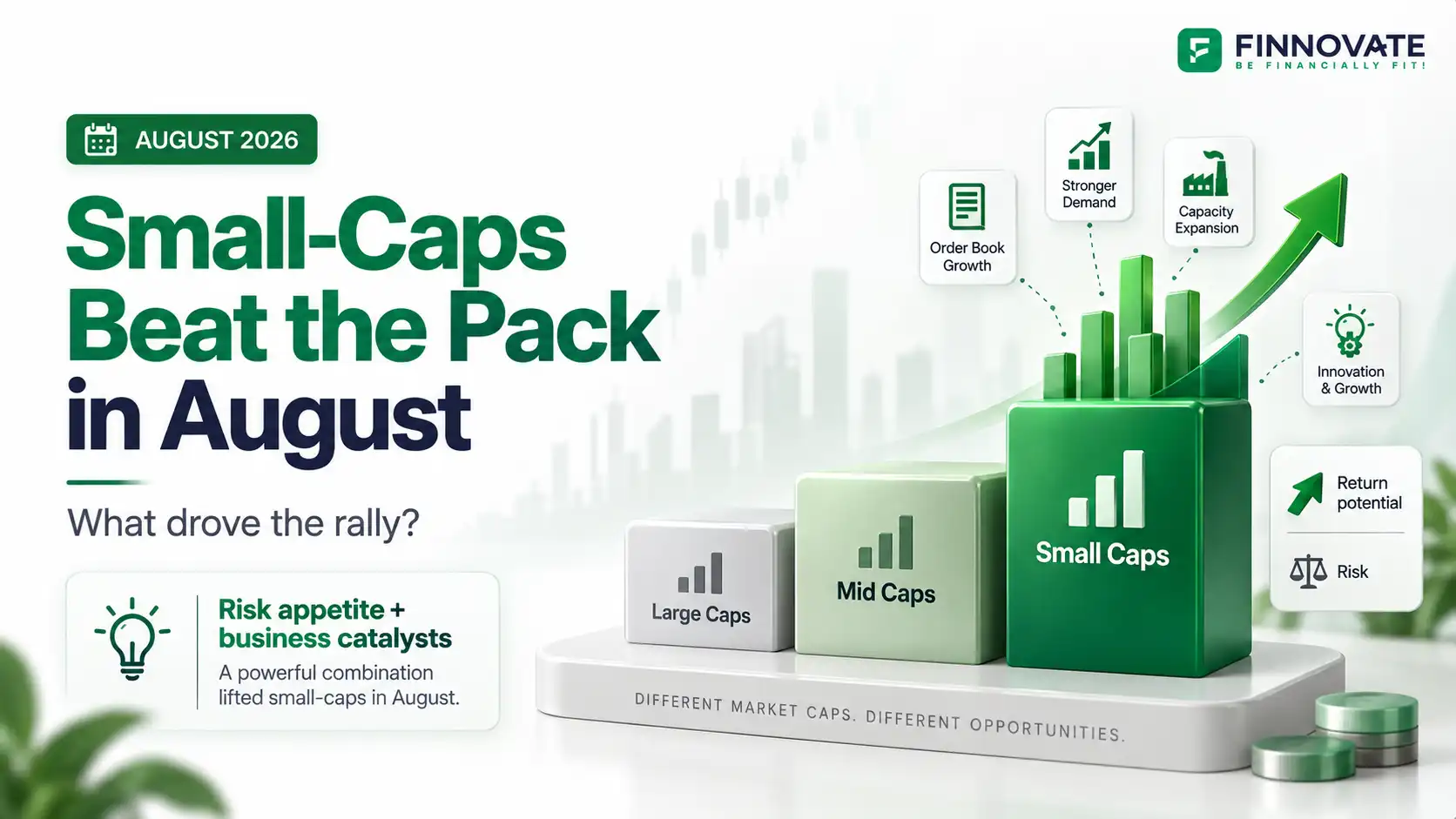
Nifty Smallcap 100 rose 3.16% in August 2026. See which small-cap stocks led, what drove t...

Nifty Midcap 100 rose 2.15% in August 2026. See which mid-cap stocks led the rally, key se...
Popular now
Learn how to easily download your NSDL CAS Statement in PDF format with our step-by-step g...

Looking for the best financial freedom books? Here’s a handpicked 2026 reading list with...
Learn what SIF investment means in India, SEBI rules, Rs 10 lakh minimum investment, avail...

Clear guide to mutual fund taxation in India for FY 2025–26 after July 2024 changes: equ...