

Why the AI Boom Could Make Your Next Phone More Expensive
AI demand is pushing up memory chip prices. Here's why the shortage could make smartphones...
08 October 2026
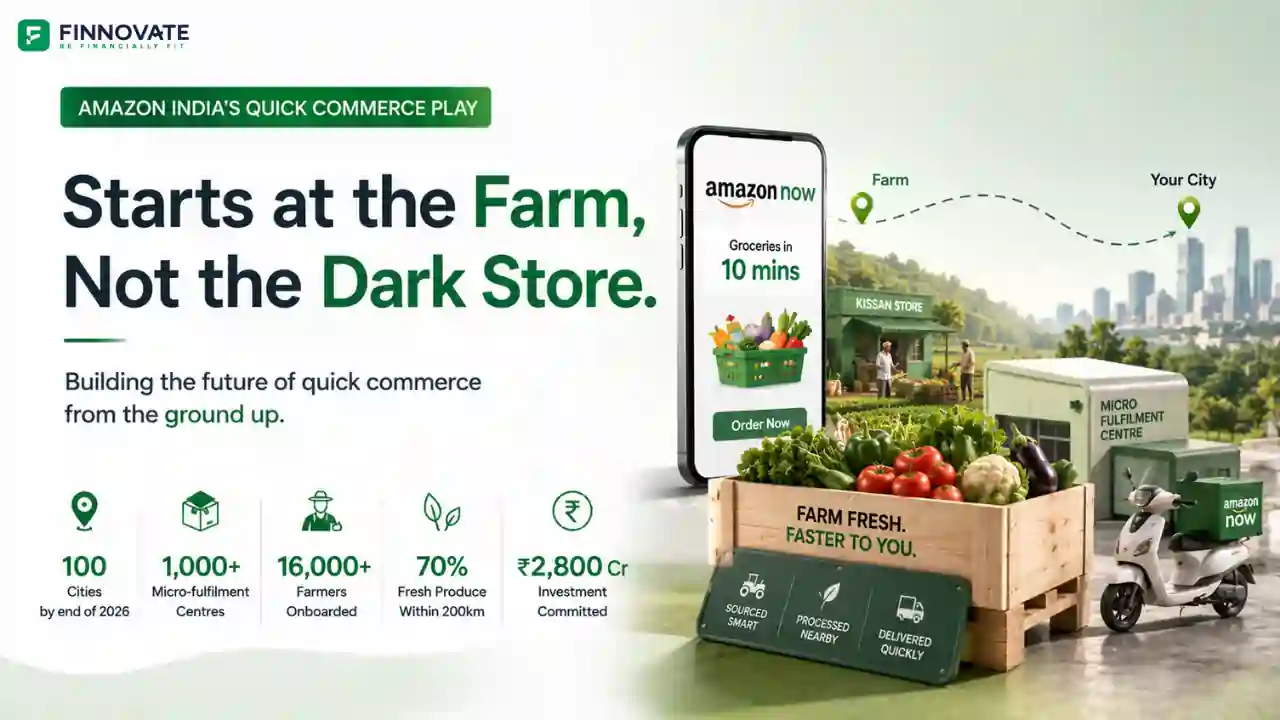
India's quick commerce market hit ₹11,000 crore in GMV in January 2026, growing 100% year-on-year with 7.8 million daily orders. Blinkit, Zepto, and Swiggy Instamart got there first and built their positions around dark stores (warehouses close to the customer, designed for speed). Amazon India arrived late. But rather than replicating the dark store race, it is building the supply chain from the other end: the farm.
Quick read
There is an anecdote that circulates in Indian retail circles about Mukesh Ambani's early thinking on Reliance Retail. Before the business launched, the argument made to him was that for food and groceries in India, the back-end is the real competitive advantage. Procurement, not delivery speed, would determine margin and quality. Reliance Retail followed that logic in building its supply chain. Amazon India is now taking a version of the same thesis and applying it specifically to quick commerce at scale.
The insight is structural. Dark stores solve a proximity problem: they position inventory close enough to the customer to enable ten-to-twenty-minute delivery. But dark stores do not solve the supply chain problem. If the inventory flowing into those dark stores is expensive, poor quality, or inconsistent, the customer experience degrades regardless of delivery speed. In fresh produce especially, where shelf life is measured in hours and days, the supply chain upstream of the dark store matters as much as the dark store itself.
The first tier of Amazon's procurement model operates through Kissan Stores, a network of farmer-facing centres where farmers can buy agricultural inputs (seeds, crop protection products) and sell their produce directly to Amazon. Produce is graded scientifically on the spot, and farmers are paid at prices linked to local APMC (Agricultural Produce Market Committee) rates, with payment into bank accounts within four hours. Amazon operates these collection centres near sourcing regions; Maharashtra alone has ten, with additional infrastructure across Tamil Nadu, Karnataka, Himachal Pradesh, Rajasthan, Haryana, and Bihar. The model bypasses traditional mandi intermediaries, removing one layer of markup and time from the supply chain.
From the collection centres, produce moves to Light Processing Centres where it undergoes sorting by size, colour, and consistency, cleaning, weighing, and pre-packaging. This is the quality control layer. Amazon also provides agronomy services at the farm level: ML-based crop planning, real-time weather updates, and agronomic guidance that are designed to improve yield quality at source, not just after the fact. Cold-chain logistics connect the processing centres to the wider network, maintaining temperature integrity for perishables through transit. Currently 70% of fresh produce is sourced within 200 kilometres of its final delivery point, which reduces both transit time and temperature stress on the produce.
The processed, packaged produce feeds into Amazon's urban micro-fulfilment centres, from which Amazon Now delivers in minutes. Currently operational in Delhi-NCR, Mumbai, and Bengaluru with approximately 300 centres, the plan is to scale to 1,000+ centres across 100 cities by the end of 2026, including Pune, Hyderabad, Chennai, Kolkata, Jaipur, Lucknow, and fifteen other cities. This is the customer-facing end of the chain, using the same model as Blinkit and Zepto. The difference is what sits behind it: a vertically integrated farm procurement network, not third-party wholesale sourcing.
| Platform | Dark stores / MFCs | Cities | Farm sourcing model |
|---|---|---|---|
| Blinkit (Eternal) | 2,243 dark stores | 200+ | Third-party wholesale and direct; no farm-level procurement at scale |
| Swiggy Instamart | 1,143 dark stores | 129 | Third-party wholesale predominantly |
| Zepto | ~700 dark stores | ~70 | Third-party wholesale predominantly |
| Amazon Now | ~300 MFCs (scaling to 1,000+) | 3 cities (scaling to 100) | 16,000+ direct farmer partners; 70% within 200km of delivery |
Targeted increase in farm-sourced produce by end of 2026 versus 2025, through sellers on Amazon Now
Amazon India investment announced April 2026 for infrastructure, associates, and Amazon Now expansion
Increase in shopping frequency among Prime members after adopting Amazon Now, per Amazon India
Dark stores are a delivery solution. What Amazon is building is a supply chain solution that happens to enable fast delivery. The distinction matters because supply chain control is harder to replicate than adding more dark stores, and because fresh produce margins depend more on procurement efficiency than delivery cost. The risk is that Amazon is building a vertically integrated infrastructure in a market where the dark store leaders already have a significant city and store count head start. The counter-argument is that those leaders built their positions primarily on capital and speed, not on supply chain control, and that supply chain control is the moat that makes quick commerce structurally profitable rather than perpetually subsidised. That is the bet Amazon India is making with this farm-first model, and it is a structurally differentiated one in a market that has largely competed on the same playbook so far.
Quick commerce, rural commerce, and farm-to-fork supply chains are reshaping how India's ₹100 lakh crore consumer economy works. The FinnFit Financial Fitness Test takes 3 minutes and shows how your portfolio is positioned across India's growth story.
Take the FinnFit TestAmazon Now is Amazon India's quick commerce service, delivering groceries and daily essentials in ten to thirty minutes through a network of micro-fulfilment centres. Amazon Fresh is Amazon's broader online grocery service covering a wider range of cities and products with same-day or next-day delivery. Both services share the same farm sourcing and processing infrastructure, which allows Amazon to spread supply chain investment across multiple formats. Amazon Now was launched in mid-2025 and is the faster-delivery, smaller-basket service aimed at competing with Blinkit, Zepto, and Swiggy Instamart.
Buying directly from farmers removes at least one layer of intermediary markup, reduces transit time between farm and store, and gives Amazon better control over quality grading at the source. For fresh produce specifically, fewer handoffs between farm and consumer means less spoilage and more consistent quality. Amazon also gains better visibility into supply volumes, which improves demand forecasting and inventory management. The 70% within-200km sourcing rule further reduces cold chain transit stress. For farmers, the benefit is payment speed (within four hours) and price transparency (APMC-linked rates displayed at the collection centre).
By current dark store count and city coverage, Amazon Now is the smallest of the four major quick commerce players. Blinkit operates 2,243 dark stores across 200+ cities; Swiggy Instamart has 1,143 stores in 129 cities. Amazon Now currently operates approximately 300 micro-fulfilment centres in three cities (Delhi-NCR, Mumbai, Bengaluru), targeting 1,000+ centres across 100 cities by end of 2026. The gap is significant in the short term. Amazon's differentiation case is that its farm-sourcing model provides a supply chain advantage that dark store count alone does not.
Kissan Stores are Amazon's farmer-facing collection centres where farmers can buy agricultural inputs and sell produce directly to Amazon at scientifically graded, APMC-linked prices, with payment within four hours. From there, produce moves to Light Processing Centres, intermediate facilities where it undergoes sorting by size and colour, cleaning, weighing, and pre-packaging before entering the fulfilment network. Together, these two layers sit between the farm and the urban micro-fulfilment centres, standardising quality and reducing transit time before produce reaches the customer.
Quick commerce has been largely loss-making for most players, subsidised by investor capital as platforms compete for market share. Amazon's thesis is that controlling the supply chain from the farm reduces the two largest cost drivers in fresh produce quick commerce: procurement cost (by removing intermediary markups) and spoilage (by reducing transit time and improving quality control at source). Whether this structural advantage is large enough to change the unit economics of quick commerce at scale is unproven at this stage. Amazon's own track record in Indian e-commerce suggests it will invest significantly before expecting profitability, consistent with its global approach to new market verticals. Please consult a SEBI-registered investment adviser before making any investment decision related to companies referenced in this article.
Disclaimer: This article is for general information and educational purposes only. It does not constitute investment advice, a recommendation, or an offer to buy or sell any securities or financial instruments. All data referenced is from Amazon India's official announcements (April 27, 2026) and publicly available news reporting from Business Today, Outlook Business, Financial Express, and Business India as cited. Quick commerce market GMV and competitor dark store figures are from Redseer (via Business Today, May 2026) and company announcements. Forward-looking targets (100 cities, 1,000 micro-fulfilment centres, 6x farm sourcing) are Amazon India's stated goals and are not guaranteed to be achieved. Please consult a SEBI-registered investment adviser before making any investment decision.
No spam. Only new posts, simple explainers, and practical money checklists for busy professionals.
Finnovate is a SEBI-registered financial planning firm that helps professionals bring structure and purpose to their money. Over 3,500+ families have trusted our disciplined process to plan their goals - safely, surely, and swiftly.
Our team constantly tracks market trends, policy changes, and investment opportunities like the ones featured in this Weekly Capsule - to help you make informed, confident financial decisions.
Learn more about our approach and how we work with you:
No comments yet. Start the conversation. What would you add?
No spam. Only new posts, simple explainers, and practical money checklists.
You may also like
AI demand is pushing up memory chip prices. Here's why the shortage could make smartphones...
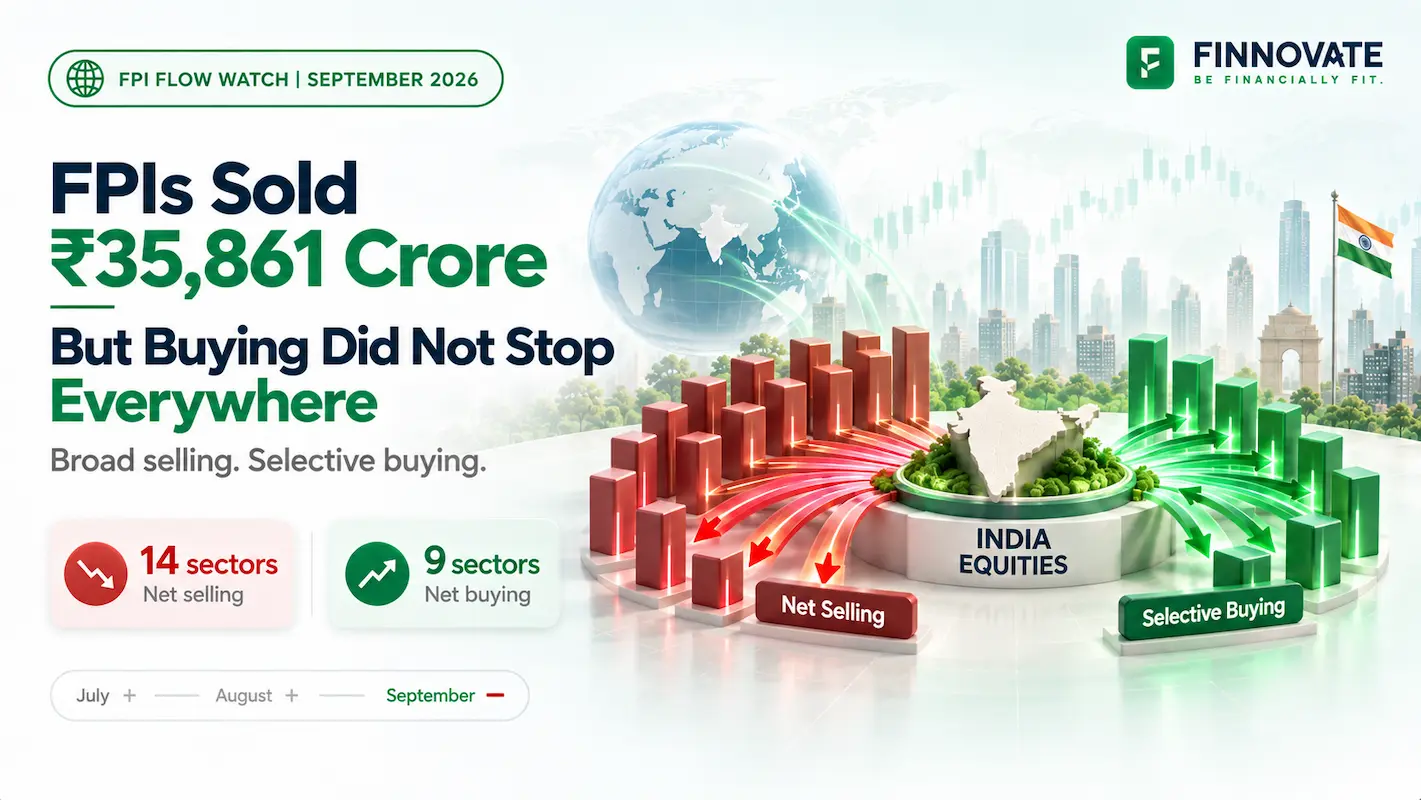
FPIs sold ₹35,861 crore in Indian equities in September 2026. See which sectors saw outf...
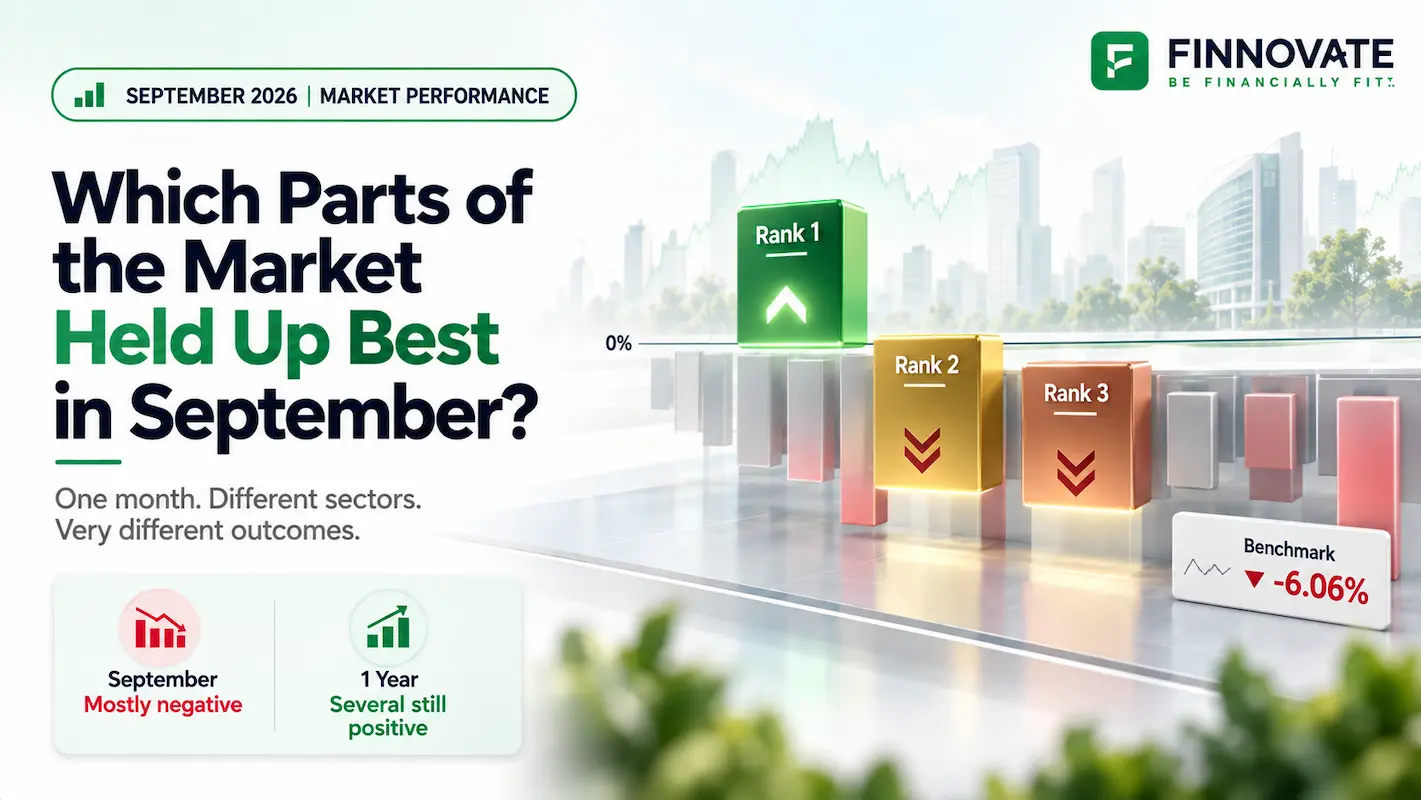
Compare 19 sector and thematic indices with Nifty 50 for September 2026, covering monthly ...

Understand the Growpital case, SEBI’s refund order, the LLP investment structure and wha...
Popular now
Learn how to easily download your NSDL CAS Statement in PDF format with our step-by-step g...

Looking for the best financial freedom books? Here’s a handpicked 2026 reading list with...
Learn what SIF investment means in India, SEBI rules, Rs 10 lakh minimum investment, avail...
Clear guide to mutual fund taxation in India for FY 2025–26 after July 2024 changes: equ...