

The Great Economic Decoupling of 2026: Oil, AI & India
Rising oil prices and booming AI investment are shaping an uneven global economy in 2026. ...
24 October 2026
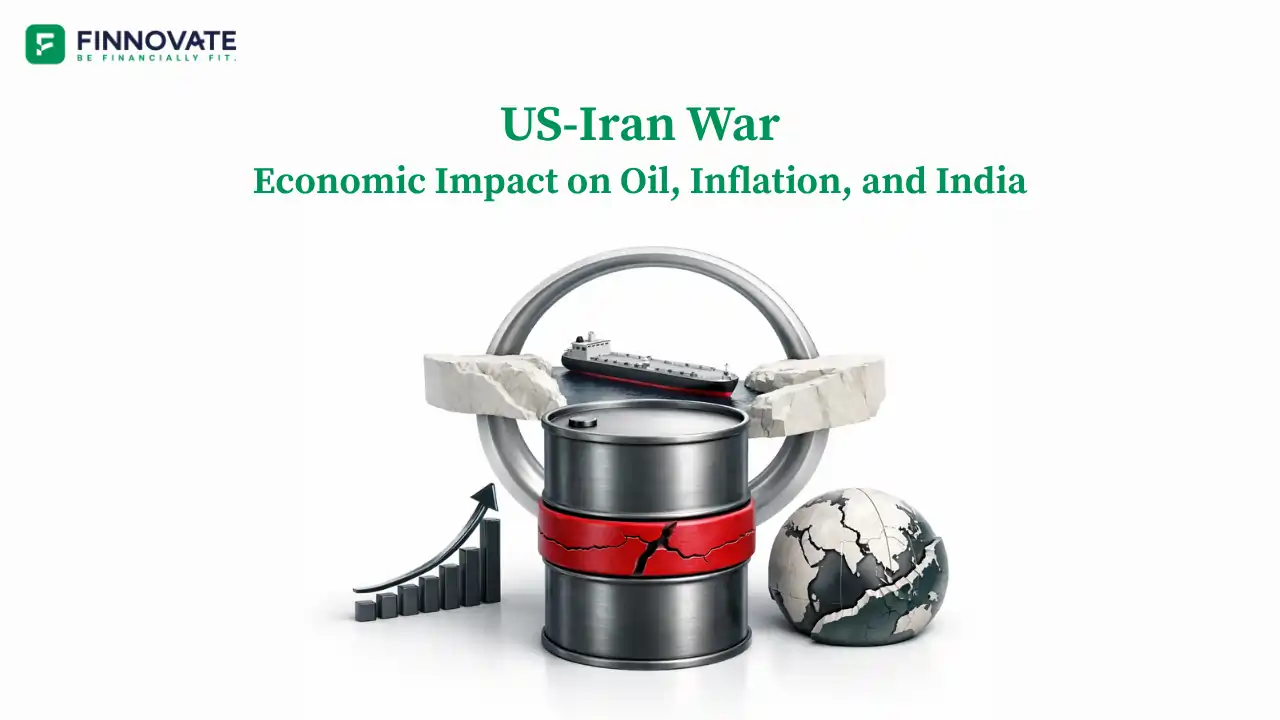
The war that began on February 28, 2026, when the US and Israel launched air strikes on Iran, has now entered its most uncertain phase. A two-week ceasefire brokered by Pakistan was announced on April 8. Islamabad talks between the US and Iran then collapsed on April 12 after 21 hours of negotiations, with US Vice President JD Vance declaring no deal was reached. As of April 13, the US has announced a naval blockade of Iranian ports. The ceasefire is fragile, the talks have stalled, and oil prices remain elevated well above pre-war levels.
This article examines why this war, despite the failed negotiations, cannot continue indefinitely, why every party involved has strong incentives to end it, and what a post-war settlement could mean for global oil markets, inflation, and India.
Iran's most consequential strategic move was not a military strike. It was closing the Strait of Hormuz.
Approximately one-fifth of the world's oil supply passes through the Strait. Iran understood that it did not need to sink every vessel. It only needed to raise the perceived risk of attack high enough that no shipping company would take the chance with cargo worth hundreds of millions of dollars. The tactic worked.
The economic transmission was immediate. Iran also lost track of mines it planted in the Strait, requiring a US naval operation to begin clearing them. Even after the April 8 ceasefire, the Strait has not fully reopened, and today's announced naval blockade of Iranian ports adds a new layer of disruption.
The conflict's economic footprint extends well beyond the oil price headline.
March 2026 CPI data from the Bureau of Labor Statistics confirmed the transmission. The annual inflation rate jumped from 2.4% in February to 3.3% in March, the highest since May 2024. Energy drove the move: gasoline surged 21.2% in a single month.
Crucially, core CPI (excluding food and energy) remained at 2.6%. The inflation is an energy supply shock, not broad demand-driven inflation. That distinction matters for how the Federal Reserve responds and how quickly prices can normalise once the Strait reopens.
| Indicator | Jan 2026 | Feb 2026 | Mar 2026 |
|---|---|---|---|
| US CPI (YoY) | 2.4% | 2.4% | 3.3% |
| Core CPI (YoY) | 2.5% | 2.5% | 2.6% |
| Energy CPI (YoY) | Negative | 0.5% | 12.5% |
| Gasoline (Monthly) | Flat | +0.8% | +21.2% |
| Brent Crude (approx.) | ~$70/bbl | ~$70/bbl | ~$118/bbl |
Iran's attacks on UAE, Saudi Arabia, Oman, Bahrain, and Qatar, including strikes on Saudi Aramco's Abqaiq processing facility, disrupted oil and petrochemical production across the Gulf. The consequences run through supply chains for fertilisers, plastics, and industrial chemicals that underpin manufacturing across Asia, Europe, and North America.
The fertiliser disruption is particularly significant for South and Southeast Asian agriculture. Gulf gas and petrochemical inputs are essential raw materials for nitrogen-based fertilisers. Ahead of the monsoon season, production shortfalls are already creating supply gaps that could persist beyond any ceasefire.
Despite the failed Islamabad talks, each party's underlying incentives point toward eventual resolution. None of the three can sustain the current situation indefinitely.
The Islamabad talks collapsed on the core sticking points: Iran's nuclear programme, Hormuz sovereignty, war reparations, and the Lebanon conflict. None are easily resolved. But the structure of a deal is visible.
The US and Israel will claim strategic victory, pointing to military gains including the degradation of Iran's nuclear programme and military capability. Iran will seek economic and diplomatic recognition: war reparations, some form of recognised authority over the Strait of Hormuz, sanctions relief, and a regional ceasefire that includes Lebanon.
Iran's demand for Hormuz recognition is consistent with a transit levy model. If Iran secures some form of maritime authority over the Strait, a modest per-barrel or per-vessel levy becomes economically manageable for global oil buyers compared to the alternative of continued closure. For oil-importing nations, a predictable transit cost is far preferable to price volatility and supply uncertainty.
Prices are unlikely to return to pre-war levels immediately. Damaged infrastructure, mines to be cleared, and the resumption of normal shipping patterns could take several months to normalise. A new, higher medium-term price equilibrium appears probable. J.P. Morgan Private Bank has described the current situation as potentially the "largest oil supply shock in post-World War II history" if a durable settlement is not reached.
India sits at the intersection of every pressure point in this conflict. The economic exposure is direct and multiple:
India has more to gain from a swift resolution than almost any other large emerging economy. As a major oil importer with no direct stake in the conflict's political outcome, its interest is unambiguously in a durable ceasefire and the reopening of the Strait.
Please consult a SEBI-registered investment adviser before making any financial decisions linked to geopolitical developments.
A two-week ceasefire brokered by Pakistan was announced on April 8, 2026. Peace talks in Islamabad on April 11-12 ended without an agreement after 21 hours of negotiations. The US announced a naval blockade of Iranian ports effective April 13. The ceasefire remains fragile and the conflict unresolved as of the time of writing.
Iran used the Strait as its primary strategic pressure point because approximately one-fifth of global oil supply passes through it. By escalating the risk of attack rather than blocking every vessel, Iran forced shipping companies to reroute or halt voyages, triggering a global oil price shock that transmitted quickly to consumer inflation across the US, Europe, and Asia.
Brent crude rose from approximately $70 per barrel before the war to over $118 by late March 2026. US CPI jumped from 2.4% in February to 3.3% in March, driven by a 21.2% monthly surge in gasoline prices. Core inflation remained at 2.6%, confirming the inflation is an energy supply shock rather than broad demand-driven price pressure.
India imports over 85% of its crude oil and is directly exposed to high energy prices through a wider current account deficit, rupee weakness, and higher retail inflation. Fertiliser supply chains have also been disrupted, affecting agricultural input availability ahead of the kharif season. The RBI's FY27 inflation forecast of 4.6% already factors in elevated crude assumptions.
A settlement is likely to involve the US and Israel claiming military gains while Iran secures economic and diplomatic recognition, including some form of Hormuz authority, war reparations, and sanctions relief. Oil supply normalisation could take several months even after a formal agreement, and a higher medium-term oil price equilibrium appears probable. Please consult a SEBI-registered investment adviser before making any financial decisions linked to geopolitical developments.
Disclaimer: This article is for general information and educational purposes only. It does not constitute investment advice, a recommendation, or an offer to buy or sell any securities or financial instruments. Geopolitical developments, oil price data, and macroeconomic figures referenced in this article are based on publicly available sources and Finnovate Research, and are subject to rapid change given the evolving nature of the conflict. Past market behaviour during geopolitical events is not indicative of future outcomes. Investors should not make any financial decision based solely on this article. Please consult a SEBI-registered investment adviser or qualified financial professional before making any investment decision. All investments are subject to market risks.
No spam. Only new posts, simple explainers, and practical money checklists for busy professionals.
Finnovate is a SEBI-registered financial planning firm that helps professionals bring structure and purpose to their money. Over 3,500+ families have trusted our disciplined process to plan their goals - safely, surely, and swiftly.
Our team constantly tracks market trends, policy changes, and investment opportunities like the ones featured in this Weekly Capsule - to help you make informed, confident financial decisions.
Learn more about our approach and how we work with you:
No comments yet. Start the conversation. What would you add?
No spam. Only new posts, simple explainers, and practical money checklists.
You may also like
Rising oil prices and booming AI investment are shaping an uneven global economy in 2026. ...

Explore FPI equity flows for October First Half, 2026: ₹47,955 crore in net outflows, th...
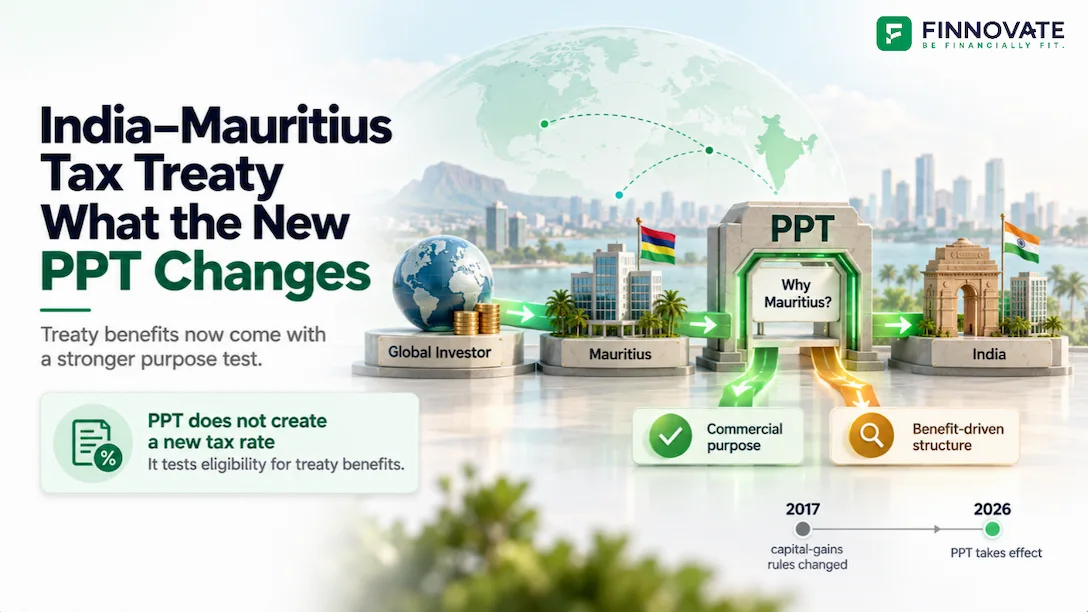
Understand the India–Mauritius tax treaty’s Principal Purpose Test, its August 2026 ef...

Explore India’s AI hardware opportunity through the proposed Adani–Jabil venture, from...
Popular now

Learn how to easily download your NSDL CAS Statement in PDF format with our step-by-step g...

Looking for the best financial freedom books? Here’s a handpicked 2026 reading list with...
Learn what SIF investment means in India, SEBI rules, Rs 10 lakh minimum investment, avail...

Clear guide to mutual fund taxation in India for FY 2025–26 after July 2024 changes: equ...