

Tax Planning and Benefits for Married Couples in India: 2026 Guide
Tax planning for married couples in India explained for 2026. Compare tax regimes, deducti...
05 September 2026

Finnovate’s editorial team researches and creates financial content using trusted sources, regulatory references and inputs from subject experts.

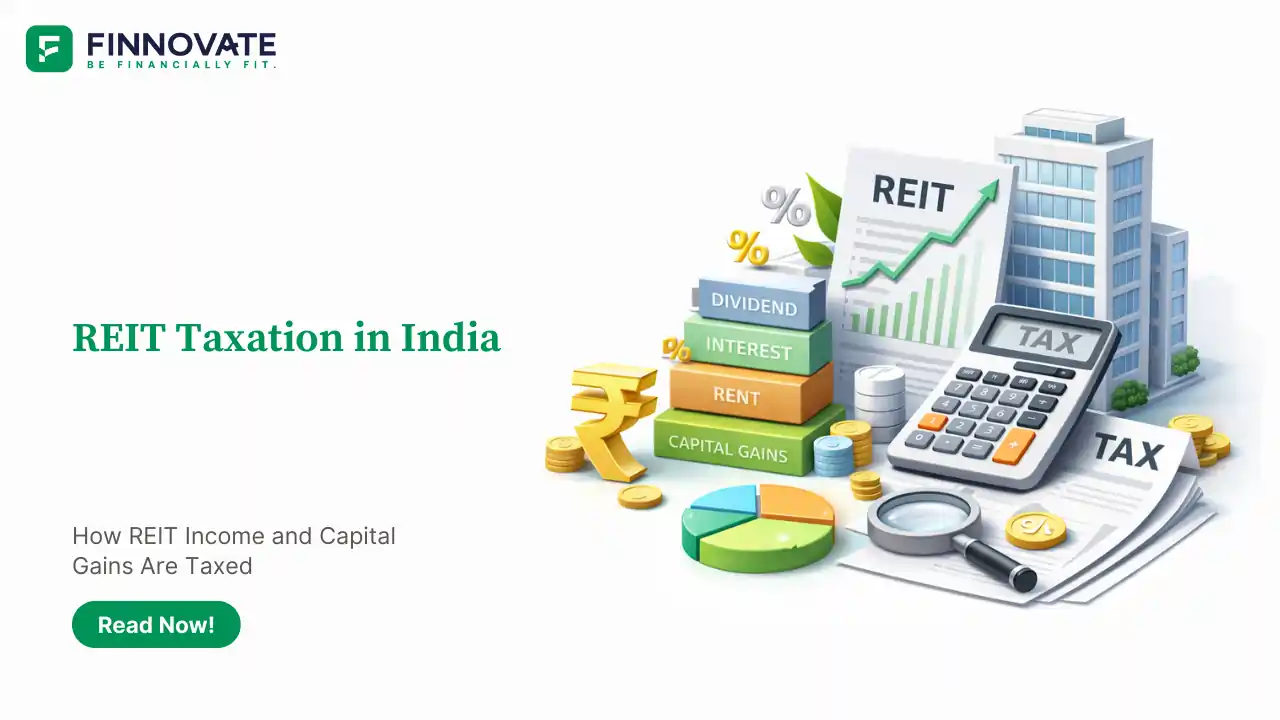
REITs have opened up a part of the real estate market that most individual investors could not access easily before. Instead of buying and managing a commercial property directly, investors can buy listed REIT units and participate in the cash flows generated by those assets.
But REIT taxation is not a single rule. A REIT payout can contain dividend, interest, rent, or repayment of debt. Capital gains on sale of REIT units are separate again. This guide breaks down REIT taxation in India using the current framework for FY 2025-26.
Table of Contents
A REIT (Real Estate Investment Trust) is a SEBI-regulated business trust that pools investor money into income-generating real estate assets. It may hold assets directly or through a holding company and SPV (Special Purpose Vehicle) structure. Listing is mandatory, so investors can buy and sell REIT units on stock exchanges.
REITs are often described as the real-estate equivalent of a fund structure. Investors get access to professionally managed real estate without dealing with tenants, property registration, or large ticket sizes. Because income flows through multiple layers (REIT to SPV to property), the tax treatment of each distribution depends on both its nature and the SPV's own tax position.
Yes, but through different rules for different components. A REIT unit holder may receive dividend, interest, rent, repayment of debt, and capital gains when units are sold. Each of these can have a different tax treatment. Looking only at the total amount credited to an account misses the actual tax position. The annual distribution break-up is what matters.
Dividend taxation depends on the structure below the REIT, specifically whether the SPV through which the REIT holds its assets has opted for the concessional tax rate regime under Section 115BAA.
| SPV Tax Position | Dividend Treatment in Investor's Hands |
|---|---|
| SPV has opted for Section 115BAA (concessional 22% rate) | Dividend is taxable in the investor's hands at applicable slab rate |
| SPV has not opted for Section 115BAA (taxed at normal company rate) | Dividend can be exempt in the investor's hands under the pass-through framework |
REIT dividend is not always taxable and not always exempt. The SPV's tax election is what decides. This is disclosed in the REIT's annual distribution statement and tax FAQ documents, which listed REITs are required to publish.
Interest distributed by a REIT is generally taxable in the investor's hands at the applicable slab rate under the pass-through framework. This applies regardless of the SPV's tax election.
The tax treatment of rental income depends on how the REIT holds the property. Where the REIT directly owns the underlying property, the rental distribution is taxable as rental income in the investor's hands. Where the REIT holds property through an SPV, the distribution from that SPV reaches the investor as dividend rather than rent, and the dividend rules (including the Section 115BAA test) apply instead.
In practice, reading each component separately in the distribution statement rather than treating the full payout as a single type of income is the correct approach. Interest, rent, and dividend can all appear in the same REIT distribution cycle but do not necessarily follow the same tax rule. For return reporting, always follow the component classification as stated in the REIT's own tax and distribution statement for that cycle.
This is one of the least understood parts of REIT taxation and one that changed significantly from Finance Act 2023.
Before Finance Act 2023, repayment of debt or amortization from business trusts was commonly treated as a tax-free capital return by many investors. The Finance Act 2023 closed this by inserting Section 56(2)(xii), which brings a "specified sum" received by a unit holder from a business trust into taxable income under the head Income from Other Sources.
TDS on REIT distributions is governed by Section 194LBA. The applicable thresholds were revised upward from FY 2025-26 following Budget 2025.
| Distribution Component | TDS Rate (Resident) | TDS Rate (Non-Resident) |
|---|---|---|
| Interest income from SPV | 10% (no minimum threshold. TDS applies on all amounts) | 5% |
| Dividend (where taxable under Section 115BAA) | 10% (no minimum threshold) | 10% |
| Rental income (direct property) | 10% (no minimum threshold) | Rates in force or DTAA rate |
TDS deducted is a credit against total tax liability and must be reconciled at ITR filing time. The gross distribution amount before TDS must be reported in the return. Non-resident unit holders may benefit from lower rates under applicable DTAA provisions, subject to documentation including Form 10F and Tax Residency Certificate.
Capital gains tax applies when listed REIT units are sold on the stock exchange. This is entirely separate from the tax on periodic distributions. The holding period for listed business trust units was reduced to 12 months (from 36 months) effective July 23, 2024.
Where listed REIT units are sold within 12 months and the required STT conditions are met, STCG is taxed at 20% under Section 111A, plus applicable surcharge and cess. The 20% rate applies to transfers on or after July 23, 2024.
For REIT units held more than 12 months, the applicable capital gains section depends on the financial year.
| Capital Gain Type | Holding Period | FY 2025-26 | From FY 2026-27 |
|---|---|---|---|
| STCG on listed REIT units | 12 months or less | 20% under Section 111A | 20% under Section 111A |
| LTCG on listed REIT units | More than 12 months | 12.5% under Section 112 (no ₹1.25 lakh exemption) | 12.5% under Section 112A (₹1.25 lakh annual exemption applies) |
This means REITs now sit close to equity-style capital gains treatment, but distribution income remains component-based and is not affected by this framework.
An investor receives the following from a listed REIT during FY 2025-26 and also sells units after 14 months.
| Component | Amount | Tax Treatment (FY 2025-26) |
|---|---|---|
| Interest distribution | ₹18,000 | Taxable at investor's slab rate; TDS at 10% applies above ₹10,000 threshold |
| Dividend distribution | ₹12,000 | Taxable at slab rate if SPV opted for Section 115BAA; exempt if not |
| Rental distribution (direct property) | ₹8,000 | Taxable as rental income at slab rate |
| Repayment of debt ("specified sum") | ₹10,000 | Taxable under Section 56(2)(xii) to the extent of profit element per formula |
| Capital gain on sale after 14 months | ₹1,80,000 | LTCG at 12.5% under Section 112 (no ₹1.25 lakh exemption for FY 2025-26) |
This example illustrates why REIT taxation cannot be reduced to one sentence. One investor can receive five different kinds of tax treatment from the same holding in the same financial year.
REIT distributions involve multiple components that each need separate treatment in your ITR. Our advisory team can help you map the distribution statement correctly before you file.
Book a Tax Planning CallThe total payout figure shown in a broker account or bank credit is not sufficient for tax reporting. The year-end distribution statement published by the REIT (and the accompanying tax FAQ document) identifies how much of the payout was interest, dividend, rent, repayment of debt, or other components.
Each component may need different treatment in the ITR. The correct head of income and the applicable tax rate depend on what the component is. Many listed Indian REITs publish detailed distribution tax FAQs at the time of each payout cycle, which set out the component break-up and the applicable tax treatment for that cycle.
| Mistake | What Actually Applies |
|---|---|
| Assuming all REIT payouts are dividends | A REIT distribution can contain interest, dividend, rent, and repayment of debt. Each component is different |
| Assuming the full REIT distribution is tax-free | Interest and rent are generally taxable. Dividend depends on the SPV's 115BAA election. Debt repayment may be taxable under Section 56(2)(xii) |
| Confusing tax on distributions with tax on sale of units | These are two separate tax events. Distributions are taxed based on component type. Sale of units creates capital gains under Section 111A or 112 |
| Ignoring whether the SPV has opted for Section 115BAA | This determines whether dividend is taxable or exempt. Disclosed in the REIT's distribution tax FAQ documents each cycle |
| Assuming repayment of debt has no tax relevance | Finance Act 2023 inserted Section 56(2)(xii) to tax the profit element of debt repayment distributions from business trusts |
| Assuming the ₹1.25 lakh LTCG exemption applies to REIT units in FY 2025-26 | For FY 2025-26, LTCG on listed REIT units is under Section 112, not Section 112A. The ₹1.25 lakh annual exemption under Section 112A does not apply. This changes from FY 2026-27 when the Section 115UA amendment takes effect |
| Reporting net distribution (after TDS) instead of gross amount | Always report gross distribution in the relevant income schedule. TDS is claimed as a credit in the return |
No. Some components can be taxable. The answer depends on whether the distribution is interest, dividend, rent, or repayment of debt. Interest and rent are generally taxable. Dividend depends on the SPV's tax election. Repayment of debt may also be partly taxable after Finance Act 2023.
No. It depends on whether the SPV has opted for the concessional rate under Section 115BAA. If the SPV opted in, the dividend is taxable at slab rate. If the SPV has not opted in and is taxed at the normal company rate, the dividend can be exempt in the unit holder's hands.
Yes. Interest distributed by a REIT is generally taxable in the investor's hands at the applicable slab rate under the pass-through framework.
For listed business trust units, the long-term holding period is more than 12 months, following the reduction from 36 months effective July 23, 2024.
Where Section 111A conditions are met (sold through recognised exchange with STT paid, held 12 months or less), the base rate is 20%, plus applicable surcharge and cess, for transfers on or after July 23, 2024.
For FY 2025-26, the ₹1.25 lakh annual LTCG exemption under Section 112A does not apply to REIT units. LTCG on listed REIT units for FY 2025-26 is taxed at 12.5% under Section 112 without that exemption. An amendment to Section 115UA adding the reference to Section 112A takes effect from FY 2026-27, at which point the exemption will apply. Please consult a qualified Chartered Accountant to confirm the applicable treatment for your specific situation.
No. Sale of units creates capital gains tax under Section 111A or Section 112 depending on holding period. Periodic distributions are taxed based on the nature of each component: interest, dividend, rent, or debt repayment. These are two separate tax events with different rules.
TDS under Section 194LBA applies. Unlike many other TDS sections, Section 194LBA has no minimum threshold. TDS applies on all amounts distributed, irrespective of size. For resident unit holders, TDS at 10% applies on interest, taxable dividend, and rental income. For non-resident unit holders, TDS at 5% applies on interest and 10% on dividend, subject to applicable DTAA rates with proper documentation.
Disclaimer: This article is for general information and educational purposes only. It does not constitute investment advice, a recommendation, or an offer to buy or sell any REIT units or securities. REIT tax rules described here are based on the Income Tax Act, 1961 as amended, applicable for FY 2025-26 (AY 2026-27). The Section 112A amendment to Section 115UA takes effect from FY 2026-27 and is not yet in force for FY 2025-26 returns. Distribution components, SPV tax elections, and applicable rates may vary by REIT and may change in subsequent budgets or notifications. Please consult a qualified Chartered Accountant or tax professional before making any tax filing decision, and a SEBI-registered investment adviser for investment decisions.
No spam. Only new posts, simple explainers, and practical money checklists for busy professionals.
Finnovate is a SEBI-registered financial planning firm that helps professionals bring structure and purpose to their money. Over 3,500+ families have trusted our disciplined process to plan their goals - safely, surely, and swiftly.
Our team constantly tracks market trends, policy changes, and investment opportunities like the ones featured in this Weekly Capsule - to help you make informed, confident financial decisions.
Learn more about our approach and how we work with you:
No comments yet. Start the conversation. What would you add?
No spam. Only new posts, simple explainers, and practical money checklists.
You may also like
Tax planning for married couples in India explained for 2026. Compare tax regimes, deducti...
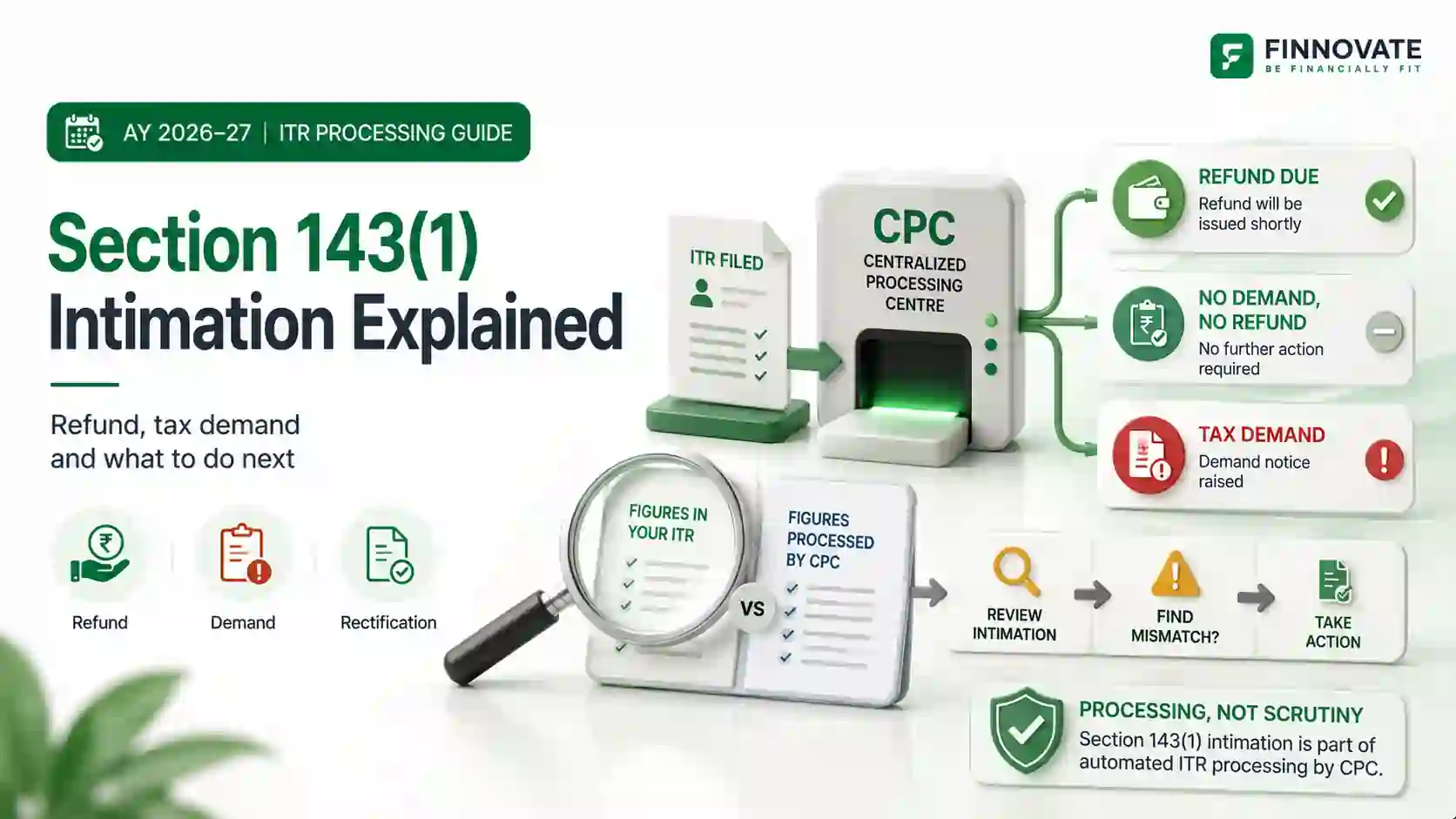
Received a Section 143(1) intimation? Understand CPC adjustments, refunds, tax demands, re...

Zero tax on a ₹14.65 lakh salary is real, but only if your employer contributes EPF on f...
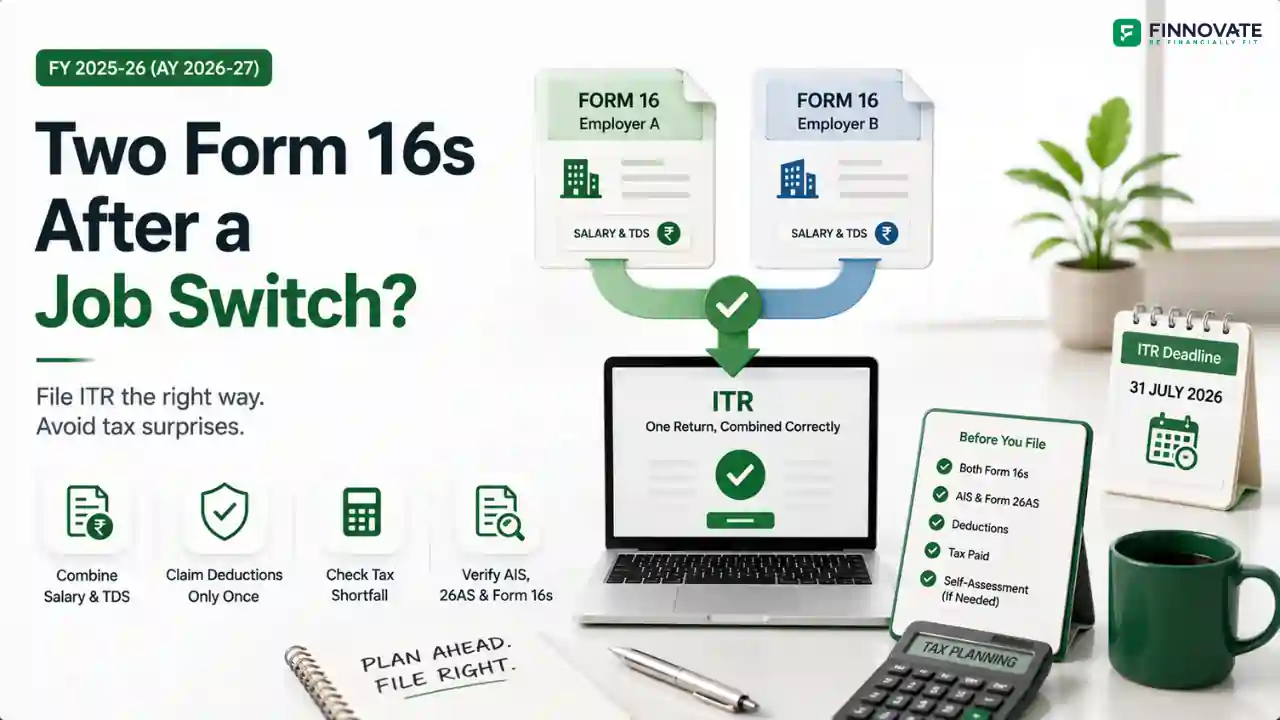
Changed jobs in FY 2025-26? See why combining two Form 16s can create a tax shortfall past...
Popular now

Learn how to easily download your NSDL CAS Statement in PDF format with our step-by-step g...

Looking for the best financial freedom books? Here’s a handpicked 2026 reading list with...
Learn what SIF investment means in India, SEBI rules, Rs 10 lakh minimum investment, avail...
Clear guide to mutual fund taxation in India for FY 2025–26 after July 2024 changes: equ...