
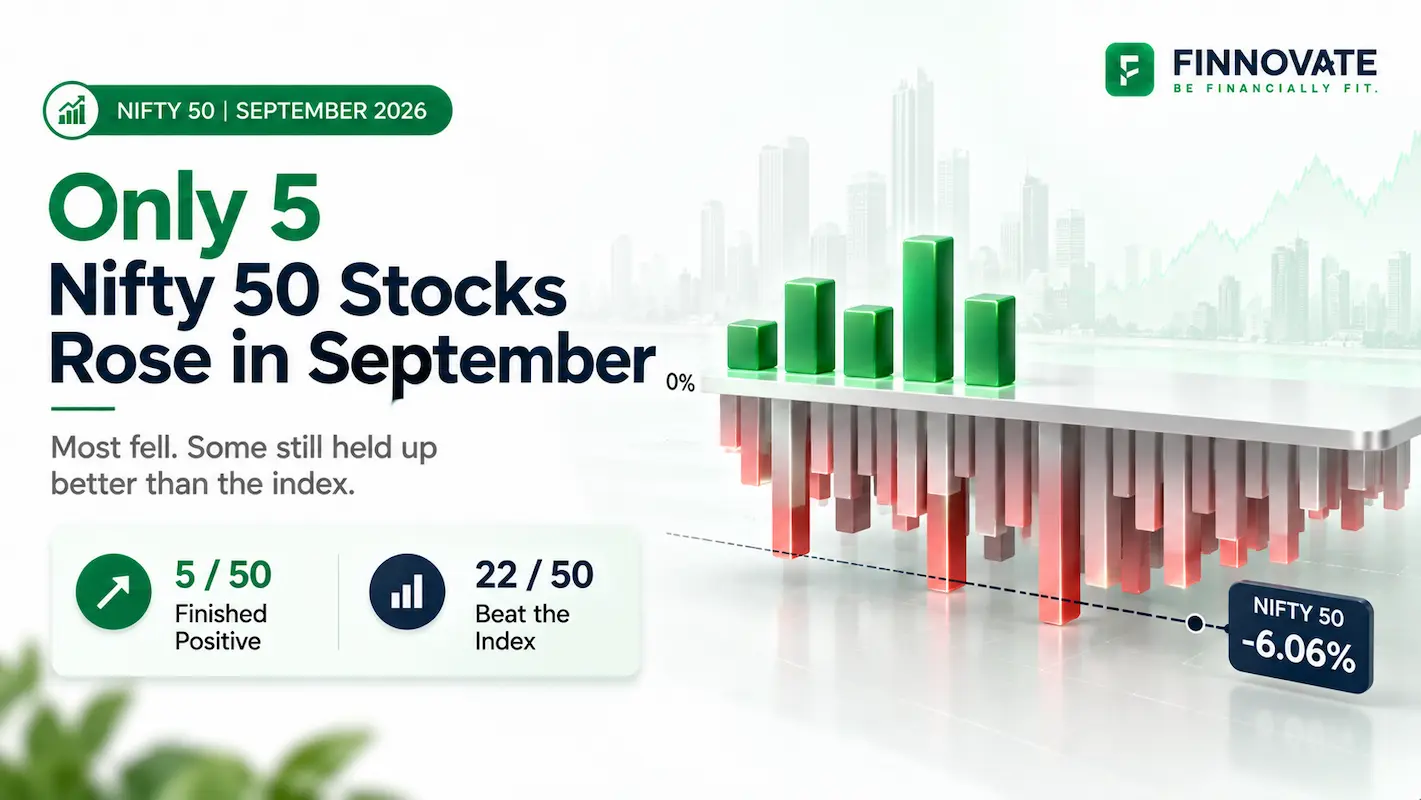
Top Performing Nifty 50 Stocks in September 2026
Only five Nifty 50 stocks rose in September 2026 as the index fell 6.06%. Compare monthly ...
08 October 2026
The ₹18,000 crore share buyback announced by Infosys has given the stock some short-term support. Investors welcomed the announcement as a signal of confidence and cash-rich strength. But the bigger question remains: does this buyback really address the deeper valuation challenges that Infosys faces?
Over the past few quarters, Infosys has struggled with real business pressures. In 2025 alone, the stock has lost more than 20% of its value. While tariffs do not directly impact Infosys, they have created global market uncertainty. Corporates across industries are rethinking their IT budgets, often delaying investments or demanding steep discounts. This has slowed top-line growth and put pressure on operating profit margins.
The result: even a strong company like Infosys is facing challenges in convincing investors about near-term growth visibility.
This is nearly double the size of the previous Infosys buyback in 2022. On the surface, this looks attractive. It tells investors two things: Infosys has a cash-rich balance sheet, and the company currently lacks many avenues to reinvest this cash into growth opportunities.
The buyback has provided short-term price support. But is it a sustainable answer to the valuation gap?
Despite the buyback, Infosys trades at around 22X trailing earnings and 20X forward earnings. The Nifty-50 median P/E is ~33X. The discount is clear.
It is not just Infosys. The IT sector overall trades at a lower multiple than the market. The core issue is the lack of a strong growth narrative that excites investors, such as scaled AI platforms, differentiated cloud-product revenue, or new high-margin service lines.
Major Indian IT companies have spent billions on buybacks. Yet sector valuations have not re-rated. The reason: buybacks do not solve the growth question. They often signal limited high-return reinvestment opportunities. While buybacks return cash and can support the price in the near term, they do not build a long-term story of expanding revenue and margins.
Global peers balance shareholder payouts with bold reinvestment. Infosys has the balance sheet to do the same.
The buyback is positive for short-term sentiment and rewards shareholders with a premium. But it is not, by itself, a long-term value trigger. Unless Infosys deploys its financial strength into innovation, targeted acquisitions, and scalable platforms, the valuation gap with the market is unlikely to close. Investors should track how capital is allocated in the next few quarters, beyond the buyback.
Unsure how to position Infosys or the IT sector in your portfolio? Book a quick call with our advisory team to build a strategy aligned to your risk and goals.
Disclaimer: This article is for informational purposes only and does not constitute financial, legal, or investment advice. Please consult qualified professionals for advice specific to your situation.
No spam. Only new posts, simple explainers, and practical money checklists for busy professionals.
Finnovate is a SEBI-registered financial planning firm that helps professionals bring structure and purpose to their money. Over 3,500+ families have trusted our disciplined process to plan their goals - safely, surely, and swiftly.
Our team constantly tracks market trends, policy changes, and investment opportunities like the ones featured in this Weekly Capsule - to help you make informed, confident financial decisions.
Learn more about our approach and how we work with you:
No comments yet. Start the conversation. What would you add?
No spam. Only new posts, simple explainers, and practical money checklists.
You may also like
Only five Nifty 50 stocks rose in September 2026 as the index fell 6.06%. Compare monthly ...
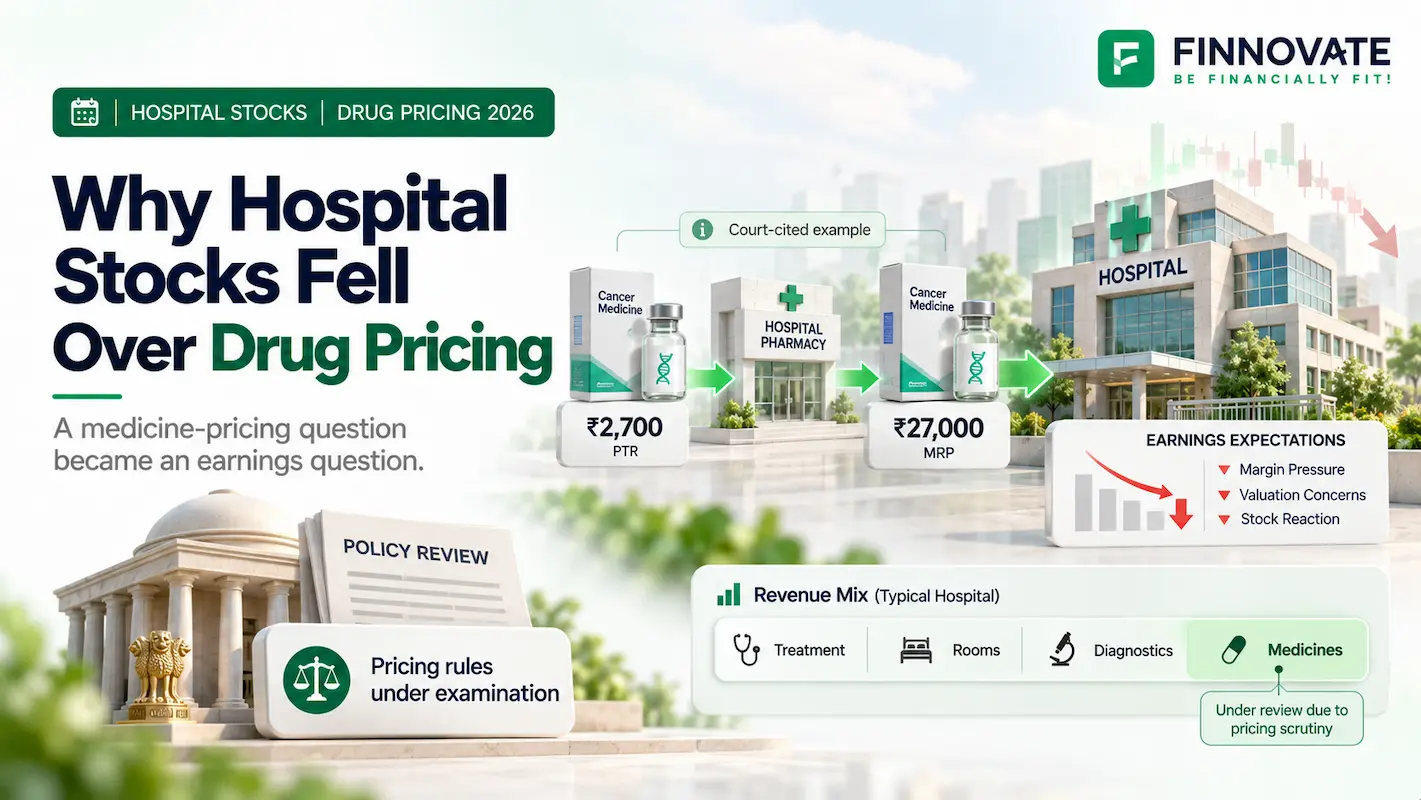
Why did hospital stocks fall after Supreme Court scrutiny of medicine prices? Understand d...
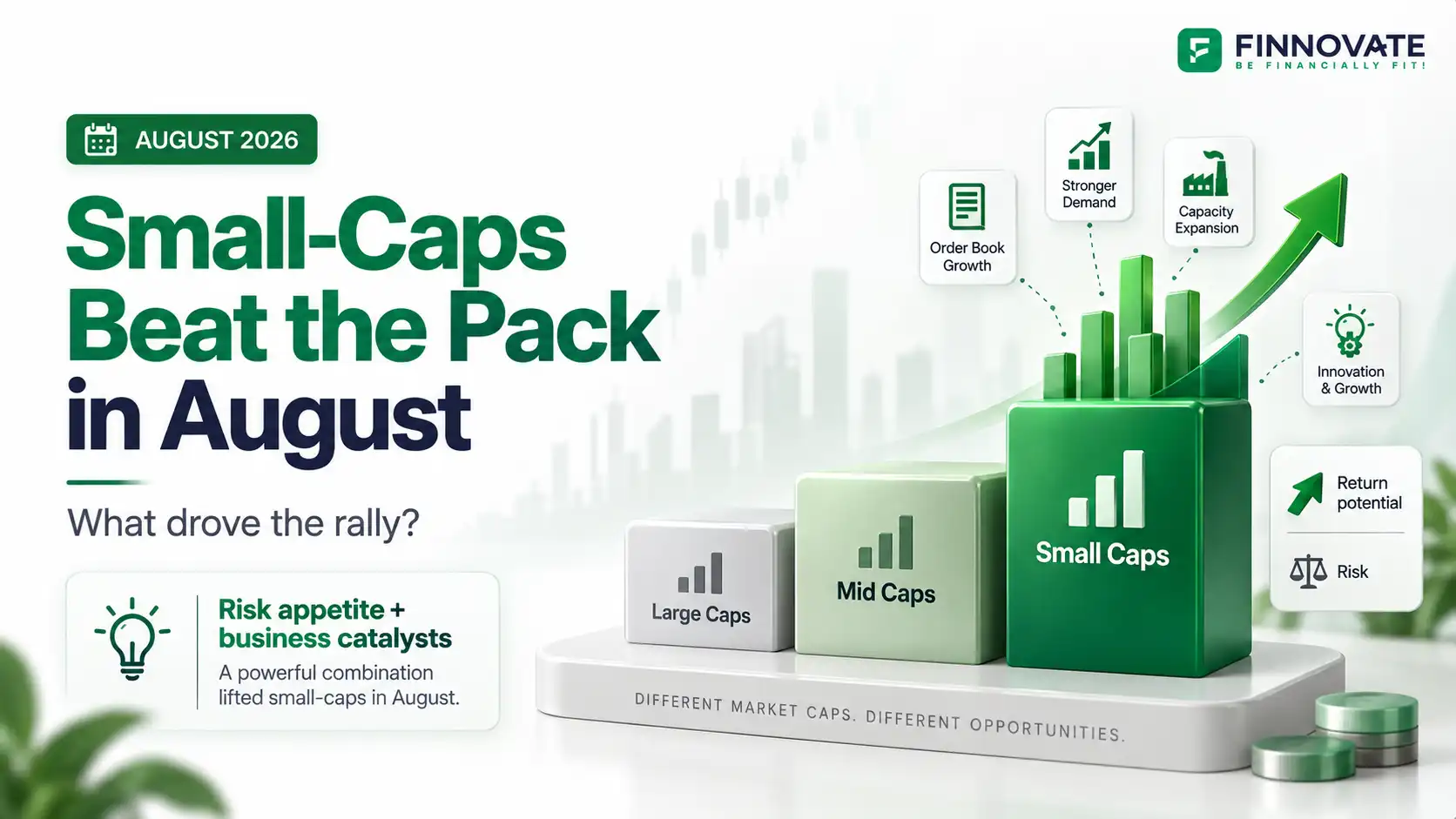
Nifty Smallcap 100 rose 3.16% in August 2026. See which small-cap stocks led, what drove t...
Nifty Midcap 100 rose 2.15% in August 2026. See which mid-cap stocks led the rally, key se...
Popular now

Learn how to easily download your NSDL CAS Statement in PDF format with our step-by-step g...

Looking for the best financial freedom books? Here’s a handpicked 2026 reading list with...
Learn what SIF investment means in India, SEBI rules, Rs 10 lakh minimum investment, avail...

Clear guide to mutual fund taxation in India for FY 2025–26 after July 2024 changes: equ...