

Can India Build the Hardware Behind the AI Boom?
Explore India’s AI hardware opportunity through the proposed Adani–Jabil venture, from...
14 October 2026
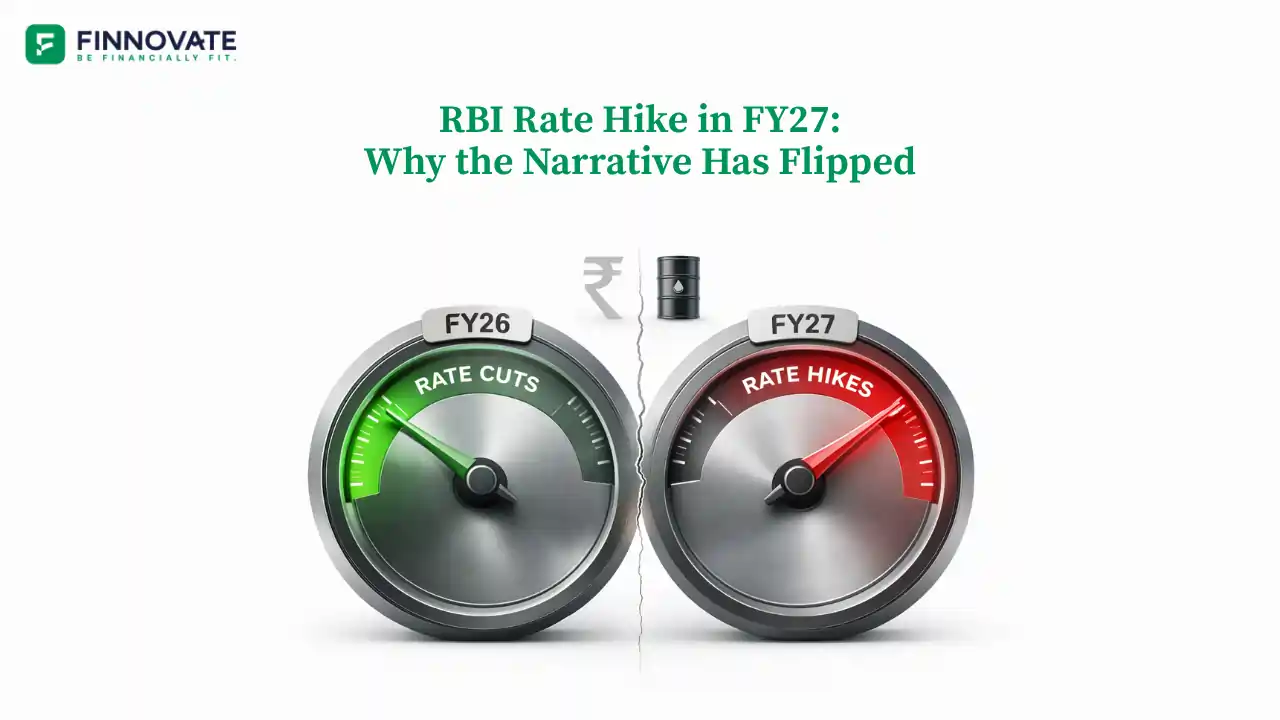
For most of the past year, India's monetary policy debate centred on one question: how many rate cuts would the RBI deliver in FY26? That debate is over. A new one has begun. The question entering FY27 is not whether rates will be cut further. It is whether rates will need to go up.
The US-Iran conflict, the crude price surge, a record FPI sell-off, and a rupee that crossed ₹95 per dollar by 30 March have collectively changed the calculus. Global fund houses are now openly discussing RBI rate hikes. Bond markets are already pricing them in. And the banking system has structural pressures that a rate hike could actually help resolve.
This article explains why the rate hike narrative has gained credibility, what the data is showing, and what it means across inflation, the rupee, the banking system, and equity valuations.
Before the analysis, here is the full picture of where the key indicators stand and how much they have moved since the conflict began.
| Indicator | Before Conflict (Feb 2026) | Current (End March 2026) |
|---|---|---|
| RBI Repo Rate | 5.25% | 5.25% (unchanged) |
| 10-Year G-Sec Yield | ~6.62% | 7.03% (biggest monthly spike in 9 years) |
| Brent Crude | ~$73/barrel | Above $100/barrel |
| Rupee | ~₹91.10/$ | ~₹95.21/$ |
| FY26 CPI Inflation | 2.1% (full year) | Rising sharply for FY27 |
| FY27 CPI Forecast (ICICI Bank) | 3.9% | Revised to 4.5% |
| FY27 CPI Forecast (Goldman Sachs) | 3.9% | Revised to 4.6% |
| Credit-Deposit Ratio | ~82.5% | Record 83.04% |
Goldman Sachs, in its March 2026 India outlook, flagged the possibility of a 50 basis point repo rate hike in 2026, which would bring the repo rate from 5.25% to 5.75%. Goldman's framing is important: the hike is not primarily being proposed to curb inflation. It is being proposed to counter rupee depreciation and manage imported inflation pass-through.
A 50 bps hike is Goldman's base case, though their report notes that if oil prices remain elevated longer than expected, additional tightening cannot be ruled out. The hike is likely to be delivered in phases rather than as a single move, though the RBI's sequencing will be a policy decision at the time.
ICICI Bank's March 2026 report separately revised its FY27 CPI forecast to 4.5%, up from 3.9%. The revision reflects a structural change in the CPI basket under the new 2024 base year, where the weight of food has declined and fuel-linked items carry greater weight. Under the new basket, every $10 per barrel increase in crude oil adds approximately 50-60 basis points to overall CPI inflation, roughly double the sensitivity of the old series, making the basket significantly more reactive to global energy price moves.
With Brent above $100 per barrel, the 4.5% forecast is credible even without further conflict escalation.
A legitimate concern about rate hikes here is that India is facing cost-push inflation, not demand-pull. The distinction matters for how effective rate hikes will be.
| Type | What Drives It | How Rate Hikes Help | FY27 Relevance |
|---|---|---|---|
| Demand-pull inflation | Excess consumer spending, overheated economy | Directly. Higher borrowing costs reduce spending and cool demand. | Not the primary driver in FY27 |
| Cost-push inflation | Supply shocks, rising input costs, oil prices | Indirectly. Prevents second-round effects and speculative excess from embedding into wages and pricing expectations. | Primary driver in FY27 via crude oil |
The experience of 2022 and 2023 is instructive here. When supply chain disruptions and commodity shocks drove inflation globally, central banks including the RBI raised rates. The goal was not to fix the supply shock itself but to prevent higher input costs from becoming embedded in wages, services pricing, and consumer expectations. That second-round effect, if it sets in, is significantly harder to unwind than the original supply shock.
The FY27 risk is the same. If elevated crude prices persist, the pass-through into transport, food processing, and manufacturing could make inflation sticky. Rate hikes serve partly as a signalling tool in this context, anchoring expectations that the RBI will not allow inflation to drift.
The rupee dimension of this story may be more important than the inflation dimension in the near term. The rupee weakened from approximately ₹91.10 per dollar before the conflict to ₹95.21 by 30 March, a depreciation of approximately 4.5% in under five weeks.
The consequences of that weakness compound across the economy:
A rate hike addresses this through two channels. Higher interest rates make Indian fixed income assets more attractive to global investors, supporting rupee demand. They also reduce the carry advantage of selling the rupee in the NDF market, reducing speculative pressure. Goldman Sachs explicitly stated that rupee stability, not inflation control, is the primary motivation for the projected hike.
One underappreciated dimension of this debate is that a rate hike may actually be welcome in the banking system.
As of 15 March 2026, India's credit-deposit ratio hit a record 83.04%. Loan growth was running at 13.8% year-on-year while deposit growth lagged at 10.8%, a gap of approximately 300 basis points. Banks have been bridging this shortfall through the Certificates of Deposit market. Outstanding CDs reached a record ₹6.6 lakh crore by late February 2026, with CD yields at approximately 7.1% despite earlier policy rate cuts.
This creates a structural vulnerability: reliance on expensive short-term wholesale funding rather than stable retail deposits, raising funding costs, squeezing net interest margins, and creating rollover risk.
A rate hike changes this directly. Higher deposit rates make bank fixed deposits more competitive versus mutual funds and equities, drawing retail savings back into the banking system and narrowing the credit-deposit gap. In effect, the same rate hike that may pressure equity valuations could materially improve banking sector stability.
The standard concern about rate hikes is their impact on equity valuations. Higher interest rates raise the discount rate for future cash flows, compressing valuations. This is the textbook view.
But there is a countervailing argument. A rate hike that successfully stabilises the rupee and anchors inflation expectations reduces the macro uncertainty premium in valuations. Lower uncertainty means a lower equity risk premium, which offsets some of the impact from a higher cost of capital.
Markets that are already pricing in rupee weakness, elevated inflation, and FPI exits may have partially discounted this risk. A hike that credibly addresses those concerns could have a stabilising rather than purely negative effect on sentiment. The net impact on equity valuations from a 50 bps hike in this specific context may therefore be smaller than a mechanical application of the textbook model would suggest.
The shift from a rate cut environment to a potential rate hike cycle has practical implications across different parts of a portfolio.
Fixed deposit rates have already started reflecting higher market yields. Investors in fixed income may find current rates relatively more attractive before any hike cycle begins. Short-duration debt funds tend to be less affected than long-duration funds when yields rise, as shorter maturities reprice faster.
The sector faces two competing forces. Net interest margins may initially compress from higher wholesale funding costs, but the narrowing of the credit-deposit gap over time improves structural health. Rate-sensitive lending categories like home loans and auto loans may see slower disbursement growth in the near term.
As discussed, the impact is more nuanced than a simple negative. Historically, sectors with high debt loads such as real estate and infrastructure have been more affected during rate hike cycles. Defensive sectors and businesses with low debt and strong cash generation have historically shown more resilience in rising rate environments.
Crude prices and rupee movement are the key macro variables that will determine the RBI's timing. If the Strait of Hormuz disruption eases faster than expected and crude normalises, the rate hike case weakens. If disruptions persist into Q2 FY27, the case for early action strengthens.
The US-Iran conflict sharply changed the macro environment. Crude above $100, the rupee at ₹95 per dollar, and FY27 inflation forecasts rising to 4.5% have shifted the risk calculus. Goldman Sachs now projects a 50 bps hike, primarily to defend the rupee and anchor inflation expectations.
Cost-push inflation is driven by supply shocks like rising oil prices rather than excess spending. Rate hikes cannot fix the supply shock directly but help prevent higher costs from embedding into wages and pricing expectations, as seen during the 2022-23 commodity shock cycle.
Higher rates make Indian fixed income assets more attractive to global investors, increasing rupee demand. They also reduce the carry advantage of speculative rupee selling in the NDF market. Both effects support the currency over time.
Higher rates make fixed deposits more competitive versus other savings options, drawing retail savings back into banks. This helps narrow the credit-deposit gap that has reached a record 83.04% in March 2026, reducing banks' reliance on expensive wholesale funding.
Not necessarily in this context. A hike that credibly stabilises the rupee and anchors inflation may reduce the equity risk premium, partially offsetting the higher discount rate. Please consult a SEBI-registered investment adviser before making any investment decisions.
Disclaimer: This article is for general information and educational purposes only. It does not constitute investment advice, a recommendation, or an offer to buy or sell any securities or financial instruments. Macro forecasts, interest rate projections, and market data referenced in this article are based on publicly available sources including Goldman Sachs research, ICICI Bank reports, Business Recorder, RBI data, and Finnovate analysis, and are subject to change. Past monetary policy patterns are not indicative of future outcomes. Please consult a SEBI-registered investment adviser or qualified financial professional before making any investment decision. Debt and equity investments are subject to market risks.
No spam. Only new posts, simple explainers, and practical money checklists for busy professionals.
Finnovate is a SEBI-registered financial planning firm that helps professionals bring structure and purpose to their money. Over 3,500+ families have trusted our disciplined process to plan their goals - safely, surely, and swiftly.
Our team constantly tracks market trends, policy changes, and investment opportunities like the ones featured in this Weekly Capsule - to help you make informed, confident financial decisions.
Learn more about our approach and how we work with you:
No comments yet. Start the conversation. What would you add?
No spam. Only new posts, simple explainers, and practical money checklists.
You may also like
Explore India’s AI hardware opportunity through the proposed Adani–Jabil venture, from...
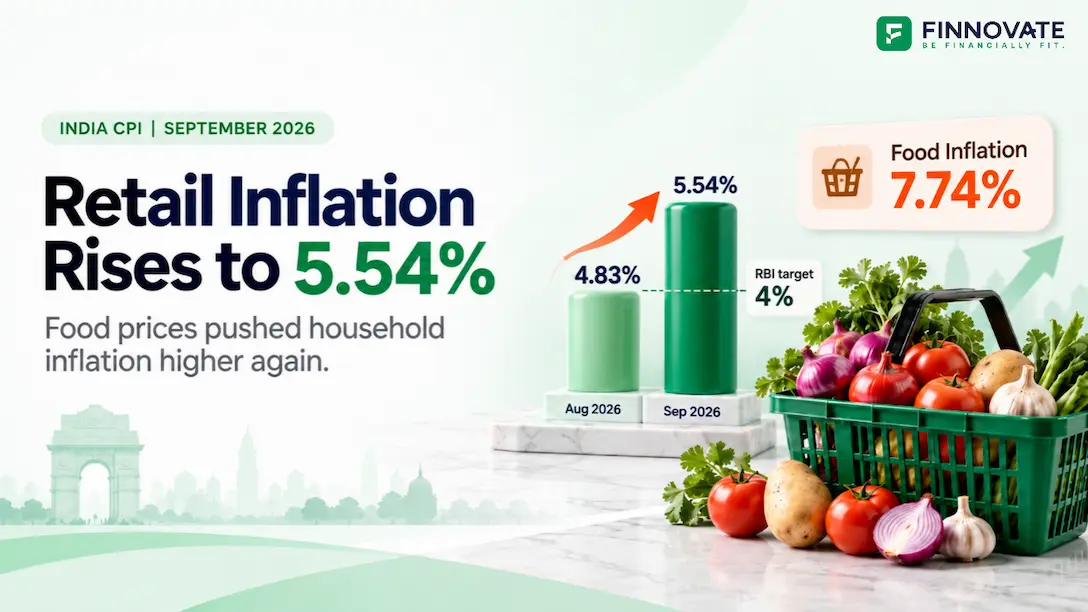
India’s CPI inflation rose to 5.54% in September 2026. Compare monthly trends, food pric...
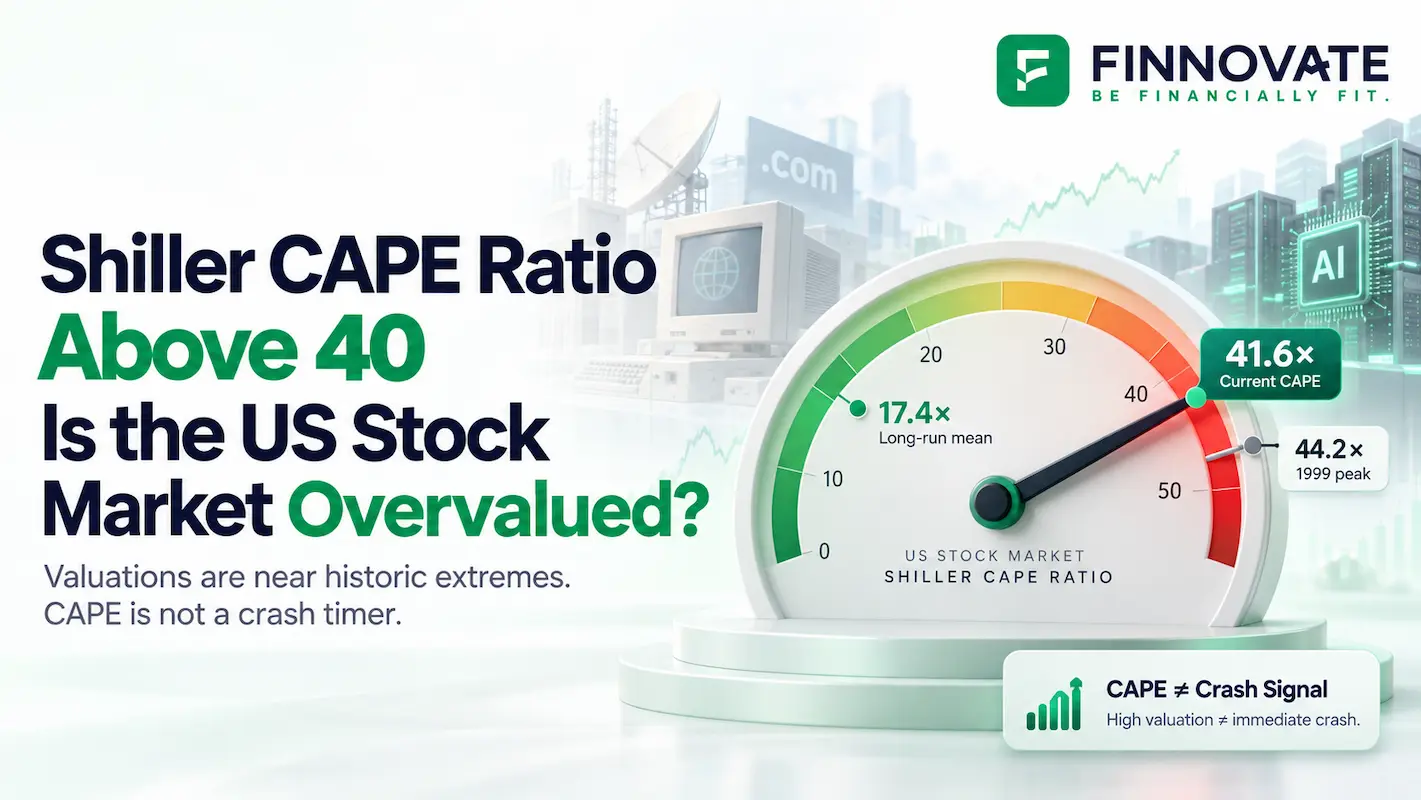
The Shiller CAPE ratio is near its 1999 peak. Explore what it means for US stock valuation...

Can Starlink change internet access in India? Explore why Jio and Airtel signed deals, how...
Popular now

Learn how to easily download your NSDL CAS Statement in PDF format with our step-by-step g...

Looking for the best financial freedom books? Here’s a handpicked 2026 reading list with...
Learn what SIF investment means in India, SEBI rules, Rs 10 lakh minimum investment, avail...
Clear guide to mutual fund taxation in India for FY 2025–26 after July 2024 changes: equ...