
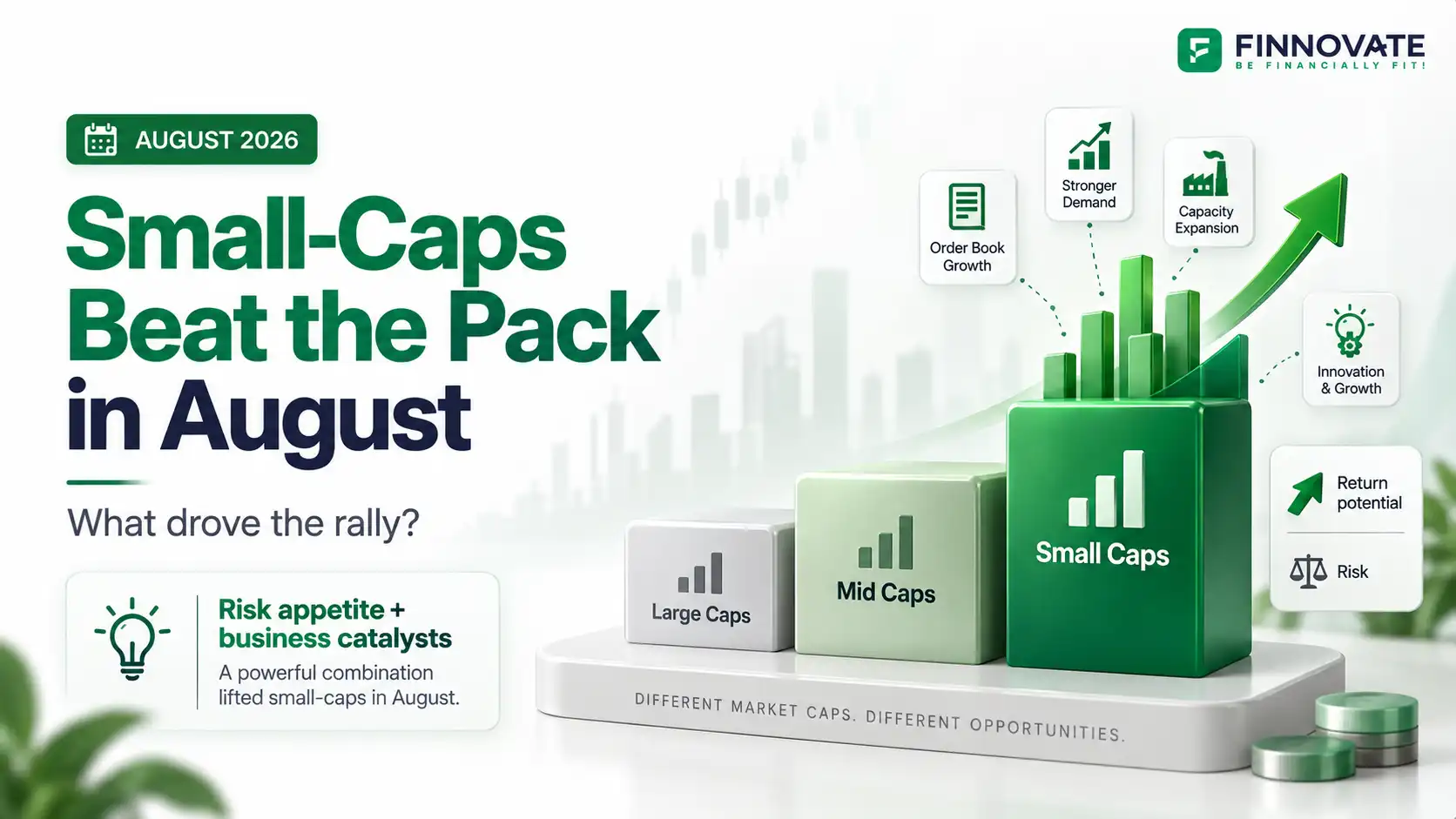
Top Small-Cap Stocks in August 2026: Why Small Caps Outperformed
Nifty Smallcap 100 rose 3.16% in August 2026. See which small-cap stocks led, what drove t...
08 September 2026

Published: April 27, 2026 | Data source: FundsIndia (CAGR figures as of early 2026)
Across every time horizon from 3 years to 20 years, Indian large-cap equities have failed to rank among the top five performing asset classes. Not once. That is the finding when CAGR returns across ten asset classes are ranked side by side, and it helps explain why foreign investors have been exiting India at a historically unprecedented pace.
Since September 2024, Foreign Portfolio Investors (FPIs) have withdrawn more than $45 billion from Indian equities over 18 months. FPI equity assets under custody (AUC), which peaked at $931 billion in September 2024, had fallen to approximately $714 billion by early March 2025. The returns data makes clear this is not noise. It is a structural verdict.
The table below ranks ten asset classes by CAGR return across five time horizons. Figures are Total Return Index (TRI) where applicable, meaning dividends are reinvested. All returns are in INR unless otherwise stated.
| Asset Class | 3-Year CAGR | 5-Year CAGR | 10-Year CAGR | 15-Year CAGR | 20-Year CAGR |
|---|---|---|---|---|---|
| Nifty 50 TRI | 10.0% | 10.0% | 12.5% | 10.7% | 11.2% |
| Nifty 100 TRI | 11.2% | 10.3% | 12.6% | 11.1% | 11.5% |
| Nifty 500 TRI | 13.2% | 11.9% | 13.5% | 11.7% | 11.5% |
| Nifty Mid-Cap 150 TRI | 20.3% | 17.5% | 17.5% | 16.0% | 14.2% |
| Nifty Small-Cap TRI | 18.3% | 16.3% | 14.5% | 13.1% | 12.3% |
| US Equity S&P 500 TRI | 23.5% | 17.7% | 18.2% | 19.0% | 14.7% |
| US NASDAQ TRI | 28.0% | 19.2% | 23.4% | 23.9% | 19.5% |
| Gold (in INR) | 38.4% | 28.4% | 18.1% | 13.5% | 15.1% |
| Real Estate | 5.6% | 5.9% | 5.2% | 5.6% | 7.9% |
| Debt Instruments | 6.9% | 6.0% | 6.9% | 7.6% | 7.5% |
The table tells a consistent story across five decades of data. Breaking it down by asset class:
Gold ranks first across both the 3-year and 5-year horizons, with CAGRs of 38.4% and 28.4% respectively. Over 20 years, it still delivers 15.1%, comfortably ahead of Indian large-cap indices. Two forces drive this: a surge in global gold prices on safe-haven demand and central bank buying, and INR depreciation against the USD, which mechanically amplifies gold's INR return since gold is priced globally in dollars.
NASDAQ TRI ranks first across the 10-year, 15-year, and 20-year frames, with CAGRs of 23.4%, 23.9%, and 19.5%. Even the broader S&P 500 TRI claims second place across two frames and third across three. Global equities have not merely outperformed Indian large-caps; they have done so by 400 to 800 basis points on average across all measured horizons.
Within Indian markets, mid-caps have held up comparatively well. Nifty Mid-Cap 150 TRI delivers 20.3% over 3 years, 17.5% over both 5 and 10 years, and 16.0% over 15 years. These are genuinely competitive numbers in the Indian context, though they still fall below NASDAQ across every long-term frame.
Nifty 50 TRI delivers 10.0% over both 3 and 5 years, and 10.7% to 11.2% across the 15 and 20-year frames. For an equity asset class expected to compensate investors for higher risk and lower liquidity than debt, these figures sit only marginally above the 7.5% that debt instruments have delivered over 20 years.
The CAGR figures in the table are rupee returns. For foreign investors, and for Indian investors evaluating global allocation options, the currency dimension changes the picture materially.
The INR has depreciated against the USD across every multi-year period in the dataset. When Nifty 50's INR CAGR of 10 to 11% is adjusted for this depreciation, the effective dollar-denominated return falls considerably. NASDAQ's returns are already in USD, with no adjustment needed. This currency gap is one of the structural reasons FPI allocations have gravitated toward US markets over the past decade.
Return underperformance is one part of the FPI calculus. Three additional factors have compounded the pressure on Indian equity allocations since the September 2024 peak:
Indian large-cap indices have historically traded at premium valuations relative to other emerging markets, as measured by the Buffett Ratio (market cap to GDP). When earnings growth slows, as it has over the past two years, premium valuations become harder to justify against competing global opportunities that offer higher returns at comparable or lower valuations.
Large-cap earnings growth in India has moderated from the strong post-COVID rebound phase. Revenue growth has compressed across key sectors including IT, FMCG, and consumer durables. With the forward earnings case for Indian large-caps weakening, the traditional "buy India for growth" argument has come under scrutiny from global allocation desks.
India's index-heavyweight IT sector faces a structural question around the impact of AI-led automation on services revenue. FPIs with significant IT holdings have been reassessing their exposure, contributing to selling pressure in a sector that has historically been a key anchor of India's FPI allocation story.
For more context on the FPI selling pattern, see Finnovate's detailed analysis: FPI Outflows in Early March 2026 and FPI Flows February 2026: What Drove the Sell-Off.
The data across 15 and 20-year periods consistently points to Indian large-cap equity CAGRs in the 10 to 11% range in INR terms. This is not a recent phenomenon driven by the current market correction. It is what the indices have delivered over two full market cycles.
After accounting for long-term capital gains tax of 12.5% on listed equity gains held over one year, post-tax returns from large-cap indices have historically landed in the 9 to 10% range. For more on equity taxation, see Mutual Fund Taxation in India: FY 2025-26 Guide.
Financial plans built on large-cap return assumptions of 14 to 15% may reflect bull-cycle optimism rather than long-run index reality. Calibrating projections to what indices have historically delivered across 15 to 20 years may lead to more durable financial outcomes. Please consult a SEBI-registered investment adviser before making any changes to your portfolio or long-term financial plan.
Gold has delivered a 3-year CAGR of 38.4% in INR terms, compared to 10.0% for the Nifty 50 TRI. Two factors drive this: global gold prices have surged on safe-haven demand and central bank buying, and INR depreciation amplifies gold's INR return since gold is globally priced in dollars. Gold's 20-year CAGR of 15.1% is strong, but the recent 3-year figure is an outlier driven by exceptional global conditions. Past performance is not indicative of future returns.
The Nifty 50 TRI has delivered a 20-year CAGR of approximately 11.2% in INR terms, based on FundsIndia data. This is the total return index figure, which includes dividends reinvested. The price return index, which excludes dividends, would be lower. Past performance is not indicative of future returns.
On historical CAGR data, NASDAQ TRI has outperformed Nifty 50 TRI across every long-term horizon measured: 10 years (23.4% vs 12.5%), 15 years (23.9% vs 10.7%), and 20 years (19.5% vs 11.2%). However, NASDAQ returns are in USD and involve currency risk, geopolitical considerations, and different tax treatment for Indian investors. Please consult a SEBI-registered investment adviser before making cross-border allocation decisions.
FPIs have withdrawn more than $45 billion from Indian equities since September 2024, driven by a combination of factors: Indian large-cap returns lagging global alternatives across every measured horizon, elevated valuations measured by market cap to GDP ratios, slowing corporate earnings growth, and concerns about AI disruption risk to India's IT sector. INR depreciation, which reduces dollar-adjusted returns for foreign investors, adds a further structural headwind. See the detailed FPI analysis: FPI Flows January 2026: Understanding the Equity Outflows.
Historical data over 15 to 20 years shows Indian large-cap indices have delivered CAGRs of approximately 10 to 11% in INR terms. After applicable long-term capital gains tax, post-tax returns have historically been in the 9 to 10% range. These are historical observations based on index data, not projections or guarantees. Please consult a SEBI-registered investment adviser for personalised return planning suited to your financial goals and risk profile.
Disclaimer: This article is for general information and educational purposes only. It does not constitute investment advice, a recommendation, or an offer to buy or sell any securities or financial instruments. CAGR return data cited in this article is sourced from FundsIndia's computed index return data and is subject to revision based on the computation date. FPI AUC and flow figures are sourced from NSDL. Past market performance across asset classes is not indicative of future outcomes. Investors should not make any investment decision based solely on this article. Please consult a SEBI-registered investment adviser or qualified financial professional before making any investment decision. Equity investments are subject to market risks.
No spam. Only new posts, simple explainers, and practical money checklists for busy professionals.
Finnovate is a SEBI-registered financial planning firm that helps professionals bring structure and purpose to their money. Over 3,500+ families have trusted our disciplined process to plan their goals - safely, surely, and swiftly.
Our team constantly tracks market trends, policy changes, and investment opportunities like the ones featured in this Weekly Capsule - to help you make informed, confident financial decisions.
Learn more about our approach and how we work with you:
No comments yet. Start the conversation. What would you add?
No spam. Only new posts, simple explainers, and practical money checklists.
You may also like
Nifty Smallcap 100 rose 3.16% in August 2026. See which small-cap stocks led, what drove t...
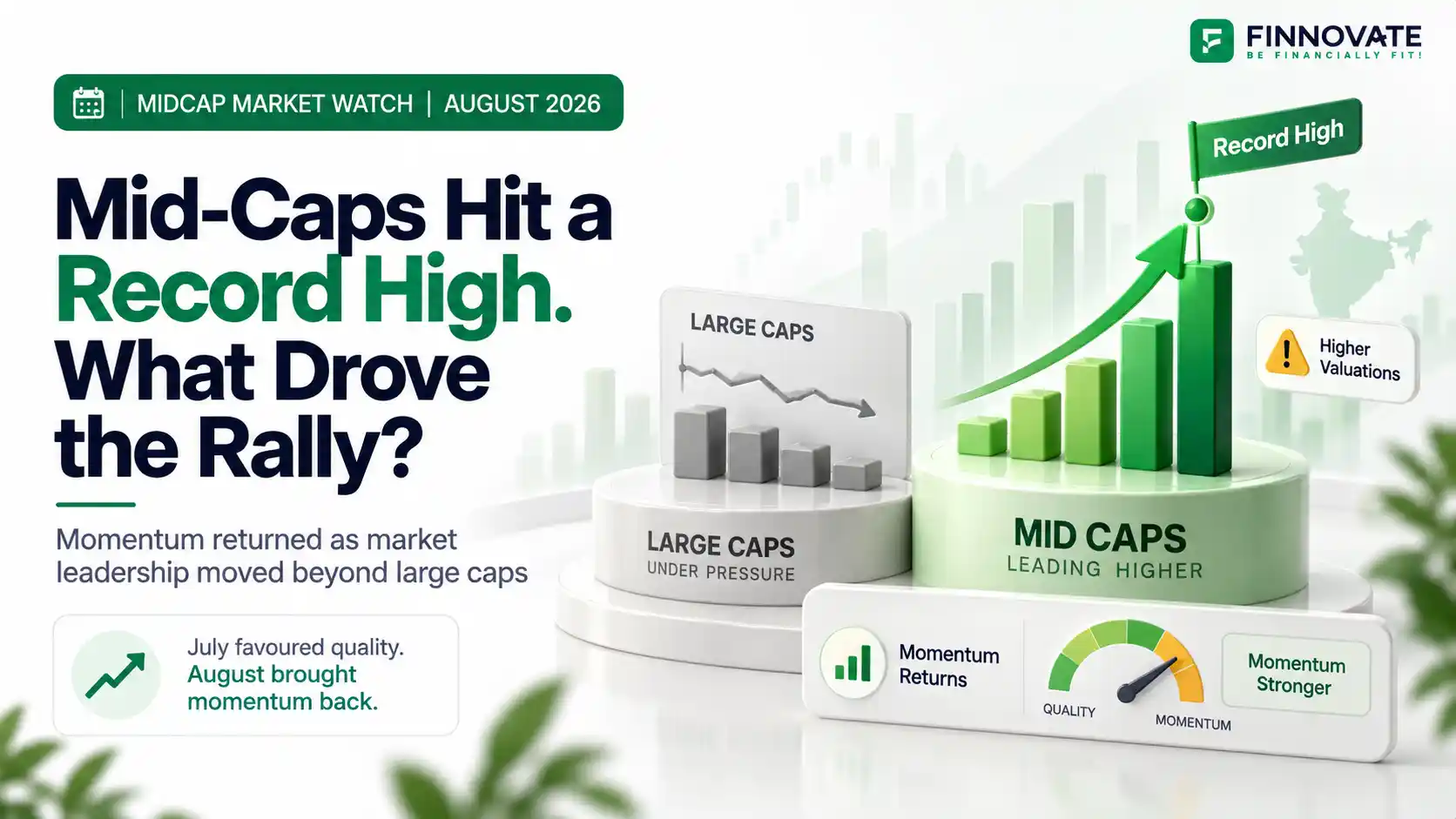
Nifty Midcap 100 rose 2.15% in August 2026. See which mid-cap stocks led the rally, key se...
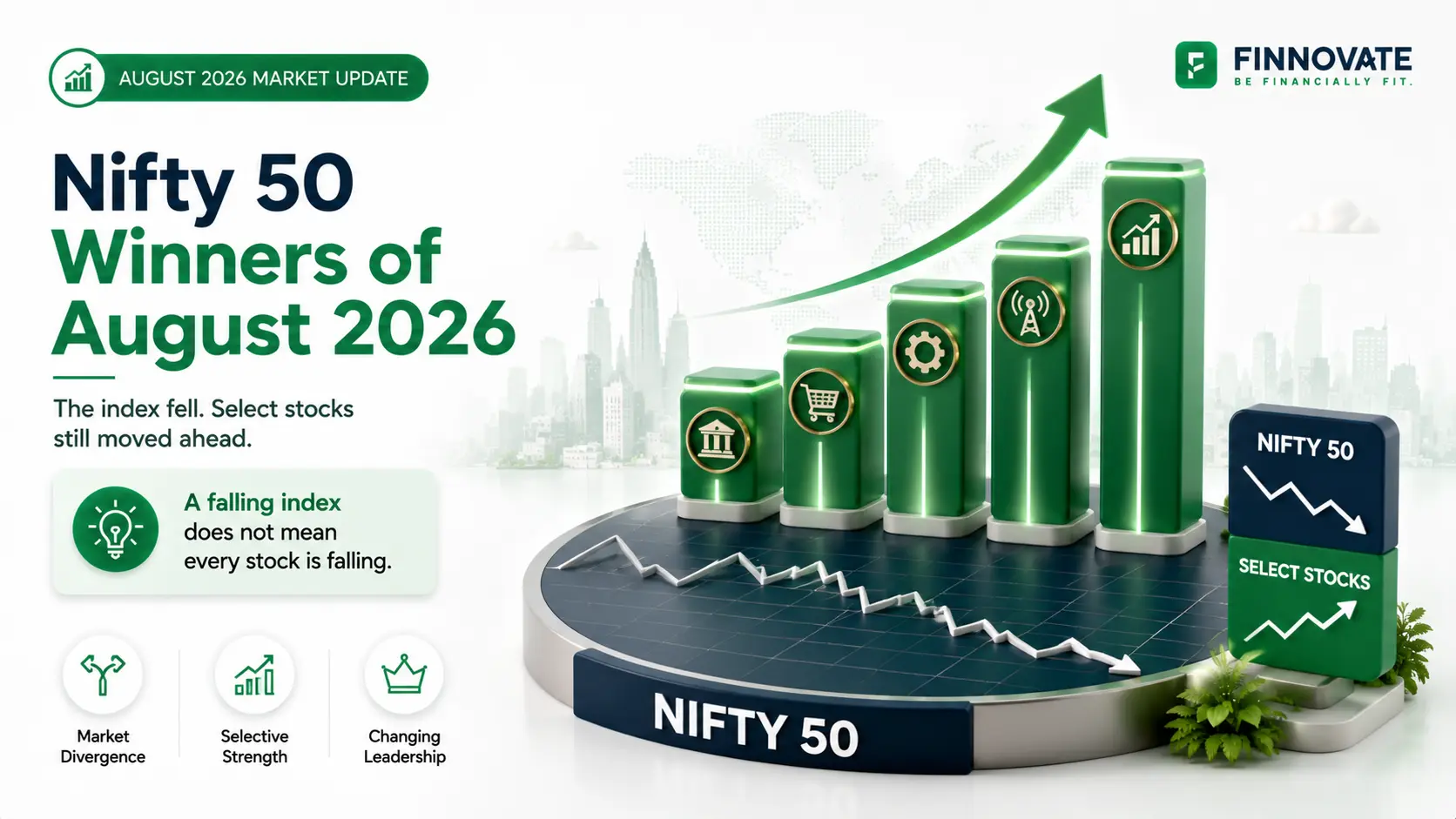
See the best-performing Nifty 50 stocks in August 2026, which sectors led the market, and ...
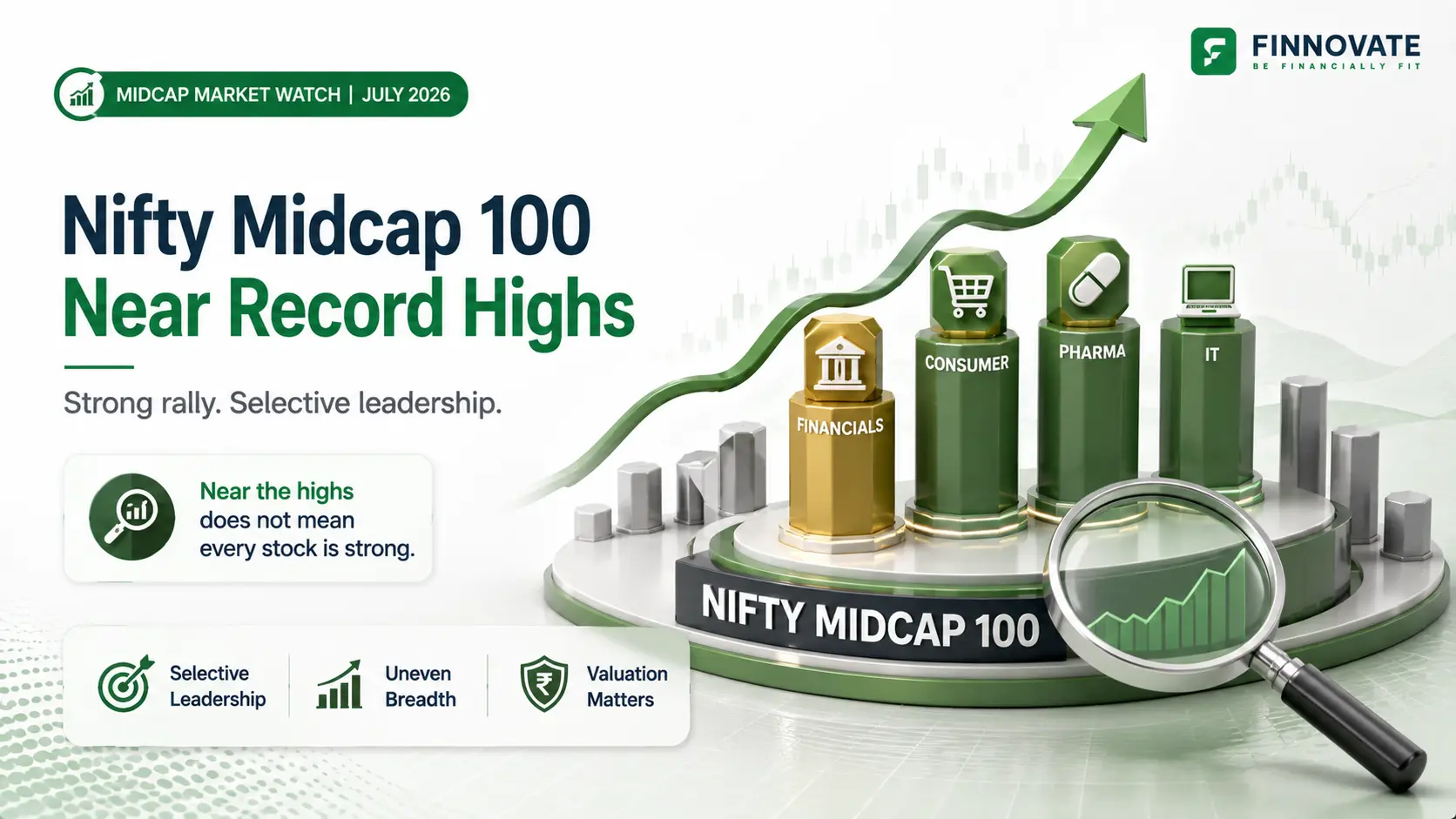
Nifty Midcap 100 gained 1.81% in July 2026 and moved near its yearly high. See the top mid...
Popular now

Learn how to easily download your NSDL CAS Statement in PDF format with our step-by-step g...

Looking for the best financial freedom books? Here’s a handpicked 2026 reading list with...
Learn what SIF investment means in India, SEBI rules, Rs 10 lakh minimum investment, avail...

Clear guide to mutual fund taxation in India for FY 2025–26 after July 2024 changes: equ...