

The Great Economic Decoupling of 2026: Oil, AI & India
Rising oil prices and booming AI investment are shaping an uneven global economy in 2026. ...
24 October 2026
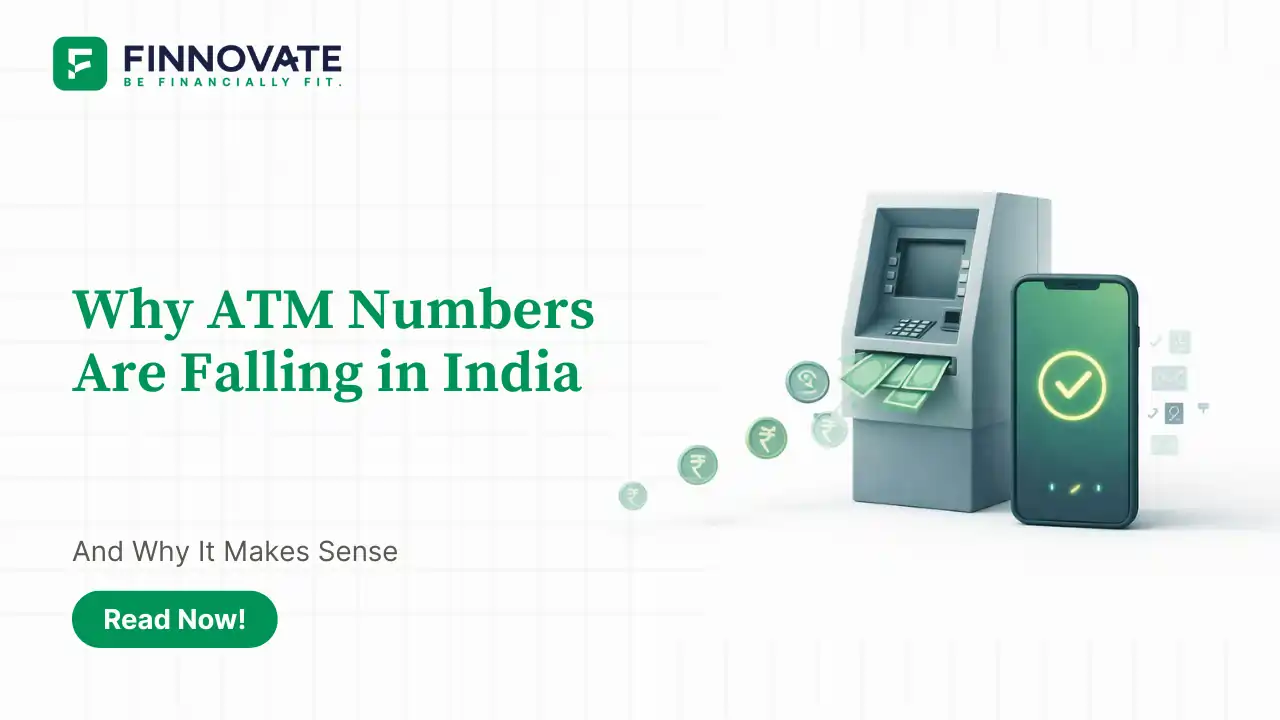
A couple of years ago, a visit to a small temple village in Maharashtra was quietly eye-opening. From flower sellers to tea stalls, almost everyone accepted digital payments. Cash was optional. ATMs were rare and mostly unused.
That memory came back while looking at recent RBI data. India is not just using less cash. It is also slowly dismantling the physical infrastructure built to dispense it.
According to RBI data, the total number of ATMs in India fell from 2,53,416 to 2,51,057 in FY25. That is a net shutdown of nearly 2,400 ATMs in a single year.
At first glance, this looks like a sharp break. But the reality is more interesting. FY25 was not the start of the decline. It was the point where a long-running trend finally turned negative.
RBI data over the last decade shows three clear phases in India’s ATM journey:
In fact, while public sector banks had already slowed additions years earlier, private sector banks began actively cutting ATMs after usage dropped and costs rose. FY25 merely confirmed what had been building quietly for years.
The latest year makes the trend clearer. In FY25, private sector banks reduced offsite ATMs from 79,884 to 77,117. Public sector banks saw a much smaller decline.
This split matters. Private banks are usually quicker to respond to cost and usage data. When they pull back first, it signals that the economics of ATMs are no longer attractive.
This does not mean cash has disappeared. It simply means banks are becoming selective about where cash access is genuinely needed.
Interestingly, while bank-owned ATMs are shrinking, white-label ATMs continue to expand in specific rural and semi-urban pockets where digital alternatives are still limited.
The shift away from ATMs did not happen overnight. It built up gradually with the rise of UPI and mobile payments.
Digital payments won on everyday practicality:
Groceries, transport, utilities, and even small vendors moved digital. When people stop withdrawing cash regularly, ATM footfall drops. When footfall drops, the business case weakens.
ATMs were originally meant to reduce pressure on bank branches. Over time, they became expensive assets, especially offsite machines.
Each ATM carries recurring costs:
To recover these costs, banks introduced withdrawal limits and fees. For customers, this meant paying extra for accessing their own money. For banks, ATMs slowly turned from convenience tools into operational liabilities.
Digital payments offered a cheaper, scalable alternative.

One contrast stands out. While ATM numbers are falling, bank branches continue to grow.
The reason is simple. Branches provide trust, problem-solving, and human interaction. ATMs do not. Machines survive purely on cost efficiency and usage.
On cost, convenience, speed, and safety, digital payments now outperform ATMs in most urban and semi-urban settings.
Any service that becomes expensive and cumbersome eventually loses relevance.
ATMs expanded rapidly when cash usage was high. They stagnated when usage slowed. They are now shrinking because better alternatives exist.
This is not financial exclusion. It is adaptation. Consumer behaviour changed first. Infrastructure followed.
Digital payments are winning because they solve real problems. The shrinking ATM network is simply aligning with that reality.
Disclaimer: This article is for informational and educational purposes only and does not constitute investment advice.
No spam. Only new posts, simple explainers, and practical money checklists for busy professionals.
Finnovate is a SEBI-registered financial planning firm that helps professionals bring structure and purpose to their money. Over 3,500+ families have trusted our disciplined process to plan their goals - safely, surely, and swiftly.
Our team constantly tracks market trends, policy changes, and investment opportunities like the ones featured in this Weekly Capsule - to help you make informed, confident financial decisions.
Learn more about our approach and how we work with you:
No comments yet. Start the conversation. What would you add?
No spam. Only new posts, simple explainers, and practical money checklists.
You may also like
Rising oil prices and booming AI investment are shaping an uneven global economy in 2026. ...

Explore FPI equity flows for October First Half, 2026: ₹47,955 crore in net outflows, th...

Understand the India–Mauritius tax treaty’s Principal Purpose Test, its August 2026 ef...

Explore India’s AI hardware opportunity through the proposed Adani–Jabil venture, from...
Popular now

Learn how to easily download your NSDL CAS Statement in PDF format with our step-by-step g...

Looking for the best financial freedom books? Here’s a handpicked 2026 reading list with...
Learn what SIF investment means in India, SEBI rules, Rs 10 lakh minimum investment, avail...
Clear guide to mutual fund taxation in India for FY 2025–26 after July 2024 changes: equ...