

How India Saves and Invests: Where Household Money Goes
See how Indian households save and invest across deposits, insurance, mutual funds and sto...
07 October 2026
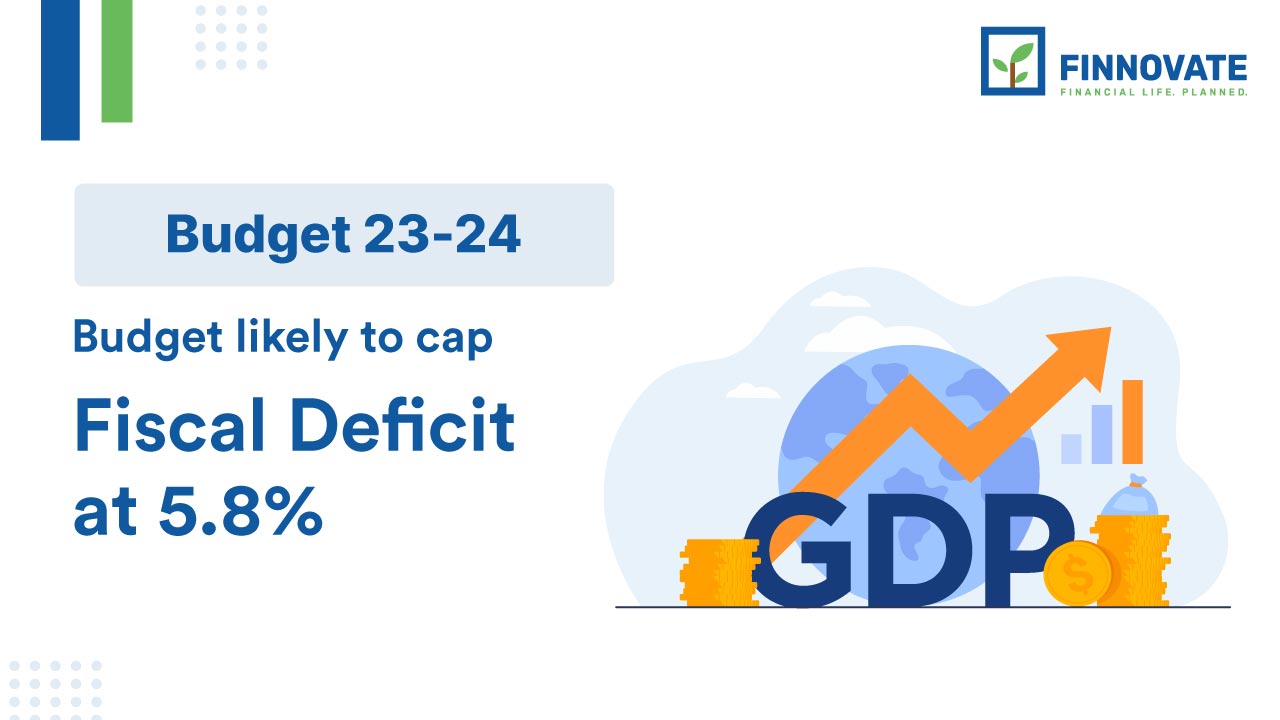
Ahead of the Union Budget on 01st Feb, the big question is on the fiscal deficit. There is a segment that wants a drastic overhaul of the fiscal deficit estimates for FY24. Is that likely to really happen?
Targeting fiscal deficit
In the last year, the fiscal deficit is down from 6.9% of GDP to 6.4% of GDP. The lower figure was an outcome of better spending controls and also higher GDP. The big question is what would be fiscal deficit target for FY24. In fact, numbers being touted range from 5.8% on the lower side to 6% on the upper side. That would be a lowering of the fiscal deficit targeting by 40 bps to 60 bps. It would not just be the fiscal deficit figure but the glide path that will really matter.
Glide path; and why to do it?
A glide path for fiscal deficit is guidance over next 3-4 years. When the FRBM Act was passed earlier, the idea was to take fiscal deficit gradually lower to the level of 3.5% and stabilize at 3.0% of GDP. While the Indian economy was on the glide path, the COVID pandemic was a kind of dampener to the reduction of fiscal deficit. Due to the massive outlays planned to revive growth, the deficit was 9.2% in FY21, 6.9% in FY22 and 6.4% in FY23. The glide path would show the commitment of government to progressively reduce the fiscal deficit and will also send a signal to investors and to the sovereign rating agencies.
How to set the glide path?
Ideally, the glide path should not be more than 3 years; that means at the most it can go up to FY26. The center must plan to aggressively trim the fiscal deficit to a level of around 4.5% by FY26, which means taking fiscal deficit to 5.8% in FY24 and cutting another 130 basis points in 2 years. The real challenge is that, this has to be done without impacting the capex, which is the core of future growth. An aggressive glide path would convince the rating agencies and FPIs that the government is serious about fiscal prudence. This will be value accretive for India from a global sovereign rating perspective too.
It is risk worth taking
The million dollar question is, whether India can really achieve such a glide path to lower fiscal deficit. The answer is that it is a risk worth taking. It would convince the investors and the rating agencies that the government is dead serious about fiscal prudence. It is also essential to demonstrate commitment, but the first step is to make that kind of commitment. We have seen in the past that the sovereign rating agencies and the FPIs have been extremely positive about an aggressive glide path to cut the fiscal deficit. The last 3 years were challenging years, and now India shows signs of recovering faster. That must be backed by fiscal prudence. The quicker India does it, the better it would be!
No spam. Only new posts, simple explainers, and practical money checklists for busy professionals.
Finnovate is a SEBI-registered financial planning firm that helps professionals bring structure and purpose to their money. Over 3,500+ families have trusted our disciplined process to plan their goals - safely, surely, and swiftly.
Our team constantly tracks market trends, policy changes, and investment opportunities like the ones featured in this Weekly Capsule - to help you make informed, confident financial decisions.
Learn more about our approach and how we work with you:
No comments yet. Start the conversation. What would you add?
No spam. Only new posts, simple explainers, and practical money checklists.
You may also like
See how Indian households save and invest across deposits, insurance, mutual funds and sto...

Received a ₹10 lakh bonus? Learn how to decide between spending, debt repayment, near-te...

Should your emergency fund stay in a savings account? Learn how to split it across savings...

FD vs corporate bonds: compare returns, YTM, safety, liquidity, tax and credit risk to und...
Popular now

Learn how to easily download your NSDL CAS Statement in PDF format with our step-by-step g...

Looking for the best financial freedom books? Here’s a handpicked 2026 reading list with...

Learn what SIF investment means in India, SEBI rules, Rs 10 lakh minimum investment, avail...

Clear guide to mutual fund taxation in India for FY 2025–26 after July 2024 changes: equ...