

The Great Economic Decoupling of 2026: Oil, AI & India
Rising oil prices and booming AI investment are shaping an uneven global economy in 2026. ...
24 October 2026
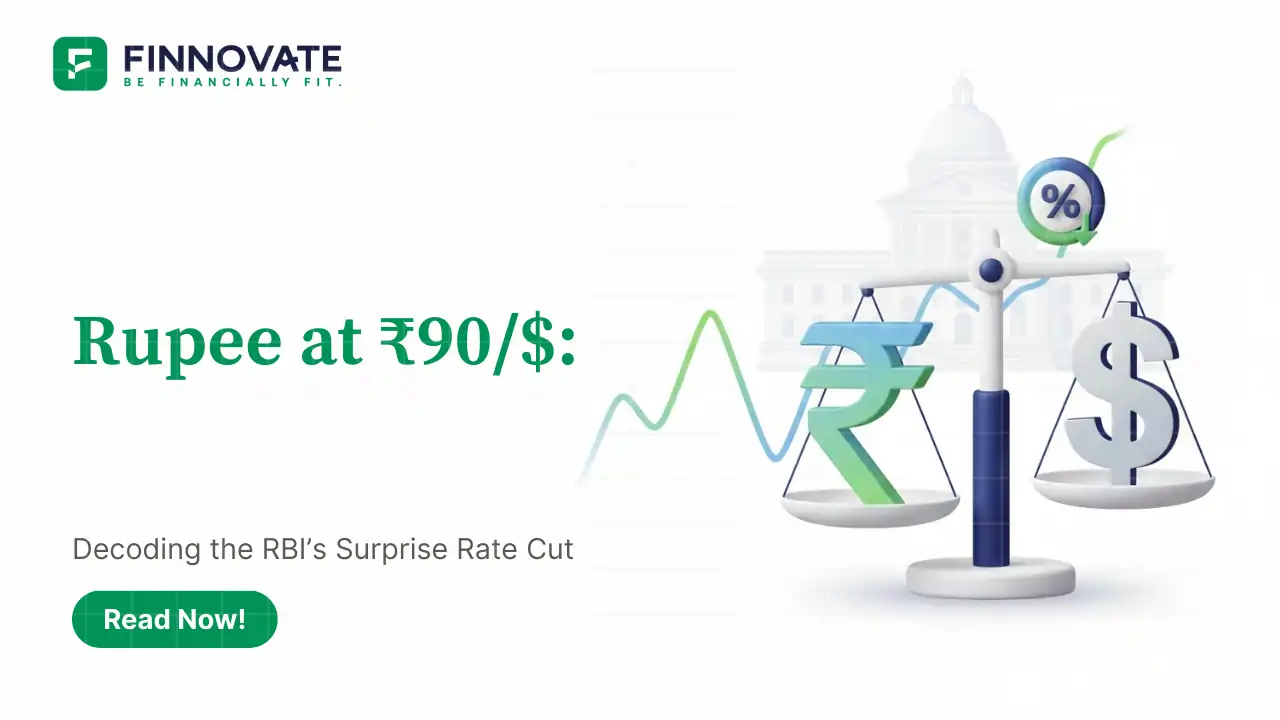
The Indian rupee touched ₹90 per dollar last week - a level popularly called the “nervous nineties,” borrowing from cricket’s tense moments. Just as the market was absorbing this currency weakness, the RBI surprised everyone with a 25-bps rate cut in the December policy.
Cutting rates when the currency is sliding is unusual. It risks weakening the rupee further. Yet, the RBI chose to go ahead. Was this bravery? Mere optimism? Or a well-calculated move that looks risky from the outside but has a deeper logic inside?
The answer lies in inflation, growth, and a bit of boldness.
Most economists expected the RBI to stay cautious. But the central bank leaned on one big factor - inflation has collapsed.
This is the lowest inflation India has seen in the CPI era. With food inflation easing and the gold impact gradually tapering, the RBI believed this was the right moment to support growth.
And so, despite rupee volatility, the MPC chose to cut rates and push liquidity into the system.
Cutting interest rates when the rupee is under pressure is not something a central bank typically does. It signals confidence - and perhaps courage - in the growth and inflation outlook.
The RBI didn’t stop at the rate cut. It doubled down with:
This is a full-scale liquidity expansion. And the RBI backed it with upgraded estimates:
The message was clear: inflation is not a threat right now, and growth deserves more support.
There is another interpretation. This may not be simple bravery. It may be bravura - a bold move backed by deep internal confidence.
Why? Because the decision to cut rates was unanimous among all six MPC members. That means the RBI deliberated thoroughly and accepted calculated risks.
The core bet seems to be this:
The RBI appears to be aiming for a virtuous cycle: growth → flows → stronger rupee → better sentiment → more flows.
This is bravura - bold but deliberate.

There is an important piece of the puzzle that the RBI did not explicitly mention: nominal GDP growth.
India’s nominal GDP grew just 8.7% in Q2 FY26 — far below the double-digit levels needed to attract global capital and sustain economic momentum. Without strong nominal growth, the India story does not look compelling to long-term investors.
Here is where ultra-low inflation becomes an opportunity:
In other words, the RBI is trying to “buy time” - using the low-inflation cushion to stimulate growth before global investors start reassessing India.
If this works, India could enter another sweet spot: low inflation, strong real growth, rising nominal growth, and stable currency.
The truth is - it’s a mix of all three.
The payoff will depend on two things:
(1) whether growth actually strengthens, and
(2) whether foreign investors return.
If both happen, the RBI’s bold call may look genius in hindsight.
Disclaimer: This article is for informational and educational purposes only and does not constitute investment advice.
No spam. Only new posts, simple explainers, and practical money checklists for busy professionals.
Finnovate is a SEBI-registered financial planning firm that helps professionals bring structure and purpose to their money. Over 3,500+ families have trusted our disciplined process to plan their goals - safely, surely, and swiftly.
Our team constantly tracks market trends, policy changes, and investment opportunities like the ones featured in this Weekly Capsule - to help you make informed, confident financial decisions.
Learn more about our approach and how we work with you:
No comments yet. Start the conversation. What would you add?
No spam. Only new posts, simple explainers, and practical money checklists.
You may also like
Rising oil prices and booming AI investment are shaping an uneven global economy in 2026. ...

Explore FPI equity flows for October First Half, 2026: ₹47,955 crore in net outflows, th...

Understand the India–Mauritius tax treaty’s Principal Purpose Test, its August 2026 ef...

Explore India’s AI hardware opportunity through the proposed Adani–Jabil venture, from...
Popular now

Learn how to easily download your NSDL CAS Statement in PDF format with our step-by-step g...

Looking for the best financial freedom books? Here’s a handpicked 2026 reading list with...
Learn what SIF investment means in India, SEBI rules, Rs 10 lakh minimum investment, avail...
Clear guide to mutual fund taxation in India for FY 2025–26 after July 2024 changes: equ...