

Why the AI Boom Could Make Your Next Phone More Expensive
AI demand is pushing up memory chip prices. Here's why the shortage could make smartphones...
08 October 2026
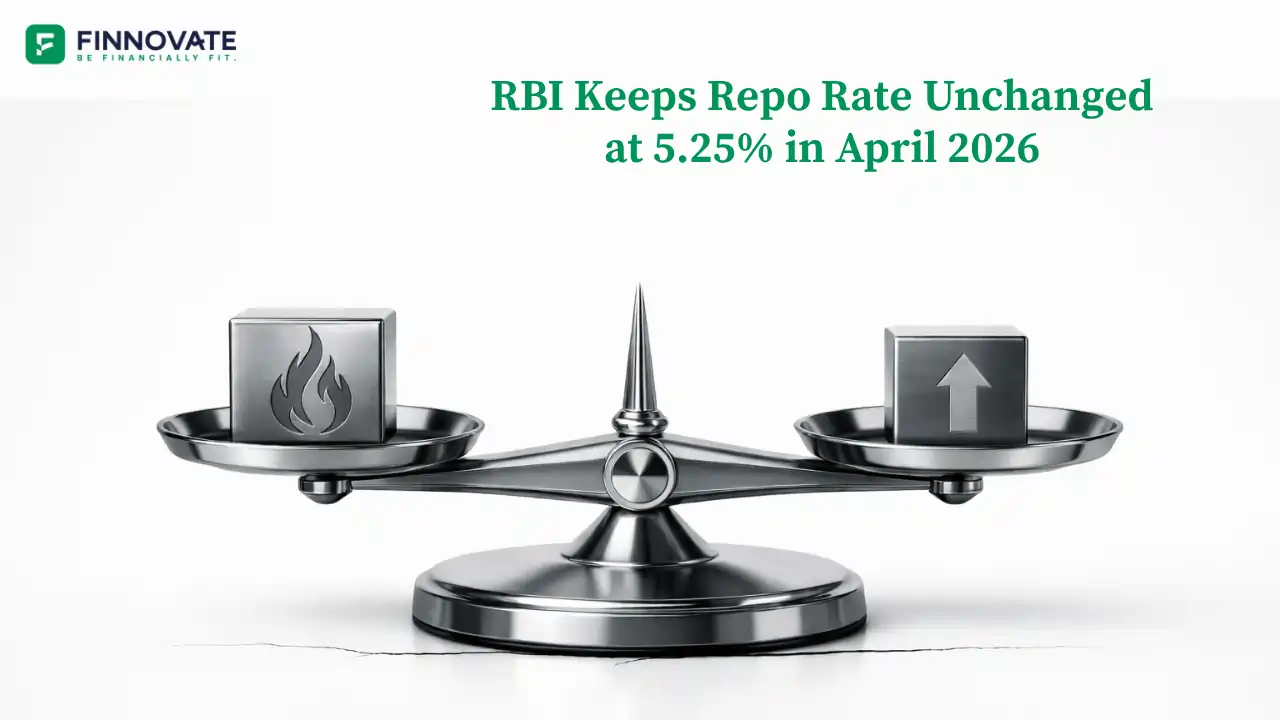
The RBI held the repo rate at 5.25% on April 8, 2026, the first policy decision of FY27. The decision was unanimous and the stance remains neutral. What makes this hold different from February is the context it was made in: crude above $100, a rupee that hit a record low in March, and an inflation outlook that has shifted materially since the start of the year. This article covers what the RBI decided, why, what the new FY27 projections say, and what it means for your loans, deposits, and investments.
| Metric | April 2026 Outcome |
|---|---|
| Repo Rate | 5.25% (unchanged) |
| Policy Stance | Neutral (retained) |
| SDF Rate | 5.00% (unchanged) |
| MSF / Bank Rate | 5.50% (unchanged) |
| MPC Vote | Unanimous |
| FY27 GDP Growth Forecast | 6.9% |
| FY27 CPI Inflation Forecast | 4.6% |
| FY27 Core Inflation Forecast | 4.4% |
The inflation the RBI is now managing did not come from excess demand or loose monetary policy. It came from crude oil.
The West Asia conflict that escalated in late February pushed the Indian crude oil basket well above $100 per barrel, a sharp reversal from the $60 range that characterised much of FY26. India imports over 85% of its crude requirements. When crude prices move sharply, the pass-through is near-automatic across:
Governor Malhotra was explicit on this point. Rate hikes are not the right tool for supply-driven inflation. A higher repo rate would make borrowing more expensive for Indian businesses and households without reducing a barrel of oil's price by a single dollar. The MPC's stated approach is to wait and watch as the geopolitical situation evolves, while anchoring inflation expectations through clear communication.
The RBI's own FY27 inflation projection of 4.6% sits within the 2-6% tolerance band, but it represents a meaningful upward revision. January CPI came in at 2.7% and February at 3.2%, both comfortably below target. The pipeline effect of crude above $100 and a rupee that touched ₹95.22 in March is expected to push the headline number progressively higher through Q1 and Q2 of FY27.
In February 2026, the RBI held rates and described the economy as being in a "good spot." Between February 6 and April 8, the macro picture shifted sharply:
The April MPC is operating in a materially different macro environment from the February one.
The April meeting was the first to use India's new GDP and CPI base series, which the RBI had deferred from February pending their release. The full-year projections these new series produced reflect the shift in macro conditions since the start of the year.
GDP growth for FY27 is projected at 6.9%, down from 7.4% in February and 7.6% recorded in FY26 under the new series. Governor Malhotra acknowledged that the West Asia conflict and its impact on energy costs, supply chains, and investor sentiment weigh on the outlook.
Private consumption and fixed investment remain the key supports to growth. However, rising input costs could compress corporate margins and dampen the pace of investment through the year.
CPI inflation for FY27 is projected at 4.6%, revised up from the 4.2% estimate in February. Core inflation is expected at 4.4%, with precious metals excluded core running lower. The RBI has for the first time published a full quarterly path, showing inflation peaking in Q3 before easing into Q4.
The RBI describes risks to this forecast as being on the upside, driven by:
| Quarter | FY27 CPI Inflation Forecast |
|---|---|
| Q1 FY27 (Apr-Jun 2026) | 4.0% |
| Q2 FY27 (Jul-Sep 2026) | 4.4% |
| Q3 FY27 (Oct-Dec 2026) | 5.2% (peak) |
| Q4 FY27 (Jan-Mar 2027) | 4.7% |
| Full Year FY27 | 4.6% |
| Projection | February 2026 | April 2026 | Change |
|---|---|---|---|
| FY27 GDP Growth | 7.4% | 6.9% | -50 bps |
| FY27 CPI Inflation | 4.2% | 4.6% | +40 bps |
| FY27 Core Inflation | Not published | 4.4% | First full-year estimate |
| Policy Stance | Neutral | Neutral | Unchanged |
| Repo Rate | 5.25% | 5.25% | Unchanged |
The market is no longer asking only whether the RBI will cut rates. It is also asking whether the RBI might hike. If Brent crude stays above $100 for an extended period, imported inflation could push headline CPI toward the upper end of the tolerance band. A rupee that remains under pressure compounds that risk.
The RBI has not signalled a hike. The neutral stance preserves flexibility to move in either direction. But the language from Governor Malhotra on April 8 was notably more cautious than February, with three clear signals:
The rate hike scenario becomes relevant if CPI inflation moves durably above 5% and the rupee continues to weaken. Neither condition is met as of today. The easing cycle that delivered 125 basis points of cuts across FY26 is firmly over. Whether the next move, whenever it comes, is a cut or a hike will depend on how FY27 inflation data evolves over the coming months. For a detailed analysis of the hike case, see our earlier piece: RBI Rate Hike in FY27: Why the Narrative Has Flipped.
The repo rate hold at 5.25% means no immediate change to EMIs on repo-linked home loans. Borrowers who benefited from the 125 bps of FY26 cuts continue to hold those gains. Here is what those cuts delivered on a ₹50 lakh, 20-year loan:
| Before FY26 Cuts | After FY26 Cuts | |
|---|---|---|
| Home loan rate | ~8.50% | ~7.25% |
| Monthly EMI | ~₹43,391 | ~₹39,519 |
| Monthly saving | ~₹3,000 per month preserved by today's hold | |
FD rates have already drifted lower in line with the FY26 easing cycle. The hold does not push them lower, but the possibility of a rate hike later in FY27 means locking in very long tenures at current rates is worth reviewing in light of the FY27 rate uncertainty. Shorter to medium-tenure FDs may allow more flexibility until the rate direction becomes clearer through incoming inflation data.
The RBI's more cautious tone and flagged upside inflation risks reduce the case for further bond price appreciation in the near term. Longer duration funds benefited significantly during the FY26 easing cycle, but with that cycle on pause, the risk-reward for long duration exposure has shifted. Shorter duration and dynamic bond fund categories have historically shown more resilience during periods of rate uncertainty. Please consult a SEBI-registered investment adviser before making any changes to your portfolio based on interest rate expectations.
FY27 begins in a meaningfully different position than FY26 did. A year ago, inflation was benign, growth was strong, and the RBI had room to cut rates comfortably. Today, inflation is rising, growth has been revised down, the rupee is under pressure, and the West Asia conflict introduces a variable that neither the RBI nor financial markets can fully forecast or price in advance.
Governor Malhotra's observation that India's fundamentals are on stronger footing than in previous crisis episodes is accurate. Three factors provide genuine buffer:
These are buffers against severity, not immunity from impact.
The next MPC meeting is scheduled for June 3-5, 2026. By then the committee will have two more months of CPI data, a clearer read on crude price trajectories, and a better picture of whether the West Asia situation is stabilising or escalating. That meeting, not this one, is likely to be the more consequential decision point for FY27 monetary policy direction.
A rate hold in an environment of rising inflation and slowing growth does not affect all sectors equally. The RBI's April policy creates distinct conditions across different parts of the economy.
Credit growth is expected to remain stable, supported by steady economic activity. However, margin expansion is likely to remain constrained with no rate cuts on the horizon and the easing cycle firmly on pause.
These sectors continue to benefit from sustained government capital expenditure, which has been a structural support throughout FY26 and is expected to continue in FY27. Their limited sensitivity to short-term inflation dynamics makes them relatively more insulated from the current macro shift.
Elevated global commodity prices could support profitability for oil and metal sector companies, though outcomes will depend on demand conditions and each company's cost efficiency. The key variable is how long crude stays above $100 per barrel.
Interest rate sensitivity in these sectors remains high. The rate hold preserves borrowing costs at current levels, which is a relative positive over a hike scenario. However, persistently elevated borrowing costs compared to the pre-tightening era may continue to weigh modestly on discretionary demand.
Rising input costs, particularly from food inflation which is expected to build through Q3 FY27, could exert pressure on margins. Rural demand trends warrant monitoring as food price inflation disproportionately affects rural purchasing power.
A weaker rupee historically provides a tailwind to export earnings by making Indian services more competitively priced in dollar terms. However, global demand conditions remain a critical and uncertain variable for IT sector revenue growth in FY27.
The MPC unanimously held the repo rate at 5.25% and retained the neutral policy stance. The meeting also delivered the RBI's first full-year FY27 projections under the new GDP and CPI base series: GDP growth at 6.9% and CPI inflation at 4.6%.
The inflation risk India faces is imported and supply-driven, caused by crude oil above $100 per barrel due to the West Asia conflict. Rate cuts into a supply shock would risk further currency weakness and higher imported inflation without meaningfully supporting growth, which the RBI assessed as an inappropriate trade-off at this stage.
No. The repo rate is unchanged, so EMIs on repo-linked home loans remain stable. Borrowers continue to benefit from the 125 bps of cuts delivered in FY26. A future rate hike, if it occurs, could raise EMIs, but no such move has been signalled currently. Please consult a SEBI-registered investment adviser or your bank for guidance specific to your loan.
It signals that the RBI expects inflation to rise meaningfully through FY27, reducing the probability of further rate cuts and introducing the possibility of a rate hike if inflation overshoots. FD rates are unlikely to fall further in the near term, and a hike scenario could push deposit rates modestly higher. Very long FD tenures at current rates may be worth reviewing until the FY27 rate direction becomes clearer.
The next MPC meeting is scheduled for June 3-5, 2026, with the decision announced on June 5. That meeting will incorporate two additional months of CPI data and a clearer read on crude price trajectories, making it a more significant decision point for the direction of FY27 monetary policy.
Disclaimer: This article is for general information and educational purposes only. It does not constitute investment advice, a recommendation, or an offer to buy or sell any securities or financial instruments. Macroeconomic projections, policy rate decisions, and inflation and GDP forecasts referenced in this article are based on publicly available RBI Monetary Policy Statements and Finnovate Research, and are subject to revision. Past monetary policy outcomes are not indicative of future rate decisions. Investors should not make any financial decision based solely on this article. Please consult a SEBI-registered investment adviser or qualified financial professional before making any investment, loan, or deposit-related decision. All investments and financial products are subject to market and interest rate risks.
No spam. Only new posts, simple explainers, and practical money checklists for busy professionals.
Finnovate is a SEBI-registered financial planning firm that helps professionals bring structure and purpose to their money. Over 3,500+ families have trusted our disciplined process to plan their goals - safely, surely, and swiftly.
Our team constantly tracks market trends, policy changes, and investment opportunities like the ones featured in this Weekly Capsule - to help you make informed, confident financial decisions.
Learn more about our approach and how we work with you:
No comments yet. Start the conversation. What would you add?
No spam. Only new posts, simple explainers, and practical money checklists.
You may also like
AI demand is pushing up memory chip prices. Here's why the shortage could make smartphones...

FPIs sold ₹35,861 crore in Indian equities in September 2026. See which sectors saw outf...
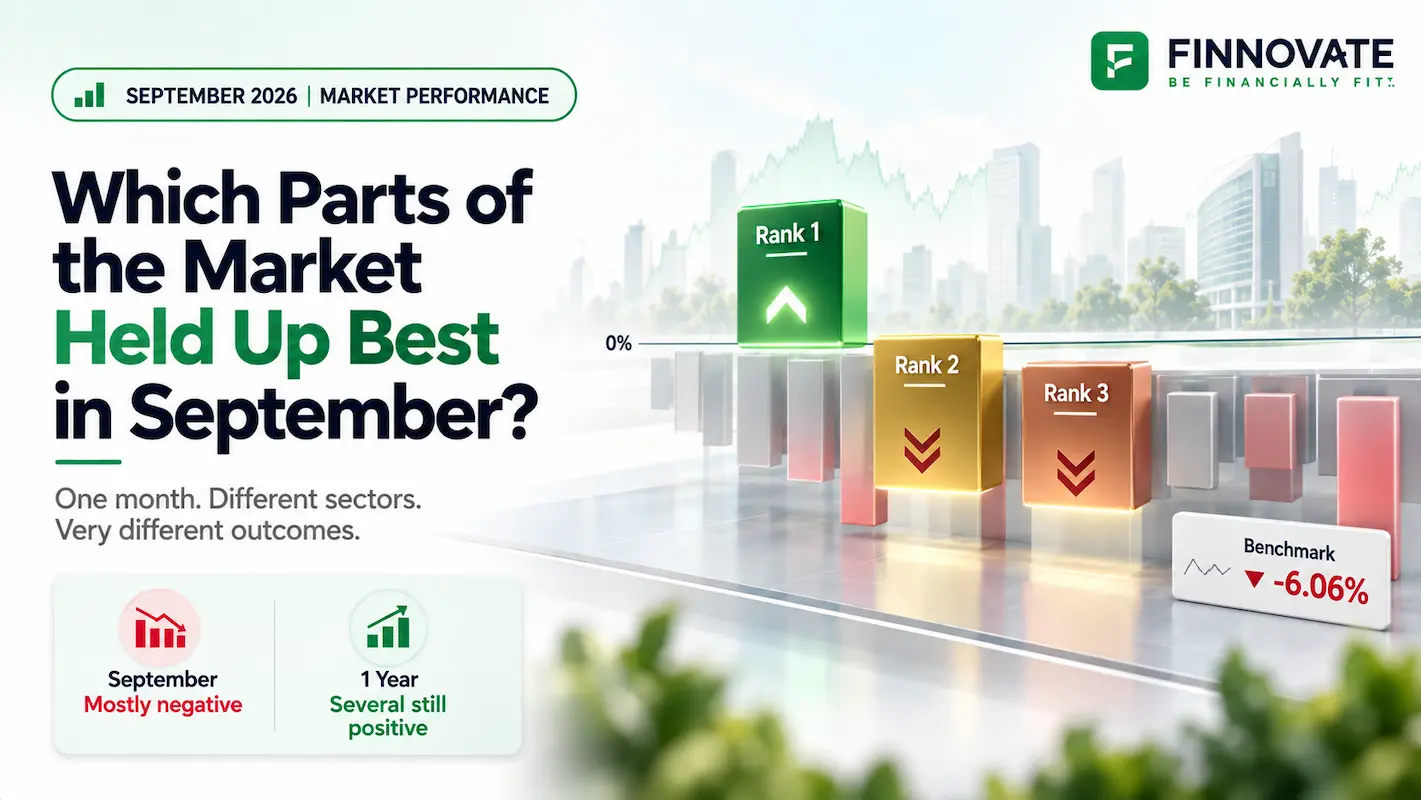
Compare 19 sector and thematic indices with Nifty 50 for September 2026, covering monthly ...

Understand the Growpital case, SEBI’s refund order, the LLP investment structure and wha...
Popular now

Learn how to easily download your NSDL CAS Statement in PDF format with our step-by-step g...

Looking for the best financial freedom books? Here’s a handpicked 2026 reading list with...
Learn what SIF investment means in India, SEBI rules, Rs 10 lakh minimum investment, avail...
Clear guide to mutual fund taxation in India for FY 2025–26 after July 2024 changes: equ...