

The Great Economic Decoupling of 2026: Oil, AI & India
Rising oil prices and booming AI investment are shaping an uneven global economy in 2026. ...
24 October 2026
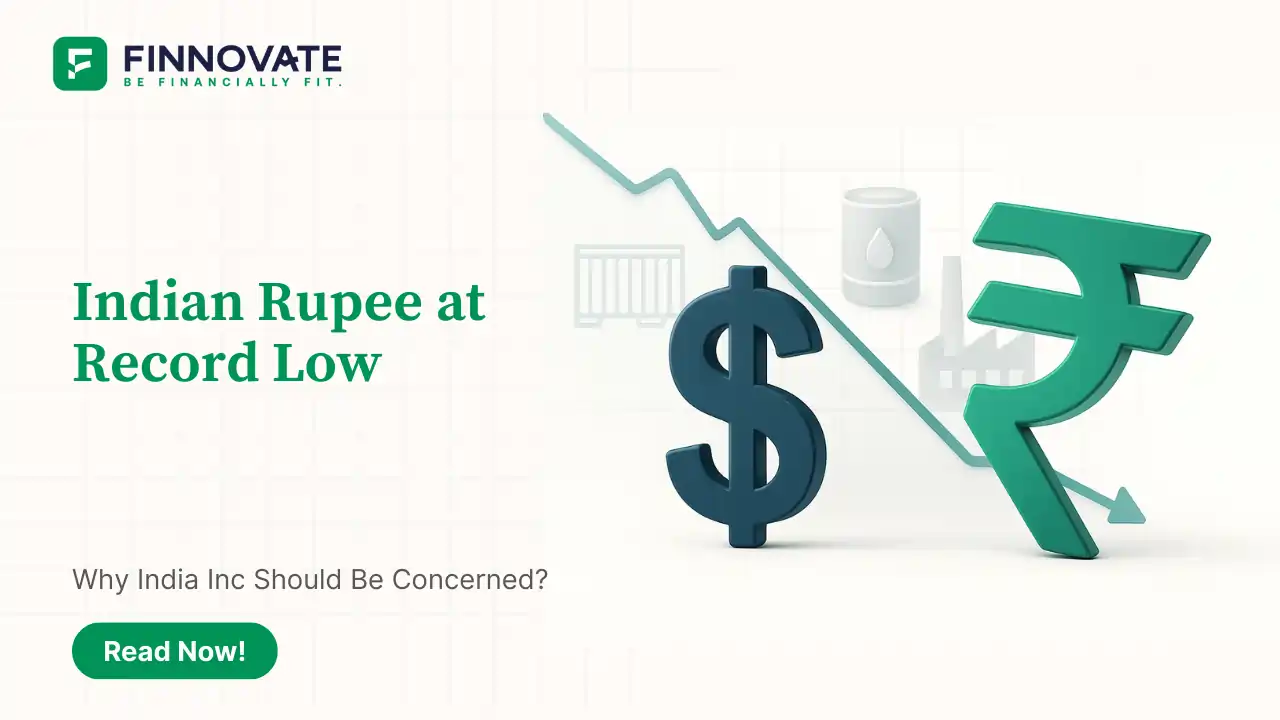
The Indian rupee at ₹90.60 per dollar is not just another headline number. It marks a phase where currency weakness starts to affect businesses, investors, and policymakers in tangible ways.
Since the US elections, the rupee has emerged as one of the worst-performing emerging market currencies. This is no longer a short-term fluctuation. It is turning into a macro challenge that India Inc cannot afford to ignore.
In absolute terms, the rupee has depreciated by 6.9% against the US dollar. But the more telling metric is the Real Effective Exchange Rate (REER).
In REER terms - which measure India’s currency competitiveness against a basket of trading partners - the rupee has fallen by 9.2%. That signals a meaningful loss of purchasing power and competitiveness, not just a technical move on currency charts.
This matters because REER captures inflation-adjusted weakness. In simple terms, India is becoming more expensive globally, even as its currency weakens.
One of the most immediate consequences of a weak rupee is its impact on valuations in dollar terms.
Global GDP comparisons are done in dollars. When the rupee weakens, India’s GDP shrinks in dollar terms - even if it continues to grow in rupees.
This is one reason India’s $5 trillion GDP target, once aimed for 2028, is now increasingly being pushed closer to 2031. Currency weakness silently erodes dollar wealth.
The same applies to equity markets. Market capitalisation may rise domestically, but Indian markets can still underperform globally when measured in dollars.
For corporates, this is the most direct and painful impact.
Several key sectors in India depend heavily on dollar-denominated imports:
When the rupee weakens, import costs rise instantly. Margins get squeezed unless companies pass costs to consumers.
Then there is foreign currency borrowing. While external debt has reduced over time, an unhedged portion still exists. Market experts warn that if the rupee crosses ₹91 per dollar, companies may rush to hedge - adding further pressure on the currency.
India has historically run a merchandise trade deficit. While services exports help, they do not fully offset the gap. This leaves India exposed to imported inflation.
When the rupee weakens and domestic demand stays resilient, global exporters often pass their inflation into India through higher prices.
This does not show up immediately. But over time, it leads to:
Soft crude oil prices have helped cushion the impact so far. But that relief may not last indefinitely.
India still relies on foreign capital flows to bridge gaps in its fiscal and current account balances. A weak rupee complicates that equation.
Here’s the math foreign investors care about:
If an investor earns 10% on Indian equities but the rupee depreciates by 6%, the effective dollar return is just 4%.
That is why FPIs tend to turn cautious when the rupee weakens. Over the last four years, FPIs have largely been net sellers in Indian equities.
Debt inflows picked up mainly because of India’s inclusion in global bond indices - not because currency risk disappeared.
Historically, capital outflows have often triggered a domino effect for India: weaker currency, lower inflows, and tighter financial conditions.

A weak rupee does not hurt overnight. It works slowly through balance sheets, margins, valuations, and confidence.
For India Inc, sustained currency weakness means:
This is not a short-term trading issue. It is a macro risk that needs careful management - both at the corporate and policy level.
Disclaimer: This article is for informational and educational purposes only and does not constitute investment or currency advice.
No spam. Only new posts, simple explainers, and practical money checklists for busy professionals.
Finnovate is a SEBI-registered financial planning firm that helps professionals bring structure and purpose to their money. Over 3,500+ families have trusted our disciplined process to plan their goals - safely, surely, and swiftly.
Our team constantly tracks market trends, policy changes, and investment opportunities like the ones featured in this Weekly Capsule - to help you make informed, confident financial decisions.
Learn more about our approach and how we work with you:
No comments yet. Start the conversation. What would you add?
No spam. Only new posts, simple explainers, and practical money checklists.
You may also like
Rising oil prices and booming AI investment are shaping an uneven global economy in 2026. ...

Explore FPI equity flows for October First Half, 2026: ₹47,955 crore in net outflows, th...

Understand the India–Mauritius tax treaty’s Principal Purpose Test, its August 2026 ef...

Explore India’s AI hardware opportunity through the proposed Adani–Jabil venture, from...
Popular now

Learn how to easily download your NSDL CAS Statement in PDF format with our step-by-step g...

Looking for the best financial freedom books? Here’s a handpicked 2026 reading list with...
Learn what SIF investment means in India, SEBI rules, Rs 10 lakh minimum investment, avail...

Clear guide to mutual fund taxation in India for FY 2025–26 after July 2024 changes: equ...