

The Great Economic Decoupling of 2026: Oil, AI & India
Rising oil prices and booming AI investment are shaping an uneven global economy in 2026. ...
24 October 2026
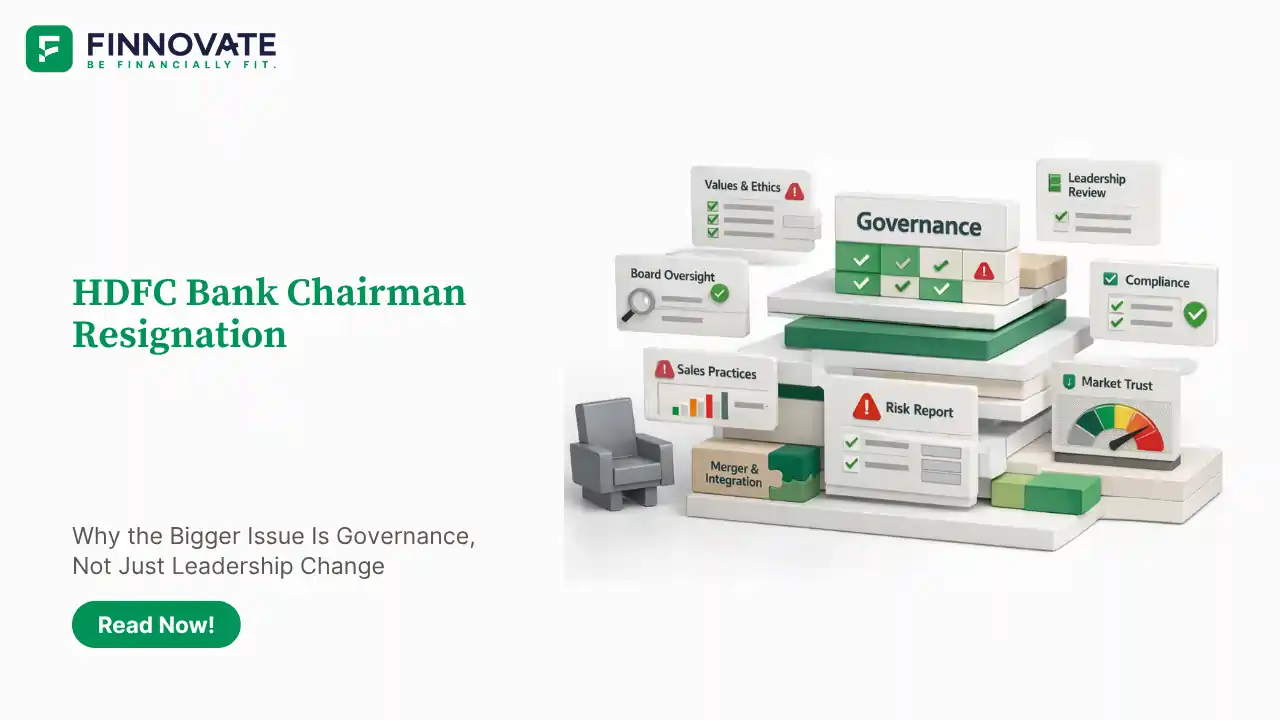
HDFC Bank’s part-time chairman and independent director, Atanu Chakraborty, resigned in March 2026 with immediate effect. In his resignation letter, he said certain “happenings and practices” he had observed over the last two years were not in congruence with his personal values and ethics. The bank then moved to appoint Keki Mistry as interim part-time chairman for three months from March 19, 2026.
That is why this is bigger than a boardroom change. At a bank of HDFC Bank’s scale, a chairman’s exit is not usually read as routine churn. It raises a broader question about governance standards, board comfort, oversight culture, and how the institution responds when internal discomfort becomes public. Even though the RBI later said it had found no material concerns regarding the bank’s conduct or governance, the resignation itself has clearly reopened the conversation.
| Issue | What is known | Why it matters |
|---|---|---|
| Chairman resignation | Atanu Chakraborty resigned citing certain happenings and practices not aligned with his values and ethics | Signals governance discomfort rather than a routine exit |
| Interim leadership | Keki Mistry was approved as interim part-time chairman for three months from March 19, 2026 | Provides continuity at a sensitive time |
| RBI response | RBI said it found no material concerns regarding the bank’s conduct or governance | Important reassurance for a systemically important bank |
| AT1 bond issue | Three employees were terminated after an internal probe into alleged Credit Suisse AT1 bond mis-selling at UAE operations | Raises questions around sales practices, suitability, and compliance culture |
| Merger benefits | Chakraborty said the benefits of the HDFC merger were yet to fully fructify | Reopens debate on execution and integration quality |
At large banks, the chairman is not only a ceremonial figure. The board is expected to protect governance discipline, risk oversight, and institutional credibility. So when a chairman steps down using language tied to values and ethics, markets do not read it as a normal transition. They read it as a signal.
This matters even more in banking than in many other sectors because trust is part of the business model. Investors, depositors, regulators, and counterparties all care not only about growth and profitability, but also about the quality of oversight behind those numbers. That is why governance signals often matter more than the first-day stock move.
One thing is clear from the public record: Chakraborty did not resign citing health, tenure, or personal scheduling reasons. He cited discomfort with certain happenings and practices over the last two years. He did not publicly list each concern in detail. That means it would be wrong to reduce the resignation to one single issue. But it would also be wrong to dismiss the language as routine.
The message appears to be broader. When a chairman chooses values-and-ethics language, the market naturally interprets it as discomfort around governance standards, internal processes, or conduct expectations. That does not establish wrongdoing by itself. But it does make governance scrutiny unavoidable.
One important issue this episode brings back into focus is how boards evaluate leadership at a major private bank. At that level, continuity cannot be treated as a routine matter. It has to rest on objective performance review, governance comfort, compliance discipline, and reputation management.
That principle matters beyond any one individual. Investors expect a board to apply clear and credible standards when evaluating top leadership, especially when the bank is facing reputational questions or internal controversy. In banking, the process behind leadership decisions matters almost as much as the decision itself.
This episode has become harder to treat as isolated because of what followed. Shortly after the chairman’s resignation, three HDFC Bank employees, including senior executives, were terminated after an internal probe into the alleged mis-selling of Credit Suisse AT1 bonds to NRI clients through the bank’s UAE operations. The bank said it had identified gaps in client onboarding requirements and taken remedial action in line with internal policies.
This matters because AT1 bonds are not simple fixed-income products. They are riskier capital instruments with loss-absorption features, which means suitability, disclosure, and client understanding are critical. In this case, the issue was not just the product itself. The bigger concern was whether the product was sold with adequate disclosure and proper suitability standards. For a bank, that is not a side issue. It goes directly to culture, controls, and trust.
The resignation has also reopened a strategic question. Chakraborty said in his letter that the benefits of the HDFC Ltd merger were “yet to fully fructify.” That does not amount to a rejection of the merger. But it does show that the integration story is still open to judgement.
That matters because large bank mergers are not judged by scale alone. They are judged by execution, integration discipline, cultural fit, and whether the promised benefits become visible in operating performance over time. So the market may now be looking at HDFC Bank through two connected lenses: governance confidence and merger execution. They are different issues, but they can shape investor confidence together.
The most useful lens is not gossip. It is governance quality.
The RBI’s statement that it found no material concerns is clearly an important stabilising signal. But market trust is not rebuilt by reassurance alone. Investors will still want to see whether the bank’s internal response looks corrective, credible, and durable.
Banks are built on confidence. Capital, margins, and growth matter, but trust matters just as much.
That is why governance questions can outlast one resignation. A chairman can leave, an interim replacement can arrive, and the regulator can offer reassurance. But if the market feels there is still unfinished business around board oversight, culture, or conduct, the trust gap can remain open. In that sense, the bigger issue for HDFC Bank is not the resignation alone. It is how convincingly the bank addresses the message behind it.
Atanu Chakraborty resigned saying certain happenings and practices within the bank over the last two years were not congruent with his personal values and ethics.
It raises governance questions because chair-level exits at large banks are usually interpreted as signals about oversight, culture, or internal comfort levels rather than routine reshuffles.
No such formal conclusion has been established. RBI said it found no material concerns regarding the bank’s conduct or governance. But the resignation still matters because it has clearly reopened governance scrutiny.
It relates to alleged mis-selling of Credit Suisse AT1 bonds to NRI clients through the bank’s UAE operations. The bank said it found gaps in onboarding requirements and took remedial action, including personnel changes.
They should watch governance confidence, compliance culture, board response, leadership review standards, and whether the bank addresses reputational concerns with visible seriousness.
Disclaimer: This article is for general information and educational purposes only. It does not constitute investment, legal, tax, or financial advice. Governance matters, regulatory developments, and corporate actions can evolve, so readers should refer to official disclosures before taking decisions.
No spam. Only new posts, simple explainers, and practical money checklists for busy professionals.
Finnovate is a SEBI-registered financial planning firm that helps professionals bring structure and purpose to their money. Over 3,500+ families have trusted our disciplined process to plan their goals - safely, surely, and swiftly.
Our team constantly tracks market trends, policy changes, and investment opportunities like the ones featured in this Weekly Capsule - to help you make informed, confident financial decisions.
Learn more about our approach and how we work with you:
No comments yet. Start the conversation. What would you add?
No spam. Only new posts, simple explainers, and practical money checklists.
You may also like
Rising oil prices and booming AI investment are shaping an uneven global economy in 2026. ...

Explore FPI equity flows for October First Half, 2026: ₹47,955 crore in net outflows, th...

Understand the India–Mauritius tax treaty’s Principal Purpose Test, its August 2026 ef...

Explore India’s AI hardware opportunity through the proposed Adani–Jabil venture, from...
Popular now

Learn how to easily download your NSDL CAS Statement in PDF format with our step-by-step g...

Looking for the best financial freedom books? Here’s a handpicked 2026 reading list with...
Learn what SIF investment means in India, SEBI rules, Rs 10 lakh minimum investment, avail...
Clear guide to mutual fund taxation in India for FY 2025–26 after July 2024 changes: equ...