

FPI Flows First Half October 2026: ₹47,955 Crore Outflow
Explore FPI equity flows for October First Half, 2026: ₹47,955 crore in net outflows, th...
23 October 2026

When the First Advance Estimates (FAE) of India’s FY26 GDP growth came in at 7.4%, reactions were mixed. On the surface, the number looked reassuring. It was better than the previous year and also higher than the RBI’s estimates. For many, this suggested that India’s growth engine was still running strong.
But economists were not fully convinced. The concerns were not about the headline growth number. They were about what sat beneath it. To understand FY26 GDP properly, it is important to look beyond the headline and focus on the trajectory and the underlying drivers.
That is where the real story lies.
It is important to start with context.
The 7.4% real GDP growth number for FY26 comes from the First Advance Estimates, which are preliminary in nature. This is not the final word on growth.
So, revisions are not only possible, they are expected.
Even within this early estimate, there are some clear signals. The 7.4% growth figure already factors in a sharp slowdown in the second half of FY26. That means the growth number is not front-loaded optimism. It assumes moderation ahead.
However, another detail stands out. While real GDP growth appears strong, nominal GDP growth for FY26 is 180 basis points lower than FY25. This divergence is central to the debate.
Real GDP measures growth after adjusting for inflation. Nominal GDP captures growth in actual rupee terms. While both matter, they tell very different stories.
In FY26, low inflation has played an outsized role in boosting real GDP growth. This creates a situation where real growth looks healthy, but nominal growth does not keep pace.
This matters because:
A slowdown of 180 bps in nominal growth compared to FY25 raises valid concerns, even if real GDP growth looks robust.
Sectoral trends also add nuance:
The message is clear. The growth number alone does not capture the full picture. The composition and momentum matter just as much.
At first glance, a 7.4% growth rate does not appear worrying. So why are economists uneasy?
There are three broad concerns.
Economists worry that slower nominal growth could:
Without strong nominal growth, economic momentum becomes harder to sustain over time.
Many economists believe that external risks are not fully reflected in the estimates. These include:
These factors could weigh on growth as FY26 progresses.
The slowdown in:
is seen by some as an early signal of deeper macro stress. While not alarming yet, these trends warrant close monitoring.
Focusing only on nominal versus real growth risks missing the more constructive signals in the data.
Two factors stand out.
Capital formation in FY26 has risen by 70 basis points to 7.8%. This is an important development.
Higher capital formation:
This is not a short-term boost, but a foundation for sustained expansion.
There is also a visible pick-up in consumption, especially government consumption.
Government spending tends to:
When capital formation and consumption improve together, they create a much stronger future growth setup than current GDP optics may suggest.
GDP debates often focus excessively on one year’s number. That approach can be misleading.
Growth driven by:
plays out over time. These are not instant results. They build gradually and reflect in earnings, jobs, and income growth with a lag.
In that context, the FY26 GDP discussion should be less about whether growth is 7.2% or 7.4%, and more about whether the growth engine is structurally strengthening. On that front, the signals are more encouraging than the narrative suggests.
Beyond numbers and ratios, FY26 has highlighted one critical theme - resilience.
Consider what India has faced recently.
These are not cosmetic achievements. They reflect:
This resilience is not accidental. It is structural.
Disclaimer: This article is for general information and educational purposes only and should not be treated as financial, legal, tax, or investment advice. Economic data and interpretations may change as revised estimates are released. Please consult a qualified professional before making any financial decision.
No spam. Only new posts, simple explainers, and practical money checklists for busy professionals.
Finnovate is a SEBI-registered financial planning firm that helps professionals bring structure and purpose to their money. Over 3,500+ families have trusted our disciplined process to plan their goals - safely, surely, and swiftly.
Our team constantly tracks market trends, policy changes, and investment opportunities like the ones featured in this Weekly Capsule - to help you make informed, confident financial decisions.
Learn more about our approach and how we work with you:
No comments yet. Start the conversation. What would you add?
No spam. Only new posts, simple explainers, and practical money checklists.
You may also like
Explore FPI equity flows for October First Half, 2026: ₹47,955 crore in net outflows, th...

Understand the India–Mauritius tax treaty’s Principal Purpose Test, its August 2026 ef...

Explore India’s AI hardware opportunity through the proposed Adani–Jabil venture, from...
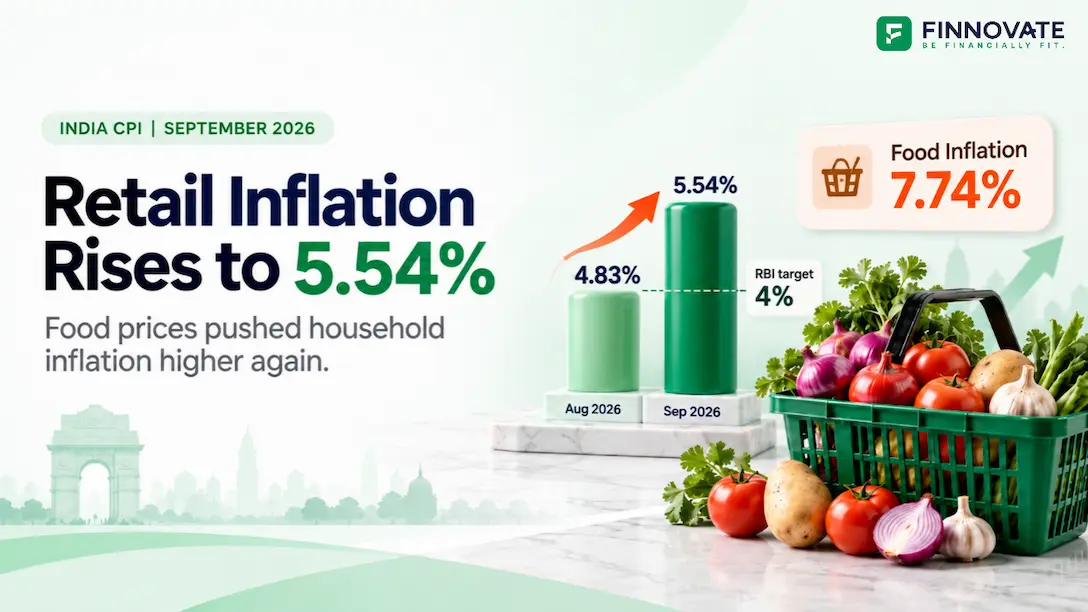
India’s CPI inflation rose to 5.54% in September 2026. Compare monthly trends, food pric...
Popular now

Learn how to easily download your NSDL CAS Statement in PDF format with our step-by-step g...

Looking for the best financial freedom books? Here’s a handpicked 2026 reading list with...
Learn what SIF investment means in India, SEBI rules, Rs 10 lakh minimum investment, avail...

Clear guide to mutual fund taxation in India for FY 2025–26 after July 2024 changes: equ...