

How India Saves and Invests: Where Household Money Goes
See how Indian households save and invest across deposits, insurance, mutual funds and sto...
07 October 2026
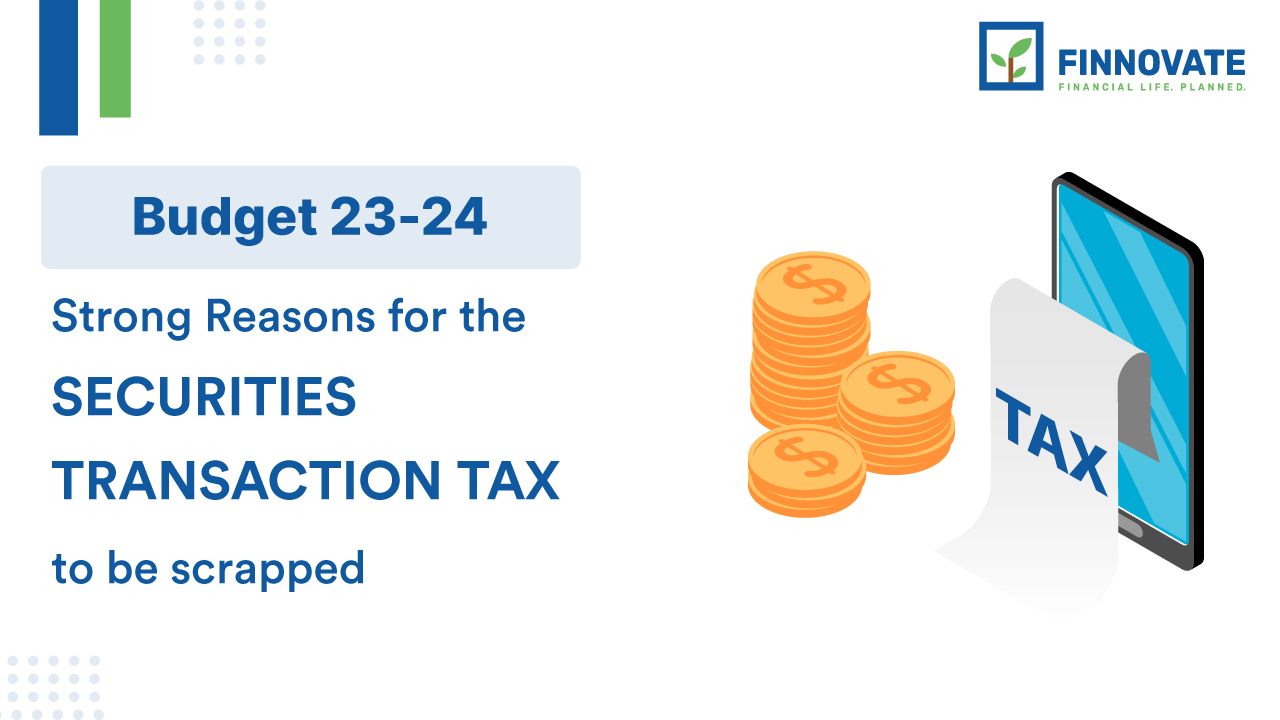
One of the big questions ahead of the Union Budget is whether the securities transaction tax (STT) will be scrapped by the Indian government. It could be a boost to volumes and trading costs, but the revenue implications may be high.
Why to scrap the STT?
There are several strong reasons for the STT to be scrapped. Firstly, at a macro level, STT adds to the cost of trading. In a market, where the broking spreads are already quite thin, it makes the big difference to the breakeven of a trade. Most global investors have protested that the STT skews the trading away from India, since no other liquid market charges STT. It also makes the market less liquid as the spreads become much wider and that impacts the tick liquidity of stocks and indices. It also makes the trading system unnecessarily complex.
There is also an argument from the side of investors. When STT was introduced in the year 2004, it was specifically in lieu of long term capital gains which had been scrapped. Now that LTCG tax has been introduced once again, there is a very strong case to scrap the STT. The second problem with STT is that when a tax payer files capital gains returns, the STT amount paid is not available as a credit and only the brokerage costs are adjusted. That does not give the trader the benefit of expense actually made. The scrapping would actually reduce the cost for traders and also for investors.
But, a big revenue contributor
There are several reasons why STT has stayed on over the years, although it was supposed to be temporary. Firstly, it was expected that cash and F&O volumes would dwindle post STT. On the other hand, since 2004, the stock market volumes have grown manifold. Secondly, STT has been a very easy tax to administer. Unlike capital gains that has set-offs and has to be levied at an individual level, the STT is directly levied on brokers, who then pass it on to the trading clients. But the major argument for STT to continue is the revenues. It is expected to generate $3 billion in FY23, a level that is too salivating to let go.
Is there a middle path?
There certainly is a middle path. It is true that STT is the low hanging fruit for the government. Instead, it can scrap the long term capital gains tax and also give a basic exemption of Rs1 lakh on short term capital gains. That should be enough to take care of the interests of the investors at large. But there is one thing that the government must do. STT on equity funds must be scrapped. The fund would have already indirectly paid the STT when the stocks were traded. Now charging STT again on equity funds amounts to double taxation. Also, equity mutual funds are used for long term goal planning and so government must reduce appropriations from the terminal amount. That will be a good start!
No spam. Only new posts, simple explainers, and practical money checklists for busy professionals.
Finnovate is a SEBI-registered financial planning firm that helps professionals bring structure and purpose to their money. Over 3,500+ families have trusted our disciplined process to plan their goals - safely, surely, and swiftly.
Our team constantly tracks market trends, policy changes, and investment opportunities like the ones featured in this Weekly Capsule - to help you make informed, confident financial decisions.
Learn more about our approach and how we work with you:
No comments yet. Start the conversation. What would you add?
No spam. Only new posts, simple explainers, and practical money checklists.
You may also like
See how Indian households save and invest across deposits, insurance, mutual funds and sto...

Received a ₹10 lakh bonus? Learn how to decide between spending, debt repayment, near-te...

Should your emergency fund stay in a savings account? Learn how to split it across savings...

FD vs corporate bonds: compare returns, YTM, safety, liquidity, tax and credit risk to und...
Popular now

Learn how to easily download your NSDL CAS Statement in PDF format with our step-by-step g...

Looking for the best financial freedom books? Here’s a handpicked 2026 reading list with...
Learn what SIF investment means in India, SEBI rules, Rs 10 lakh minimum investment, avail...

Clear guide to mutual fund taxation in India for FY 2025–26 after July 2024 changes: equ...